
Magna
MAGNESIUM (Mg) — *bold, ceremonial; burns bright white; chlorophyll core.* Two extra outer-shell electrons; gives both away to become Mg²⁺; bright-white-flame combustion; the chlorophyll-anchor element of green plants.
Press play to listen along. The line being read lights up as you go.
Show full transcript
Loading transcript…
- Salt
- Ion gate-allow-text-pattern: '^([A-Z][a-z]?[0-9]?)+([-=≡][A-Z][a-z]?[0-9]?)*$' ---

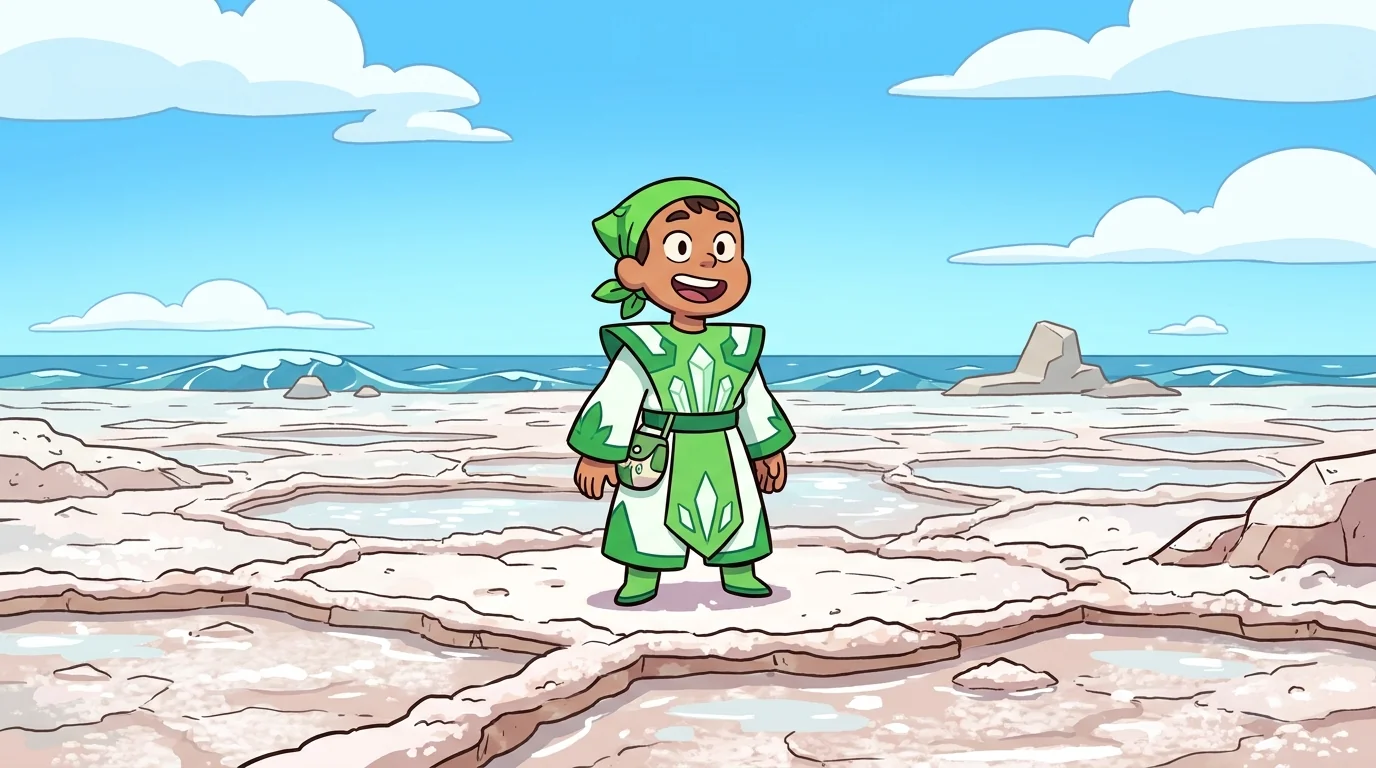
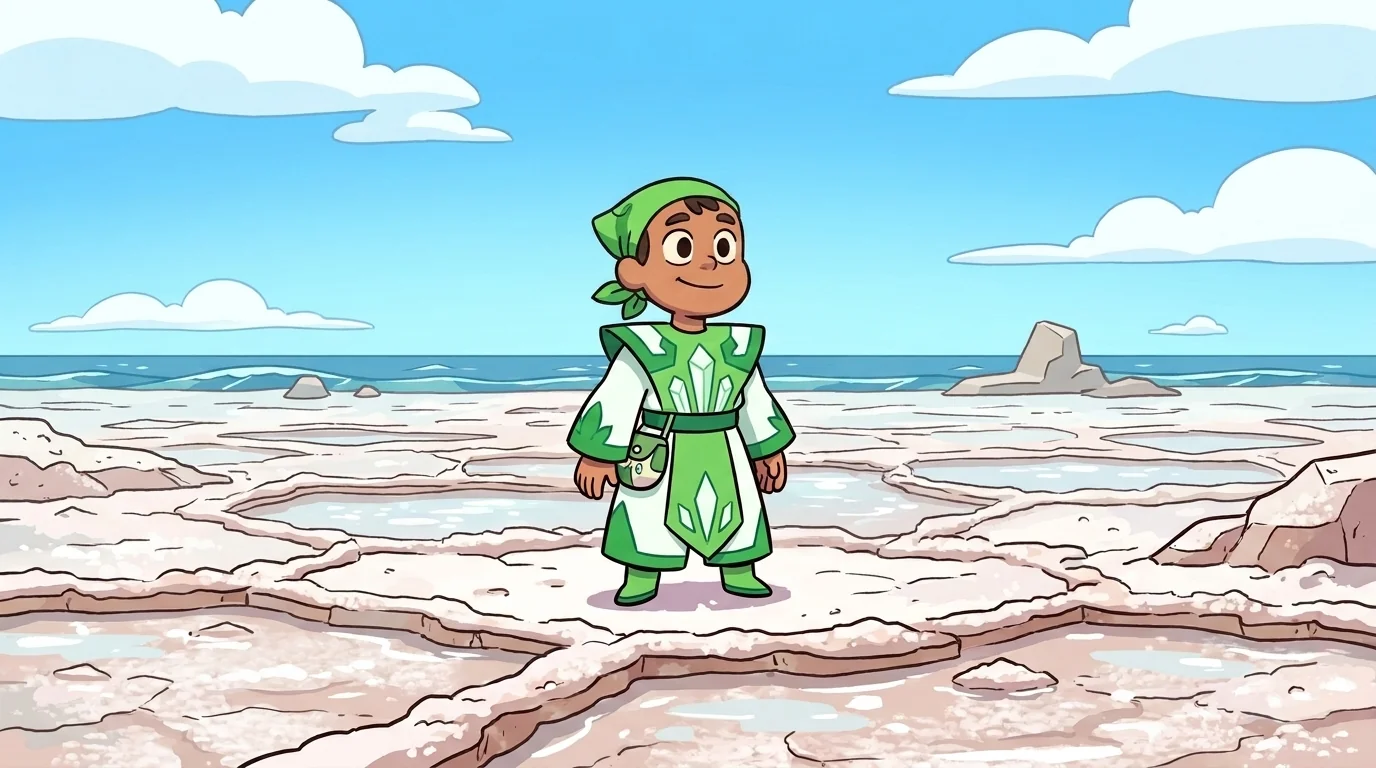
Magna was a crane-tween. She wasn't very big, but she held herself tall. A pure-white feathered crest sat on her head. It shimmered like fresh snow.
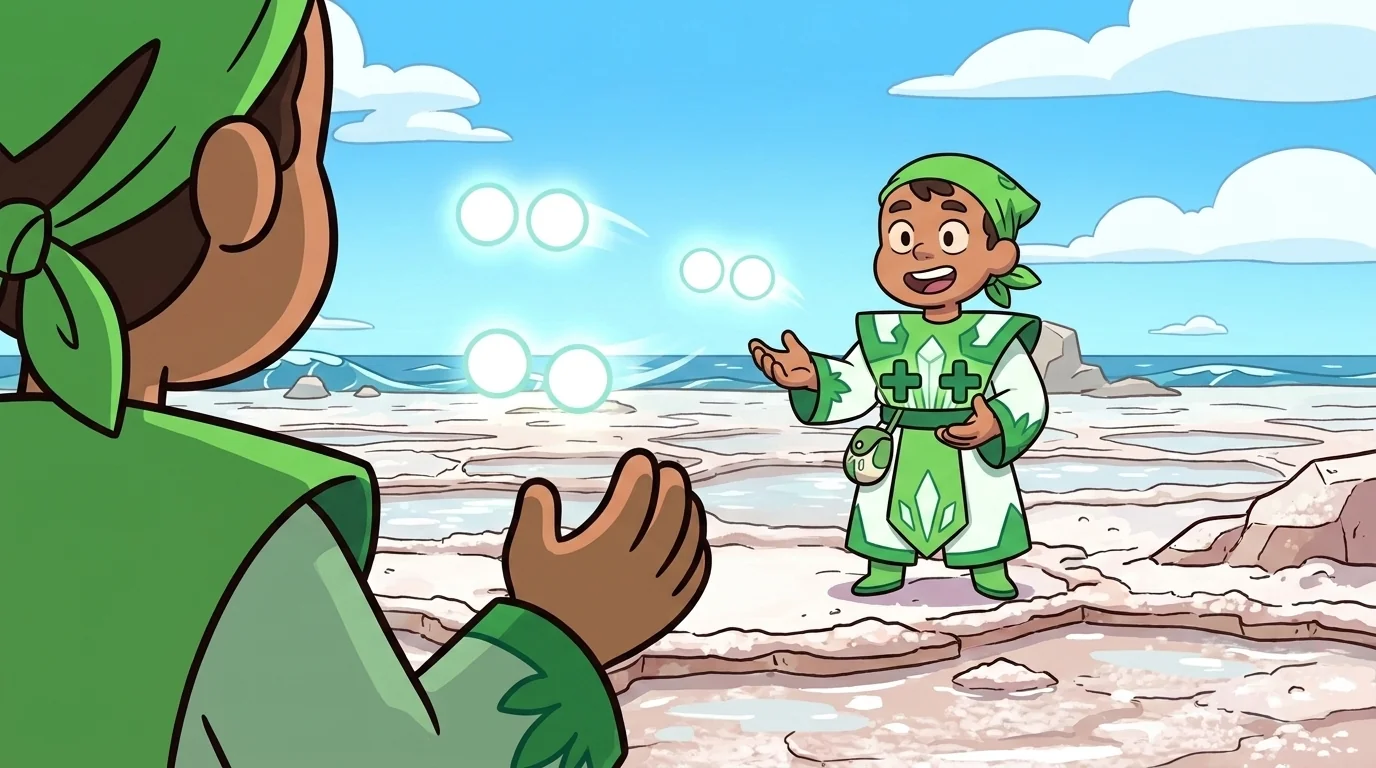
This was the main point about Magna. She was like the element *magnesium (Mg). Magnesium atoms have two extra tiny bits. We call these 'electrons.' These two electrons are on its outer shell, like tiny guards on the edge of a castle. Magnesium doesn't need them to stay balanced. It's like having two extra toys you don't play with. (Sodi, another element, only has one extra electron.) Like Sodi, magnesium gives its extra electrons away. But magnesium gives away two electrons at once. When magnesium gives away both electrons, it changes. It becomes Mg²⁺. Think of it like a superhero who just gave away two powers. Now it has two positive charges, like two big 'PLUS' signs. Things made with Mg²⁺ often stick together very tightly. They stick tighter than things made with Sodi. For example, magnesium chloride (MgCl₂) sticks tighter than NaCl. Magnesium oxide* (MgO) is a white powder. People use it as an antacid. It's also used in cement.
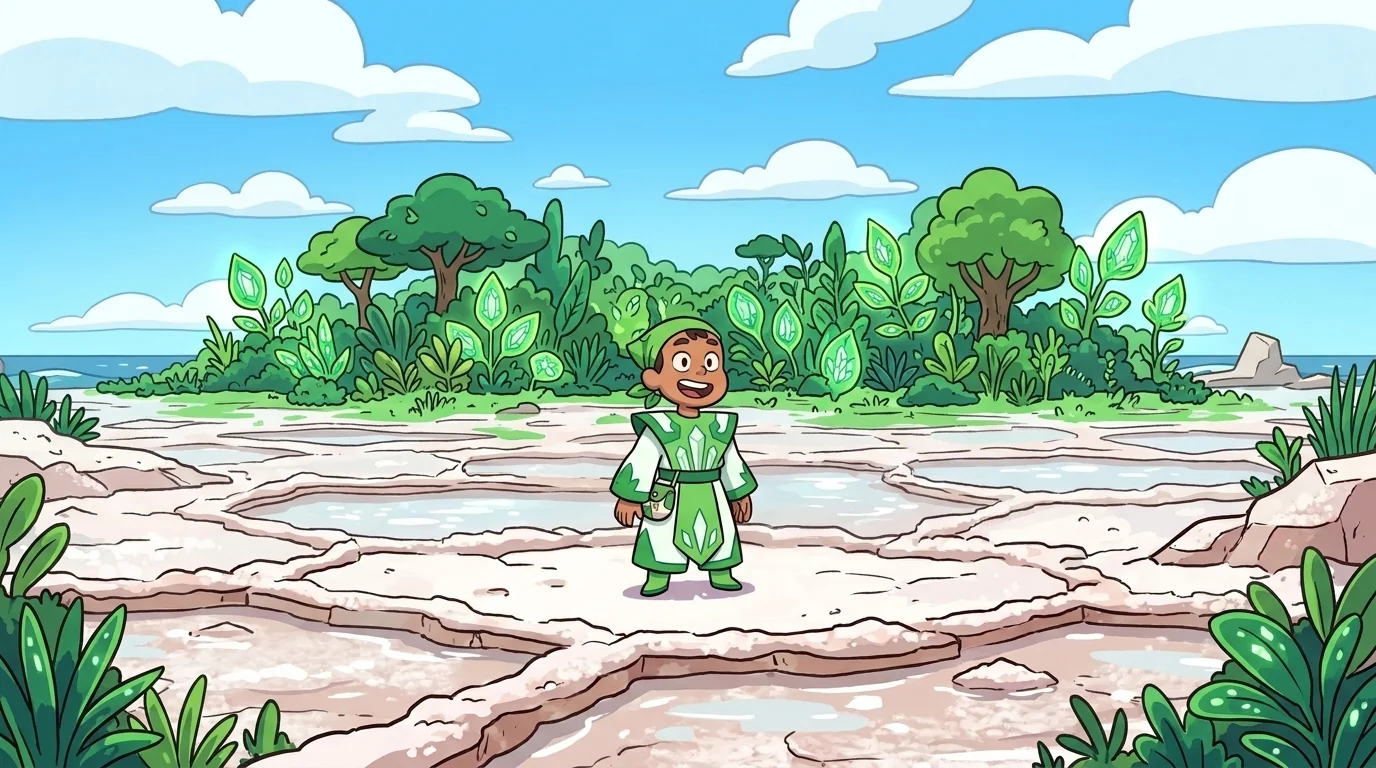
But *magnesium has another really important job. It's a quiet job, but it's for all living things. Chlorophyll is the green color in every plant leaf. It has a magnesium ion right in its middle. It's like the quiet engine of a plant. Chlorophyll uses this magnesium center. It grabs energy from sunlight, soaking it up like a sponge. Then it changes that sunlight into power for the plant to grow. Without magnesium, there's no chlorophyll. Without chlorophyll, there are no plants. Without plants, there's no oxygen for us to breathe. No oxygen means no food. No food means no life on Earth. The bright flame of magnesium* is cool and exciting. But its quiet job in plants, making life possible, is just as important.
The ChemQuest ensemble
Magna is part of ChemQuest's distributed-narrative cast. Each character embodies a different curricular primitive; together they teach the full subject.
-

Hydra
Hydrogen (H) — lightweight, ubiquitous, always paired up; buddy-system enthusiast
-

Carbo
Carbon (C) — connects to anything; the social atom; backbone of life
-

Oxy
Oxygen (O) — eager bonder; electronegative; the hungry grabber
-

Nitra
Nitrogen (N) — triple-bond loyal; slow-to-warm; locks in deeply once bonded
-
Sodi
Sodium (Na) — generous, impulsive; always giving away electrons
-

Chlora
Chlorine (Cl) — sharp, focused; the collector who finishes what Sodi starts
-

Helio
Helium (He) — noble gas; peaceful, floaty, complete; the contented onlooker
-

Sulfa
Sulfur (S) — earthy, dramatic; the stinky uncle of volcanoes and proteins
-

Phossa
Phosphorus (P) — energetic, restless; the spark of ATP and matches
-

Silica
Silicon (Si) — patient, geometric; the architect who builds quietly
-

Alumi
Aluminum (Al) — practical, modest; the workhorse of cans and foil
-

Tugger
Ionic bond — forceful, decisive; full electron transfer; opposites attract
-

Sharer
Covalent bond — cooperative, balanced; equal partnership
-

Streamer
Metallic bond — flowing, communal; delocalized electron sea
-

Whisperer
Hydrogen bond — subtle, persistent; water's superpower; DNA pairing