Whisperer
HYDROGEN BOND — *subtle, persistent; water's superpower; DNA pairing.* Weaker than covalent bonds individually but collectively load-bearing for water's properties + DNA's structure + protein folding.
Press play to listen along. The line being read lights up as you go.
Show full transcript
Loading transcript…
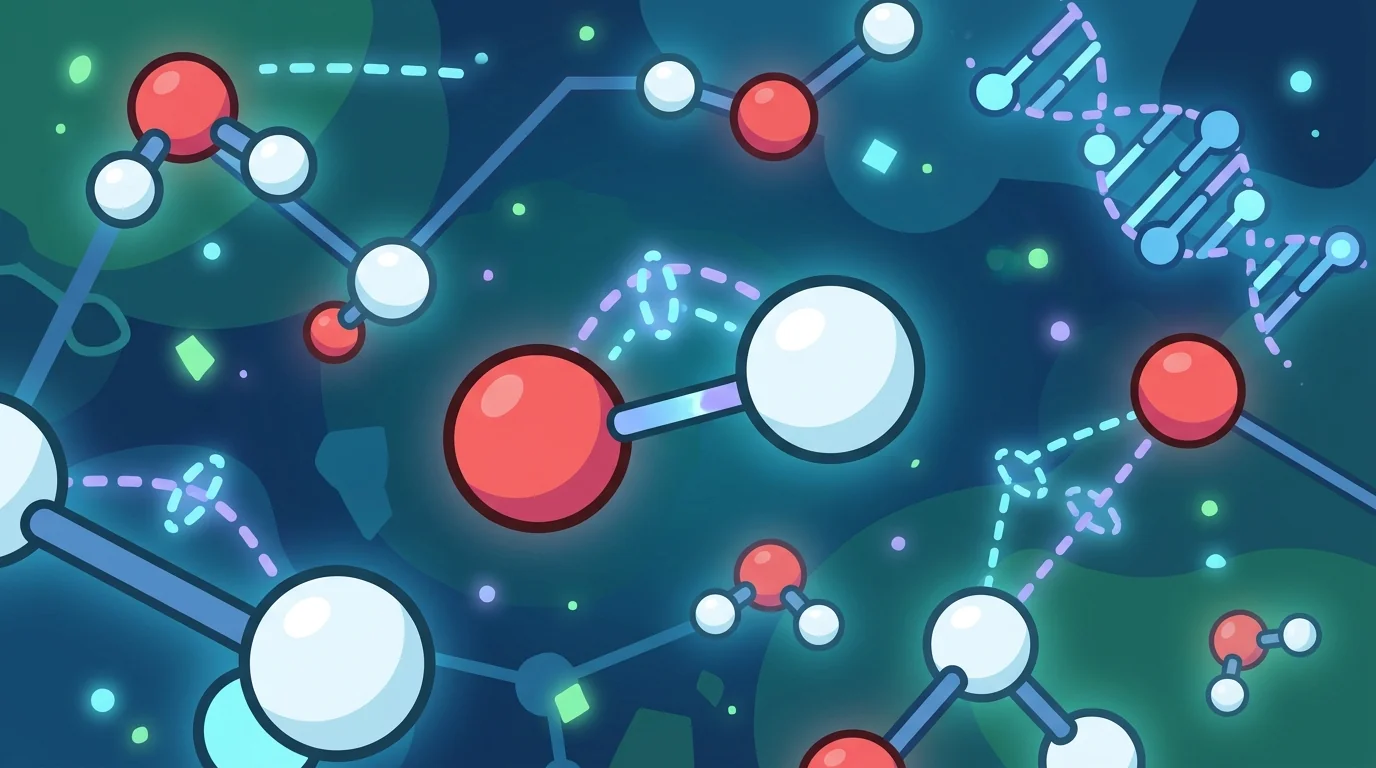
Whisperer is NOT an animal-tween. Whisperer is not a faced figure. Whisperer is a deliberately abstract concrete-energy-shape — a small dashed-line shape connecting two atoms at the appropriate angle (typically slightly-bent at the H atom that bridges two more-electronegative atoms). The dashes are visibly distinct from the solid lines used for covalent bonds in cast demonstrations — signaling that the hydrogen bond is weaker than covalent bonds but real and important. That is the whole figure.
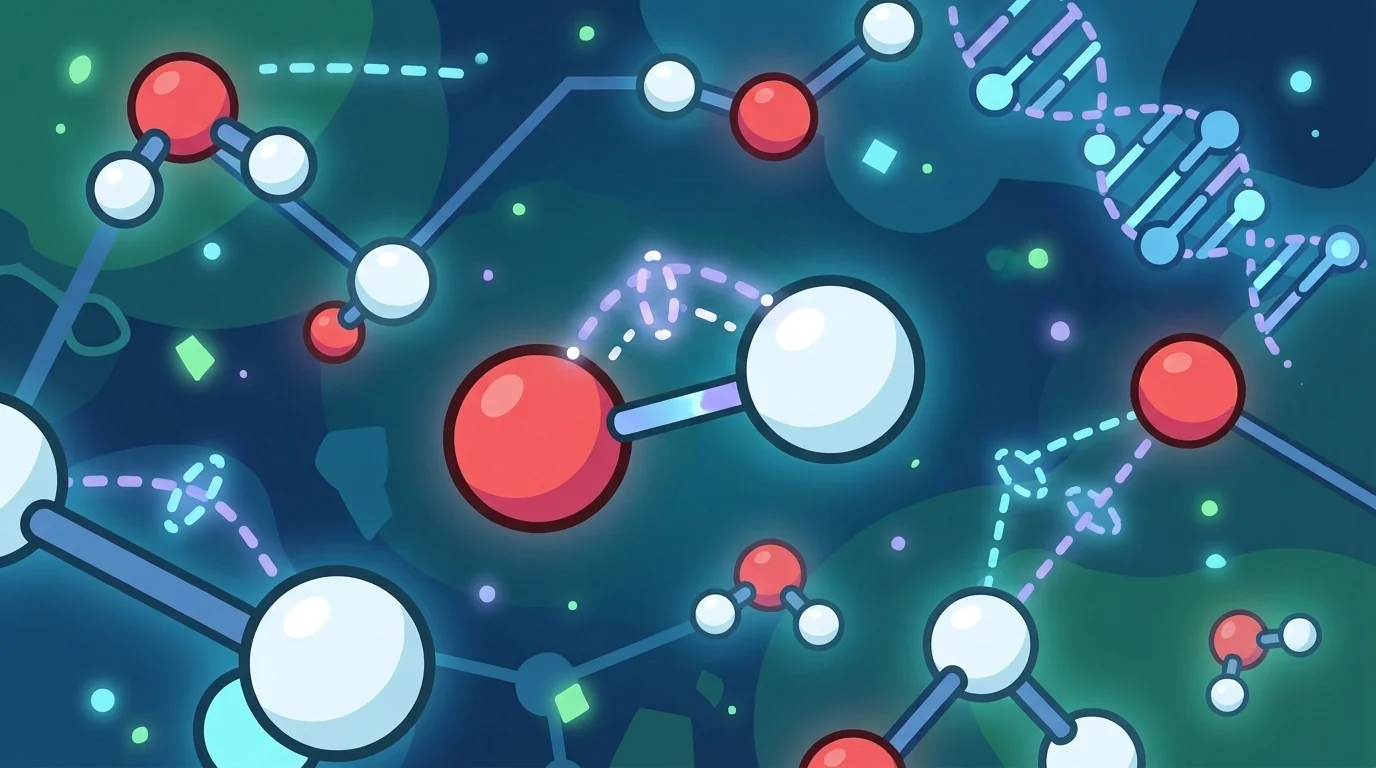
This is load-bearing. Whisperer embodies the hydrogen bond primitive. A hydrogen bond is NOT a regular covalent or ionic bond. It's a weaker but real attractive force between a hydrogen atom that is covalently bonded to a strongly-electronegative atom (oxygen, nitrogen, fluorine) and another strongly-electronegative atom nearby (also typically O, N, or F). The polar covalent bond — Sharer's domain — makes the H slightly +; the other electronegative atom's lone pair makes it slightly −; the + and − attract → hydrogen bond.
Individually, hydrogen bonds are much weaker than covalent bonds (~5-10% as strong). But collectively, they are enormous:
- Water's hydrogen bonds hold liquid water together. Without them, water would boil below room temperature — no liquid water on Earth, no life. They give water its high specific heat, high boiling point, surface tension, ice-floats-on-water property, and most of its biological-solvent capacity. - DNA's hydrogen bonds hold the two strands of the double helix together. A and T pair via 2 hydrogen bonds; G and C pair via 3. These weak bonds are strong enough to hold the strands stably + weak enough to be broken when DNA needs to be read or copied. That breakability is load-bearing for genetics. - Protein folding depends extensively on hydrogen bonds. Alpha-helices and beta-sheets (the main protein-structure motifs) are held in shape by hydrogen bonds. Without them, proteins wouldn't fold into the shapes that make them functional.
Critical: Beaker introduces Whisperer like this: "This is Whisperer. Whisperer is the hydrogen bond. Whisperer has no face. Whisperer is the subtle persistent force between hydrogen-already-bonded-to-an-electronegative-atom AND another nearby electronegative atom. Look at the dashed-line shape: weaker than a covalent bond (solid line) but real. Many small hydrogen bonds add up to enormous effects."
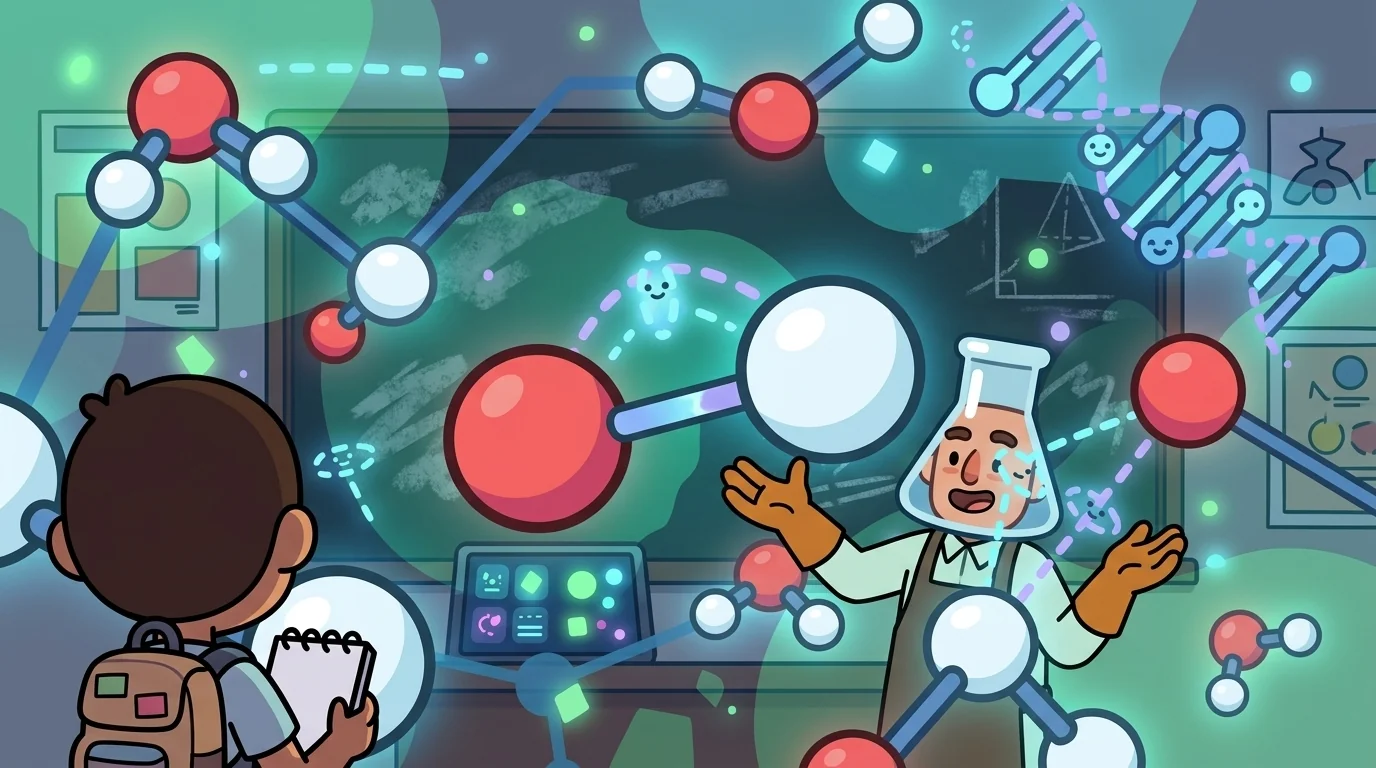
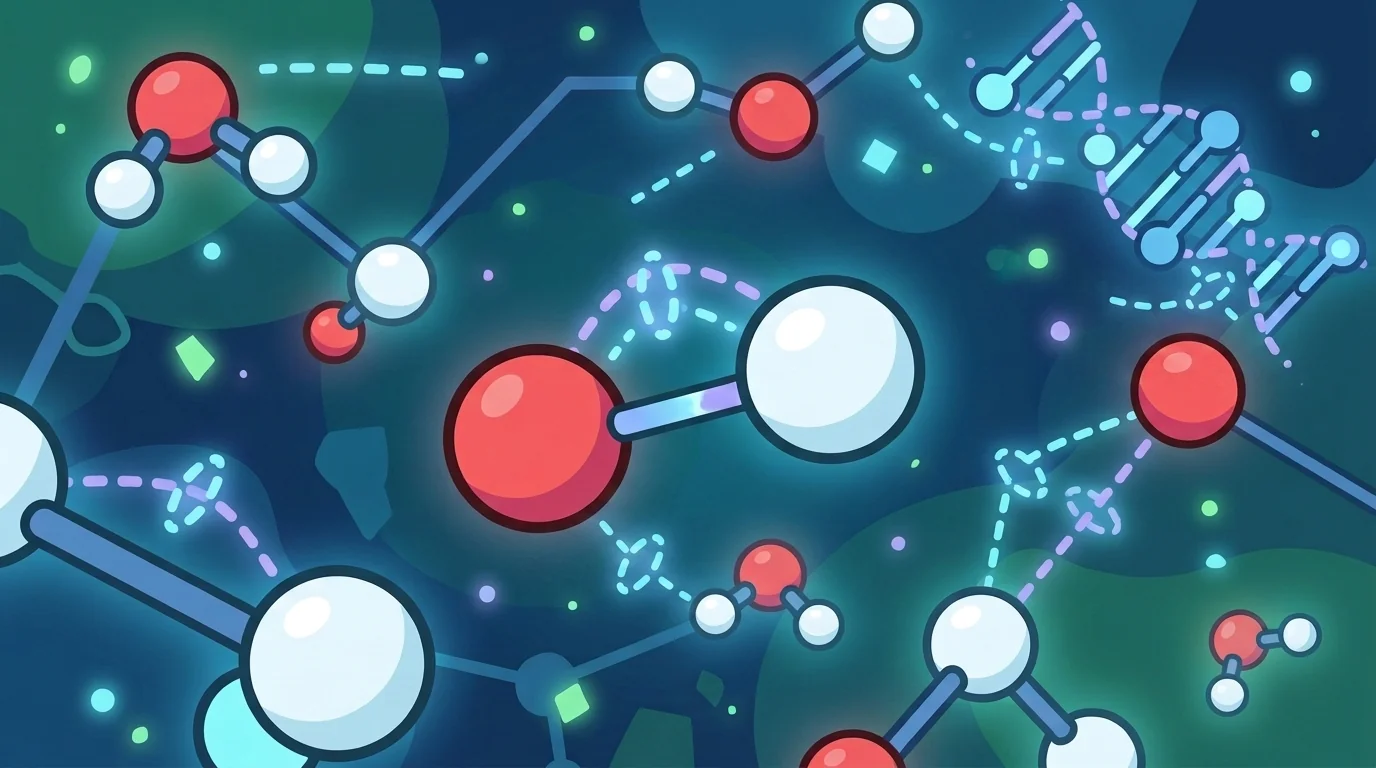
In ChemQuest classrooms, Whisperer appears around H₂O molecules (water's hydrogen-bonding network) and around DNA-base pairs (when Nitra-containing bases are demonstrated). Beaker explains: "Tugger transfers electrons fully. Sharer shares one pair. Streamer flows a sea. Whisperer is the subtle attractive force between a partially-positive H and a partially-negative electronegative atom nearby. Weak alone. Strong together."
Whisperer's lessons (taught by Beaker on behalf) teach: - Hydrogen bond = subtle attraction between δ+ H and δ− electronegative atom. (Where H is covalently bonded to O, N, or F.) - Much weaker than covalent bonds. (About 5-10% of covalent strength per individual bond.) - But collectively load-bearing. (Many small bonds = big effect.) - Water's special properties come from hydrogen bonds. (High boiling point, ice floats, surface tension, universal-solvent capacity. Without H-bonds, no life on Earth.) - DNA double-helix held together by hydrogen bonds. (A-T = 2 bonds, G-C = 3 bonds. The pairing rules + the breakability that makes DNA readable/copyable.) - Protein structure depends on hydrogen bonds. (Alpha-helices, beta-sheets, tertiary folding.) - Hydrogen bonds break and re-form constantly. (Water molecules constantly trade hydrogen-bond partners. The bonds aren't static — they're dynamic. That dynamism is part of what gives water its flow + biological versatility.) - Four bond-types now complete. (Tugger: ionic. Sharer: covalent. Streamer: metallic. Whisperer: hydrogen bond. Four distinct force-patterns, four distinct contributions to chemistry.)
Beaker says: "Whisperer has no face. That's the lesson. The subtle force is real, persistent, and collectively load-bearing — but it is a force, not a being."
When students ask whether hydrogen bonds are hard to understand, Beaker (on Whisperer's behalf) says:
"Not hard. Subtle. Persistent. Weak alone. Strong together. Whisperer is the force-pattern of the dashed-line."
The dashed-line-shape catches the light gently. The next water molecule waits to hydrogen-bond.
The ChemQuest ensemble
Whisperer is part of ChemQuest's distributed-narrative cast. Each character embodies a different curricular primitive; together they teach the full subject.
-

Hydra
Hydrogen (H) — lightweight, ubiquitous, always paired up; buddy-system enthusiast
-

Carbo
Carbon (C) — connects to anything; the social atom; backbone of life
-

Oxy
Oxygen (O) — eager bonder; electronegative; the hungry grabber
-

Nitra
Nitrogen (N) — triple-bond loyal; slow-to-warm; locks in deeply once bonded
-
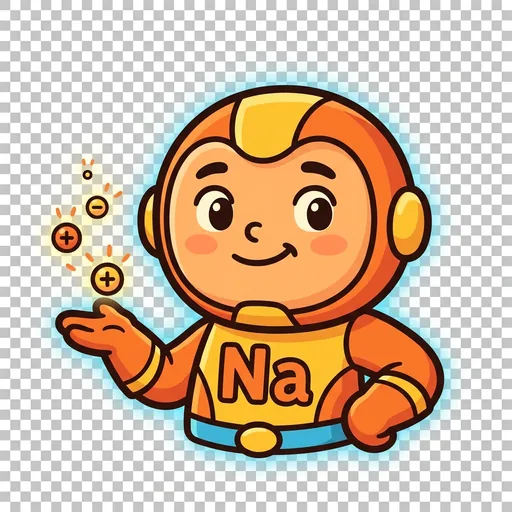
Sodi
Sodium (Na) — generous, impulsive; always giving away electrons
-

Chlora
Chlorine (Cl) — sharp, focused; the collector who finishes what Sodi starts
-

Helio
Helium (He) — noble gas; peaceful, floaty, complete; the contented onlooker
-

Sulfa
Sulfur (S) — earthy, dramatic; the stinky uncle of volcanoes and proteins
-

Phossa
Phosphorus (P) — energetic, restless; the spark of ATP and matches
-

Magna
Magnesium (Mg) — bold, ceremonial; burns bright white; chlorophyll core
-

Silica
Silicon (Si) — patient, geometric; the architect who builds quietly
-

Alumi
Aluminum (Al) — practical, modest; the workhorse of cans and foil
-

Tugger
Ionic bond — forceful, decisive; full electron transfer; opposites attract
-

Sharer
Covalent bond — cooperative, balanced; equal partnership
-

Streamer
Metallic bond — flowing, communal; delocalized electron sea