Notate
NOTATION — *the shared shorthand for cube moves — a letter for each face and a mark for direction — so any turn, and any whole solution, can be written down, saved, and shared exactly.*
Loading audio…
Press play to listen along. The line being read lights up as you go.
Show full transcript
Loading transcript…
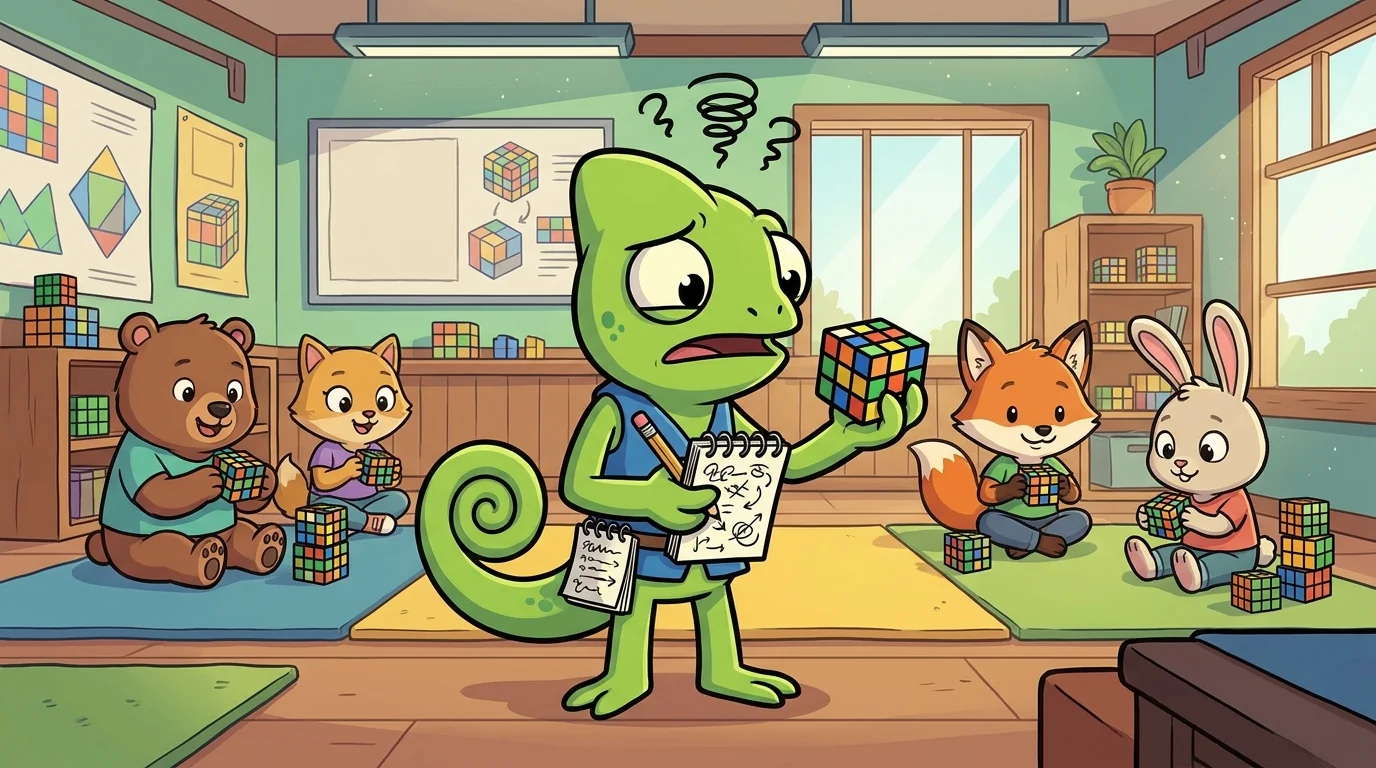
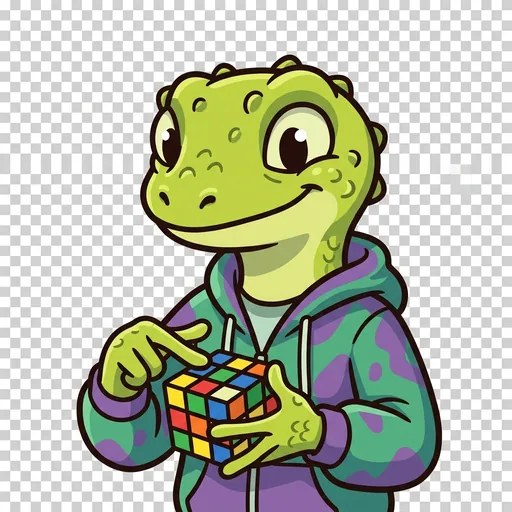
Notate was a neat, careful chameleon-tween who kept a little notebook clipped to his belt at the cubing dojo. While the other kids solved with their paws, Notate was always writing — but for the longest time, his writing didn't work, and it drove him a little crazy.
Because here was his problem. He could feel a good sequence of turns in his hands. He'd solve a tricky spot on the cube and think, I want to remember exactly that — and teach it to my friend. But when he tried to write it down, all he could manage was: "turn the... front-ish one, the way that's sort of... to the left? Twice? No, once." By the time he read it back, it meant nothing. A perfect solve, and no way to save it.
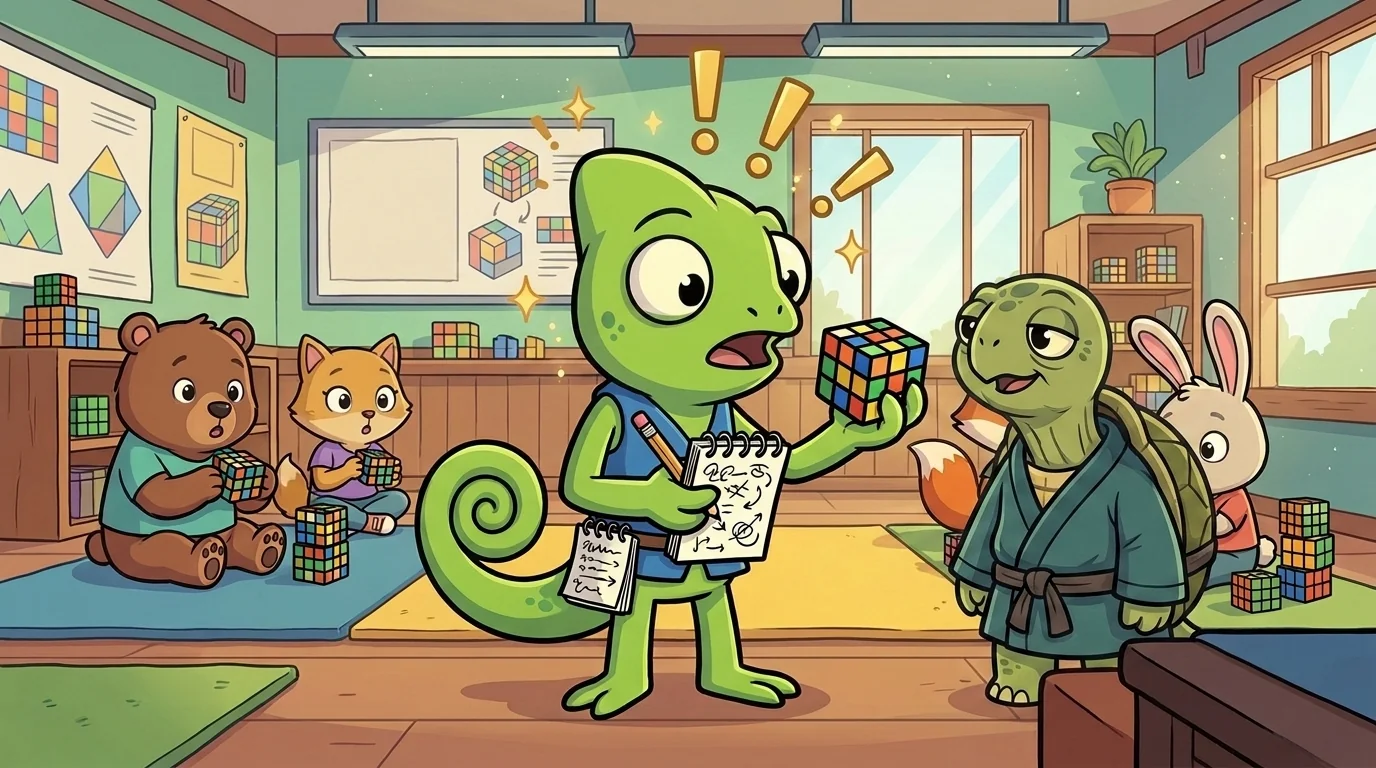
The other kids had the same trouble, though most had given up on writing at all. "Just remember it in your paws," they'd say. But paws forget. And you can't mail a friend across town a feeling-in-your-paws. Notate wanted a way to catch a turn and pin it to paper so it stayed exactly itself.
His mentor, an old wise tortoise named Sensei Still, watched him struggle for weeks. "You keep trying to describe the turns," she observed one day. "Long words. 'The front-ish one, sort of left.' Words are slippery. What if each face just had a name — one letter — and each direction just had a mark?"
Notate's eyes went wide.
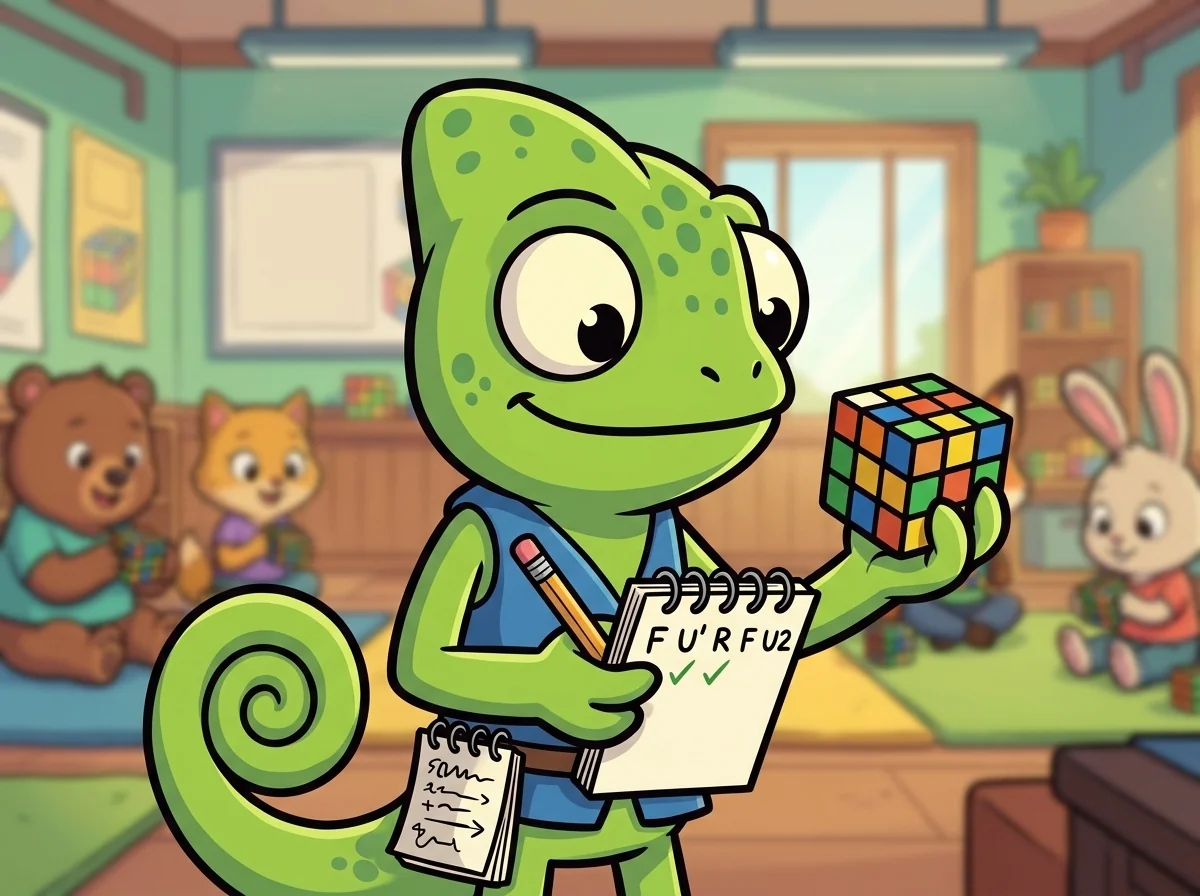
They worked it out together, simple and exact. The face pointing at you: call it F, for Front. The one on top: U, for Up. The right face: R. One letter for each of the six faces. And for direction: a plain letter meant turn that face one quarter, the usual way. A little mark next to it — a small tick — meant turn it the other way instead. That was the whole language. A handful of letters. A handful of marks.
Notate tried it on his good solve. Instead of "the front-ish one, sort of left, then the top one twice," he wrote a tidy little row of letters and ticks. He read it back. It was exact. No slipperiness, no guessing. Anyone who knew the six letters could pick up his notebook and do the precise turns he'd meant — the same solve, in the same order, perfectly.
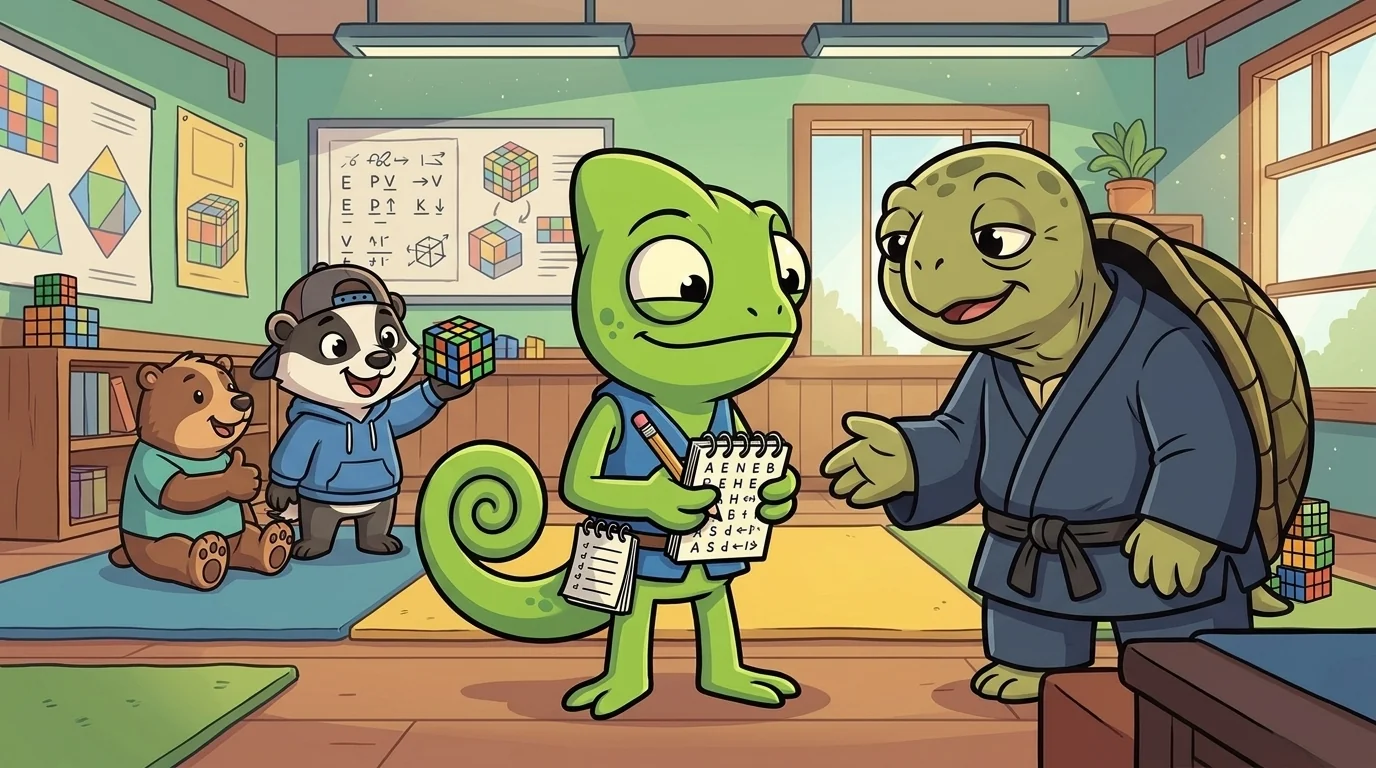
He mailed it to his friend across town. His friend wrote back a week later: "I did every letter exactly. It worked! Teach me another!"
"That's notation," said Sensei Still, pleased. "A shared shorthand. Once everyone agrees what the letters and marks mean, a turn stops being a private feeling in your paws and becomes a thing you can write, save, and share — perfectly, across any distance. Every cuber in the world uses the same few letters now. That's how a good trick found in one dojo can reach a kid who's never met you."
Notate looked at his notebook — no longer full of slippery half-descriptions, but of clean, exact little rows anyone could read — and understood he'd been handed a kind of quiet magic: a way to make a fleeting thing permanent, and a private thing shareable.
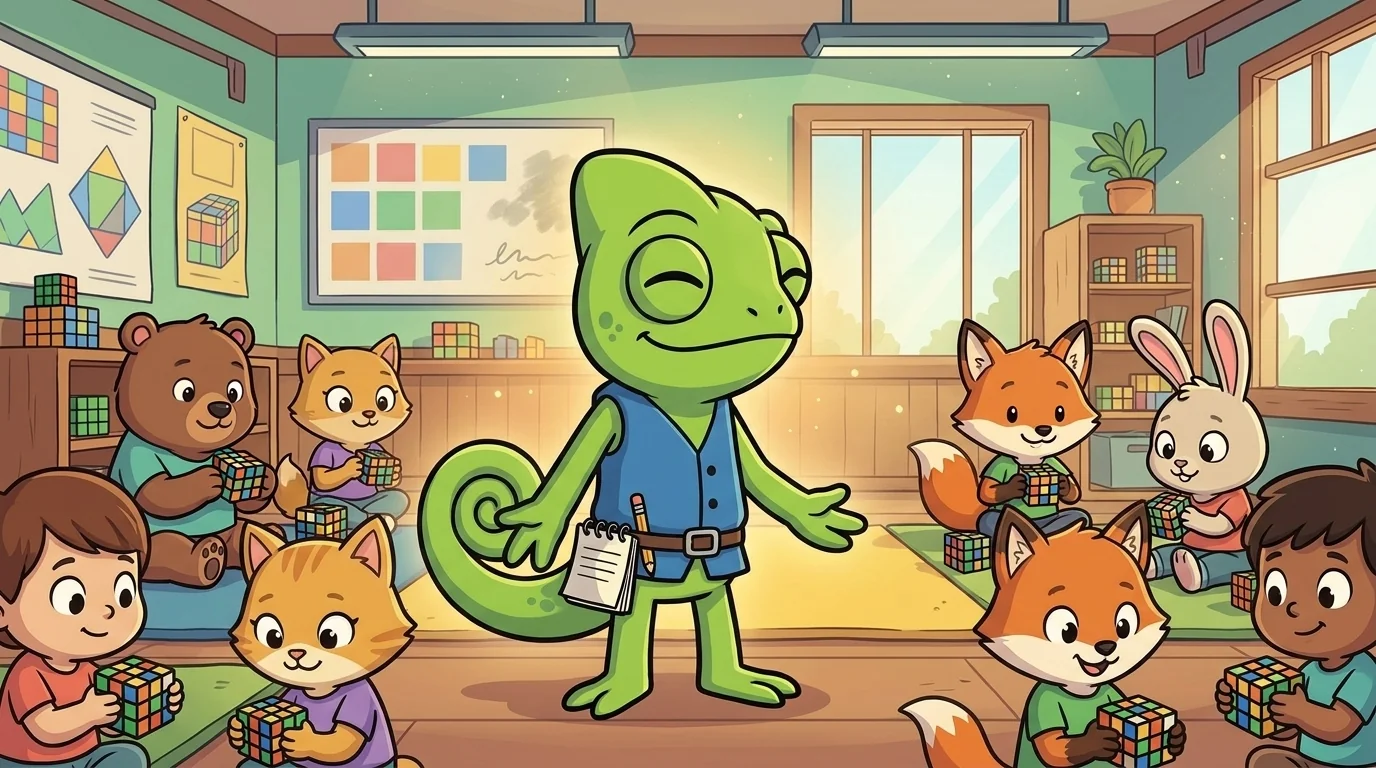
Notate clipped his notebook back onto his belt, and a warm, settled satisfaction spread through him, calm and glad. He would still solve slower than the flashy speed-kids. That had never been his gift.
His gift was this: turning a turn into letters, so it could be kept and passed on. And there was a deep, quiet contentment in that — the grounded ease of a careful creature who had found the exact words for a wordless thing, and so could hand it, whole and true, to anyone willing to learn six letters. It felt less like showing off and more like giving a gift. "One letter per face," he murmured, tucking the notebook away, content all the way down. "One mark for the way. And now it's everyone's."
The CubeSensei ensemble
Notate is part of CubeSensei's distributed-narrative cast. Each character embodies a different curricular primitive; together they teach the full subject.
-
Layer
Beginner method — layer-by-layer steward; 'Bottom first. Always.'
-

Cross
CFOP method — speedcubing steward; 'Cross, F2L, OLL, PLL — that's the road.'
-
Block
Roux method — block-building steward; 'Build the blocks. Skip the cross.'
-
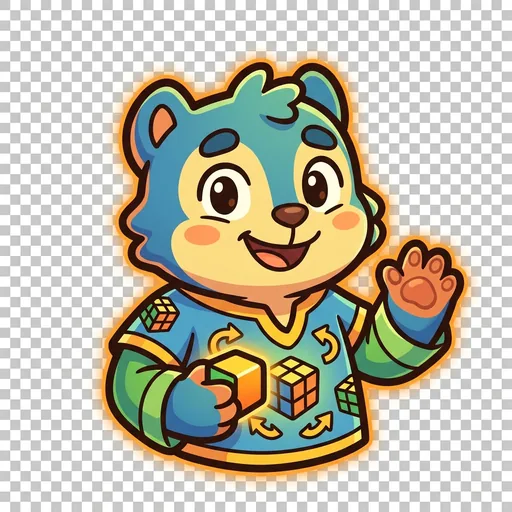
Edge
ZZ method — edge-orientation steward; 'Orient first. Then everything's faster.'
-
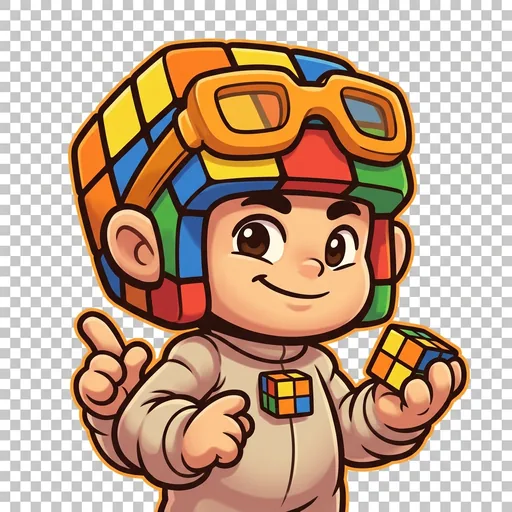
Pair
Ortega method — 2x2 specialist; 'Two-by-two has its own rules.'
-
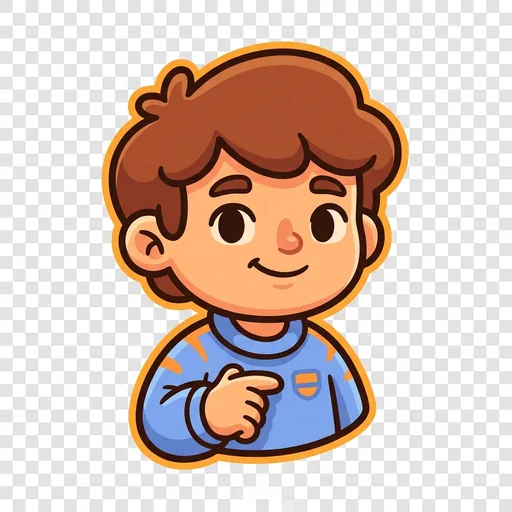
Look
Cross-method look-ahead coordinator; 'Eyes ahead. Hands following.'
-
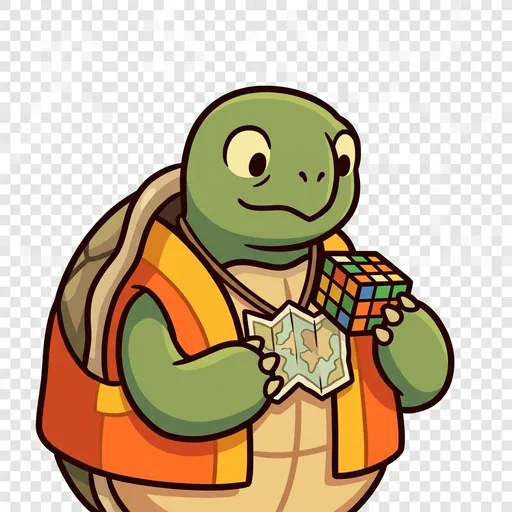
Chart
Lessons-layer cast (inspection planner — the fifteen-second pre-solve read)
-

Parity
Lessons-layer cast (the big-cube even-odd special case)
-
Grip
Fingertricks — turning the cube with small, smooth fingertip pushes, not big arm twists