
Grip
FINGERTRICKS — *turning the cube with small, smooth pushes of the fingers instead of big whole-hand regrips — the quiet efficiency that makes a solve fast, calm, and effortless-looking.*
Loading audio…
Press play to listen along. The line being read lights up as you go.
Show full transcript
Loading transcript…
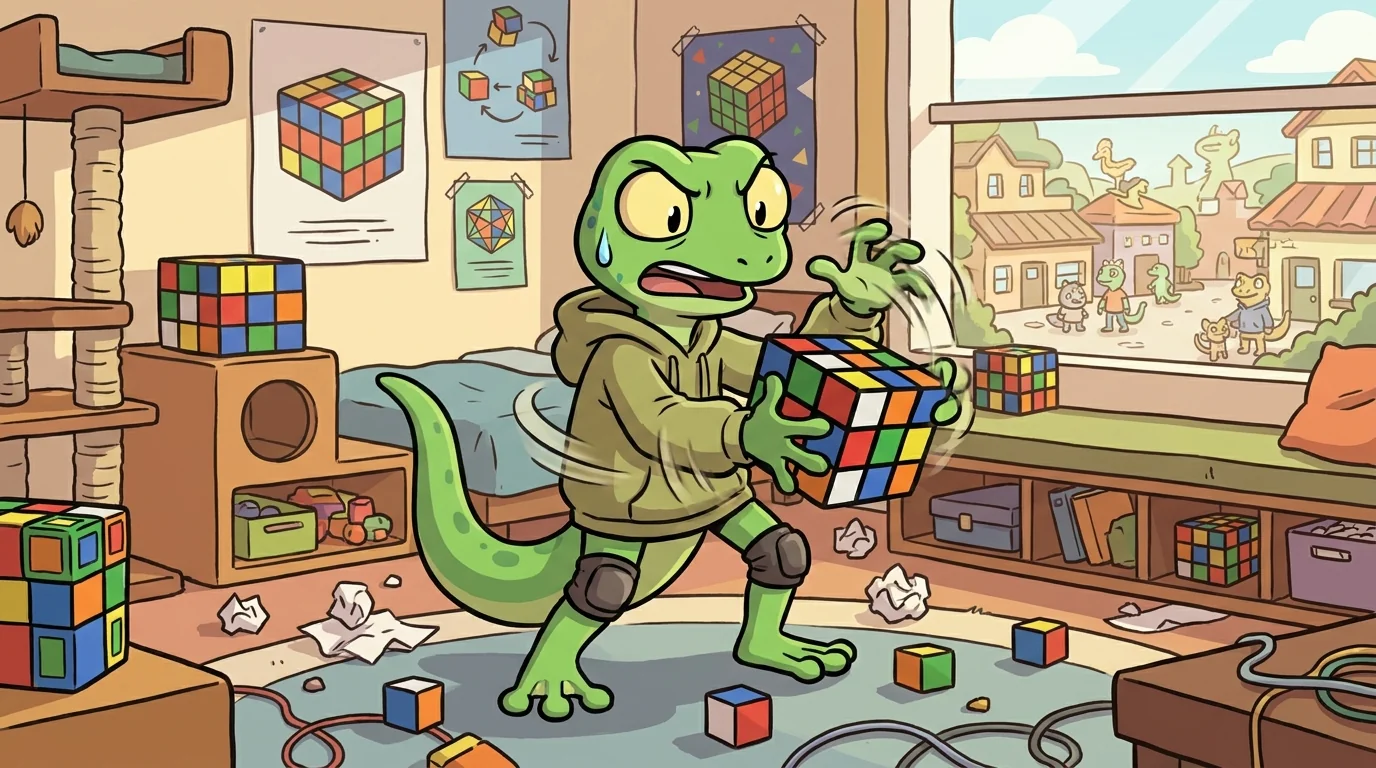
Grip was a quick, wiry gecko-tween with restless fingers, and she wanted, more than anything, to be FAST. So she solved the cube the way she thought fast looked: big, hard, whole-hand grabs, spinning the whole cube around in her palms, wrenching each face with everything she had, hands flying in a frantic blur.
It looked fast. It felt fast. It made a lot of noise. And it was, to her endless frustration, actually rather slow — because every big grab meant letting go and re-grabbing, every whole-cube spin meant losing her place, and half her frantic energy went into just hanging on.
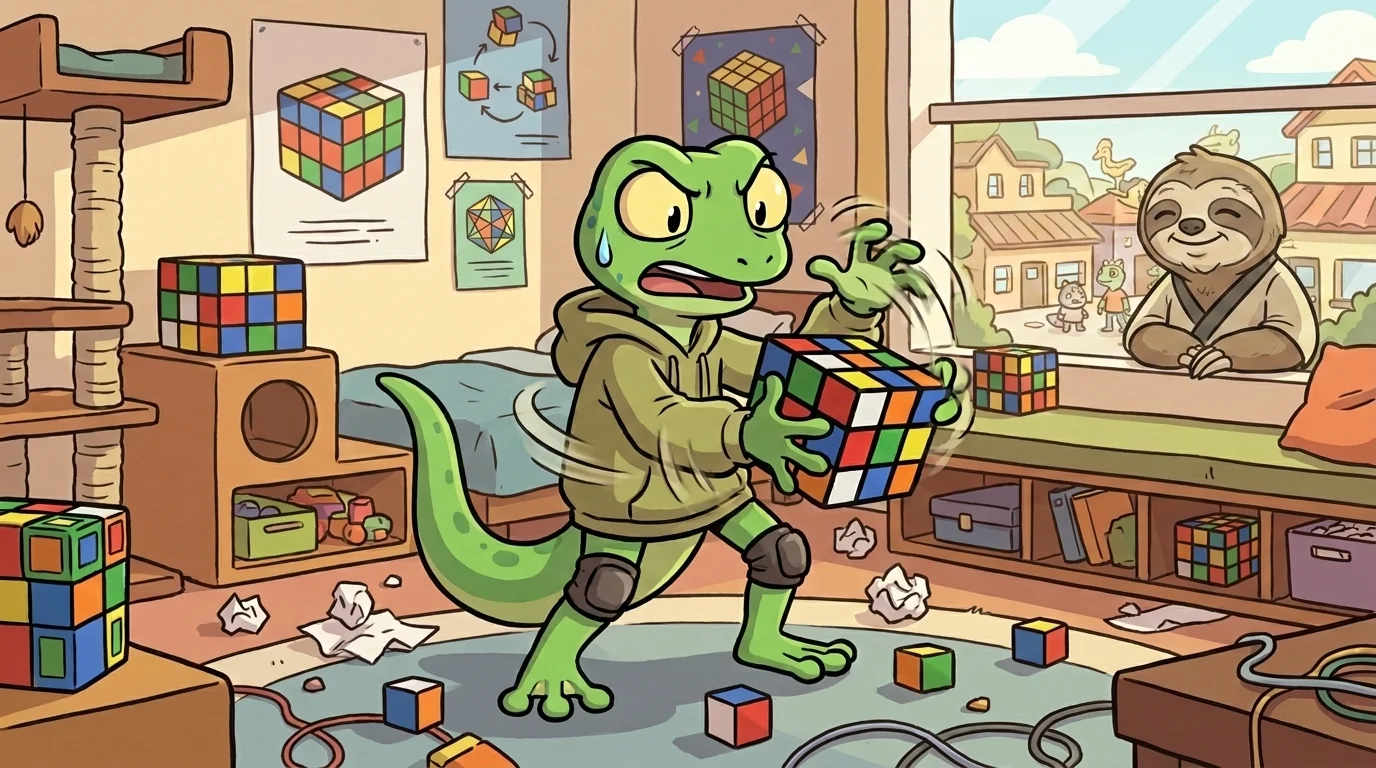
"Faster," Grip muttered to herself, wrenching harder, grabbing bigger. "Come on, FASTER." Her hands were a storm. The cube clacked and rattled. Sweat beaded on her scaly brow. And her solve times refused to budge. The harder she tried, the more her own frantic effort tangled her up.
She watched the dojo's fastest solver, a serene old sloth named Sensei Ease, and it made no sense to her. Sensei Ease's hands barely seemed to move. No big grabs. No wrenching. No storm. Just tiny, quiet flicks — and the cube solved in a fraction of Grip's time. "You're not even trying hard," Grip complained. "How are you so fast when you're so... calm?"
"Because," said Sensei Ease, slowly, "I stopped trying to turn the cube. I let my fingers do it."
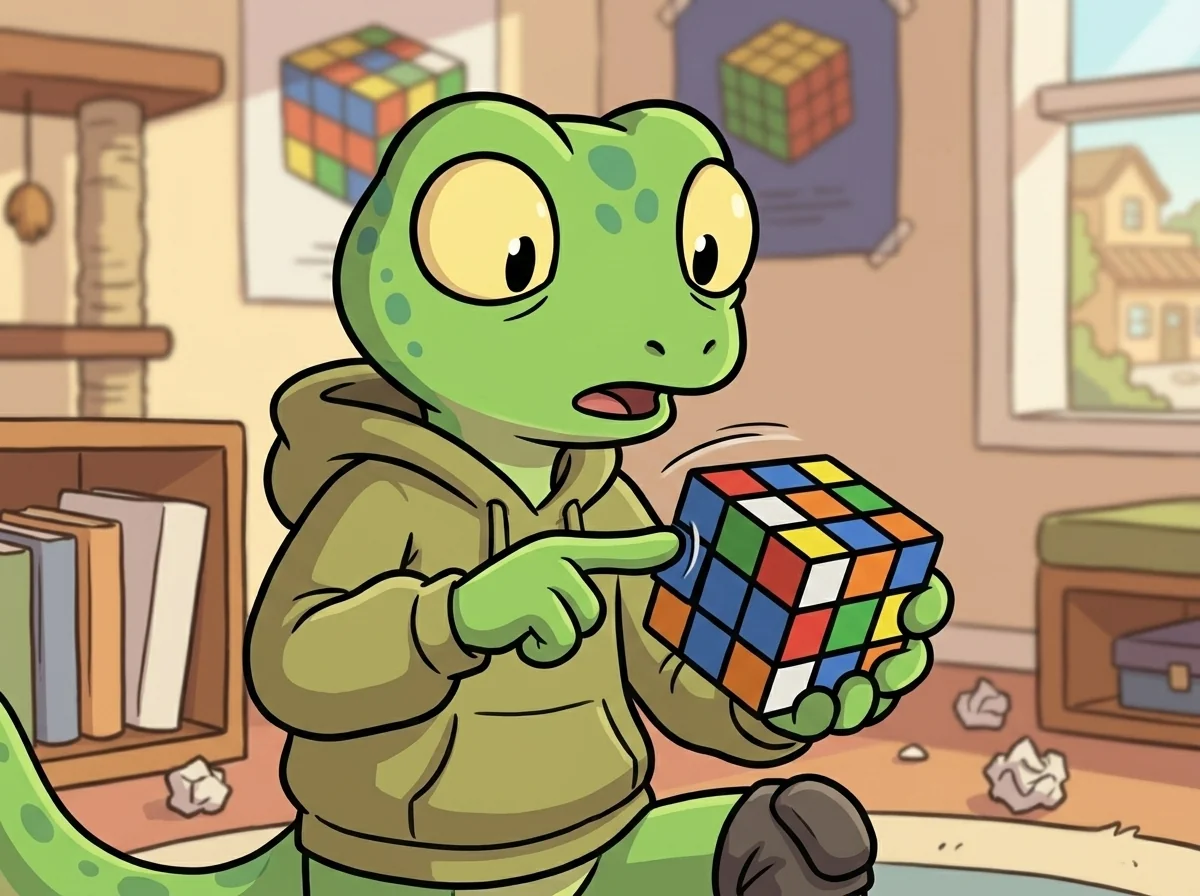
Sensei Ease held up a single paw. "Watch. You want to turn this top face. You grab the whole cube, twist your whole hand, let go, grab again — big, tiring, and you lose your place every time." She demonstrated Grip's frantic way, and it did look exhausting.
"Now watch this." She held the cube still in one paw, and with a single small push of one finger — a flick, barely a motion — the top face spun a quarter-turn. The cube hadn't moved in her palm. She hadn't regrabbed. Her hand was calm. "A fingertrick," she said. "A small smooth push, one finger, cube held steady. No big grab. No wrenching. No letting go. You keep your place, you keep your calm, and — because you're doing so much less — you go much faster."
Grip tried it. One finger. A small push. It felt wrong — too gentle, too little, surely too slow. But the face turned crisply, her hand stayed put, and she was already set up for the next move. She tried a few in a row, small and smooth, and her hands stopped storming. They went quiet. And quick.
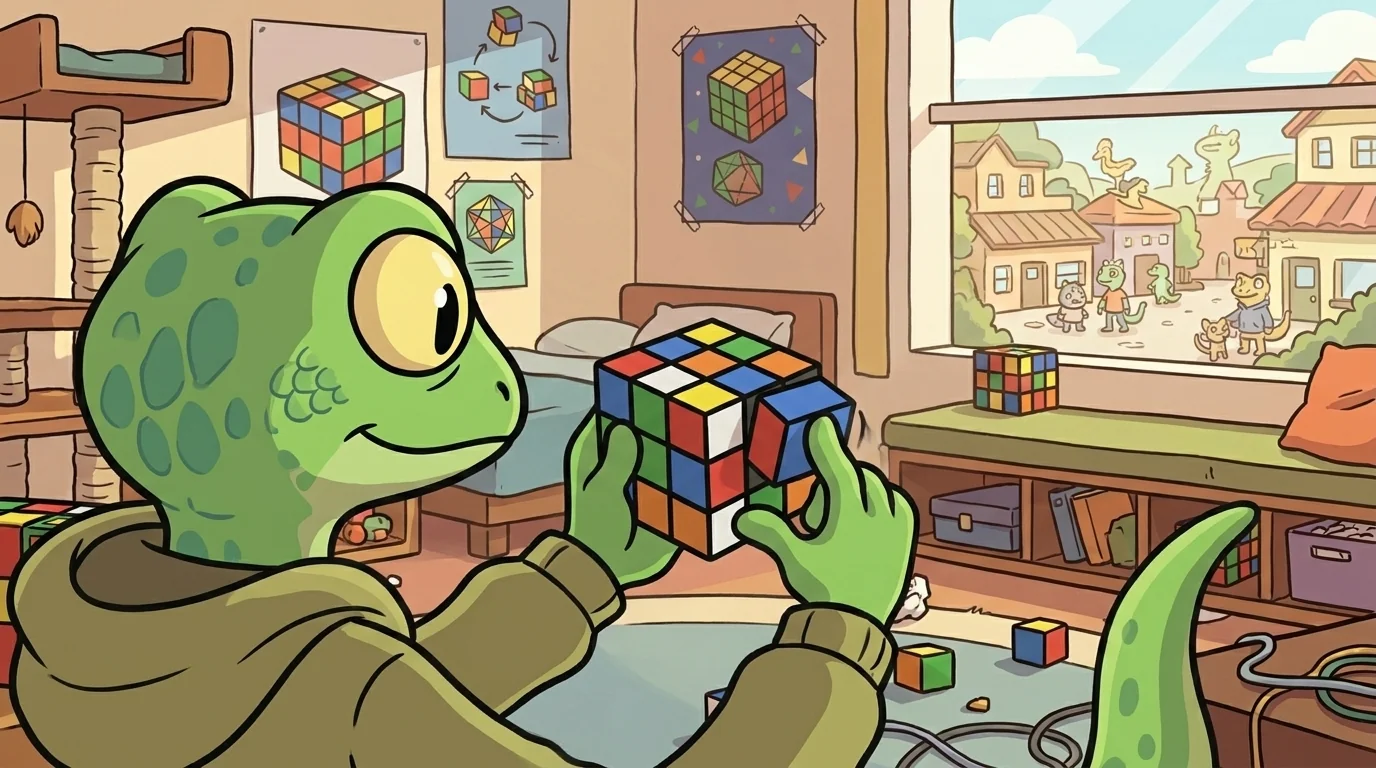
"That can't be faster," Grip said, staring at her own suddenly-calm hands. "I'm barely doing anything."
"That's exactly why it's faster," said Sensei Ease. "Speed isn't force. Speed is efficiency — the least motion that does the job. Your frantic grabbing added a hundred little wasted movements. Fingertricks cut them all away. You look calmer because you ARE doing less. And doing less, done smoothly, is the whole secret of fast."
Grip solved again — small flicks, quiet hands, cube held steady — and shaved seconds off her best time without a single frantic grab. The less she fought the cube, the faster it fell into place.
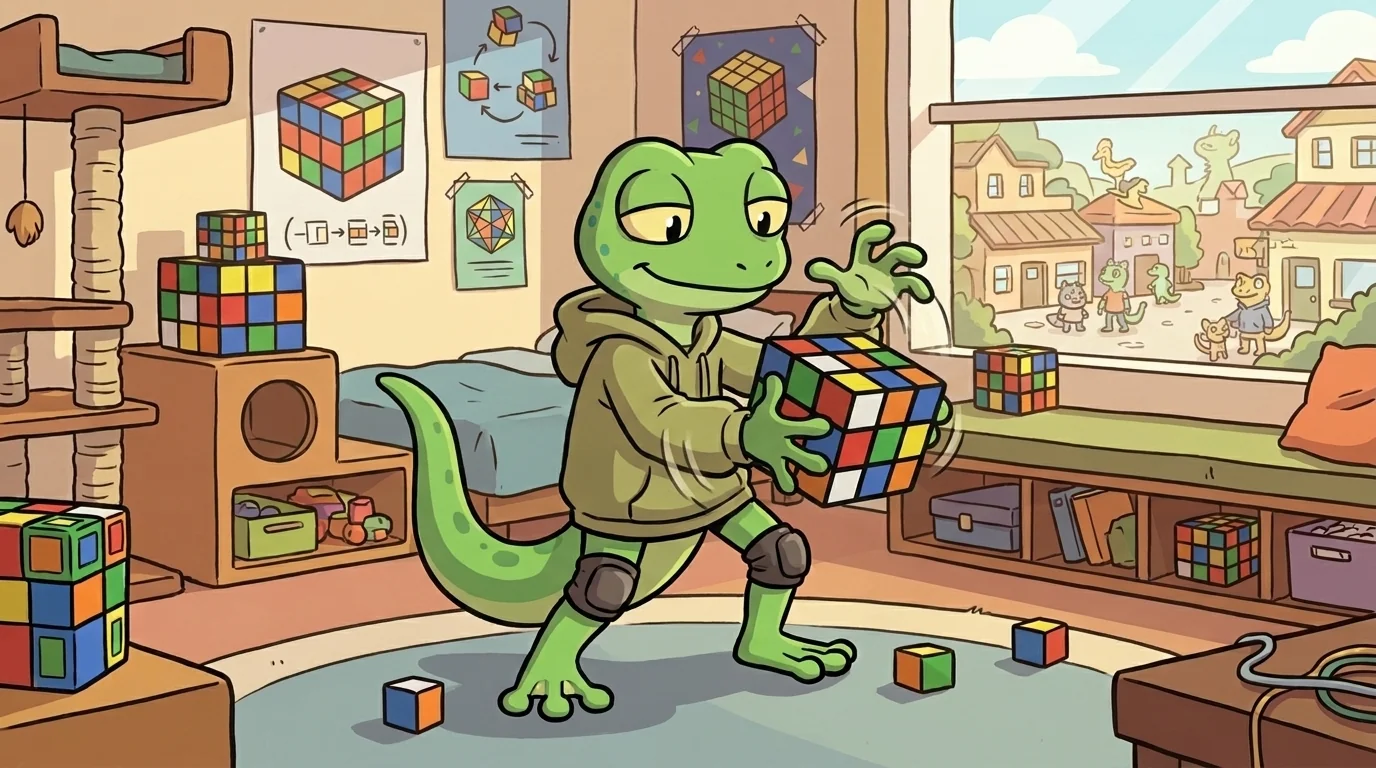
Grip flexed her restless fingers, now moving small and smooth and sure, and felt the tight, exhausting frenzy of all her old solving drain away, replaced by something calm and steady and much better.
She'd spent so long believing fast meant hard — more force, more storm, more strain. And the truth had turned out to be the gentlest thing: fast meant easy. Smaller. Smoother. Quieter. There was a deep, settled contentment in it, the grounded peace of a quick creature who had finally learned that the calmest hands are the fastest ones. Her fingers flicked, light and unhurried, and the cube turned like it wanted to. "Do less," she murmured, smiling, wholly at ease. "And do it smooth." And for the first time, being fast felt calm.
The CubeSensei ensemble
Grip is part of CubeSensei's distributed-narrative cast. Each character embodies a different curricular primitive; together they teach the full subject.
-
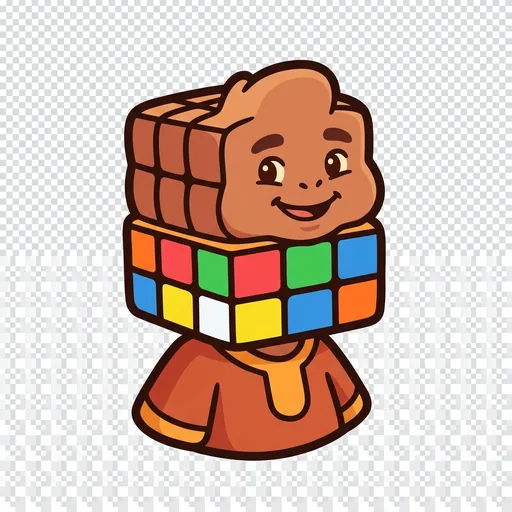
Layer
Beginner method — layer-by-layer steward; 'Bottom first. Always.'
-

Cross
CFOP method — speedcubing steward; 'Cross, F2L, OLL, PLL — that's the road.'
-
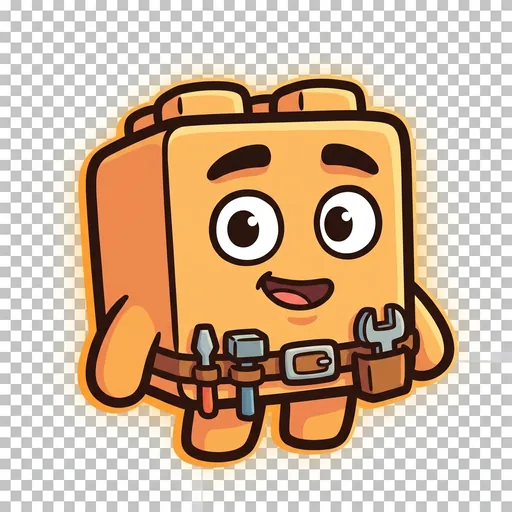
Block
Roux method — block-building steward; 'Build the blocks. Skip the cross.'
-
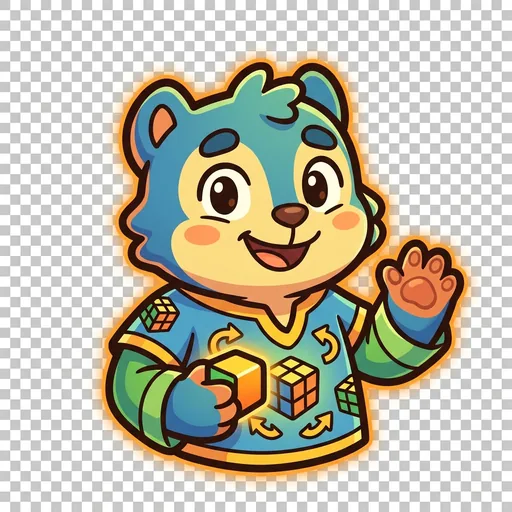
Edge
ZZ method — edge-orientation steward; 'Orient first. Then everything's faster.'
-
Pair
Ortega method — 2x2 specialist; 'Two-by-two has its own rules.'
-

Look
Cross-method look-ahead coordinator; 'Eyes ahead. Hands following.'
-
Chart
Lessons-layer cast (inspection planner — the fifteen-second pre-solve read)
-

Parity
Lessons-layer cast (the big-cube even-odd special case)
-
Notate
Notation — the shared shorthand (a letter per turn) that lets you write down and share a solve

