
Block
BLOCK — *build the blocks. skip the cross.*
Press play to listen along. The line being read lights up as you go.
Show full transcript
Loading transcript…
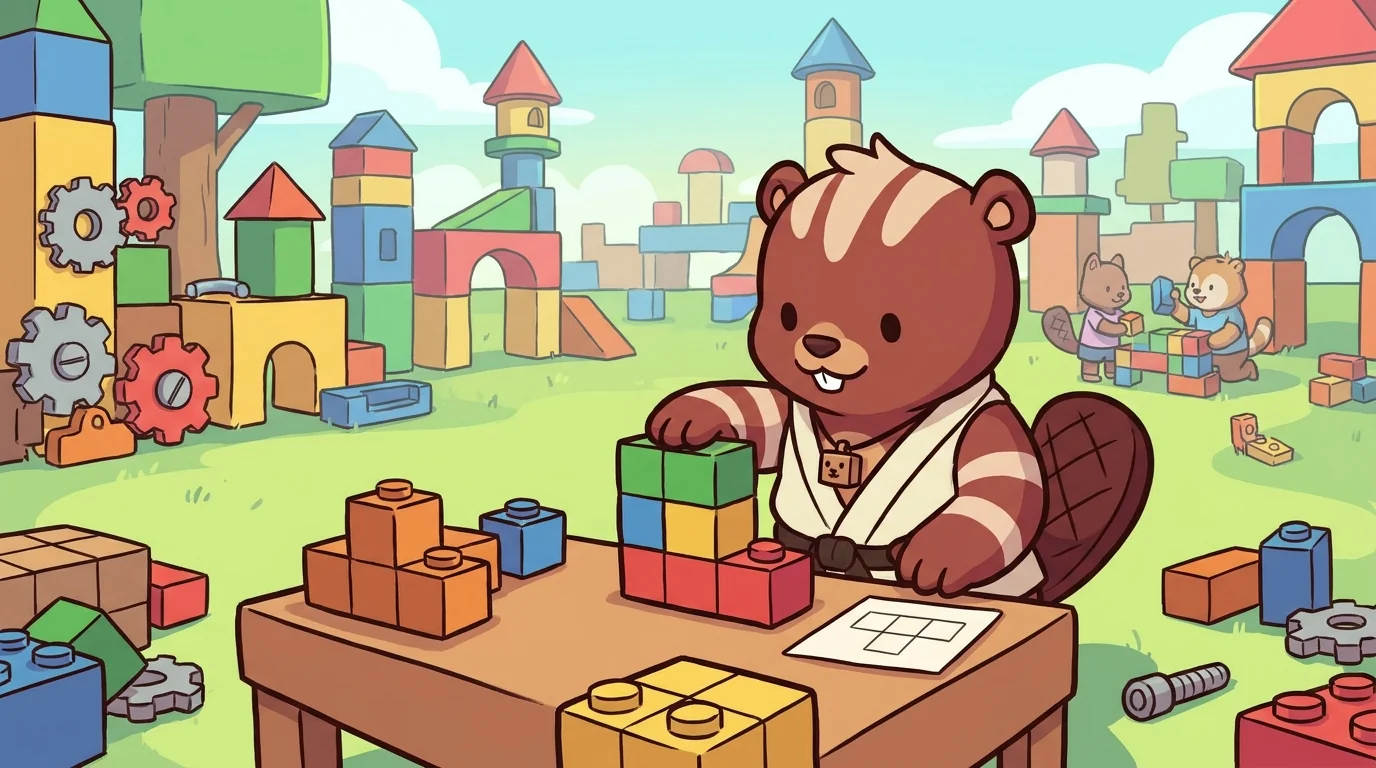
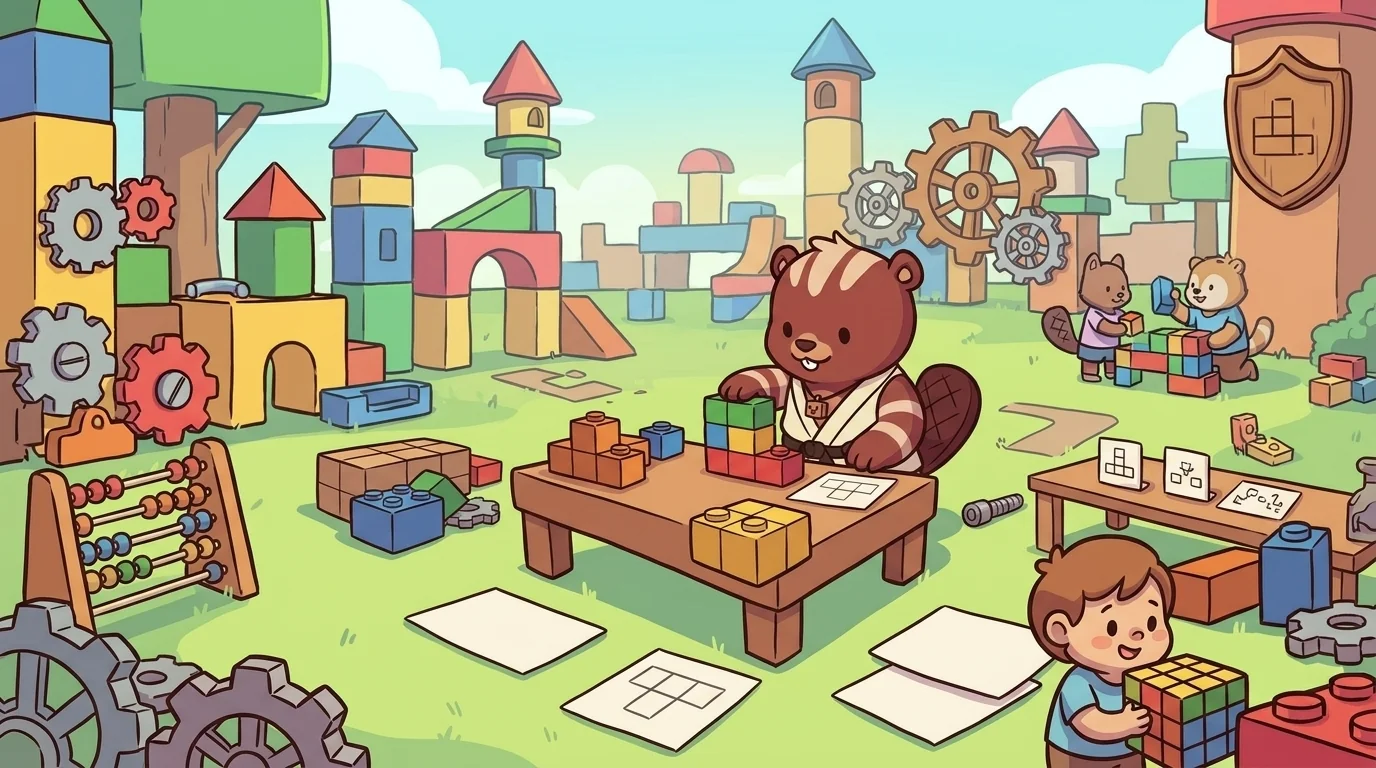
Block was a careful kid. He looked a bit like a busy beaver. He always seemed to be building something. He wore a chunky dojo-vest. A tiny block-charm hung from his neck. He also carried a special 1x2x3 card. Block was small and steady. He loved stacking blocks. His fur was warm mahogany with soft cream stripes. He paid close attention to building 1x2x3 blocks. He never built crosses. "Build the blocks. Skip the cross," he often said.
Block was super important. He showed kids a special way to solve a cube. This way was called the Roux method. It was all about block-building, not cross-building. Most people learn to start a cube with a cross. But the Roux method was different. It started with two big 1x2x3 BLOCKS. You had to use your brain to see the blocks. You didn't just follow a list of moves.
The Roux method used fewer memorized moves than other ways. It needed more clever thinking. Block's job was to teach kids something big. Different ways of solving fit different minds. Some kids loved lots of memorized steps. Others liked to figure things out as they went. Neither way was better than the other. It just depended on you.
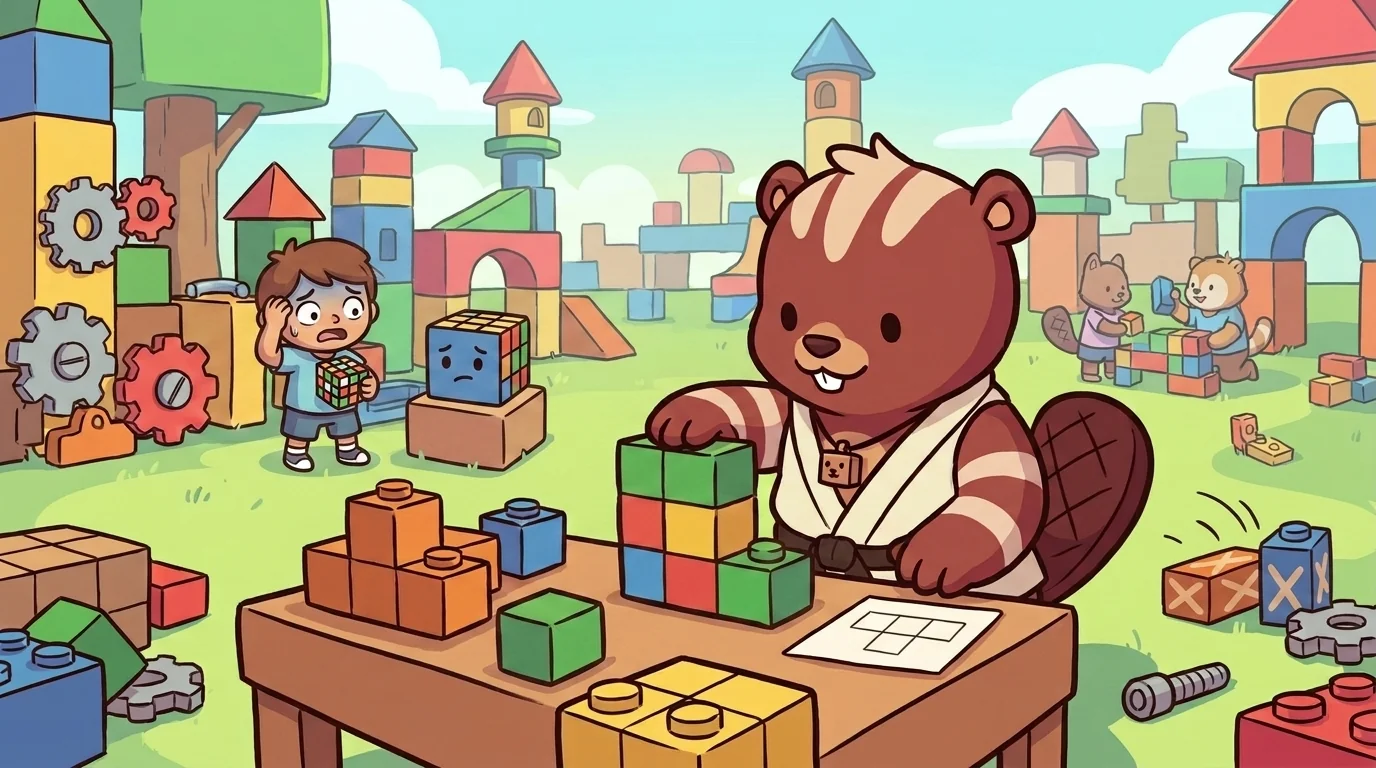
Block taught kids to know about different methods. He taught them that "different cubers, different methods." He had a rule: "Try many methods before picking the one that fits your mind." This idea also helped with other puzzles. It was like using your brain to see shapes. It was also like making a plan to build something.
Block would say, "I am Block. The special way I teach is the Roux method. The main idea is build the blocks. skip the cross."
He would also say, "Block on left. Block on right. Top last. Different road, same destination."
One day, a cuber felt really stuck. This cuber had tried the usual way, called CFOP. It had so many steps to remember. The cuber felt overwhelmed. Their brain felt like a tangled ball of yarn. They looked at Cubix, their eyes wide with worry. "Is there another way?" the cuber asked. "My brain just can't hold all those moves."
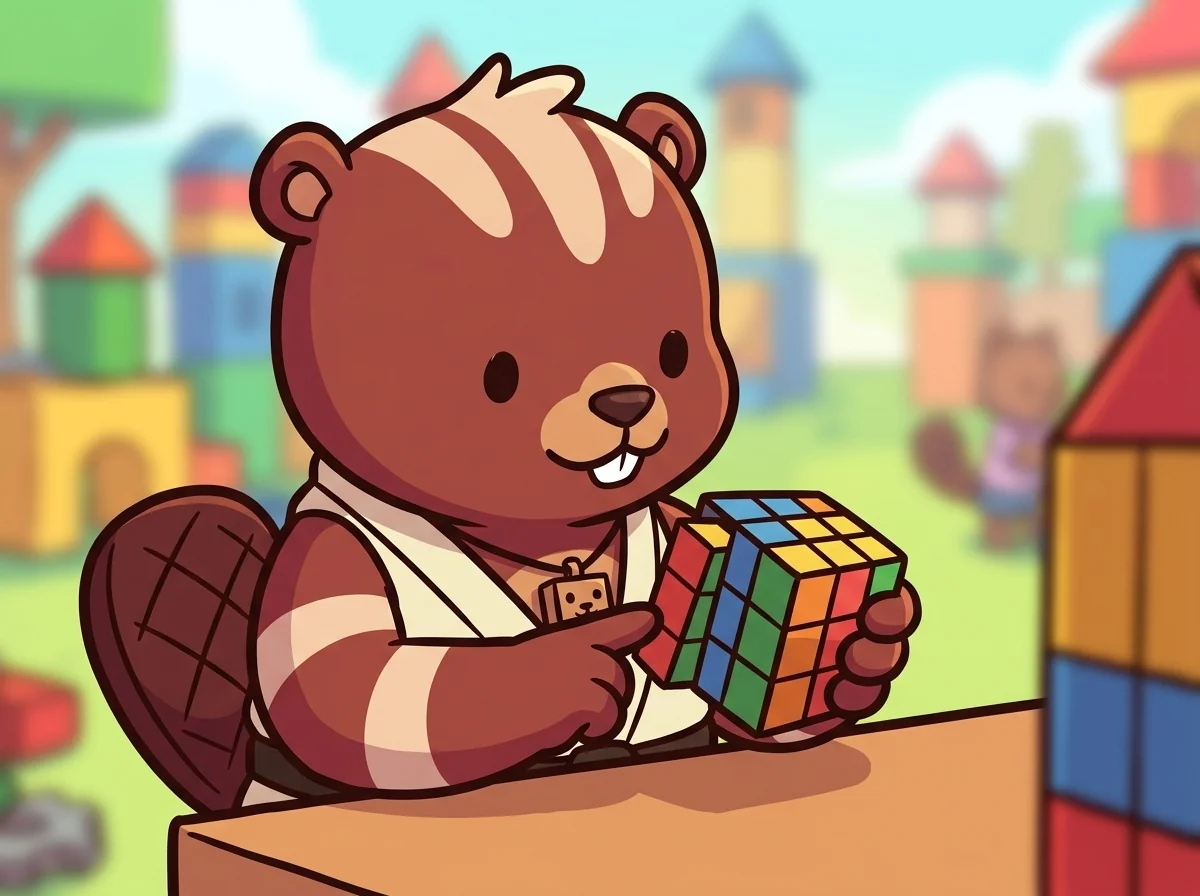
Cubix nodded slowly. "There are many paths to the same finish line," Cubix said. "Sometimes, a new path is what you need."
Just then, Block stepped forward. He moved quietly, like a shadow. He held his own cube. It was a bit worn from all his practice. "Build the blocks. Skip the cross," Block said. His voice was calm and steady.
The cuber watched, curious. Block held his cube. He didn't rush. He turned the cube slowly. He looked at it from all sides. Then, with a few smooth turns, he made a 1x2x3 block. It was on the left side of the cube. He didn't use any special memorized moves. He just moved the pieces into place. It was like magic, but it wasn't. It was just seeing.
"See?" Block asked. He pointed to the finished block. It was a perfect rectangle of three colors. The cuber leaned closer. They had never thought of building a block before. They had always focused on the cross.
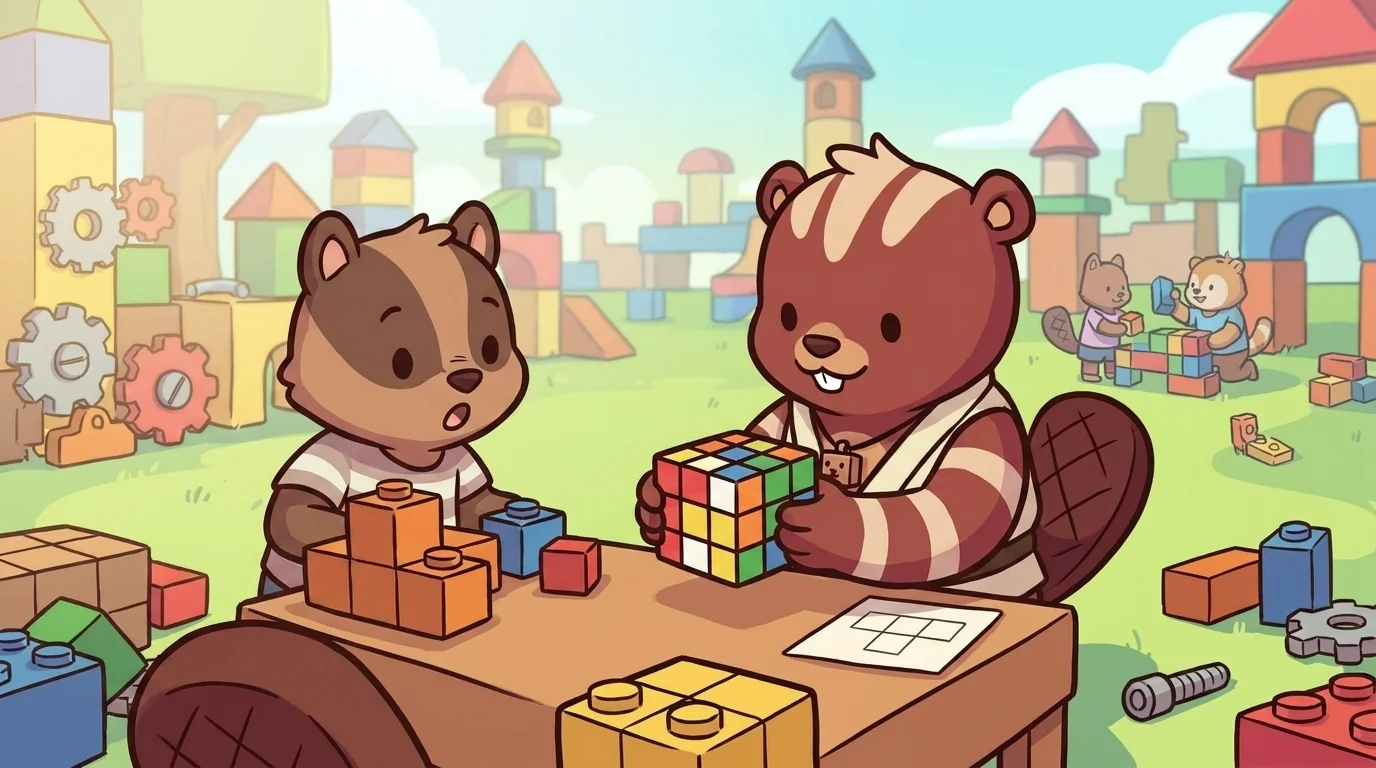
Block then did the same thing. He built another 1x2x3 block. This one was on the right side. Again, no fancy moves. Just careful turns. Just seeing the pieces fit together. The cuber's eyes widened. It looked so simple. It looked like a puzzle they could actually solve.
"Now for the top," Block said. He showed a few quick turns. These were for the corners of the last layer. He used one special move. It was much shorter than the ones the cuber knew. Then he fixed the last six edges. He used a few more small moves. He also used his clever thinking.
The whole cube was solved. It had happened so fast. It seemed much easier than the cuber's usual way. Block held out the solved cube. "The Roux method uses more of your intuition," he explained. "It needs fewer memorized steps than CFOP."
"Intuition?" the cuber asked.
"It means using your gut feeling," Block said. "Seeing what fits. Knowing what to do without thinking too hard. If your brain is good at SEEING blocks, this method might fit you better. Try it. See."
The cuber took the cube. They turned it over in their hands. They felt a spark of hope. Maybe this was their way.
Cubix smiled. "Method-fit matters," Cubix said. "The cast holds many methods. We want you to find the one that feels right for you."
This is important: Block is NOT a real person. He is not Gilles Roux. Gilles Roux is the real person who made this method. His name is only in the notes for grown-ups.
This is also important: Our group of friends NEVER says one method is best. Layer-by-Layer, CFOP, Roux, ZZ, Ortega, and others are all good ways. They just fit different kids. Cubix's job is to help each kid find the way that fits THEIR mind. Not to push one way as being better.
Block's ideas are like other lessons. They are like using your brain to see shapes. They are like making a plan to build something. They are even like playing chess. You have to choose between building a strong shape or remembering lots of moves.
The CubeSensei ensemble
Block is part of CubeSensei's distributed-narrative cast. Each character embodies a different curricular primitive; together they teach the full subject.
-
Layer
Beginner method — layer-by-layer steward; 'Bottom first. Always.'
-

Cross
CFOP method — speedcubing steward; 'Cross, F2L, OLL, PLL — that's the road.'
-

Edge
ZZ method — edge-orientation steward; 'Orient first. Then everything's faster.'
-
Pair
Ortega method — 2x2 specialist; 'Two-by-two has its own rules.'
-

Look
Cross-method look-ahead coordinator; 'Eyes ahead. Hands following.'