
Pair
PAIR — *two-by-two has its own rules. small cubes, small methods.*
Press play to listen along. The line being read lights up as you go.
Show full transcript
Loading transcript…
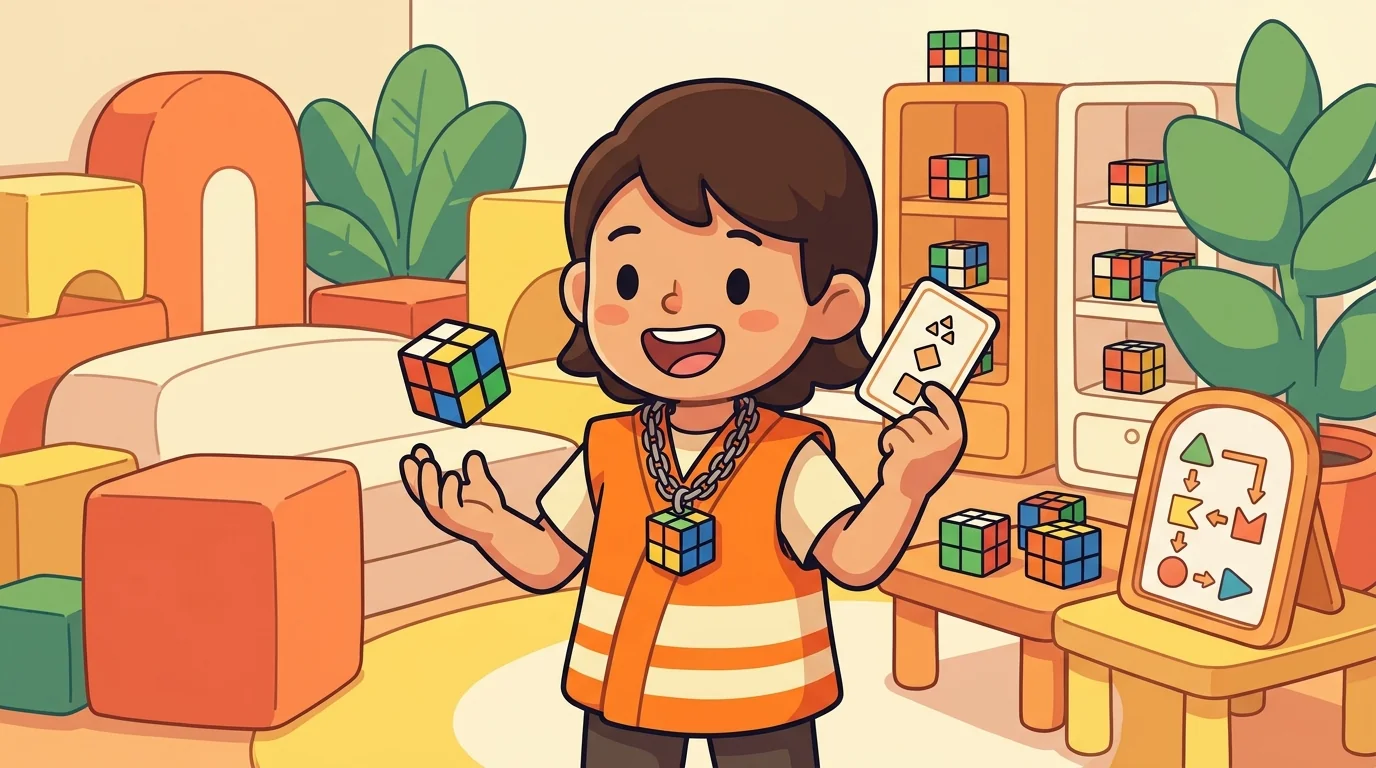
Pair was a small kid. They moved like a hummingbird, quick and light. Pair wore a bright orange vest with soft cream stripes. It looked like a tiny dojo uniform. A small cube charm hung from a chain around their neck. It was a perfect, tiny 2x2 cube. Pair always carried a special card too. It had three strange symbols on it.
Pair loved the 2x2 cube more than anything. Some people called it a "pocket cube." Others just called it a "baby 3x3." But Pair knew better. The 2x2 was its own puzzle. It had its own secrets. Pair often said, "Two-by-two has its own rules. Small cubes, small methods."
This was Pair's big lesson. The 2x2 Rubik's Cube might be small. But it was not just a simpler version of the bigger 3x3 cube. It needed its own special way to solve it. A way that fit its size. Pair called this the *Ortega method + 2x2 specialty. It was the cubing craft of knowing that small cubes deserve small methods*.
The Ortega method was a smart, three-step plan just for the 2x2. It used only about fifteen special moves. The bigger 3x3 cube needed more than seventy-eight special moves for its best method. Pair's craft taught that the size of the puzzle really matters. A method made for the 2x2 works much better on a 2x2. It's better than trying to use a method from a 3x3. Every puzzle should have its own best way to solve it.
Pair often said, "I am Pair. I teach the *Ortega method + 2x2 specialty. My big idea is: two-by-two has its own rules. Small cubes, small methods.*"
"A 2x2 isn't just a baby 3x3," Pair would add. "It's a different puzzle. It needs a different best way."
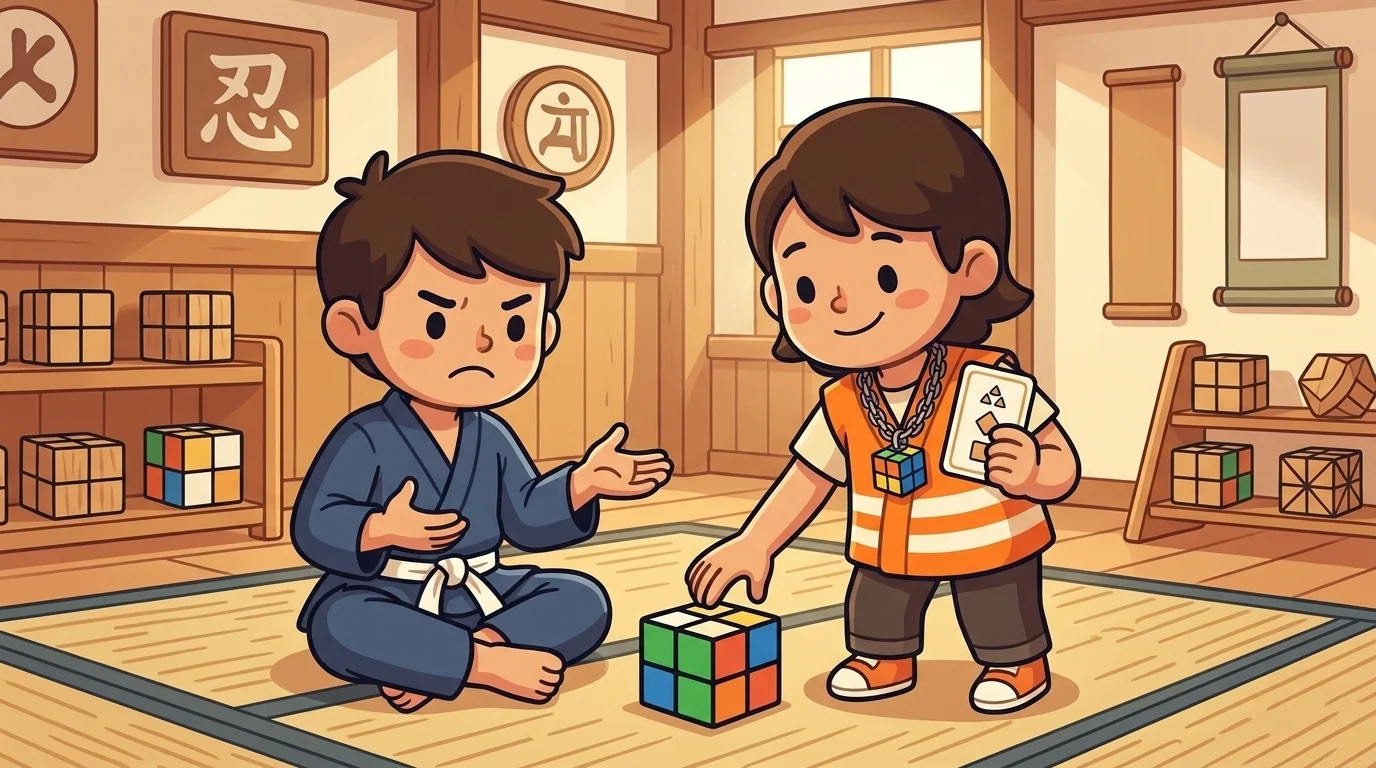
One sunny afternoon, a kid named Alex was in the main dojo. He sat on a mat, frowning at a small 2x2 cube. Alex was good at the 3x3. He could solve it super fast. But the 2x2? It was giving him trouble. He kept trying to use his 3x3 method on it. He'd solve one side, then get stuck. His fingers flew, but the cube just spun.
"Ugh!" Alex groaned. He tossed the 2x2 onto the mat. It bounced once. "This thing is impossible! It's just a tiny 3x3. Why won't it work?"
Pair had been watching from the doorway. They walked over, quiet as a mouse. Alex didn't even notice at first. Pair picked up the tiny cube. They turned it over in their hands.
"Two-by-two has its own rules," Pair said softly. "Small cubes, small methods."
Alex jumped. He hadn't seen Pair. "Oh, hey, Pair," he mumbled. "This cube is driving me crazy. My 3x3 method just isn't fast enough. My times are like, ten seconds! That's terrible for a 2x2."
Pair nodded. "That's because you're using the wrong map for the road."
"Wrong map?" Alex asked. He tilted his head.
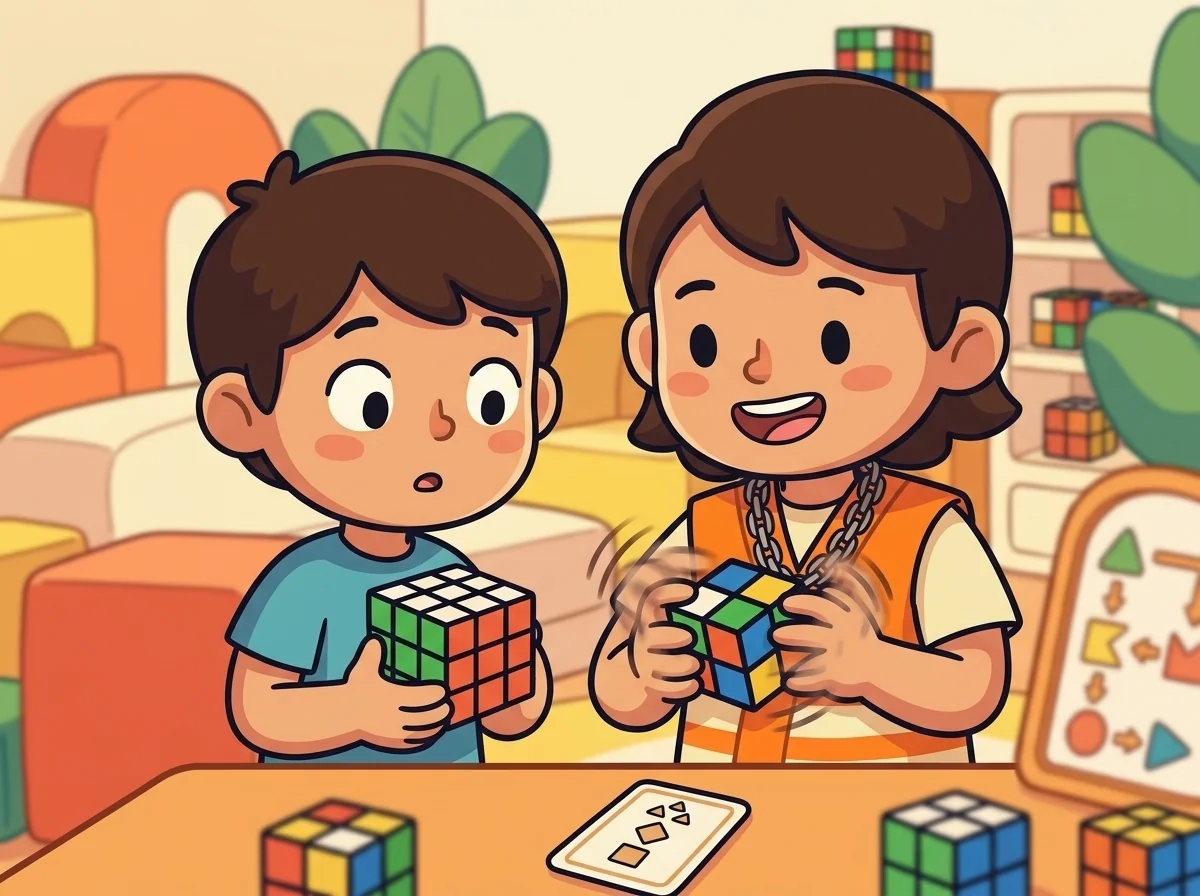
"Think about it," Pair said. They held up Alex's 2x2. "A 2x2 cube has fewer pieces. It has fewer ways it can get mixed up. The big 3x3 has tons of pieces. It has billions and billions of mixes."
Alex blinked. "So?"
"So, the way you solve a 3x3 is like a giant, super-long recipe," Pair explained. "It has steps for all those extra pieces. But the 2x2 doesn't have those extra pieces. Why use a long recipe when a short one will do?"
Pair held out the 2x2. "The Ortega method is a short recipe. It's made just for this cube."
"But I already know the 3x3 way," Alex argued. "It's basically the same, right?"
"It's like trying to use a giant wrench for a tiny screw," Pair said. "It might work, but it's slow. And it's not the best tool."
Pair took the scrambled 2x2. "Let me show you."
Pair's fingers moved. They were a blur.
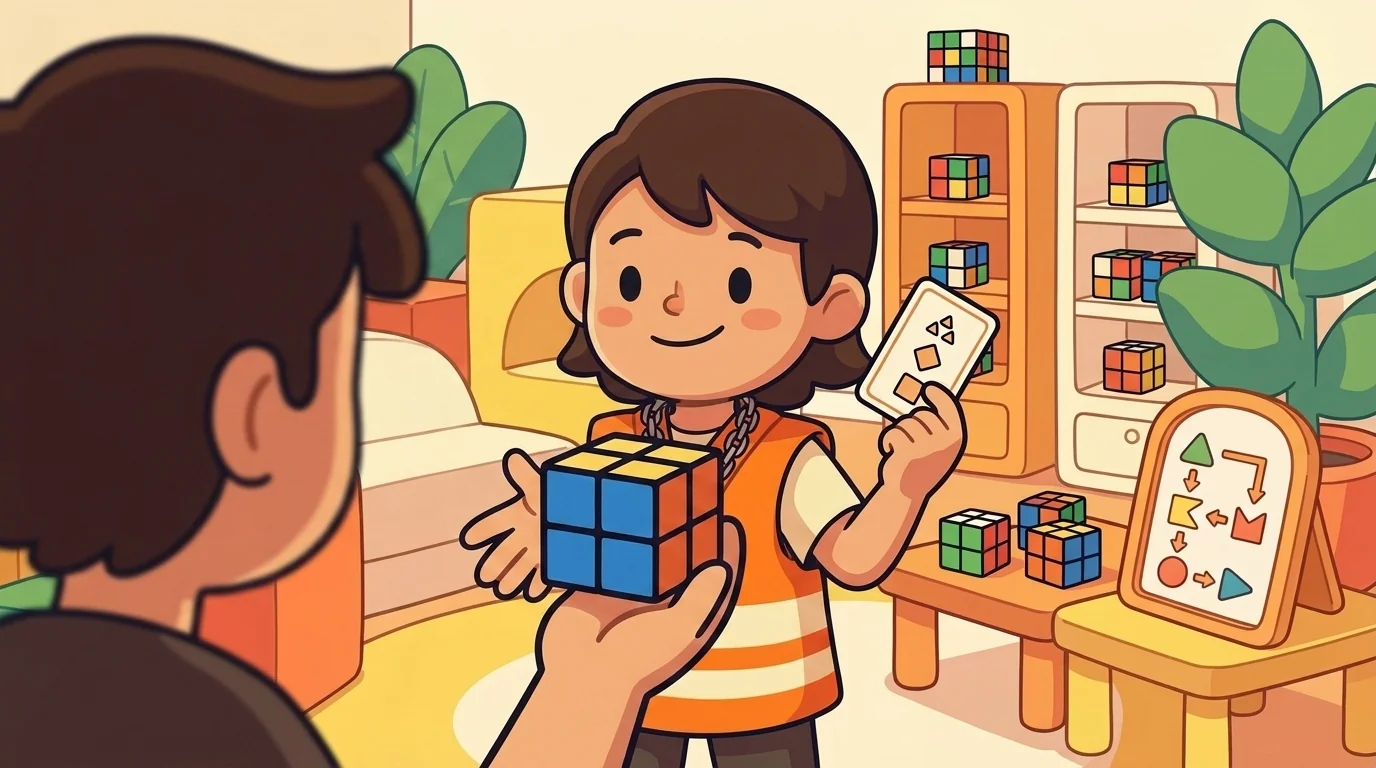
"First, you build one face," Pair said. "Any color. You don't even worry if the pieces are twisted the right way yet. Just get all the same color on one side."
Click, click, whir. One side of the cube turned solid blue. It took Pair only a second.
"Next, you orient the opposite face," Pair continued. "That means you make sure the pieces on the other side are facing the right way up. There are only seven ways this can look. So, only a few special moves to learn."
Pair did another quick series of turns. Whizz, snap. The other side of the cube now had all its pieces facing correctly. They weren't in the right spots yet, but they were upright.
"Finally," Pair said, "you permute both layers. That means you put all the pieces in their correct spots. You do this for both the top and bottom layers. All at the same time."
Pair's hands flew one last time. Zzzzip! The cube was solved. It had taken maybe three seconds. Alex's jaw dropped.
"Whoa," Alex breathed. "That was... fast."
"It's a method made for the puzzle," Pair said. "It fits perfectly."
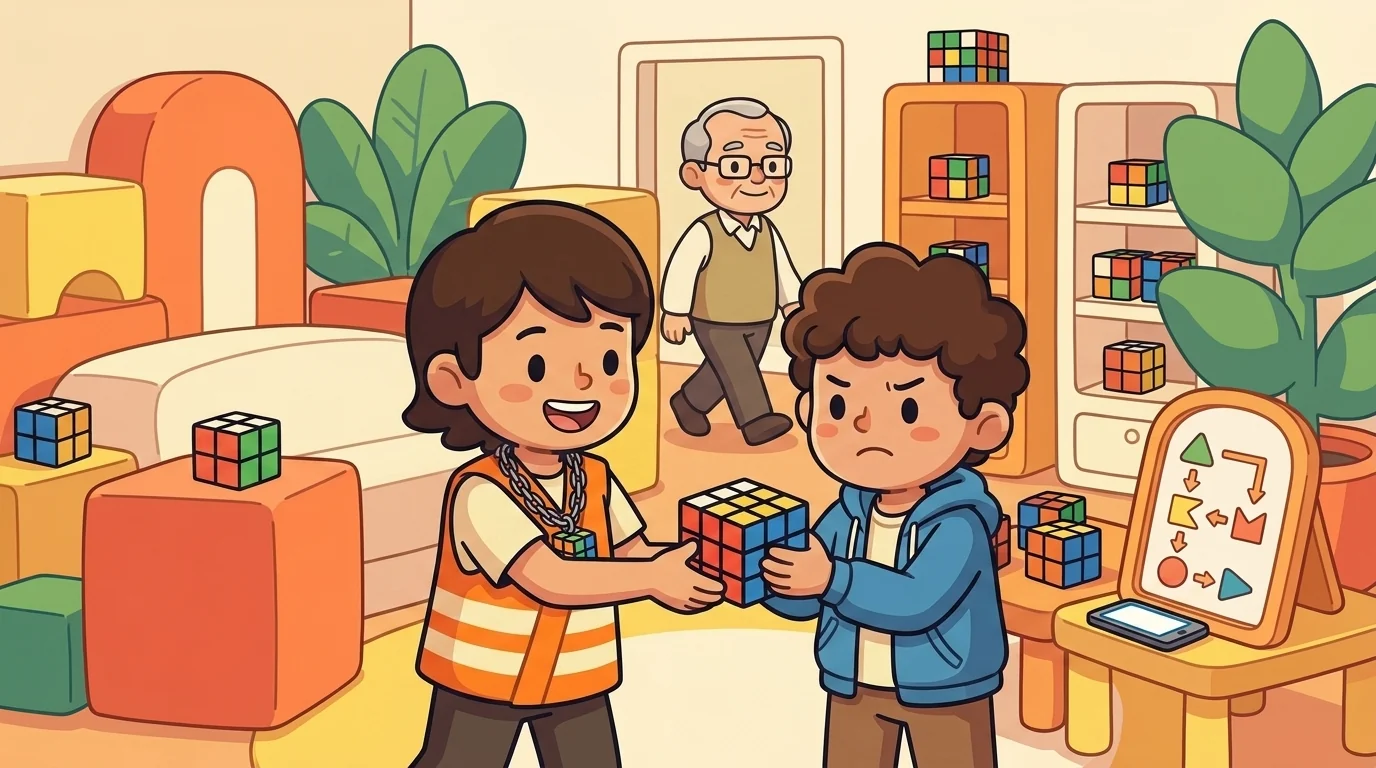
Pair handed the cube back to Alex. "Try it. Build one face. Then orient the other. Then put them all in place."
Alex took a deep breath. He scrambled the cube. He tried to remember Pair's moves. He built the first face. It took him a bit longer. Then he tried to orient the opposite side. He fumbled a little. But he got it. Finally, he tried the last step. His fingers moved slowly, carefully. Click, click, click.
The cube was solved! Alex looked at the timer on his phone. Seven seconds. Still not three, but way better than ten!
He scrambled it again. This time, he was a little faster. Six seconds. Then five. He was getting it! The moves felt cleaner, more direct.
"It works!" Alex grinned. "It really works! It's so much simpler than trying to force my 3x3 method."
Pair smiled. "Method-fit matters, Alex. The puzzle has its own ideal method. Find it."
Cubix, their mentor, walked by. He had been watching the whole time. He gave a slow, approving nod to Pair. Pair had shown Alex a big truth. Different puzzles need different ways to solve them. It wasn't just about finding a method that worked for you. It was about finding the method that worked best for the puzzle.
Pair's lesson was clear. The 2x2 cube wasn't just a toy. It was a puzzle with its own special needs. And Pair was the one who knew all its secrets.
The CubeSensei ensemble
Pair is part of CubeSensei's distributed-narrative cast. Each character embodies a different curricular primitive; together they teach the full subject.
-
Layer
Beginner method — layer-by-layer steward; 'Bottom first. Always.'
-

Cross
CFOP method — speedcubing steward; 'Cross, F2L, OLL, PLL — that's the road.'
-
Block
Roux method — block-building steward; 'Build the blocks. Skip the cross.'
-

Edge
ZZ method — edge-orientation steward; 'Orient first. Then everything's faster.'
-

Look
Cross-method look-ahead coordinator; 'Eyes ahead. Hands following.'