
Build
BUILD — *every component has a job. wire them together; the circuit comes alive.*
Press play to listen along. The line being read lights up as you go.
Show full transcript
Loading transcript…
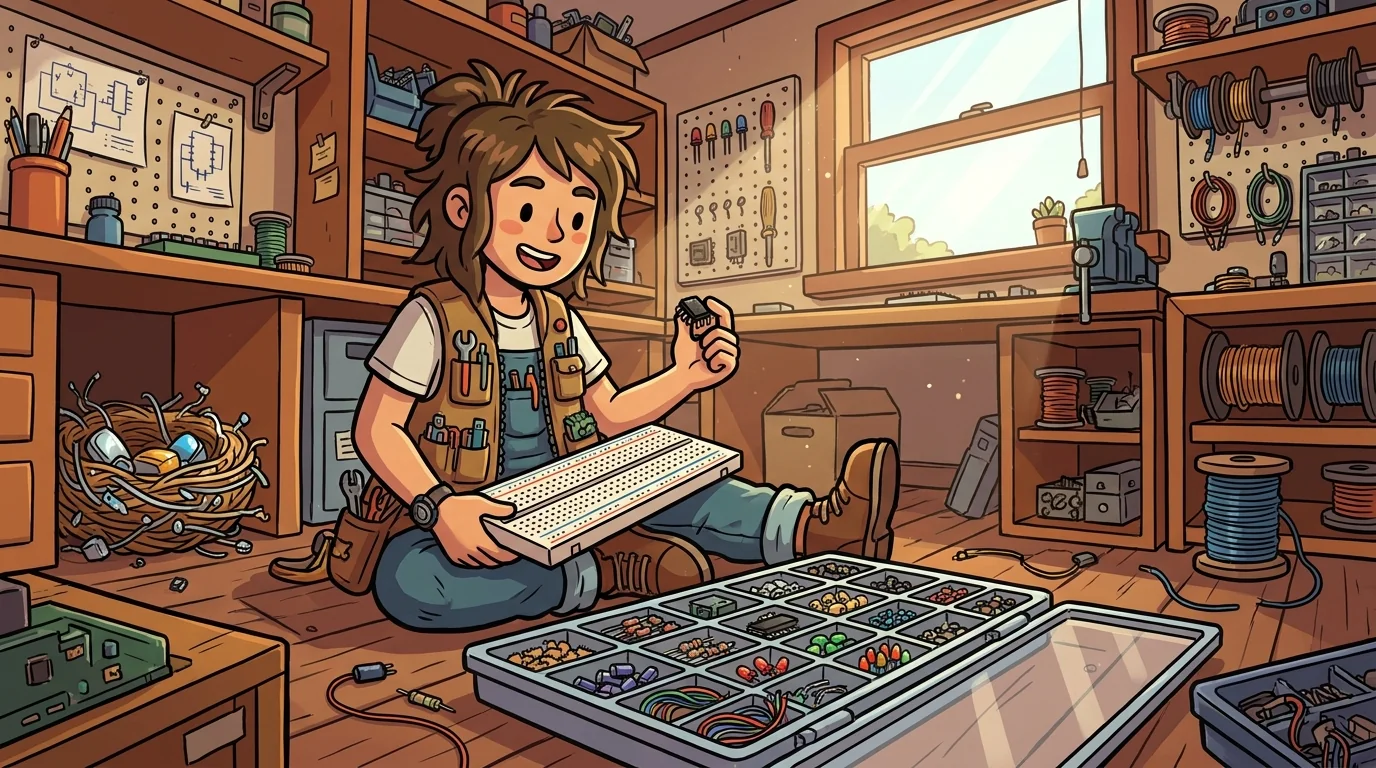
Build sat on the floor of her workshop. In front of her was a plastic tray with dozens of tiny compartments. Each one was filled with little electronic treasures. She wore a vest with many pockets, and each one held a different tool or part. Build looked a bit like a bowerbird, carefully arranging her collection.
"Every component has a job," she whispered to herself. It was her favorite thing to say. "Wire them together, and the circuit comes alive."
She grabbed her breadboard. It was a white plastic block full of tiny holes. "A breadboard is the best," she said. "You can build things fast. No hot solder needed." The holes were connected by secret metal strips underneath. They let you test ideas and change them easily.
Today, she was building a blinker.
"Okay, team," she said to the parts in her tray. "Time to get to work."
She picked up a tiny black chip with eight skinny legs. "First, we need a brain. This is an Integrated Circuit, or IC. This one is a 555 timer." She explained that an IC is like a tiny box holding hundreds of parts, all packaged to do one complex job. "This one's job is to keep a beat. Like a conductor for our little orchestra." She carefully pushed its legs into the breadboard. Click.
Next, she grabbed a resistor. It was a tiny cylinder with colorful stripes. "A resistor's job is to slow down electricity," she said. "We need this so our light doesn't get too much power and burn out." She plugged it in.
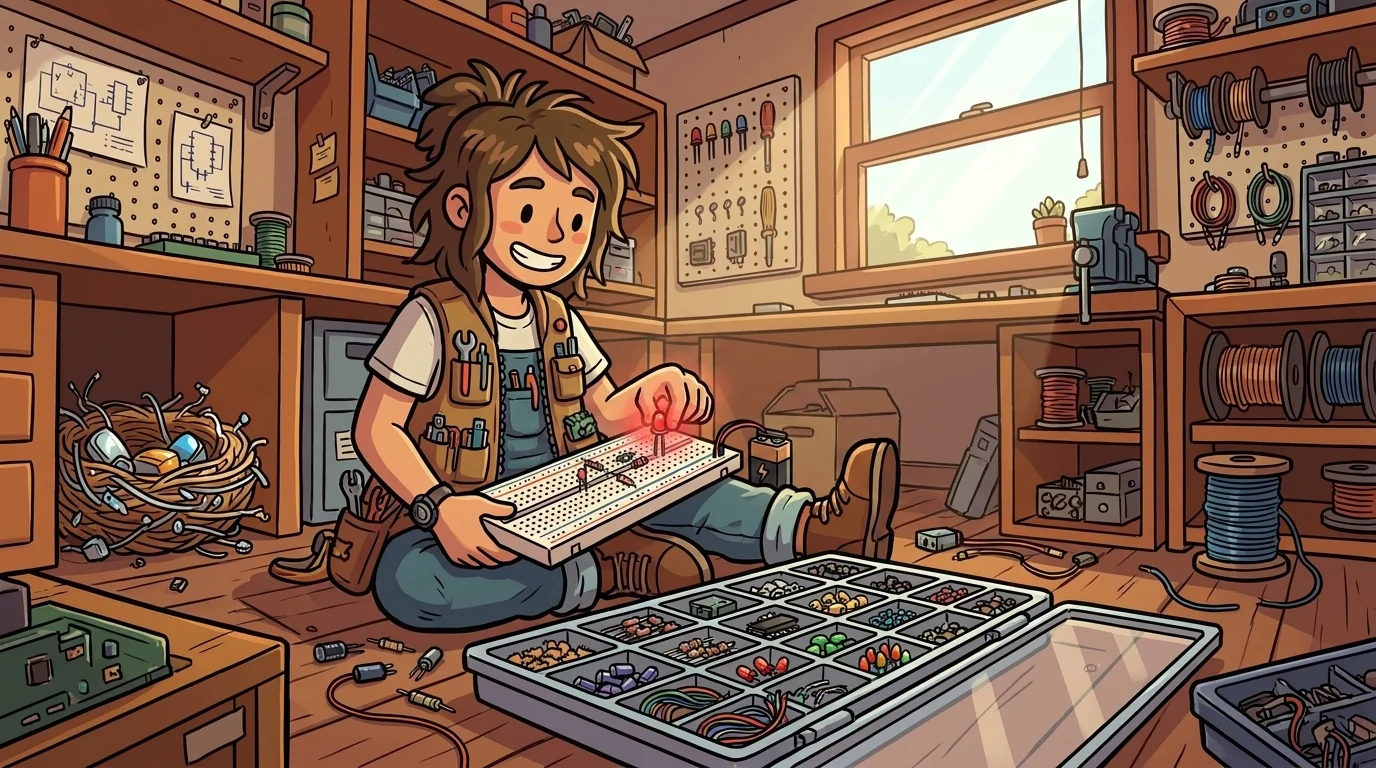
Then came a capacitor, which looked like a tiny can with two wire legs. "This part is like a little battery. It holds a tiny bit of power, then lets it go." She noted that one leg was longer than the other. "Some parts only work one way. That's called polarity. You have to plug them in right, or they won't work." Click.
Finally, she picked up a bright red LED. An LED is a Light Emitting Diode. "And this is our star performer!" A diode is like a one-way street for electricity. Power can only go through it in one direction. "This one's job is to light up."
She connected a small battery pack to the power rails on the side of the breadboard. One side for plus, one for minus. She checked her work. The trick was picking the right parts and putting them in the right spots. A circuit is a team. Each part has to do its job for the whole thing to work.
She flipped a tiny switch.
Blink. Blink. Blink.
The little red light flashed with a steady rhythm. Build grinned. "See? Five parts, one cool trick." The resistor and capacitor set the timing. The IC chip turned the light on and off. The LED blinked.
She pulled out the capacitor and chose a different, smaller one. She pushed it into place. Click. She flipped the switch again.
The LED blinked much, much faster. Blink-blink-blink-blink!
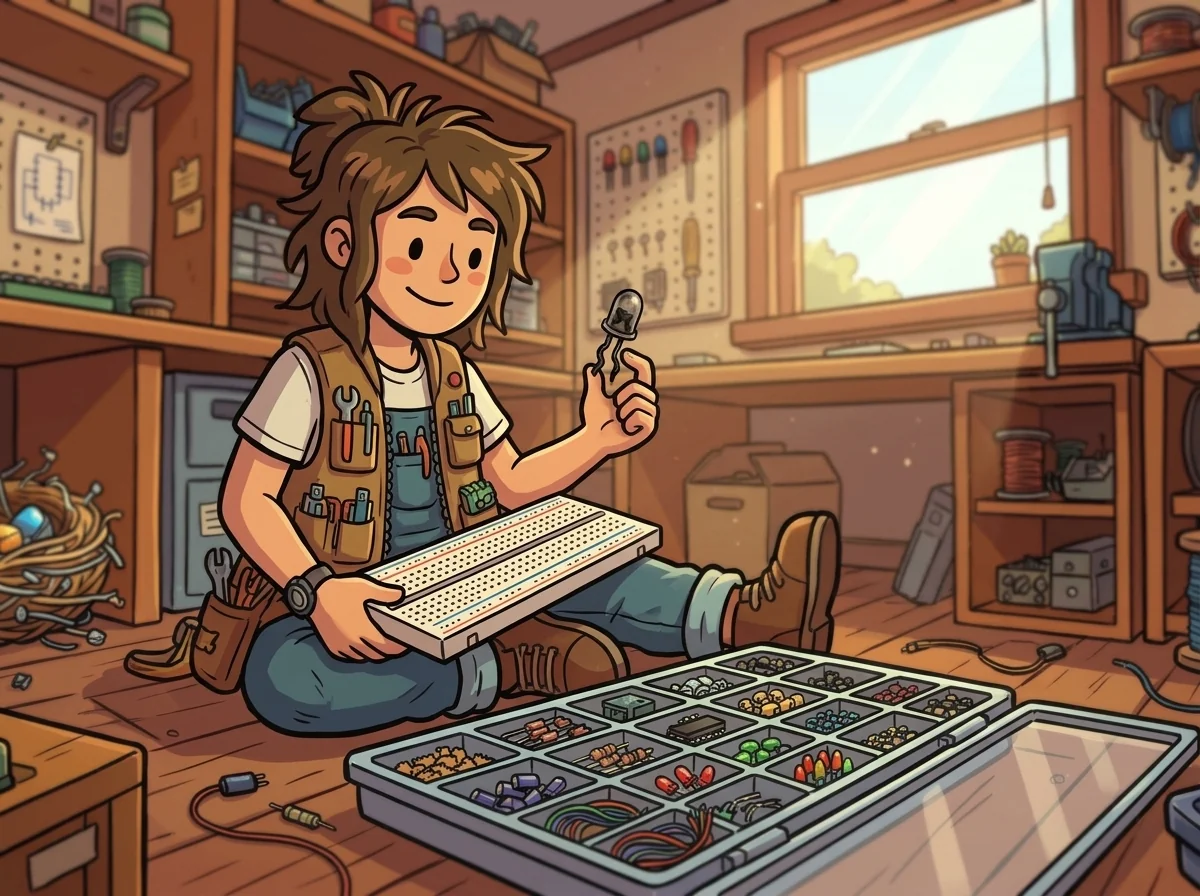
"A new part changes the team!" she cheered. "That's the capacitor's job. A smaller one makes a faster blink."
Build grew up near the bower-clearings. Her family were the village's 'arrangers.' They collected shiny pebbles and bright feathers, just like the bowerbirds. They arranged them into amazing patterns. Each object had its own special spot. "Every piece helps the whole thing work," they'd say. Build learned that lesson well.
When she was twelve, she walked to CircuitForge. Her mentor, Watt, asked her, "What is component-craft?"
Build answered right away. "Every component has a job. Wire them together; the circuit comes alive."
Watt smiled. "You are appointed," he said.
Back in her workshop, Build looked at her new students. "I am Build. The lesson I teach is *components + breadboarding. The move is every component has a job; arrange the team; the circuit comes alive.*"
She held up a burnt-out LED. It was cloudy and black inside.
"Don't be scared to break parts," she said gently. "It's how you learn. Did you burn out an LED? Good! Now you know what too much power does." She smiled. "Every part has a guide called a datasheet. It tells you how to use it. Read the datasheet next time. Try again."
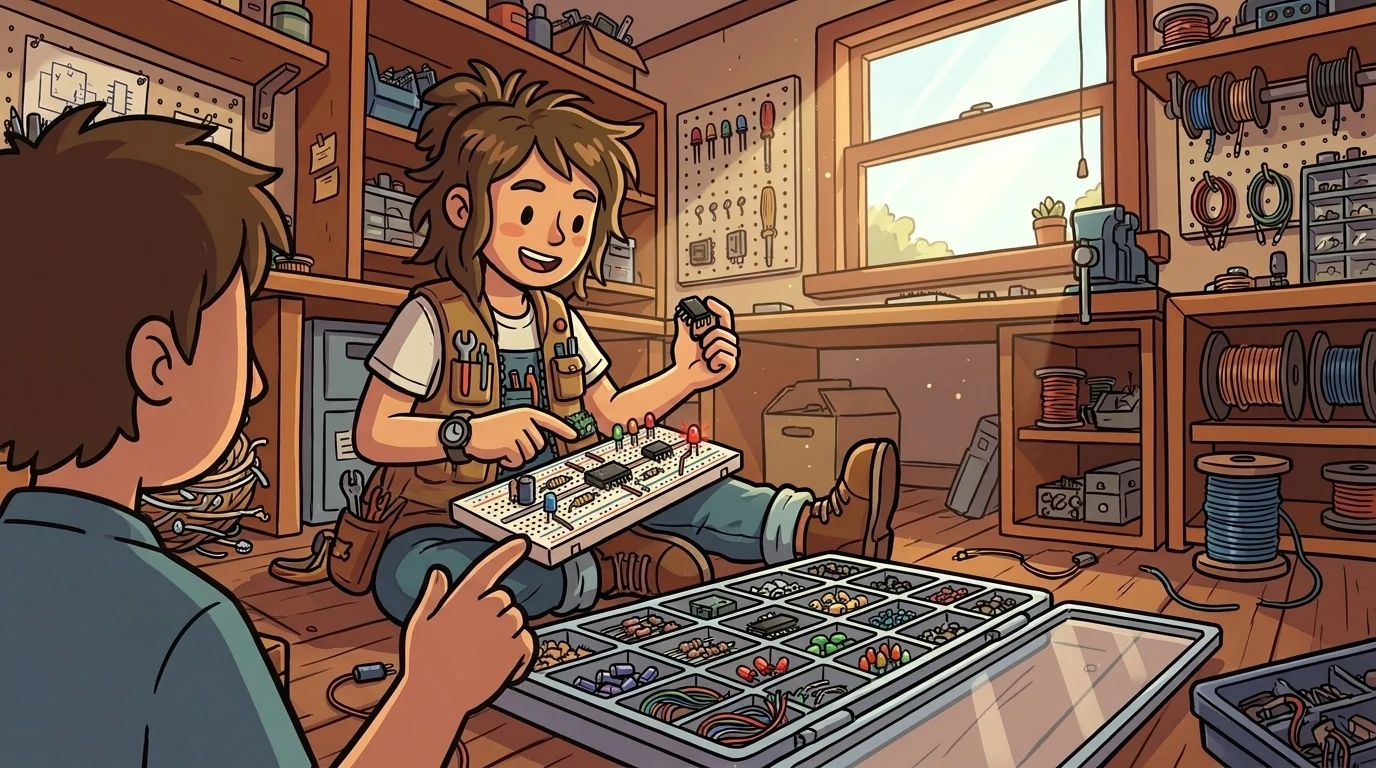
She pointed to her blinking circuit. "A plan is important. Don't just connect everything randomly. Put parts where they make sense. Random wires mean random results."
Build looked at all the tiny parts in her tray. Each one was waiting for its chance to be part of a team.
"Every component has a job," she said one last time. "Wire them together; the circuit comes alive."
About Build
Build is like a bowerbird who loves workshops. She's super curious about how tiny electronic parts work. She never just talks about "wires." For her, it's always about the team of components. Each part has a special job, and the magic happens when you arrange them in the right way.
*Things you'll hear her say: - "Every component has a job." - "Wire them together; the circuit comes alive." - "Read the datasheet."*
Build's Story
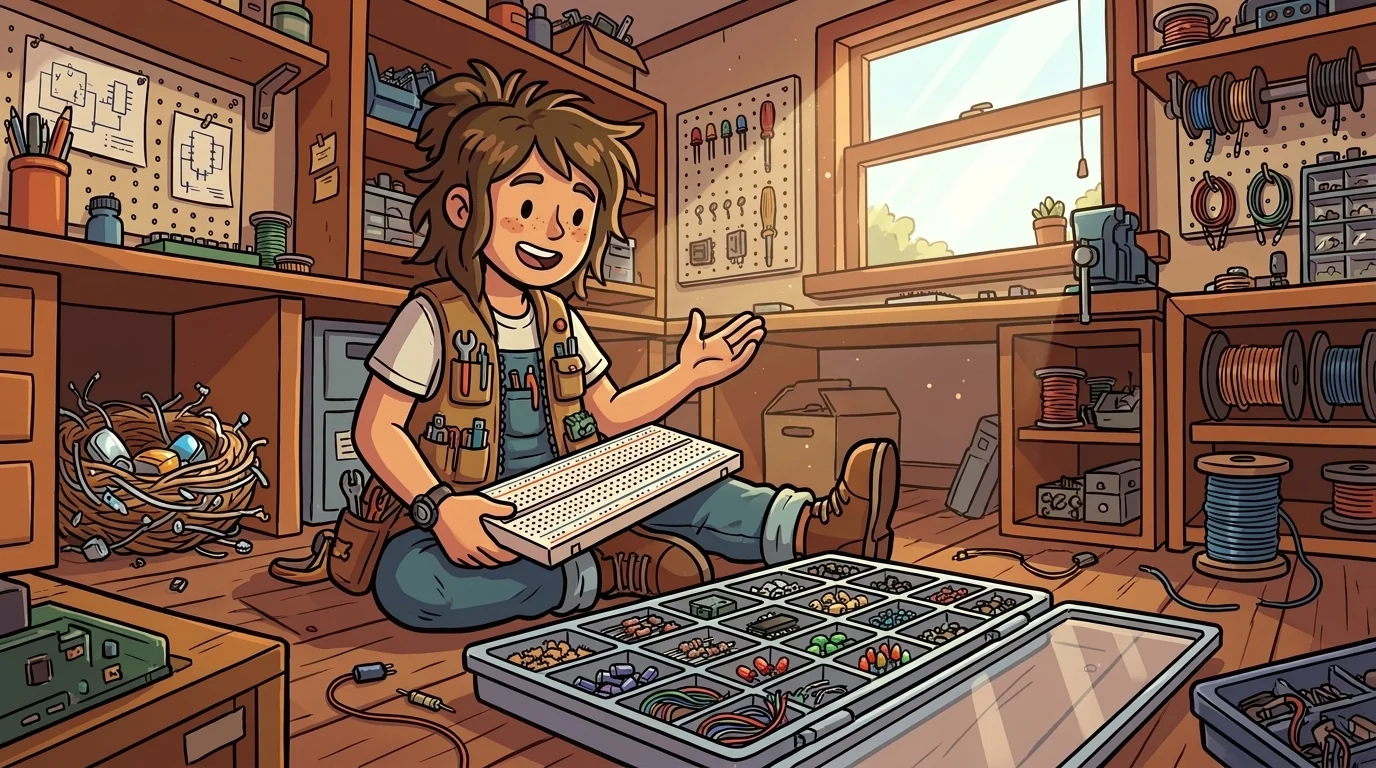
- You'll meet Build here, where she introduces her big idea: using *components + breadboarding*. - You'll see her again whenever new electronic parts show up in later kits. - At the very end of the book, Build will help bring all the big ideas together. She'll show how her components fit with Flow, Push, Damp, and Branch to make a complete electronics toolkit.
How Build Connects to Everyone
Build's idea of a "component team" is a big one. It's not just for electronics! It connects to how other characters solve problems. They all learn to put small, simple pieces together to build something amazing and new. It's all about teamwork.
What We Tried to Be Careful About
We wanted to show that science isn't some big, scary secret. It's something you can figure out by paying attention and trying things, just like Build does with her components. We also wanted to make it super clear that it's okay to mess up. When Build says, "Don't be scared to break parts," she really means it! Making mistakes is one of the best ways to learn.
Where The Ideas Came From
The idea for Build comes from two places. First, real birds called bowerbirds! They build amazing nests by carefully arranging colorful objects they find. They are nature's little arrangers.
Second, the parts Build uses are real! Resistors, capacitors, and LEDs are all basic parts in electronics. You can find them in kits and use a breadboard to build your own circuits, just like she does. Many amazing engineers and teachers have shared these ideas for years, and Build is here to share them with you.
The CircuitForge ensemble
Build is part of CircuitForge's distributed-narrative cast. Each character embodies a different curricular primitive; together they teach the full subject.
-
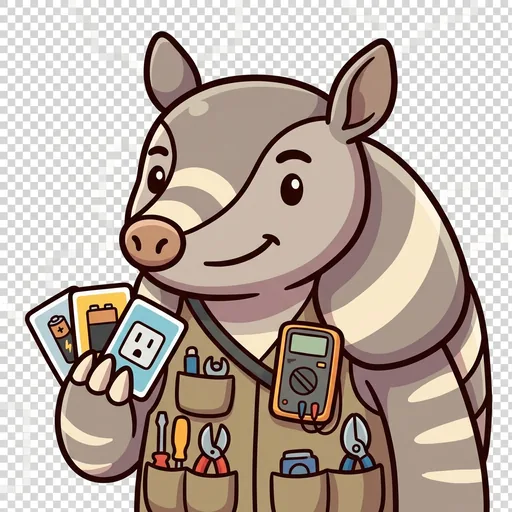
Push
Voltage — the pressure difference that drives current; measured in volts
-

Flow
Current — electrons moving through wires; measured in amperes
-

Damp
Resistance — the slowdown; measured in ohms; Ohm's Law (V = I × R) emerges from Push + Flow + Damp together
-

Branch
Series vs parallel topology — one path or many; the topology decides the behavior