
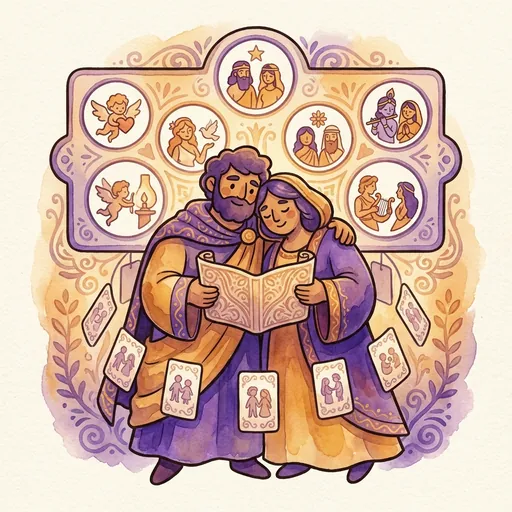
Lover
LOVER — the archetype of wholehearted care; the bonds that hold a story together.
Listen along — Lover
Loading audio…
Press play to listen along. The line being read lights up as you go.
Show full transcript
Loading transcript…
Chapter 12 — Lover and the Bonds That Hold a Story Together
In the middle of Mythforge’s great hall, where the other archetypes told loud tales of battles and clever tricks, Lover sat quietly on the floor with a broken clay bird in her hands.
It wasn’t a valuable thing. It was small, chipped, and one wing had snapped clean off. Anyone else would have swept it into the bin. But Lover held it the way you’d hold something alive. She turned it over, found the missing wing under a bench, and pressed the two pieces together, humming, waiting for the glue to take.
A student passing through slowed to watch. “Why bother? It’s just a cracked toy.”
“It’s not the toy,” Lover said, not looking up. “It’s that someone made it. Someone shaped this beak with their thumb. Somebody loved it enough to keep it on a shelf.” She set the mended bird upright and studied it. “When you care about a thing, you start to see everyone who ever cared about it too. That’s the whole trick. Caring makes things bigger than they are.”
The student frowned. “That’s not a superpower. The others fight monsters.”
Lover smiled and pointed across the hall — at the loud archetypes, the fighters and tricksters and rulers, each surrounded by a little crowd. “Watch them a while,” she said. “Every one of those heroes only leaves home because there’s something they can’t bear to lose. Someone waiting. Somewhere worth protecting. A friend they’d cross the world for.” She tapped the little bird. “Take that away, and there’s no adventure. Just a person, alone, with no reason to go anywhere.”
The student looked at the crowds again, and this time saw the invisible threads — each hero tied to the people they loved.
Lover hadn’t always understood that.
When she was young, she’d thought caring was a weakness — a soft, embarrassing thing that only got you hurt. She had a friend once, a stubborn old dog who followed her everywhere, and when he grew tired and finally stopped following, the ache had been so enormous that she swore she’d never let herself feel it again. Don’t get attached, she told herself. Then nothing can be taken from you.
For a while, she kept her heart small on purpose.
It was a grandmother figure in her village who noticed — an old woman who sat with her the day of the burying and didn’t try to cheer her up. “It hurts this much,” the woman said softly, “because it mattered this much. The size of the ache is just the size of the love, turned inside out.”
Lover had wanted to argue. But the woman went on. “You could spend your whole life not caring, and you’d never hurt again. And you’d never matter again, either. Nobody would wait for you. Nobody would mend your broken wing.” She’d squeezed Lover’s hand. “The bond is worth the risk. It’s the only thing that ever was.”
That was the moment the feeling turned into an idea Lover could carry: love and loss are the same thread, pulled in different directions. You can’t have one without the other. And a life with the thread cut is safer — and emptier — than any pain.
She started caring again after that. On purpose. Wholeheartedly.
She came to Mythforge at twelve, because a place that studied the world’s oldest stories ought to understand what actually held them together.
The keeper of the hall met her at the door — a thoughtful old teacher who had seen every kind of archetype walk in boasting. He didn’t ask Lover to prove she was clever or strong. He asked one question. “What makes a story matter?”
Lover didn’t answer right away. She looked around the hall at the shelves of tales — the quests, the trials, the long journeys home. Then she walked to the nearest shelf, pulled down a battered book of adventures, and opened it to the last page.
“Every story ends the same way,” she said. “Someone gets back to someone. Or fails to, and it breaks your heart. Either way—” she closed the book gently “—the ending only lands because somewhere at the start, the storyteller made us care. The monster isn’t the point. The bond is the point. The monster is just what stands in its way.”
The keeper looked at her for a long moment. “Most people who come here want to teach the exciting parts,” he said. “You want to teach the reason for them.”
“There’s no adventure without a reason to come home,” Lover said.
“You belong here,” said the keeper.
Lover’s corner of the hall was the warmest — full of mended things, worn photographs, and letters people had kept for fifty years.
A boy shuffled in one afternoon, red-eyed and trying not to be. His best friend was moving far away, and he’d decided the only sensible thing was to stop being friends now, before it hurt worse later. “If I don’t care so much,” he said, “then it won’t be so bad when he’s gone.”
Lover knew that plan. She’d tried it once, with a dog.
“Come here,” she said, and handed him the little clay bird. “Careful — I glued the wing back on.”
He turned it over. “Why’d you fix it? It’s still cracked. You can see the line.”
“You can always see the line,” Lover said. “That’s the point. A thing that’s been mended shows you it was worth mending.” She sat beside him. “You could throw your friendship away right now, tidy and clean, and never feel the ache. Or you could keep it — cracks and all — and let it hurt when he goes, because it was real.” She nodded at the bird. “Which one would you rather be? The clean thing nobody bothered to keep? Or the cracked one somebody loved enough to fix?”
The boy held the bird for a while. “But it’ll still hurt,” he said.
“It will,” Lover agreed. “The ache is just the love, turned inside out. Feeling it is how you know it counted.” She smiled. “Write to him. Call him. Let the thread stretch across the whole world instead of cutting it. Bonds don’t need to be close to be real — they just need somebody willing to keep holding on.”
The boy set the bird down carefully, wing and all. “I think I’ll keep it,” he said. He didn’t only mean the bird.
Later, when the hall had emptied, Lover picked up the little clay bird one more time and ran her thumb along the mended seam.
She thought about the old dog, and the grandmother’s warm hand, and every story on every shelf that only mattered because somebody, somewhere, had refused to keep their heart small.
Caring is not the soft part of the story, she thought. It’s the strong part. It’s the thread that everything else hangs from.
She set the bird back on its shelf, facing the door, the way you leave a light on for someone. And though she couldn’t have said exactly why, she felt it settle in her chest — that full, tender, glad-it-hurts feeling of loving something enough to hold on. Not sad. Not safe. Just wide open, and warm, and completely worth it.
The MythForge ensemble
Lover is part of MythForge's distributed-narrative cast. Each character embodies a different curricular primitive; together they teach the full subject.
-

Trickster
The boundary-crosser who teaches through inversion. Recurs across nearly all traditions (Anansi, Coyote, Loki, Hermes, Maui, Ijapa).
-

Hero-King
The reluctant ruler called to a journey (Campbell's central figure: Gilgamesh, Odysseus, Arjuna, Beowulf, Cuchulain).
-
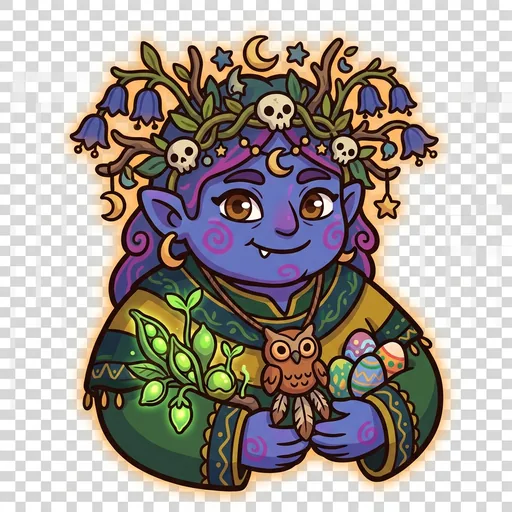
Devouring-Mother
The dark-creator / death-and-renewal force (post-Jungian; surfaces as Kali-aspect / Hel / Coatlicue / Hecate). **High trauma load.**
-
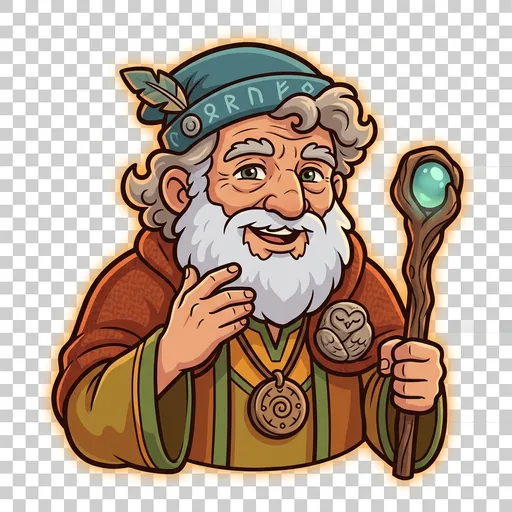
Wise-Elder
The mentor-figure who knows the path but cannot walk it for the hero (Athena, Odin-as-wanderer, Krishna-as-advisor).
-
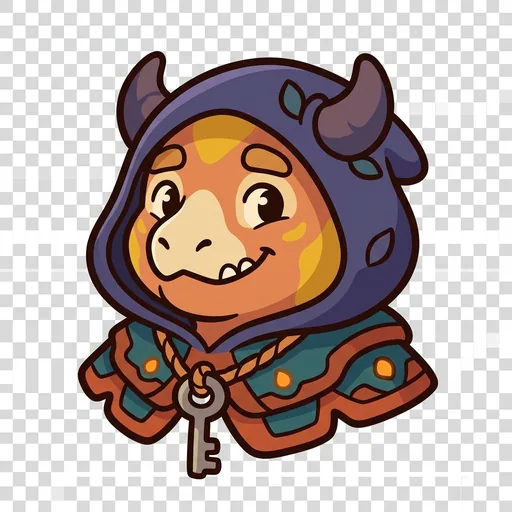
Threshold-Guardian
The figure that tests whether the hero is ready to cross (Sphinx, Cerberus, the dragon at the gate, the riddling stranger).
-
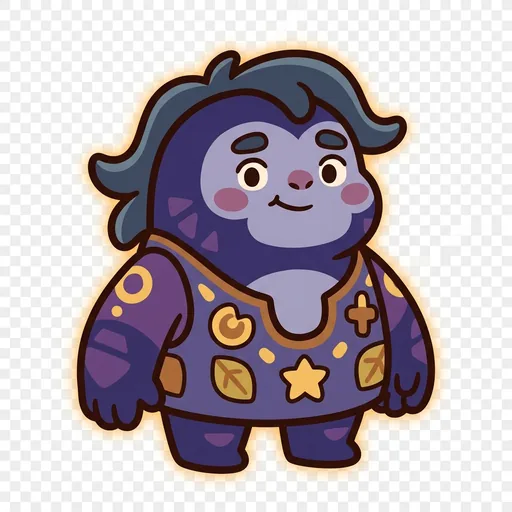
Shadow
The repressed-self / dark-mirror (Jungian core archetype; surfaces as the hero's nemesis-who-is-also-them: Loki/Baldr, Set/Osiris, Cain/Abel framings).
-

Anima/Animus (paired)
The complementary-other-self (Jungian); represented as a pair-character that always appears together, embodying the inner-other-gendered-self pattern that surfaces across many t...
-
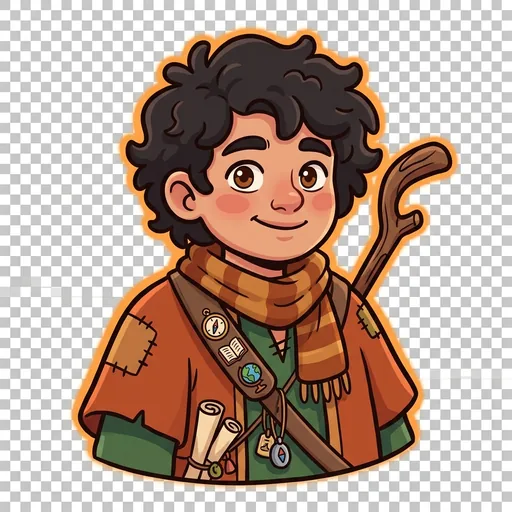
Wanderer
The journeyer-without-fixed-home who carries stories between cultures (Odysseus-after-Ithaca, the wandering Jew, the diaspora-keeper figure).
-
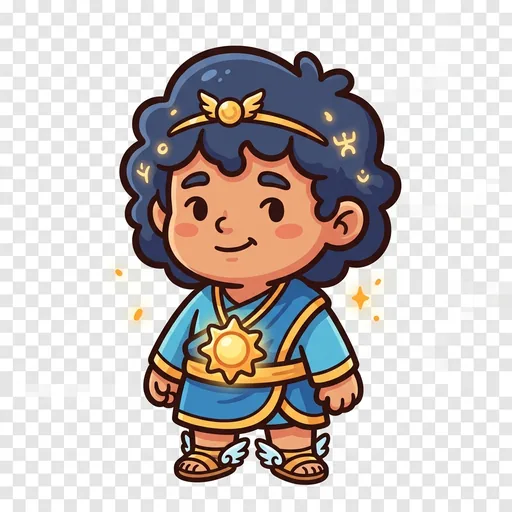
Child-Divinity
The newborn-with-power archetype (infant Krishna, baby Hermes, child Horus, divine-child motif).
-
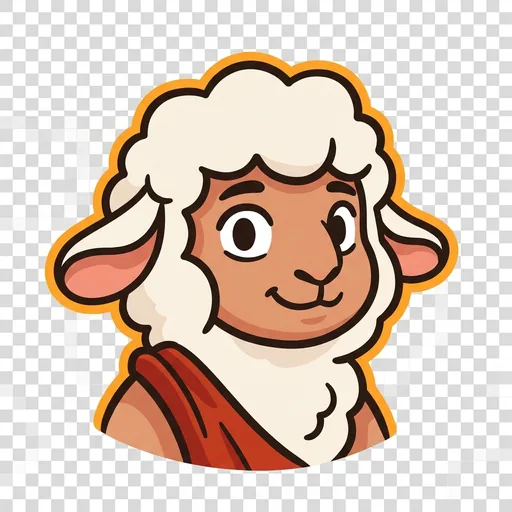
Sacrificial-Lamb
The figure whose loss enables renewal (cross-traditional: dying-and-rising deities, scapegoat figures, voluntary-sacrifice motif).
-
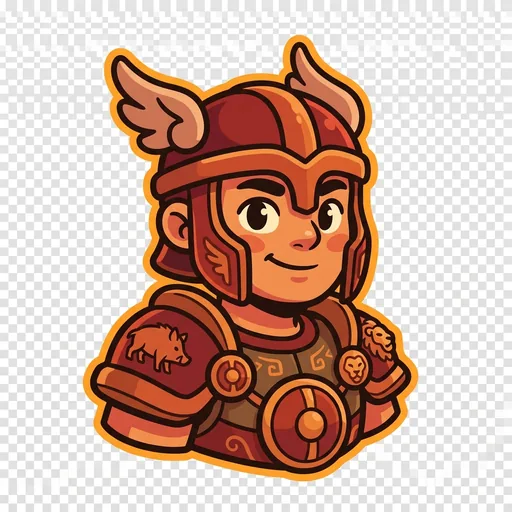
Warrior
The conflict-pattern-bearer (Ares, Tyr, Sekhmet-aspect, the warrior-figure across many traditions).
-

Sovereign
The cosmic-order-keeper archetype (Zeus-aspect, Odin-as-ruler, Ra-as-cosmic-king, Quetzalcoatl-aspect).
-
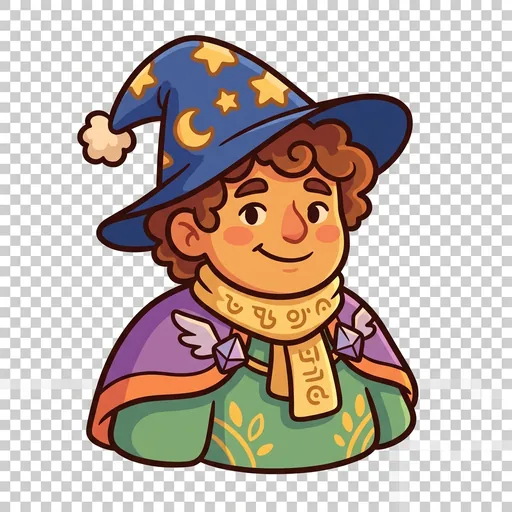
Magician
The transformation-bearer (Hermes-Trismegistus, Tezcatlipoca-aspect, Merlin, the alchemist-figure, the shape-shifter pattern).