
Lover
LOVER — *the relational-bond-bearer. craft of attachment + connection.*
Listen along — Lover
Loading audio…
Press play to listen along. The line being read lights up as you go.
Show full transcript
Loading transcript…
Chapter 12 — Lover and the Bond That Shapes the World
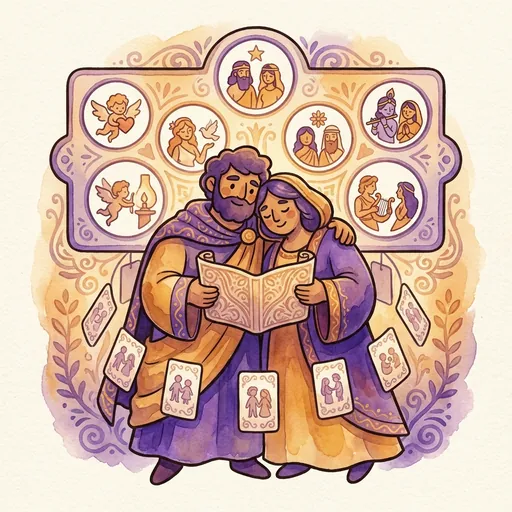
Lover stood in the center of their workshop, a warm, adult-sized figure whose presence felt like a gentle, steady hum. Their smile was soft, their eyes holding a deep, quiet understanding. They weren’t a single character, not really. Lover was the spirit of connection itself, a recurring pattern of two or more, linked by something powerful. They were the relational-bond-bearer.
Around them, suspended on threads so fine they seemed to vanish, hung dozens of cards. Each card glowed faintly, depicting pairs or groups of figures from ancient myths and legends. These were the bond-cards, Lover’s signature feature, a cross-tradition display of attachment and devotion.
“Welcome,” Lover said, their voice like warm honey. “I am the Lover pattern. The primitive I teach is the relational-bond-bearer. It’s all about the craft of attachment and connection. The way bonds shape our world.”
They gestured to a card depicting a beautiful woman, Aphrodite, with a mischievous winged boy, Eros, nearby. “In Greek myths, Aphrodite embodies love and beauty. Eros shoots arrows that create desire. Their stories show how powerful attraction can be.”
Lover moved to another card, where a queen, Inanna, stood gazing at a shepherd, Dumuzid. Then, on another, Inanna was shown descending into the underworld, her face etched with sorrow. “From Mesopotamia, we see Inanna and Dumuzid. Their courtship is a grand tale. But their bond also leads to loss, to her journey into the dark to find him.”
“Bonds aren’t always easy,” Lover observed, a hint of sadness in their voice. “Sometimes they come at a great cost. Think of Orpheus and Eurydice, another Greek story. His love was so strong, he dared to bring her back from the dead. But even that powerful bond couldn’t stop tragedy.”
Lover’s gaze swept over the students, making each one feel seen. “But don’t think love is only romantic. Friendship, family, devotional love, and bonds of many kinds shape the world.”
They pointed to a vibrant card showing Krishna and Radha, surrounded by music and light. “In Hindu traditions, Krishna and Radha embody devotional love. It’s a deep, spiritual connection, a profound adoration for the divine. It’s a different kind of bond, but just as world-shaping.”
Another card showed two muscular figures, Gilgamesh and Enkidu, locked in what looked like a struggle, but also a deep embrace. “And here, Gilgamesh and Enkidu, from Mesopotamia again. Their friendship is legendary. It transforms Gilgamesh, turning a harsh king into a true hero. Their bond makes him a better person.”
“The craft of attachment and connection,” Lover repeated softly. “Bonds shape myths. They anchor stories. They drive narratives forward.”
Lover paused, letting the images sink in. “For your age, 9 to 14, we’ll focus mostly on friendship and family bonds. We’ll explore how these connections make you stronger, how they change characters in stories, and how they shape your own world. Romantic love is part of the pattern, of course, but it won’t be our main focus right now.”
They walked along the display, tracing the outlines of the figures on the cards. “It’s important to remember that each of these figures belongs to their own tradition. Aphrodite is Greek, Inanna is Mesopotamian, Krishna is Hindu. We respect their origins. We learn from them, but we don’t take them out of their context.”
Lover’s expression grew a little firmer. “And we also understand that love and connection come in many forms. Not just one type of relationship, or one gender pairing. Many traditions show diverse bond-patterns, and modern scholarship helps us see these more clearly. The world is rich with different ways people connect.”
“So, what I teach is the relational-bond-bearer,” Lover concluded. “The move is bonds-that-shape; age-appropriate centering; cross-cultural-respect; love-beyond-category. We’re here to understand how these invisible threads weave the fabric of stories, and of life itself.”
The MythForge ensemble
Lover is part of MythForge's distributed-narrative cast. Each character embodies a different curricular primitive; together they teach the full subject.
-
Trickster
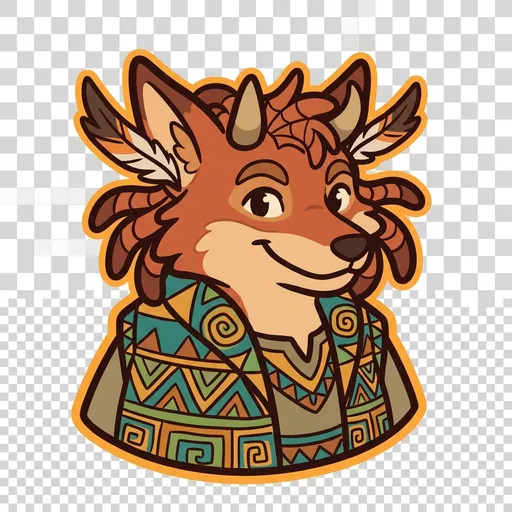
The boundary-crosser who teaches through inversion. Recurs across nearly all traditions (Anansi, Coyote, Loki, Hermes, Maui, Ijapa).
-

Hero-King
The reluctant ruler called to a journey (Campbell's central figure: Gilgamesh, Odysseus, Arjuna, Beowulf, Cuchulain).
-
Devouring-Mother
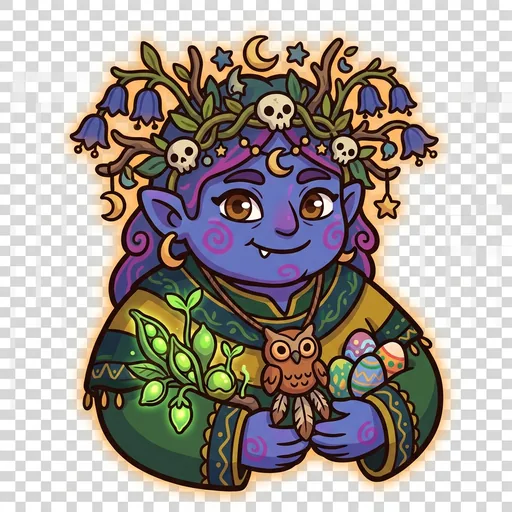
The dark-creator / death-and-renewal force (post-Jungian; surfaces as Kali-aspect / Hel / Coatlicue / Hecate). **High trauma load.**
-
Wise-Elder
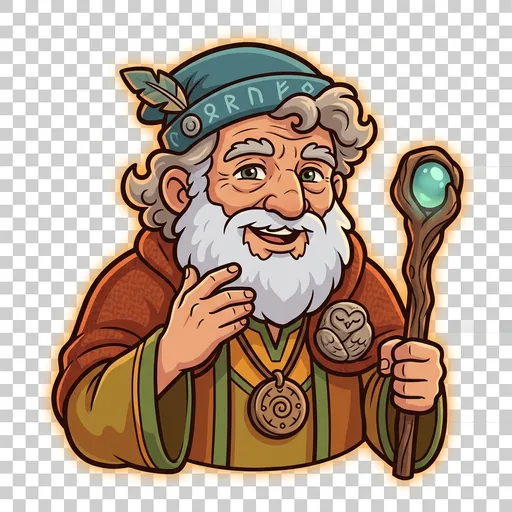
The mentor-figure who knows the path but cannot walk it for the hero (Athena, Odin-as-wanderer, Krishna-as-advisor).
-
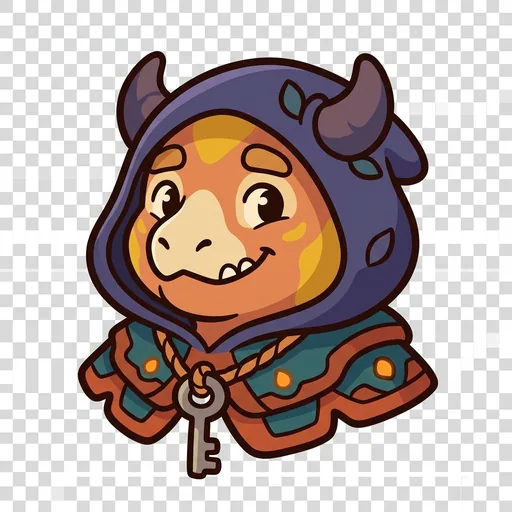
Threshold-Guardian
The figure that tests whether the hero is ready to cross (Sphinx, Cerberus, the dragon at the gate, the riddling stranger).
-

Shadow
The repressed-self / dark-mirror (Jungian core archetype; surfaces as the hero's nemesis-who-is-also-them: Loki/Baldr, Set/Osiris, Cain/Abel framings).
-

Anima/Animus (paired)
The complementary-other-self (Jungian); represented as a pair-character that always appears together, embodying the inner-other-gendered-self pattern that surfaces across many t...
-

Wanderer
The journeyer-without-fixed-home who carries stories between cultures (Odysseus-after-Ithaca, the wandering Jew, the diaspora-keeper figure).
-
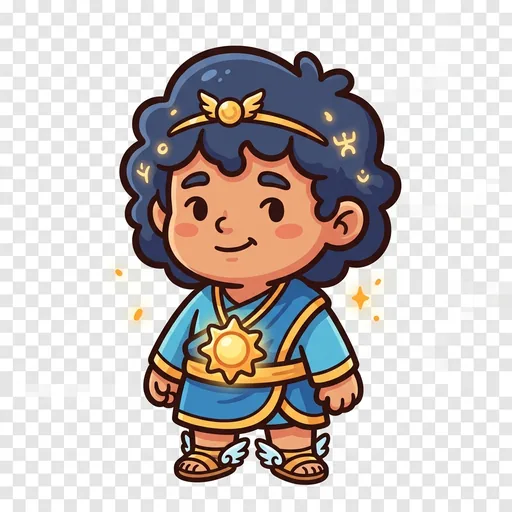
Child-Divinity
The newborn-with-power archetype (infant Krishna, baby Hermes, child Horus, divine-child motif).
-
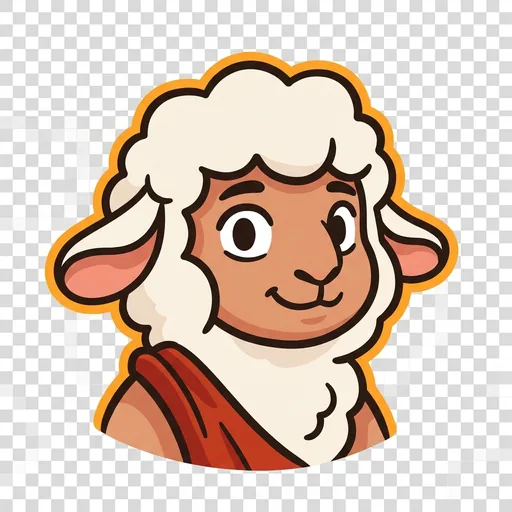
Sacrificial-Lamb
The figure whose loss enables renewal (cross-traditional: dying-and-rising deities, scapegoat figures, voluntary-sacrifice motif).
-
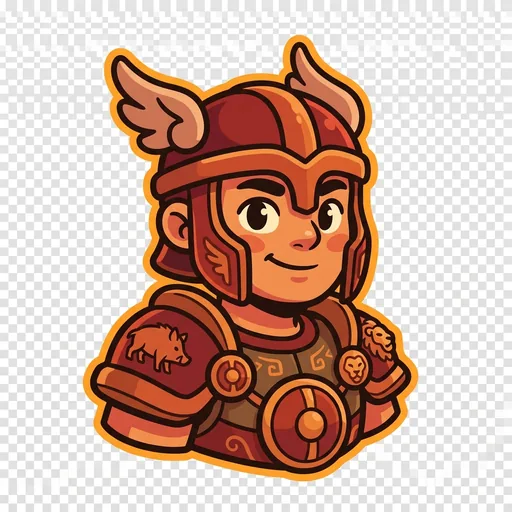
Warrior
The conflict-pattern-bearer (Ares, Tyr, Sekhmet-aspect, the warrior-figure across many traditions).
-

Sovereign
The cosmic-order-keeper archetype (Zeus-aspect, Odin-as-ruler, Ra-as-cosmic-king, Quetzalcoatl-aspect).
-

Magician
The transformation-bearer (Hermes-Trismegistus, Tezcatlipoca-aspect, Merlin, the alchemist-figure, the shape-shifter pattern).