
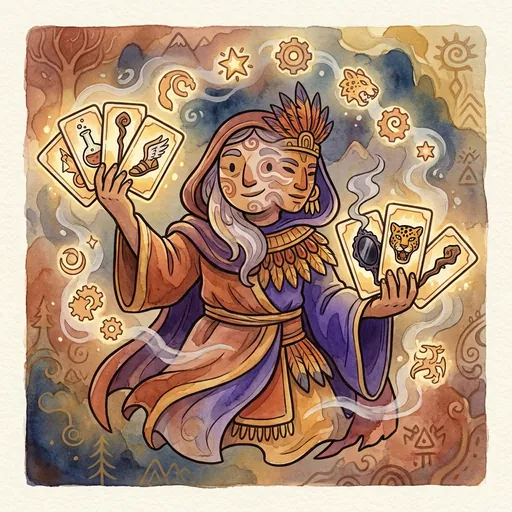
Magician
MAGICIAN — the transformer. the craft of changing the form of things through understanding.
Listen along — Magician
Loading audio…
Press play to listen along. The line being read lights up as you go.
Show full transcript
Loading transcript…
Chapter 14 — Magician and the Form-Change That Reshapes Reality
In the last workshop of the Mythforge academy, the Magician held up a lump of dull grey rock and asked the room to watch it become something else.
Nobody expected a trick. The Magician wasn’t that kind of teacher. Instead they turned the rock slowly in the lamplight, and as they turned it they talked — about where the rock had come from, what pressure had squeezed it, what streak of ore hid inside the grey. And the longer they talked, the more the students leaned in, until the plain rock in the Magician’s hand stopped looking like a rock at all and started looking like a small locked door.
“There,” the Magician said softly. “It changed.”
“It didn’t change,” a girl said. “It’s the exact same rock.”
“The rock is the same,” the Magician agreed. “You changed. A minute ago it was a grey lump you’d have kicked down the road. Now you can’t stop looking at it.” They set the rock on the table, where it sat, ordinary again — but the whole room kept staring. “That’s the only real transformation there is. Not turning one thing into another thing. Turning not-understanding into understanding. When that happens, the thing in front of you becomes new without moving an inch.”
The girl frowned, because she wanted to argue, and couldn’t. She’d felt it. The rock really had become a door.
The Magician smiled and pulled their long shifting cloak a little tighter. “Everyone thinks my craft is making things appear and vanish. It isn’t. My craft is making things make sense. That’s the change that lasts.”
The Magician had learned the difference the hard way, long before the academy.
As a young apprentice they’d been dazzled by a traveling performer who could make coins leap and scarves catch fire — a person who called themselves a magician too. The apprentice had begged to learn, and the performer had taught them the tricks: the hidden thread, the false bottom, the quick misdirecting hand.
It worked. Crowds gasped. The young apprentice made a whole village believe a stone had turned to bread. And for one glorious evening they felt enormous — until they saw a small boy hand over his family’s last coin, certain that the trickster could truly turn stone into food, certain that he’d eat that night.
The stone did not become bread. The boy went home hungry, and the apprentice went home sick.
That was the night the young Magician understood the split that would define their whole life. There was change that helped people see — and there was change that helped people not see. The first was the real work. The second was only control wearing the real work’s clothes.
The heavy, ashamed feeling in their stomach that night became a rule they never broke again: never transform someone’s understanding into someone else’s advantage. A trick takes something away from the person watching. Real transformation gives them something they get to keep.
The Magician came to the Mythforge academy last of all, when the other thirteen teachers had already claimed their workshops.
The old keeper of the academy met them at the door. “We have a room for the hero, the trickster, the healer, the wise one. What’s left for you?”
“Everything they started,” the Magician said. “And nothing new.”
The keeper waited.
“The hero learns courage. The healer learns mending. The trickster learns to slip the rules.” The Magician spread their hands. “But none of it lands until it changes the person who learned it. That last step — courage becoming a braver kid, mending becoming a kinder one — that’s the form-change. I don’t teach a new lesson. I teach the moment every other lesson turns into who you are.” They paused. “I close the circle. I’m what happens after understanding.”
The old keeper looked at the Magician for a long time — and then, slowly, saw them differently, the way the students would later see the grey rock. “You belong here,” the keeper said. “You just changed my mind about what a fourteenth teacher was for.”
The Magician bowed. “That,” they said, “was the demonstration.”
A boy stayed behind after the lesson one evening, twisting his sleeve. He’d been trying to fix a friendship that had gone quiet, and it wasn’t working.
“I keep trying to make her not-mad,” he said. “I say the perfect thing, I plan it out, and it just makes it worse. It’s like a spell that won’t cast.”
The Magician sat down across from him. “Tell me what you’re trying to do — exactly.”
“Change how she feels.”
“Ah.” The Magician nodded. “There it is. That’s not transformation. That’s the coin trick.” They leaned in, gentle. “When you plan the perfect words to make someone feel a certain way, you’re trying to control the outcome — hidden thread, quick hand. And people can always tell. It feels like being managed.”
“Then what do I do?”
“You change the only thing you’re allowed to change.” The Magician tapped the boy’s forehead, lightly. “Your understanding. Go find out what actually went quiet. Not so you can fix her — so you can see her. Ask a real question and want the real answer, even if it stings.” They smiled. “You can’t turn her feelings into what you want. But you can turn your not-understanding into understanding — and that changes everything that comes next, without you forcing a single thing.”
The boy was quiet. “That’s harder than the perfect speech.”
“Much harder,” the Magician agreed. “The perfect speech is a trick. Understanding is the work. One of them ends hungry.”
Later, alone, the Magician picked the grey rock back up and turned it once in the lamplight.
They thought about the hungry boy from long ago, and the sleeve-twisting boy from tonight, and how they were really the same boy, asking the same question across all those years: how do you change something for real?
Not by force. Not by tricks. Not by making anyone believe a stone had become bread. Only by looking so honestly and so patiently at a thing that you finally understand it — and letting that understanding change you, quietly, from the inside, where nobody can perform it and nobody can sell it.
The Magician set the rock down. It sat there, plain and grey and full of a hidden door, and the workshop was warm and still around it.
There was a settled feeling in their chest, the opposite of that long-ago sickness — steady, unhurried, like standing in a doorway you’d finally learned how to open. Not the thrill of a trick landing. Something slower and kinder than that. The quiet certainty of having changed something, and being able to look it in the eye.
The MythForge ensemble
Magician is part of MythForge's distributed-narrative cast. Each character embodies a different curricular primitive; together they teach the full subject.
-

Trickster
The boundary-crosser who teaches through inversion. Recurs across nearly all traditions (Anansi, Coyote, Loki, Hermes, Maui, Ijapa).
-

Hero-King
The reluctant ruler called to a journey (Campbell's central figure: Gilgamesh, Odysseus, Arjuna, Beowulf, Cuchulain).
-
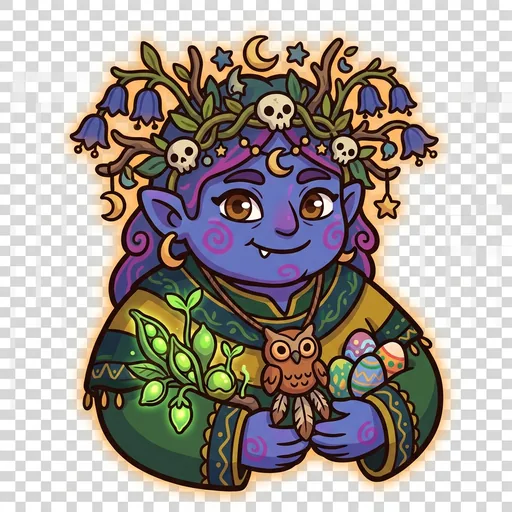
Devouring-Mother
The dark-creator / death-and-renewal force (post-Jungian; surfaces as Kali-aspect / Hel / Coatlicue / Hecate). **High trauma load.**
-

Wise-Elder
The mentor-figure who knows the path but cannot walk it for the hero (Athena, Odin-as-wanderer, Krishna-as-advisor).
-

Threshold-Guardian
The figure that tests whether the hero is ready to cross (Sphinx, Cerberus, the dragon at the gate, the riddling stranger).
-

Shadow
The repressed-self / dark-mirror (Jungian core archetype; surfaces as the hero's nemesis-who-is-also-them: Loki/Baldr, Set/Osiris, Cain/Abel framings).
-

Anima/Animus (paired)
The complementary-other-self (Jungian); represented as a pair-character that always appears together, embodying the inner-other-gendered-self pattern that surfaces across many t...
-

Wanderer
The journeyer-without-fixed-home who carries stories between cultures (Odysseus-after-Ithaca, the wandering Jew, the diaspora-keeper figure).
-

Child-Divinity
The newborn-with-power archetype (infant Krishna, baby Hermes, child Horus, divine-child motif).
-
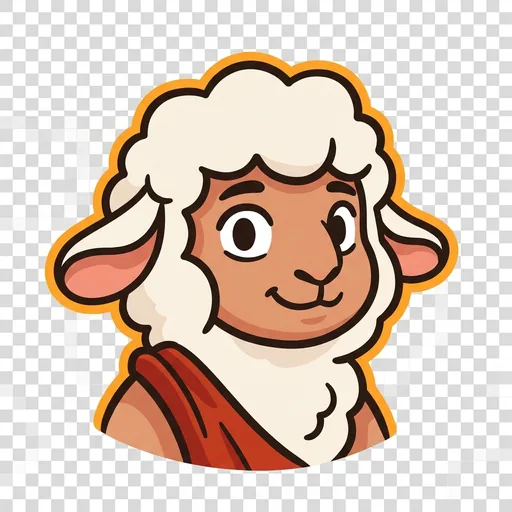
Sacrificial-Lamb
The figure whose loss enables renewal (cross-traditional: dying-and-rising deities, scapegoat figures, voluntary-sacrifice motif).
-

Warrior
The conflict-pattern-bearer (Ares, Tyr, Sekhmet-aspect, the warrior-figure across many traditions).
-

Lover
The relational-bond-bearer (Aphrodite-aspect, the romantic-mythic pair, the bond-that-shapes-the-world archetype).
-

Sovereign
The cosmic-order-keeper archetype (Zeus-aspect, Odin-as-ruler, Ra-as-cosmic-king, Quetzalcoatl-aspect).