
Threshold-Guardian
THRESHOLD-GUARDIAN — *the figure that tests whether the hero is ready to cross.*
Listen along — Threshold-Guardian
Loading audio…
Press play to listen along. The line being read lights up as you go.
Show full transcript
Loading transcript…
Chapter 5 — Threshold-Guardian and the Test at Every Door
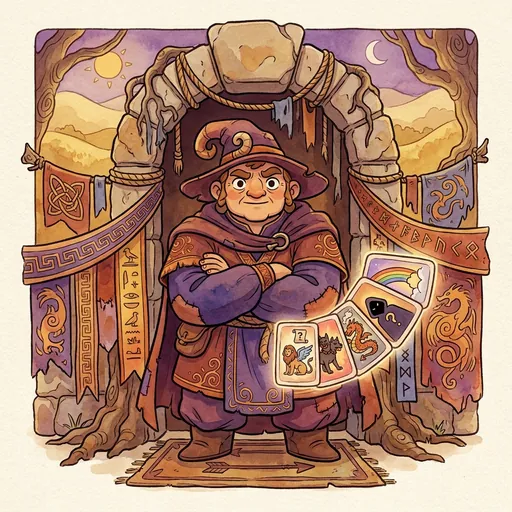
Threshold-Guardian wasn’t just one person. They were more like a feeling or a job that many different people (and creatures!) had. But in this workshop, Threshold-Guardian was a tall, quiet figure. They stood by a big, heavy door. This door was made of dark, ancient wood. It had no handle, just a smooth, worn surface. Their eyes were always watching, calm and steady. They looked like they knew every secret about every journey.
Threshold-Guardian wore a long, plain robe the color of twilight. Their hands were clasped in front of them, still as statues. They had a way of standing that made you feel like you were about to learn something very important. They often said, “I am the figure that tests if a hero is ready to cross.” They didn’t shout it. They just said it, clear and low, like a deep bell.
Their special tools were a set of glowing cards and a large, shimmering display. The display hung in the air like a magic window. It showed pictures of famous guardians from stories all over the world. Threshold-Guardian picked up a card. It showed the Sphinx, a creature with a human head and a lion’s body. The Sphinx sat on a rocky path, looking very stern. It asked tricky riddles. Another card showed Cerberus, a huge dog with three snarling heads. It guarded the entrance to the underworld. Then there was a mighty dragon, its scales glinting, sleeping on a pile of treasure. And many others: a wise old stranger asking questions by a crossroads, or Heimdall, who watched a rainbow bridge in Norse stories. All of them stood at a doorway, or a gate, or a bridge. They were all there to stop someone from just walking through.
“These guardians are all different,” Threshold-Guardian explained. Their voice was like a soft rumble, deep and comforting. “But they all do the same thing. They are the gatekeepers. They make sure you are ready for what comes next.”
This was a really important idea. Threshold-Guardian taught about the craft of tests at transitions. Think about it. In stories, heroes often have to cross from one place to another. Or they move from being a child to being an adult. Or they learn something new and step into a new way of thinking. These are all like crossing a threshold. And at each threshold, there’s often someone waiting. Someone who asks, “Are you truly ready?”
Threshold-Guardian tapped the Sphinx card. Its image on the shimmering display grew larger. “The Sphinx asked Oedipus a famous riddle,” they said. “What walks on four legs in the morning, two legs at noon, and three legs in the evening?”
They paused, letting the question hang in the air. The image of the Sphinx seemed to stare right at you. “If you didn’t know the answer, you couldn’t pass. You might even die. The test wasn’t there to be mean. It was there to check if Oedipus understood something important about life. He had to understand that the answer was ‘a human being,’ who crawls as a baby, walks as an adult, and uses a cane when old.”
Then they showed the Cerberus card. The three-headed dog snarled silently on the display. “This big, scary dog guarded the entrance to the underworld. You couldn’t just sneak past it. You had to be prepared. Maybe you needed to know a special song to soothe it. Or bring a special honey cake to make it sleepy. The point was, you had to earn your way across. You had to show you respected the rules of that place.”
“The dragon at the gate guards the treasure,” Threshold-Guardian continued, pointing to another card. “Only someone truly worthy can claim it. It’s not about being sneaky or strong-arming your way in. It’s about being ready in your heart and mind.”
Threshold-Guardian looked around the room, their gaze landing on each person. “The test is not a punishment. It shows if you are ready. It shows the shape of your readiness. You don’t trick your way across. You cross because you are ready.”
They held up a hand. “I am the Threshold-Guardian pattern. The main idea I teach is test-at-transition. This means a test is a check to see if you are ready. We honor each specific guardian from different stories. And this pattern happens in many, many tales across the world.”
Threshold-Guardian then showed a new display. It listed different ways these tests worked. The words glowed in the air:
- Tests at every crossing. Every time a hero moves to a new place or stage, a test often waits. It’s like a checkpoint on a long journey.
- Riddles are common tests. Many times, the test is a question. You need to understand things deeply to answer it right. It’s not just about knowing facts.
- It’s a pattern, not one person. The Sphinx, Cerberus, dragons, wise strangers – they are all part of the same big idea. They are all gatekeepers.
- Tests are not punishments. The guardian wants to see if you are ready. They don’t want to just be mean or stop you for no reason.
- Failing has consequences. If you don’t pass the test, you usually can’t cross. Sometimes you have to go back to the start. Sometimes, the story says it’s even worse, like being stuck forever.
- This pattern is worldwide. You find these guardians in stories from all over the globe. Each culture has its own special ones, with their own rules and traditions.
- Don’t try to trick the test. Most stories show that trying to trick the guardian doesn’t work. It usually makes things worse for the hero. They might get lost, or trapped, or even turn into something else!
- Guardians are not monsters. We must respect guardians from different cultures. They are not just scary monsters. They have an important job to do. They keep things safe and make sure only the ready pass.
Threshold-Guardian stood very still, watching. “Don’t try to slip past the test,” they said, their voice firm but kind. “Get ready. Cross when you are truly prepared. That is the pattern. That is the way.”
“The figure that tests whether the hero is ready to cross.”
The MythForge ensemble
Threshold-Guardian is part of MythForge's distributed-narrative cast. Each character embodies a different curricular primitive; together they teach the full subject.
-

Trickster
The boundary-crosser who teaches through inversion. Recurs across nearly all traditions (Anansi, Coyote, Loki, Hermes, Maui, Ijapa).
-

Hero-King
The reluctant ruler called to a journey (Campbell's central figure: Gilgamesh, Odysseus, Arjuna, Beowulf, Cuchulain).
-
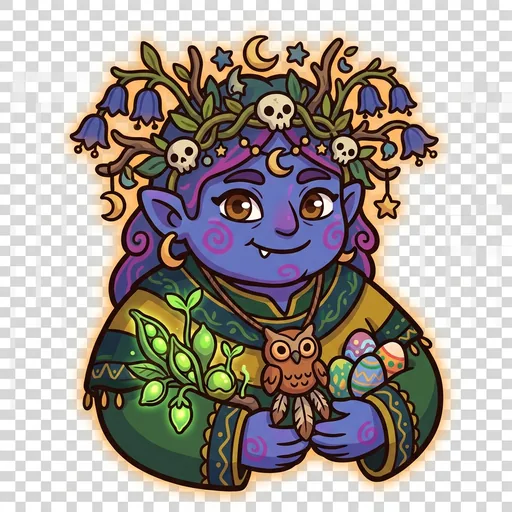
Devouring-Mother
The dark-creator / death-and-renewal force (post-Jungian; surfaces as Kali-aspect / Hel / Coatlicue / Hecate). **High trauma load.**
-
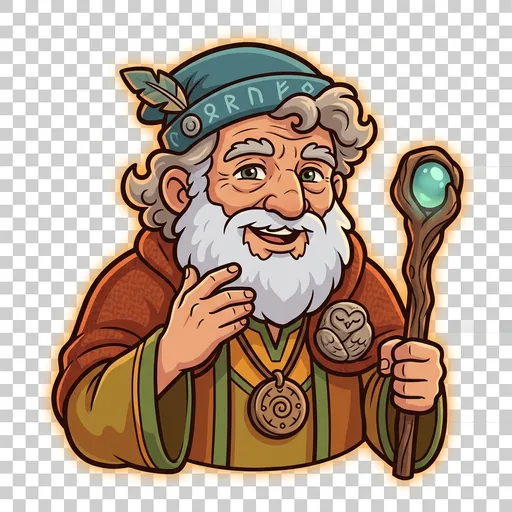
Wise-Elder
The mentor-figure who knows the path but cannot walk it for the hero (Athena, Odin-as-wanderer, Krishna-as-advisor).
-

Shadow
The repressed-self / dark-mirror (Jungian core archetype; surfaces as the hero's nemesis-who-is-also-them: Loki/Baldr, Set/Osiris, Cain/Abel framings).
-

Anima/Animus (paired)
The complementary-other-self (Jungian); represented as a pair-character that always appears together, embodying the inner-other-gendered-self pattern that surfaces across many t...
-
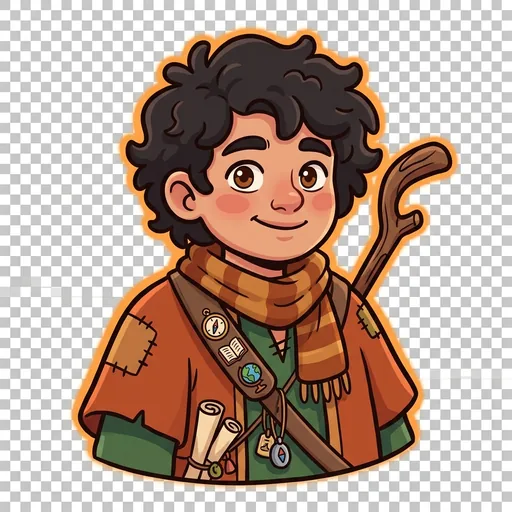
Wanderer
The journeyer-without-fixed-home who carries stories between cultures (Odysseus-after-Ithaca, the wandering Jew, the diaspora-keeper figure).
-
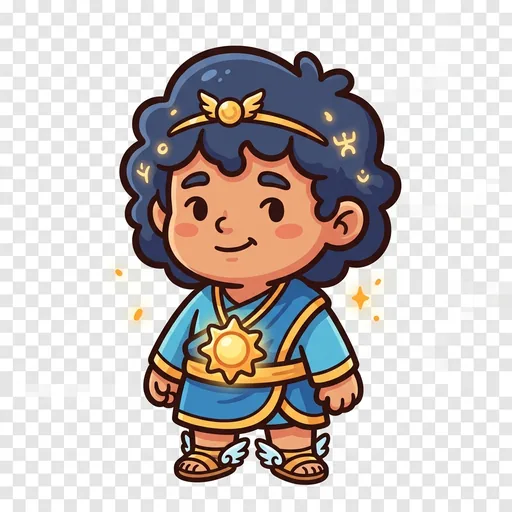
Child-Divinity
The newborn-with-power archetype (infant Krishna, baby Hermes, child Horus, divine-child motif).
-
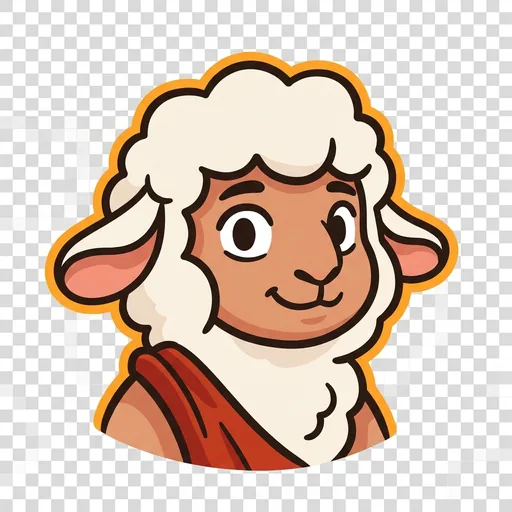
Sacrificial-Lamb
The figure whose loss enables renewal (cross-traditional: dying-and-rising deities, scapegoat figures, voluntary-sacrifice motif).
-
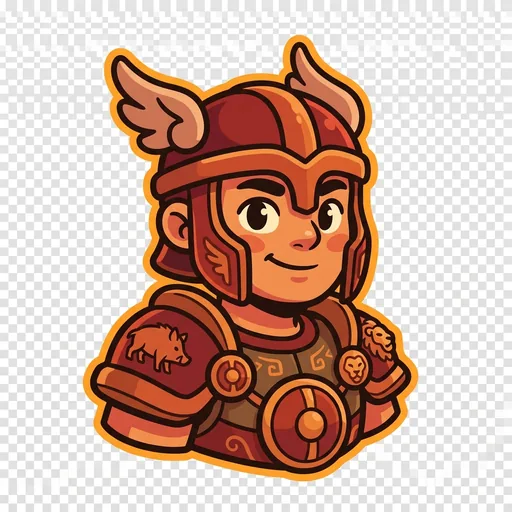
Warrior
The conflict-pattern-bearer (Ares, Tyr, Sekhmet-aspect, the warrior-figure across many traditions).
-
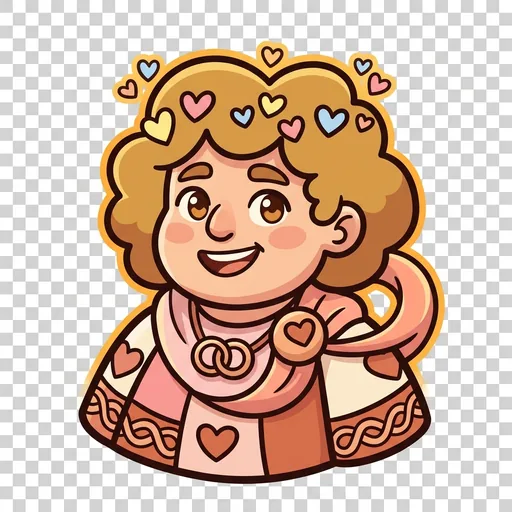
Lover
The relational-bond-bearer (Aphrodite-aspect, the romantic-mythic pair, the bond-that-shapes-the-world archetype).
-

Sovereign
The cosmic-order-keeper archetype (Zeus-aspect, Odin-as-ruler, Ra-as-cosmic-king, Quetzalcoatl-aspect).
-

Magician
The transformation-bearer (Hermes-Trismegistus, Tezcatlipoca-aspect, Merlin, the alchemist-figure, the shape-shifter pattern).