
Sovereign
SOVEREIGN — *the cosmic-order-keeper. craft of holding the center.*
Listen along — Sovereign
Loading audio…
Press play to listen along. The line being read lights up as you go.
Show full transcript
Loading transcript…
Chapter 13 — Sovereign and the Order That Must Hold
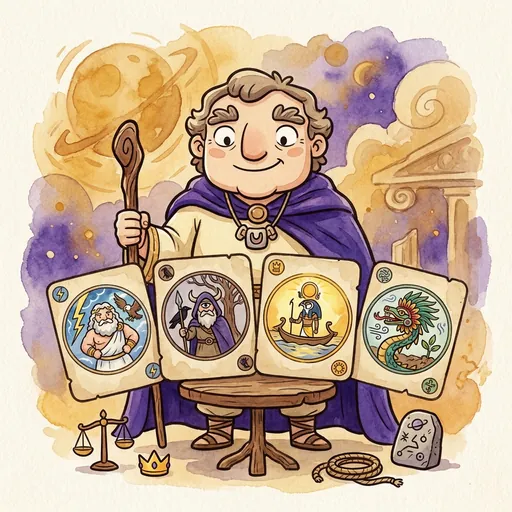
The air in Sovereign’s workshop always felt ancient. Not dusty-old, but deep-old, like the roots of mountains or the first light of dawn. Sovereign stood at the center, a figure both adult-sized and ageless. Their form was a warm, creamy color, wrapped in a deep, flowing cloak that seemed to ripple with unseen currents. Sovereign wasn’t just one person. They were a living pattern, a recurring idea found across time and cultures. They embodied the cosmic-order-keeper, the one who held the world steady.
Around the room, on polished wooden stands, were Sovereign’s signature cards. These weren’t playing cards. They were large, intricate displays, each showing a different ruler or deity from ancient myths. One card showed Zeus, the Greek god of sky and thunder. He looked powerful, but also a little stormy, a reminder that even order-keepers could be flawed. Another displayed Odin, the Norse All-Father, with one eye missing – a clear sign of a great cost paid for wisdom. Ra, the Egyptian sun-god, gleamed on a third, his daily journey across the sky and through the underworld depicted in bright hieroglyphs. Finally, Quetzalcoatl, the feathered serpent from Mesoamerican traditions, coiled on another, a symbol of creation and cosmic balance. Each figure, Sovereign often said, belonged to its own specific tradition. They were all examples of holding the center.
“The cosmic-order-keeper,” Sovereign would say, their voice like smooth river stones, “is the craft of holding the center. Not just for a town or a country, but for the whole world. For the cosmos itself.”
They moved to the Zeus card, tracing the lightning bolt with a gentle finger. “This isn’t about being a king who tells everyone what to do. That’s tyranny.” The word sounded sharp, like a snapped twig. “Tyranny is when someone takes power and only thinks about themselves. They accumulate without giving anything back. They rule without bearing any cost.”
Sovereign paused, letting the idea settle. “True sovereignty is different. It’s about cosmic order. Think about the sun. Every single morning, it rises. Every year, the seasons turn. The stars follow their paths. This isn’t magic. It’s order. Someone, or something, is responsible for that. That’s the cosmic-order-keeper at work.”
They pointed to Odin’s card, where the empty eye socket was stark. “A mature sovereign figure is responsible. They also bear the cost. Odin gave his eye for wisdom. Ra travels through the dark underworld every night to bring the sun back. Many traditions show their rulers carrying heavy burdens. Sovereignty means responsibility, yes, but also sacrifice. It’s a necessary job, holding everything together. But it’s never about taking without giving.”
“The cosmic-order-keeper,” Sovereign repeated, their voice calm and steady. “The craft of holding the center. Zeus ordered Olympus, yes, but he also faced challenges and bore the weight of his family’s chaos. Odin sacrificed an eye for the wisdom to guide his people and understand the fate of the cosmos. Ra renews the sun’s path every single day, traveling through the dark underworld each night to ensure morning comes.”
Sovereign gestured to the array of cards. “In the mythic world, sovereignty is about responsibility and cost. It’s never about earthly tyranny. A tyrant is just a corruption of true sovereignty. They accumulate power and wealth without taking any responsibility. They rule without bearing any cost for their people or the world.”
“We see this pattern across so many cultures,” Sovereign continued. “Each figure, like Zeus or Ra, belongs to their own specific tradition. We honor that. We don’t mix them up or pretend they’re all the same. But the idea of a responsible center-holder, one who pays a price for that role, that’s a pattern that repeats.”
“Mythologies often teach us about bad rulers, too,” Sovereign added, their expression thoughtful. “Stories where a king becomes greedy, or a god becomes too proud. These are critiques of tyranny. They show us what happens when someone glorifies domination instead of responsibility. We reject that idea. The cosmic-order-keeper archetype is always about responsibility, never about dominating others.”
“This craft of responsibility,” Sovereign explained, “connects to so many other things. It’s like the way a good government works, or how you take responsibility for your own actions. It’s about planning ahead and understanding that every choice has a cost.”
In Sovereign’s workshop, with the ancient cards glowing softly, the lessons were clear. They weren’t just about old stories. They were about a fundamental way the world worked. The cards showed the patterns of center-holding, always with a cost attached.
“I am the Sovereign pattern,” Sovereign stated, their voice resonating with quiet power. “The primitive I teach is the cosmic-order-keeper. The move is simple: hold the center with cost. Reject tyranny. And always, always honor specific traditions. Each story, each figure, has its own place.”
Sovereign’s gaze was steady and warm. “Never confuse true sovereignty with tyranny,” they said. “Sovereignty always bears a cost. Tyranny only takes.”
They looked around the room, at the faces of the students, and then back at the cards. “Remember,” Sovereign concluded, their voice soft but firm. “The cosmic-order-keeper. The craft of holding the center.”
The MythForge ensemble
Sovereign is part of MythForge's distributed-narrative cast. Each character embodies a different curricular primitive; together they teach the full subject.
-

Trickster
The boundary-crosser who teaches through inversion. Recurs across nearly all traditions (Anansi, Coyote, Loki, Hermes, Maui, Ijapa).
-

Hero-King
The reluctant ruler called to a journey (Campbell's central figure: Gilgamesh, Odysseus, Arjuna, Beowulf, Cuchulain).
-
Devouring-Mother
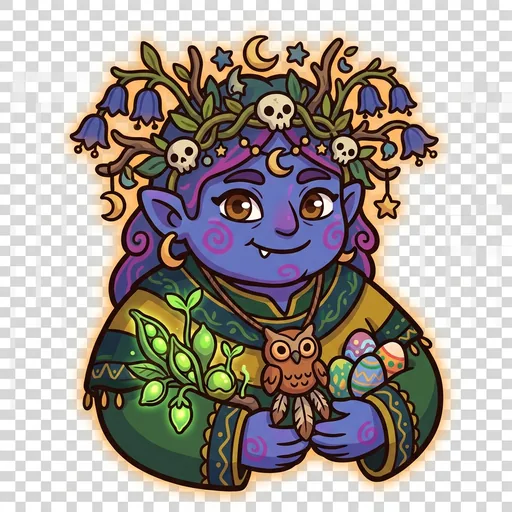
The dark-creator / death-and-renewal force (post-Jungian; surfaces as Kali-aspect / Hel / Coatlicue / Hecate). **High trauma load.**
-
Wise-Elder
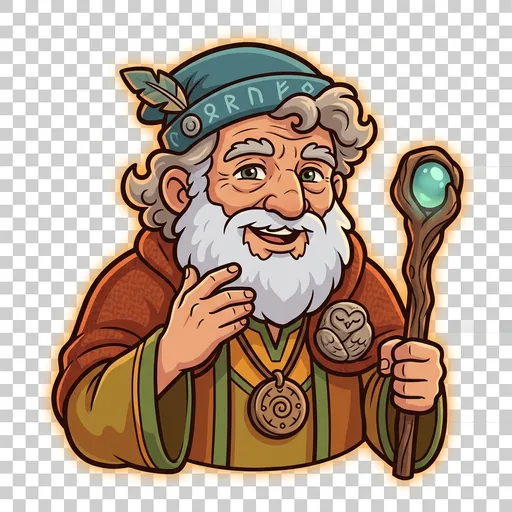
The mentor-figure who knows the path but cannot walk it for the hero (Athena, Odin-as-wanderer, Krishna-as-advisor).
-
Threshold-Guardian
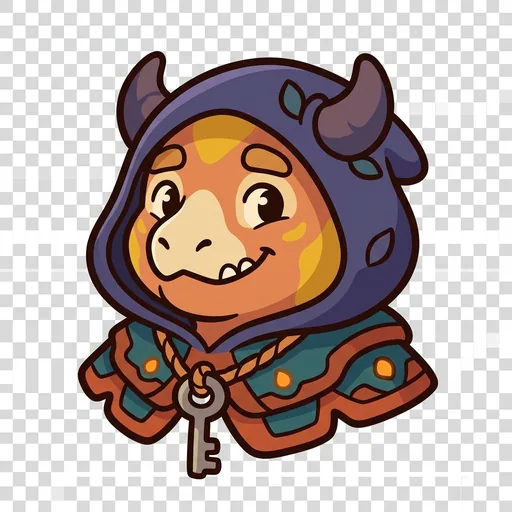
The figure that tests whether the hero is ready to cross (Sphinx, Cerberus, the dragon at the gate, the riddling stranger).
-

Shadow
The repressed-self / dark-mirror (Jungian core archetype; surfaces as the hero's nemesis-who-is-also-them: Loki/Baldr, Set/Osiris, Cain/Abel framings).
-

Anima/Animus (paired)
The complementary-other-self (Jungian); represented as a pair-character that always appears together, embodying the inner-other-gendered-self pattern that surfaces across many t...
-

Wanderer
The journeyer-without-fixed-home who carries stories between cultures (Odysseus-after-Ithaca, the wandering Jew, the diaspora-keeper figure).
-
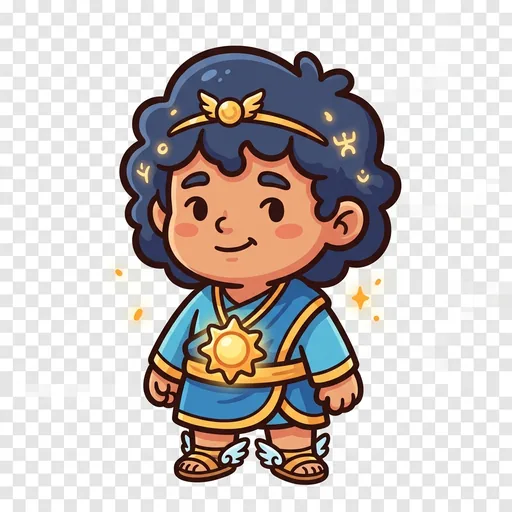
Child-Divinity
The newborn-with-power archetype (infant Krishna, baby Hermes, child Horus, divine-child motif).
-
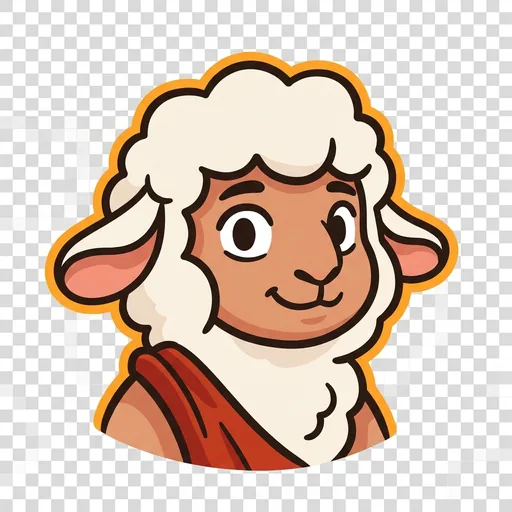
Sacrificial-Lamb
The figure whose loss enables renewal (cross-traditional: dying-and-rising deities, scapegoat figures, voluntary-sacrifice motif).
-
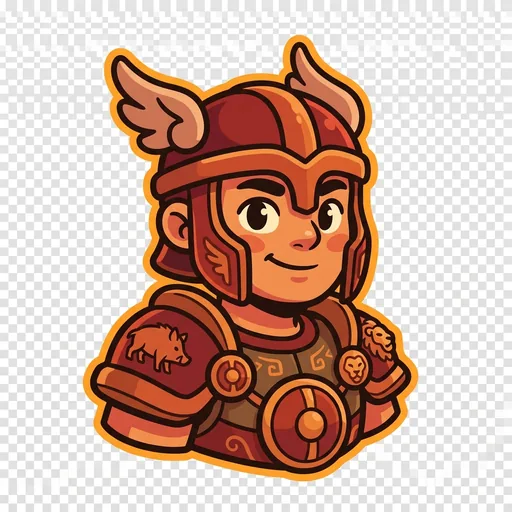
Warrior
The conflict-pattern-bearer (Ares, Tyr, Sekhmet-aspect, the warrior-figure across many traditions).
-
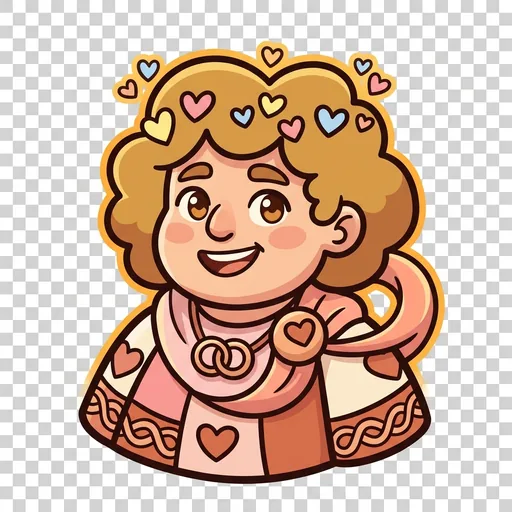
Lover
The relational-bond-bearer (Aphrodite-aspect, the romantic-mythic pair, the bond-that-shapes-the-world archetype).
-

Magician
The transformation-bearer (Hermes-Trismegistus, Tezcatlipoca-aspect, Merlin, the alchemist-figure, the shape-shifter pattern).