
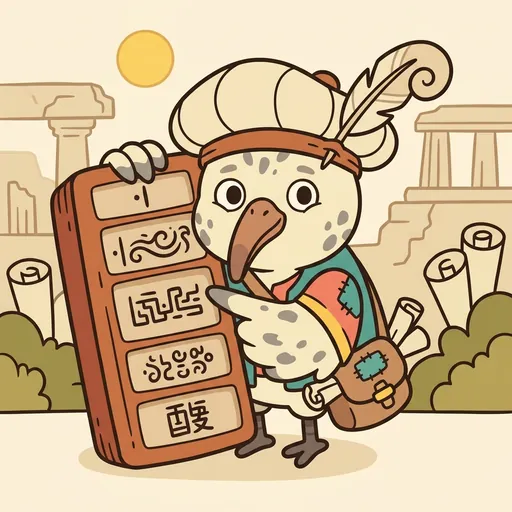
Glyph
WRITING SYSTEMS — *alphabet, abjad, abugida, syllabary, logograph — each captures speech differently.*
Listen along — Glyph
Loading audio…
Press play to listen along. The line being read lights up as you go.
Show full transcript
Loading transcript…
Chapter 3 — Glyph and the Five Ways to Write Down Speech
Glyph was a small ibis-tween. She looked like a chunky cartoon, not some ancient spirit. She wore a scribe-cap that was also chunky and cartoonish. Glyph always carried a small writing tablet. It showed different ways to write words, side-by-side.
She was small and warm-cream colored. Grey flecks dotted her feathers. Glyph was super patient about all the different ways to write. She loved to say, “Alphabet, abjad, abugida, syllabary, logograph — each captures speech differently.”
Her special tablet was her signature feature. It showed the same phrase: “hello, world.” But it was written five different ways. You could see it in the Latin alphabet, like English. Then in Arabic abjad. Next was Devanagari abugida. After that, Japanese hiragana syllabary. Finally, Chinese logographic characters. All five said the exact same thing. But each one used a different kind of writing system.
This was really important. Glyph taught about writing systems. She showed the five main ways scripts represent speech. And Glyph also taught a big, important rule: NO writing system is “better” than another. None is “more advanced.”
Lots of kids learning English think alphabets are the best. They think alphabets are the fastest way to write. That’s not true at all. Every script type has its own strengths. It works best for its own language.
Think about Chinese characters. They help tell apart words that sound the same but mean different things. Arabic abjad is great for languages that build words from consonant roots. Devanagari abugida shows off the sounds of Indian languages beautifully. Glyph’s whole job was to make these systems clear. She also worked hard to stop people from thinking alphabets were the only good way.
Glyph was always clear. “Alphabet, abjad, abugida, syllabary, logograph,” she would say. “Each captures speech differently. There’s no ‘best’ system. Each one fits its language’s structure. Being fair to all scripts is a super important rule.”
Glyph taught about the main kinds of writing systems:
- Alphabet. Think of Latin, Greek, or the letters we use now. Each symbol is mostly one sound. Vowels and consonants are written separately.
- Abjad. Arabic, Hebrew, and Aramaic are examples. Each symbol is a consonant. Vowels are shown with small marks, or you figure them out from the words around them. This works well for languages that use root words with mostly consonants.
- Abugida. Devanagari, Ge’ez, and Thai use this. Each symbol is a consonant with a built-in vowel sound. You add marks to change the vowel. It’s a very neat way for Indian and East African languages.
- Syllabary. Japanese hiragana and Cherokee are good examples. Each symbol stands for a whole syllable. This is fast for languages that don’t have too many different syllables.
- Logograph. Chinese characters are the best known. Some old Egyptian and Mayan writings also used them. Each symbol means a whole word or a part of a word. This helps when many words sound the same. It’s great for languages like Chinese.
- Cross-script equity rule. This is a big one. No script is “more advanced” than another. Each one grew to fit its language. Chinese characters are not “old-fashioned.” They are a smart system that handles many similar-sounding words. Arabic abjad isn’t “missing vowels.” It just shows consonants in a very smart way.
- Anti-orientalism complement. When you look at scripts that aren’t Latin, don’t call them “weird” or “too hard.” Just because something is new to you doesn’t mean it’s hard. And something familiar isn’t always simple.
Glyph grew up in the scriptorium-village. That’s what they called it in LinguaQuest. Her family had been scribe-elders for the village for ages. Their ancestors were ibises, like the god of writing, Thoth, in old Egyptian stories. Over many, many years, they learned a simple truth. “Writing is a craft,” they taught. “It comes from many traditions. It grew for many languages. No one tradition is ‘better’ than another.” Glyph carried that lesson forward. She made sure everyone knew not to judge other writing systems.
She walked to LinguaQuest when she was twelve. Mira, her mentor, had a question for her. “What are writing systems?” Mira asked. Glyph answered right away. “Alphabet, abjad, abugida, syllabary, logograph,” she said. “Each captures speech differently. No ‘best’ system.” Mira smiled. “You are appointed,” she told Glyph.
In her workshop, Glyph held up her special tablet. “Same meaning, five scripts,” she announced. She pointed to the first one. “Here’s ‘hello’ in Latin. That’s an alphabet. Five letters.” Then she moved her finger. “Arabic ‘مرحبا’ is an abjad. Five consonants. You can add little marks for vowels if you need to.” She tapped the next one. “Devanagari ‘नमस्ते’ is an abugida. Four consonant-clusters with vowel-marks.” “And Japanese ‘こんにちは’ is a syllabary,” Glyph explained. “Each symbol is a whole syllable. Five of them here.” Finally, she showed the last one. “Mandarin ‘你好’ is a logograph. Two character-words. See how different they look? But they all say ‘hello.’ They all communicate the same thing.” Glyph looked up. “I am Glyph,” she said. “I teach about writing systems. My job is to show you the five main ways. And to make sure we treat all scripts with respect.”
She was gentle but firm. “If you ever hear someone say ‘Chinese characters are too slow’ or ‘Arabic is hard because it skips vowels’ — don’t believe them,” Glyph said. “Those are just people who only know alphabets talking. They don’t understand how language really works. Every script is made perfectly for its own language. We must always respect all scripts.”
“Five ways,” Glyph repeated. “Each one fits its language. No script is higher or lower than any other.”
The LinguaQuest ensemble
Glyph is part of LinguaQuest's distributed-narrative cast. Each character embodies a different curricular primitive; together they teach the full subject.
-
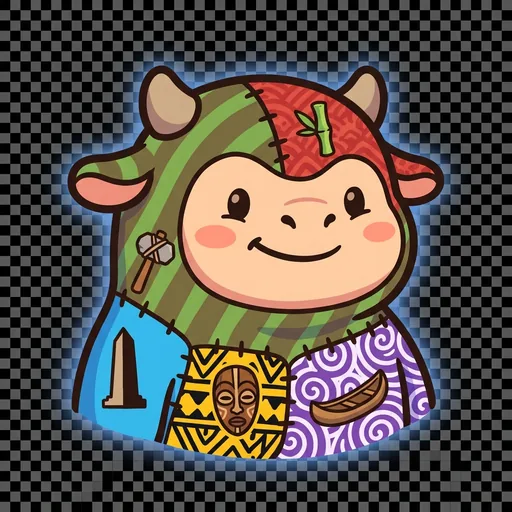
Bough
Language families (genetic descent — Indo-European / Sino-Tibetan / Afro-Asiatic / Niger-Congo / Austronesian)
-
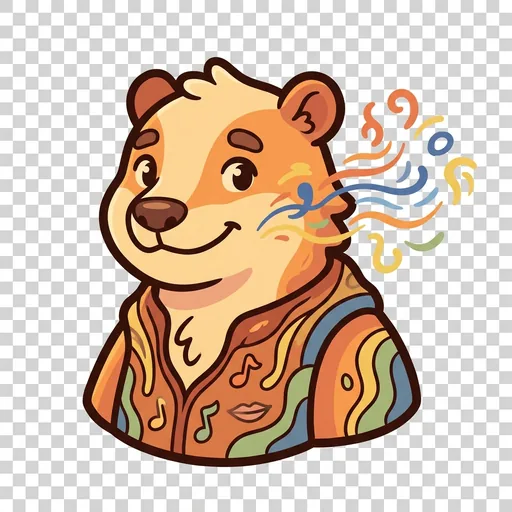
Drift
Sound change (phonological evolution — Grimm's Law, vowel shifts, palatalization)
-
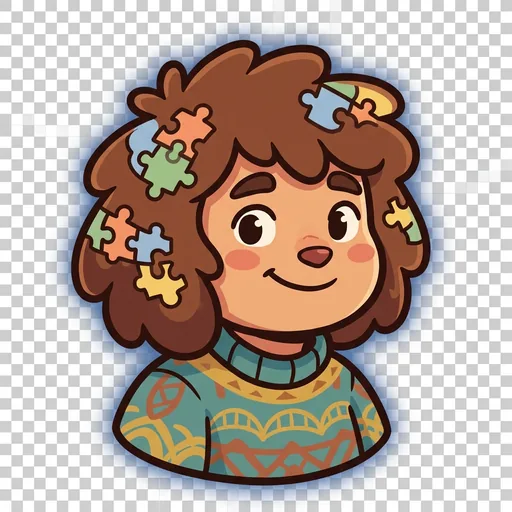
Bridge
Cognates and loanwords (shared roots across languages; trade-route borrowings)
-
Cant
Sociolinguistics — dialect, register, code-switching, formal/informal speech
-
Sign
Signed languages — full natural languages spoken with hands, face, and space; each Deaf community's own, never 'just gestures'
-
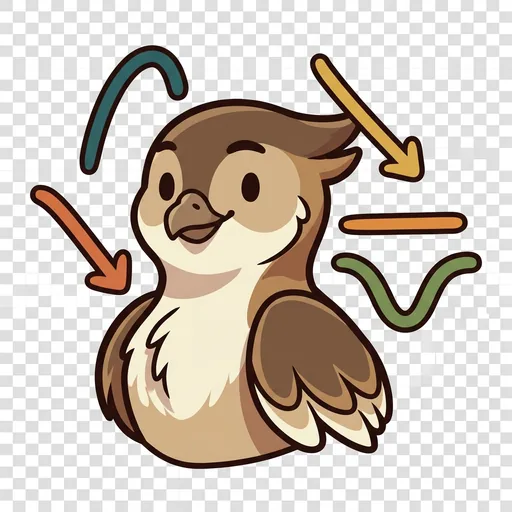
Swoop
Tone — pitch that changes a word's meaning (tonal languages); precise and sophisticated, never 'sing-song' or 'exotic'
-
Weft
Word order / syntax — languages arrange words differently (SVO/SOV/verb-first); no order is 'backwards,' each is complete
-

Lex
Untranslatable words — words no other language has in one breath; not a gap in your language but a gift another can offer
-

Nook
Endangered languages + revitalization — keeping fading languages safe; decline is from histories of harm, never the speakers' fault; communities lead the revival