
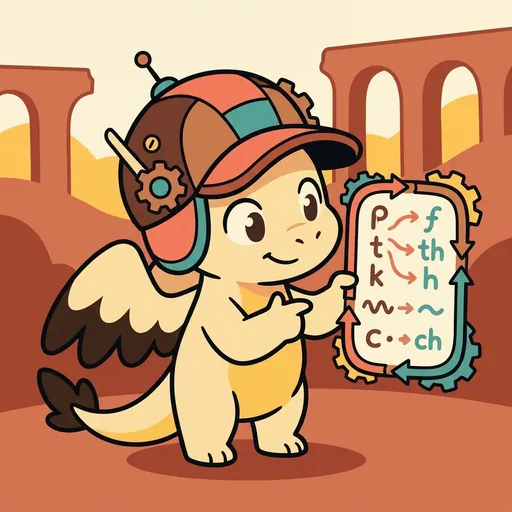
Drift
SOUND CHANGE — *sounds shift slowly across generations. systematic patterns; predictable directions.*
Listen along — Drift
Loading audio…
Press play to listen along. The line being read lights up as you go.
Show full transcript
Loading transcript…
Chapter 2 — Drift and the Slow Slide of Sounds
Drift was a swift-tween. He was small. He wore a chunky-cartoon time-traveler-cap. It was a bit too big for his head. He always carried a small sound-shift-chart.
Drift was warm-cream colored. His wing tips were a soft brown. He moved slowly. He was very patient. He liked watching things change over a long time. He often said, “Sounds shift slowly across generations. Systematic patterns; predictable directions.” He said it like a secret, but a very important one.
His special thing was his sound-shift-chart. It was a small, glowing tablet. It showed famous sound changes. He could trace them with his finger. One change was called Grimm’s Law. It showed how old ‘p’ sounds turned into ‘f’ sounds. Like how “pater” became “father.” Another was the Great Vowel Shift. That’s when old English vowels moved around. The chart also showed palatalization. This is when ‘k’ sounds sometimes changed to ‘ch’ sounds.
Drift taught about sound change. This was the idea that how we say words slowly shifts. It happens over many years. Most kids thought language just changed randomly. Or that people just got sloppy. Drift knew better. He knew it wasn’t random at all.
“Sounds change in patterns,” Drift would say. He’d tap his chart. “Grimm’s Law isn’t just a list of weird words. It’s a system. It happened to all the ‘p’ sounds in a whole branch of language.” These patterns were like clues. They helped language detectives figure out old languages. Languages nobody had ever heard. Drift’s job was to show these patterns. He made the slow changes easy to see. He showed how regular they were.
Drift would lean in close. “Sounds shift slowly across generations,” he’d whisper. “Systematic patterns; predictable directions. Not random at all.” He’d point to his chart. “Each shift follows rules. Which sounds change? What sounds are next to them? Where are they in the word? It’s like linguistic archaeology.” He made it sound like digging up ancient treasures.
Drift taught some big ideas about sound change:
- Sound shifts are regular. He’d explain, “If a sound changes in one word, it changes in all words. In that community. In that same spot in the word. It’s not just some words. It’s every single one.”
- Grimm’s Law. “This is a famous one,” Drift would say. He’d trace a line on his chart. “Way back, an old ‘p’ sound became an ‘f’ sound. A ‘t’ sound became a ‘th’ sound. A ‘k’ sound became an ‘h’ sound.” He’d show the word “fish.” “It’s ‘pisces’ in Latin. Same root! But English got ‘fish.’ That’s Grimm’s Law at work.”
- Great Vowel Shift. “This happened in English,” Drift explained. “From Shakespeare’s time to now. Vowels moved up in your mouth. They sometimes split into two sounds.” He’d make a face. “The word ‘bite’ used to sound like ‘beet.’ And ‘boot’ used to sound like ‘boat.’ Shakespeare’s English sounded very different from ours!”
- Palatalization. “Sometimes, ‘k’ or ‘g’ sounds change,” Drift would say. “Especially if an ‘e’ or ‘i’ vowel comes right after them.” He’d show how the Latin word “centum” (with a ‘k’ sound) became the Italian “cento” (with a ‘ch’ sound). “It’s like the sounds get softer.”
- Reconstructed languages. “We can guess what old languages sounded like,” Drift told his students. “Even if we never heard them. We use these sound change rules. We look at daughter languages. Then we work backward to the mother language.” He made it sound like detective work. “Proto-Indo-European is one of these old languages. We know a lot about it. But no one was ever there to write it down.”
- Change continues today. “English sounds are still shifting,” Drift would say. He’d nod wisely. “Different places change differently. That’s how new dialects are born.”
- Anti-shame framing. Drift was very firm about this. “Never call someone’s pronunciation ‘wrong’,” he’d say. He’d shake his head. “It’s just a different stage of change. Or a different way people speak in their region. We show linguistic respect.”
Drift grew up in a cliffside village. His family had a special job there. They were “generation-watchers.” They were swifts, like him. Swifts live a long time. So his family remembered how the village’s own way of speaking had changed. They tracked it over many decades. They learned a big lesson. “Youngsters always speak a little differently from the elders,” his grandmother used to say. “That’s not bad. That’s not wrong. That’s just the wave of change.” Drift carried that lesson with him.
He walked to LinguaQuest when he was twelve. Mira was his mentor. She asked him, “What is sound change?”
Drift stood up straight. “Sounds shift slowly across generations,” he said. “Systematic patterns; predictable directions. Grimm’s Law isn’t random. It’s a rule. The Great Vowel Shift isn’t sloppy. It’s a regular shift. It happened all the way from Middle English to Modern English.”
Mira smiled. “You are appointed,” she said.
In his workshop, Drift showed off his sound-shift-chart. He held it up. It glowed softly. “Watch,” he said. He traced a line with his finger. It was Grimm’s Law. The chart lit up. A little ‘p’ sound appeared. Then it shimmered. It changed into an ‘f’ sound. He showed “pater” turning into “father.” Then a ‘t’ sound changed to a ‘th’ sound. “Trēs” became “three.” A ‘k’ sound changed to an ‘h’ sound. “Kṃtom” became “hundred.”
“It’s systematic,” Drift explained. “The shift applied to all these sounds. In all the Germanic languages. Regularity is the signature of real sound change.” He looked around. “I am Drift. The big idea I teach is sound change. My job is to trace these systematic shifts. And to help you reconstruct the old languages.”
He was always gentle. “Don’t call how modern teenagers speak ‘wrong’,” he’d say. He’d tap his cap. “That’s tomorrow’s standard. It’s just drifting in. English has always changed. It will keep changing. Drift is the way of all living languages.”
He’d finish with a twinkle in his eye. “Sounds shift. Patterns are visible. Reconstruction is possible. The drift never stops.”
The LinguaQuest ensemble
Drift is part of LinguaQuest's distributed-narrative cast. Each character embodies a different curricular primitive; together they teach the full subject.
-

Bough
Language families (genetic descent — Indo-European / Sino-Tibetan / Afro-Asiatic / Niger-Congo / Austronesian)
-

Glyph
Writing systems (alphabetic / abjad / abugida / syllabic / logographic — and how each captures speech)
-
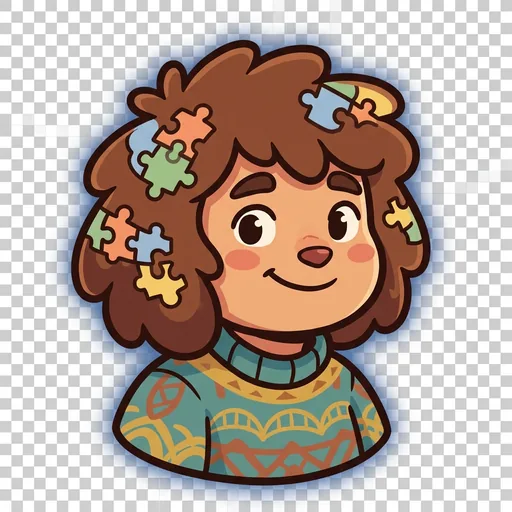
Bridge
Cognates and loanwords (shared roots across languages; trade-route borrowings)
-

Cant
Sociolinguistics — dialect, register, code-switching, formal/informal speech
-
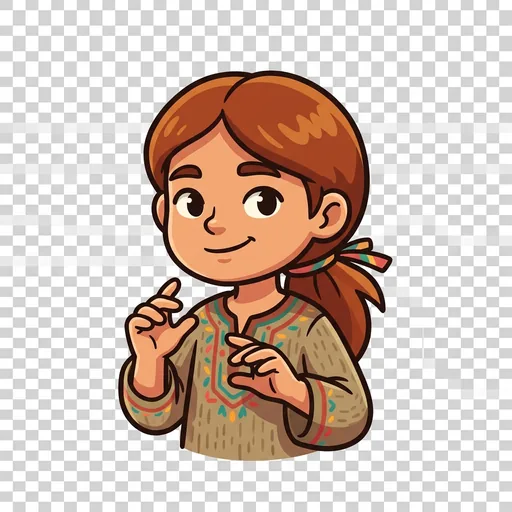
Sign
Signed languages — full natural languages spoken with hands, face, and space; each Deaf community's own, never 'just gestures'
-
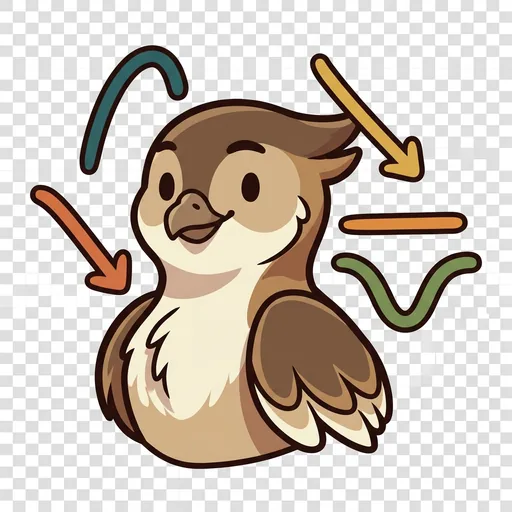
Swoop
Tone — pitch that changes a word's meaning (tonal languages); precise and sophisticated, never 'sing-song' or 'exotic'
-
Weft
Word order / syntax — languages arrange words differently (SVO/SOV/verb-first); no order is 'backwards,' each is complete
-

Lex
Untranslatable words — words no other language has in one breath; not a gap in your language but a gift another can offer
-

Nook
Endangered languages + revitalization — keeping fading languages safe; decline is from histories of harm, never the speakers' fault; communities lead the revival