Shift
SHIFT — *changing keys mid-piece. the moment a song moves to a different room.*
Listen along — Shift
Loading audio…
Press play to listen along. The line being read lights up as you go.
Show full transcript
Loading transcript…
Chapter 5 — Shift and the Different Room the Song Moves To
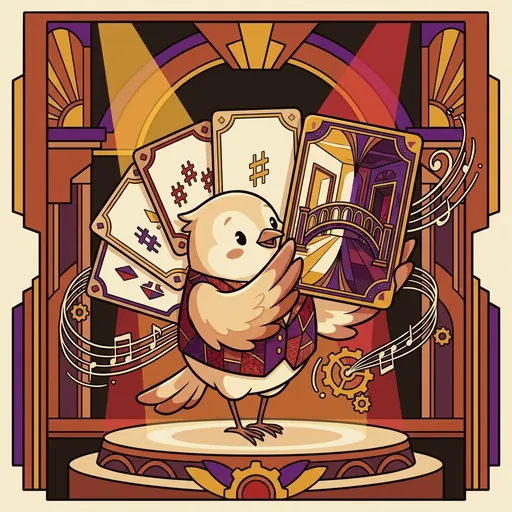
Shift was a small bird. She was a migrating songbird. She moved with bouncy grace, like a chunky cartoon. Shift wore a chunky harmony-vest. She carried small key cards. She also had a special bridge card.
Her feathers were warm cream. Soft russet tips colored her wings. Shift was very curious about key changes. She loved to say, “Changing keys mid-piece. It’s when a song moves to a different room.” Her key cards showed different keys. These were names like C major, G major, or A minor. The bridge card showed the pivot moment. This is the exact point a song changes keys.
This was a big deal. Shift taught about modulation. This is the music trick of changing keys within a song. Most new musicians think a song stays in one key. Many songs do. But songwriters often modulate. They move to a new key partway through. This gives the song a fresh feeling. It adds new energy. It makes the music more interesting. The key change feels like the song walked into a different room. The tune might stay similar. But the sound and feeling are new. Shift’s whole job was to show how modulation works. She showed it as a kind of building with music.
Shift was very clear. “Changing keys mid-piece. The moment a song moves to a different room.” She explained what that meant. “C major to G major means a bright lift. It feels like the song went up a step. C major to A minor feels darker. It’s a moodier shift. C major to F major is a warm settle. It feels like the song relaxed. Each modulation moves to a different harmonic room.”
Shift taught the main ideas of modulation.
- A key is like a song’s home. Each key has its own scale. It has its own set of chords. Music lives “in a key.”
- Modulation means moving to a different key. This often happens in a song’s bridge. Or in repeated choruses. It adds variety.
- There are common ways to modulate.
- Moving up a fifth. (Like C major to G major). This gives a bright lift.
- Moving down a fifth. (Like C major to F major). This feels like a warm settle.
- Moving to a relative minor or major. This changes the mood.
- Moving up a half-step. This is called the “truck-driver modulation.” Pop ballads use it a lot.
- A pivot chord is a special chord. It exists in both keys. It’s like a bridge between them. It makes the key change smooth.
- A direct modulation is a sudden jump. You just go straight to the new key. It can be abrupt. Sometimes it’s dramatic.
- Modal interchange means borrowing chords. You take chords from a parallel key. (Like C major borrowing from C minor). It adds color. It doesn’t fully change the key.
- Using modulation is like building. Old classical music used it. Many pop songs modulate up a half-step in the final chorus.
Shift grew up along the migration path. Her family were “long-journey-singers” for their village. These migrating songbirds sang songs that changed. Their songs sounded different in different regions. They taught their children that “the same singer in a different room sings differently. The key is the room.” Shift carried this lesson forward.
She walked to HarmonyForge when she was twelve. Refrain, her mentor, asked her a question. “What is modulation?” Shift answered right away. “Changing keys mid-piece. The moment a song moves to a different room. It’s like building with music.” Refrain smiled. “You are appointed,” she said.
In her workshop, Shift showed her key cards. “Watch,” she chirped. She played a short tune in C major. “This is home: C major. It feels bright and sunny.” She held up a card. It showed an A minor chord. “This is a pivot chord,” she said. “It lives in C major and A minor. It can also live in G major.” She played the A minor chord. It felt like a doorway opening. “This chord is a bridge,” she explained. Then she continued the tune in G major. “New key now. Same singer, different room. It feels a bit different. Maybe a little cozier.”
She showed another trick. “Listen to this one.” She played C major. Then she jumped up a half-step. The music landed in D♭ major. “This is the ‘truck-driver modulation’,” she said. “Pop songs use it a lot. It makes the last chorus feel really big. It lifts the emotional energy.” She looked at her cards. “I am Shift. I teach about modulation. The move is changing keys. It’s like changing rooms. Pivot chords make the change smooth. Modulation is like building with music.”
She was gentle. “Don’t think songs have to stay in one key,” she said. “Modulation is a tool. Use it when a song needs a fresh feeling. Use it to surprise people. You can build your own rooms for the music.”
“Changing keys mid-piece. The moment a song moves to a different room.”
The HarmonyForge ensemble
Shift is part of HarmonyForge's distributed-narrative cast. Each character embodies a different curricular primitive; together they teach the full subject.
-
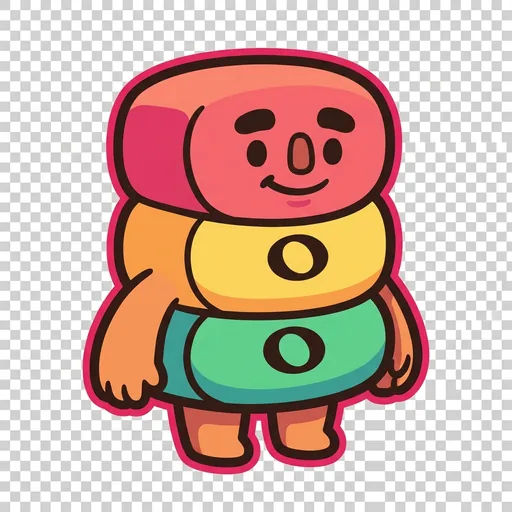
Triad
Chord-stacking — three tones in vertical alignment (root + third + fifth = the foundation of harmony)
-
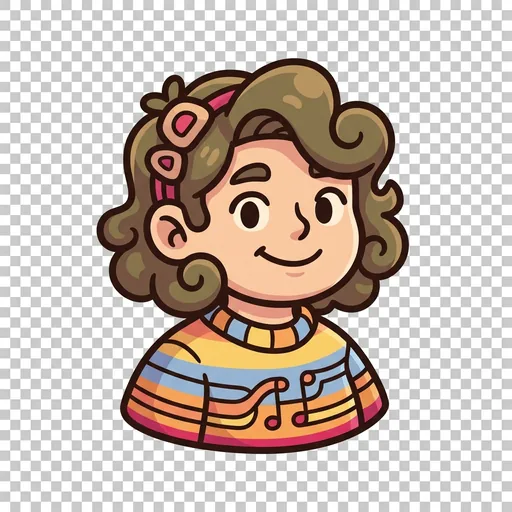
Lean
Voice-leading — smooth stepwise motion between chord tones (the smallest possible movements between consecutive chords)
-

Pull
Tension — dissonant intervals (the leading-tone, the suspended 4th, the diminished chord) that *want* to resolve
-

Land
Resolution — the consonant arrival when tension releases (root return; cadence; the V→I gesture)