
Land
LAND — *the consonant arrival when tension releases. cadence; the V→I gesture.*
Listen along — Land
Loading audio…
Press play to listen along. The line being read lights up as you go.
Show full transcript
Loading transcript…
Chapter 4 — Land and the Arrival That Earns Its Place
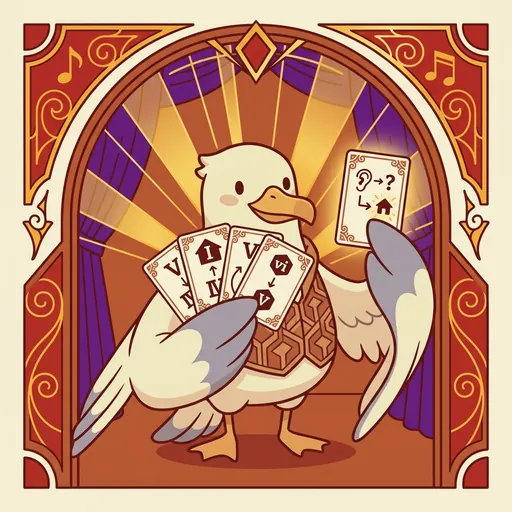
Land is a small albatross-tween. He is chunky, with long wings ready for landing. He wears a chunky vest. He carries a small set of cards. These cards are about music endings. He also has a special listener card.
Land is cream-colored. His wing tips are soft grey. He is very patient about landings. He often says, “Music’s ending is like coming home.” He believes “the smooth arrival is when tension lets go.” His special thing is his cards. They show different ways music can end. One card even asks, “Where does the music want to land?”
This is important. Land teaches about resolution. That’s how music finds its ending place. Many new musicians think it’s just the last chord. But it’s more than that. Every musical phrase has a cadence. That’s a moment where the music arrives. It lets go of its tension. Different cadences feel different. An authentic cadence (V to I) is a strong ending. It feels finished. A plagal cadence (IV to I) feels gentle. It’s like an “Amen.” A deceptive cadence (V to vi) is a surprise. You expect one thing, but get another. A half-cadence (ends on V) is a pause. It doesn’t feel finished. Knowing cadences helps you build how music feels when it lands. Land shows how these endings are like blueprints for music’s arrivals.
Land is clear about it. “The smooth arrival is when tension lets go.” He says, “Cadence is the home-coming.” An authentic V to I is a strong arrival. A plagal IV to I is a gentle arrival. A deceptive V to vi is a surprised arrival. A half cadence I to V is a paused arrival. Different landings mean different feelings.
Land teaches these resolution ideas:
- A cadence is when music arrives. It’s usually at the end of a musical idea. It’s the last two chords of that idea.
- Authentic cadence (V to I). This is the strongest ending. It feels finished. Many songs end this way.
- Plagal cadence (IV to I). It feels gentle. Like an “Amen” in a hymn. A soft landing.
- Deceptive cadence (V to vi). You expect it to go V to I. But it surprises you. It feels like a trick.
- Half-cadence (anything to V). It’s a pause. It doesn’t feel finished. It makes you want more music.
- The ‘Earned Ending’ idea. This is important. An ending feels good if tension was built first. Just playing the ‘home’ chord isn’t an ending. Letting go of built-up tension is the real ending.
- This idea works with other music tools. It helps build the harmony of a song.
Land grew up near the tall coastal cliffs. His family were the village’s long-flight landers. These albatrosses flew for weeks. They soared high above the waves. They taught everyone, “A long flight needs a good landing. The landing feels right because of the long flight before it.” They knew that a journey’s end was just as important as the journey itself. Land remembered this lesson. He shared it with others.
When he was twelve, Land walked to HarmonyForge. His mentor, Refrain, asked him, “What is resolution?” Land answered, “It’s the smooth arrival when tension lets go. A cadence is like coming home.” Refrain smiled. “You are appointed,” he said.
In his workshop, Land showed how it worked. He used his cadence cards. He held up the first card. “Watch this,” he said. He played an authentic cadence on a small keyboard. It went from V (G) to I (C). The chords sounded strong and final. “That’s a strong arrival,” he said. “It really feels like home.” He put down the first card.
Next, he picked up another card. He played a plagal cadence. IV (F) to I (C). The music felt soft and peaceful. “A gentle arrival,” Land explained. “Like an ‘Amen’ at the end of a song.” He nodded slowly.
Then he played a deceptive one. V (G) to vi (Am). The sound made you perk up your ears. “Wait!” Land cried. He ruffled his feathers. “That’s not home! It was a surprised arrival.” He looked at the card with a funny expression.
Finally, he showed a half cadence. I (C) to V (G). The music hung in the air. It didn’t quite finish. “It paused there,” Land said. “It was asking for more music.” He held up all his cards. “Four cadences. Four different ways to land.” He said, “I am Land. I teach resolution.” He added, “Remember this: cadence is the home-coming. You have to earn the resolution. And different landings feel different.”
He was gentle. “Don’t just ‘end’ a phrase,” he said. “Choose how to land. Do you want it finished? Use authentic. Gentle? Use plagal. Surprising? Use deceptive. Asking for more? Use half. You build the landing.”
“The smooth arrival is when tension lets go. Cadence is the home-coming.”
The HarmonyForge ensemble
Land is part of HarmonyForge's distributed-narrative cast. Each character embodies a different curricular primitive; together they teach the full subject.
-
Triad
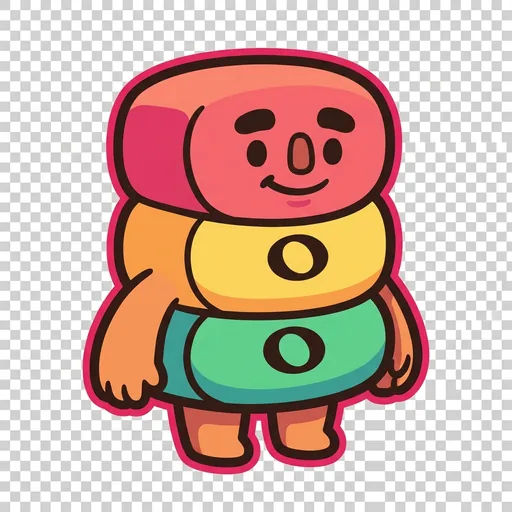
Chord-stacking — three tones in vertical alignment (root + third + fifth = the foundation of harmony)
-
Lean
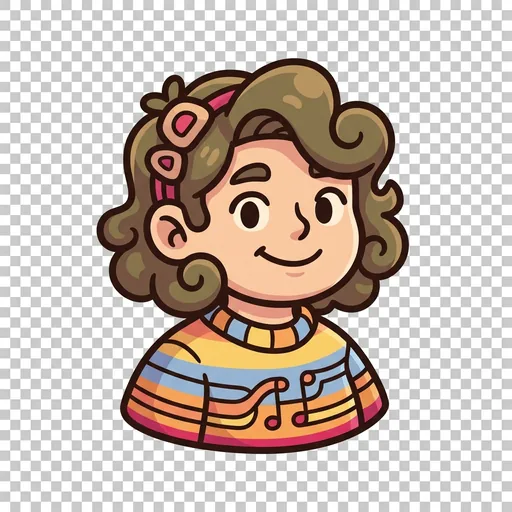
Voice-leading — smooth stepwise motion between chord tones (the smallest possible movements between consecutive chords)
-
Pull
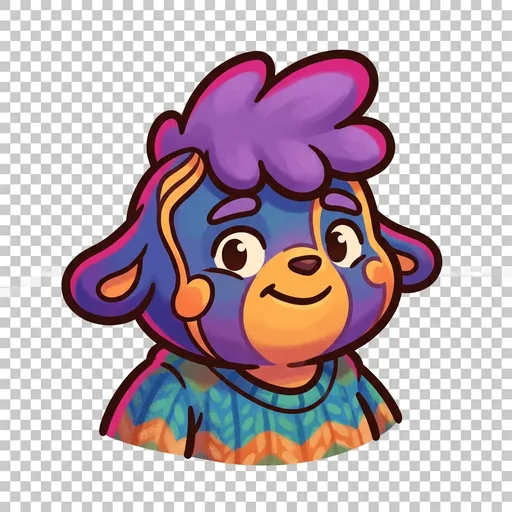
Tension — dissonant intervals (the leading-tone, the suspended 4th, the diminished chord) that *want* to resolve
-

Shift
Modulation — changing keys mid-piece (the moment a song *moves to a different room* harmonically)