Marshal
ORDER OF OPERATIONS — the agreed sequence for working an expression: brackets first, then multiply and divide, then add and subtract, so everyone gets the same answer.
Loading audio…
Press play to listen along. The line being read lights up as you go.
Show full transcript
Loading transcript…
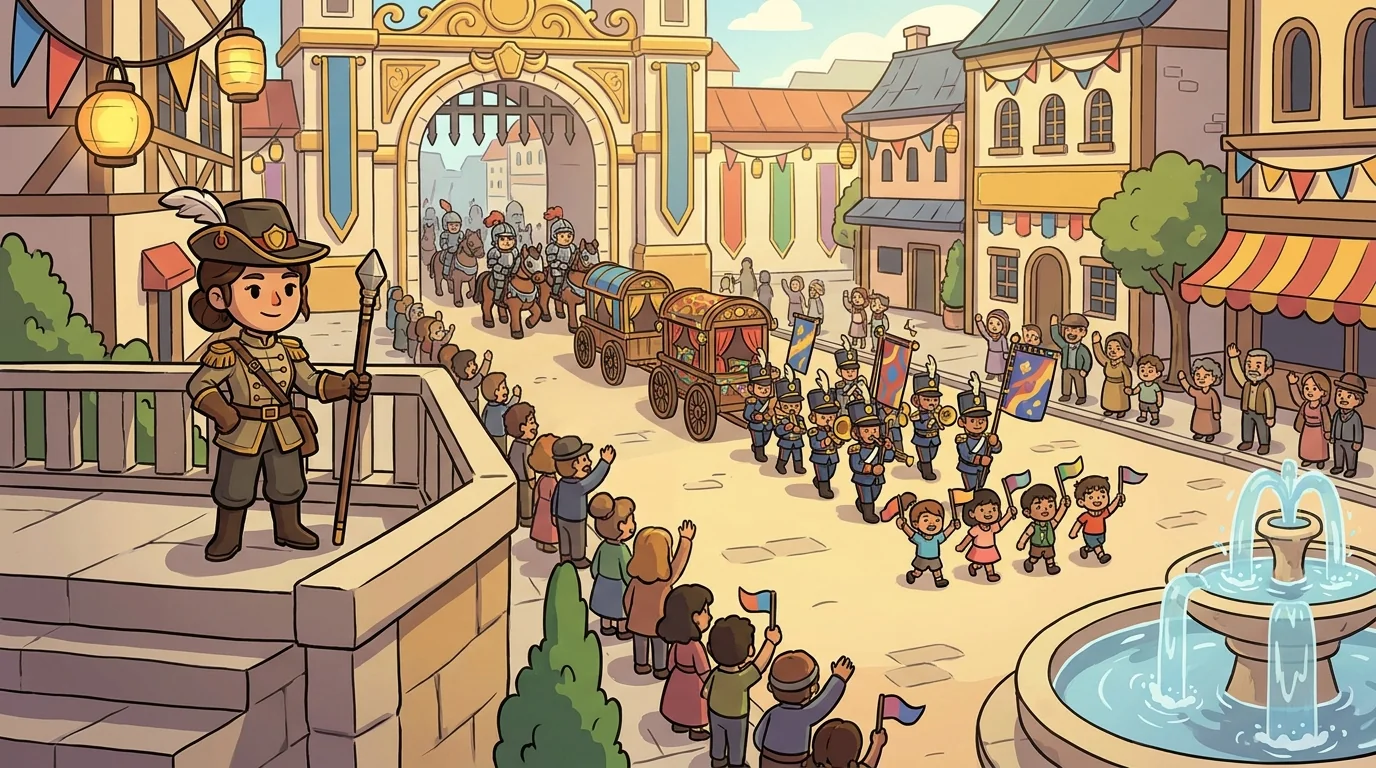
Marshal spent fifteen years directing the great processions of the capital — the harvest parade, the winter lantern march, the long slow crowds that filled the main road on festival days. Her job was to decide the order things moved in, and to make sure everything moved in that order and no other.
It was harder than it looked. A procession is not a line of one kind of thing. It is horses and carts and marchers and drummers and children with flags, all wanting to go at once, all arriving at the same narrow gate. If they went in the wrong order — carts before the horses that pulled them, drummers scattered through the marchers — the whole thing snarled into a shouting knot at the gate, and someone always ended up in the fountain.
So Marshal set the order in advance, the same order every time, and everyone learned it. Riders first. Then carts. Then marchers. Then the little ones with the flags at the back where they could not be trodden on. Because the order was agreed and fixed, every procession came out the same: smooth, and safe, and in the right shape.
"It isn't about who's most important," Marshal liked to say, watching a parade flow through the gate like water. "It's about everyone knowing the same order. Agree the order once, and the muddle never comes back."
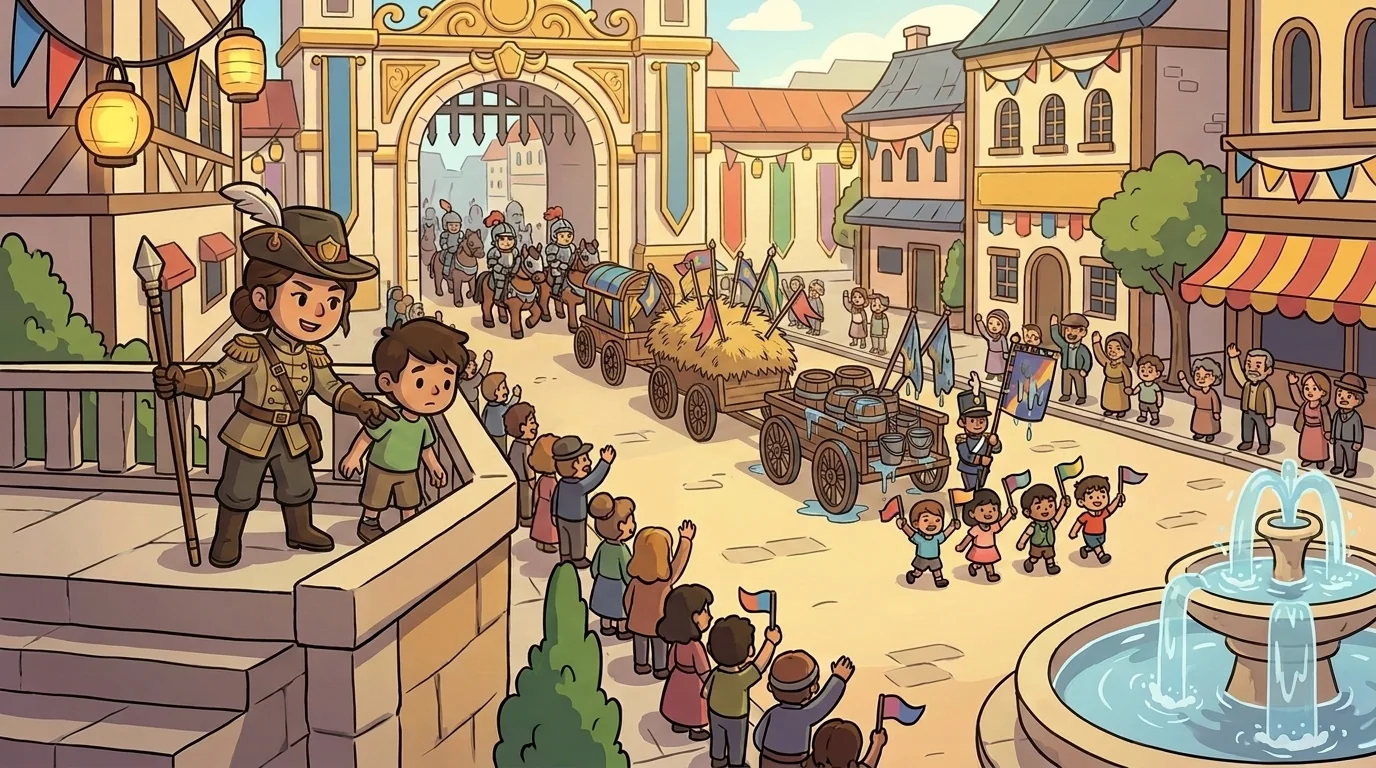
One festival, a boy named Tunny asked Marshal why it mattered so much. "They all get through the gate in the end," he said. "Does the order really change anything?"
"Watch two carts," said Marshal. She pointed to a hay-cart and a water-cart at the gate. "If the hay goes first and picks up the flags, we get a hay-cart full of flags. If the water goes first and picks up the flags, we get a wet flag-cart. Same carts. Same flags. Different order — completely different result."
Tunny stared. He had thought order was only tidiness. He had not thought it could change the answer.
"So the same things," he said slowly, "in a different order, come out different."
"Every time," said Marshal. That night she chalked it on the gatepost: SAME PARTS, WRONG ORDER, WRONG RESULT. Agree the order first.
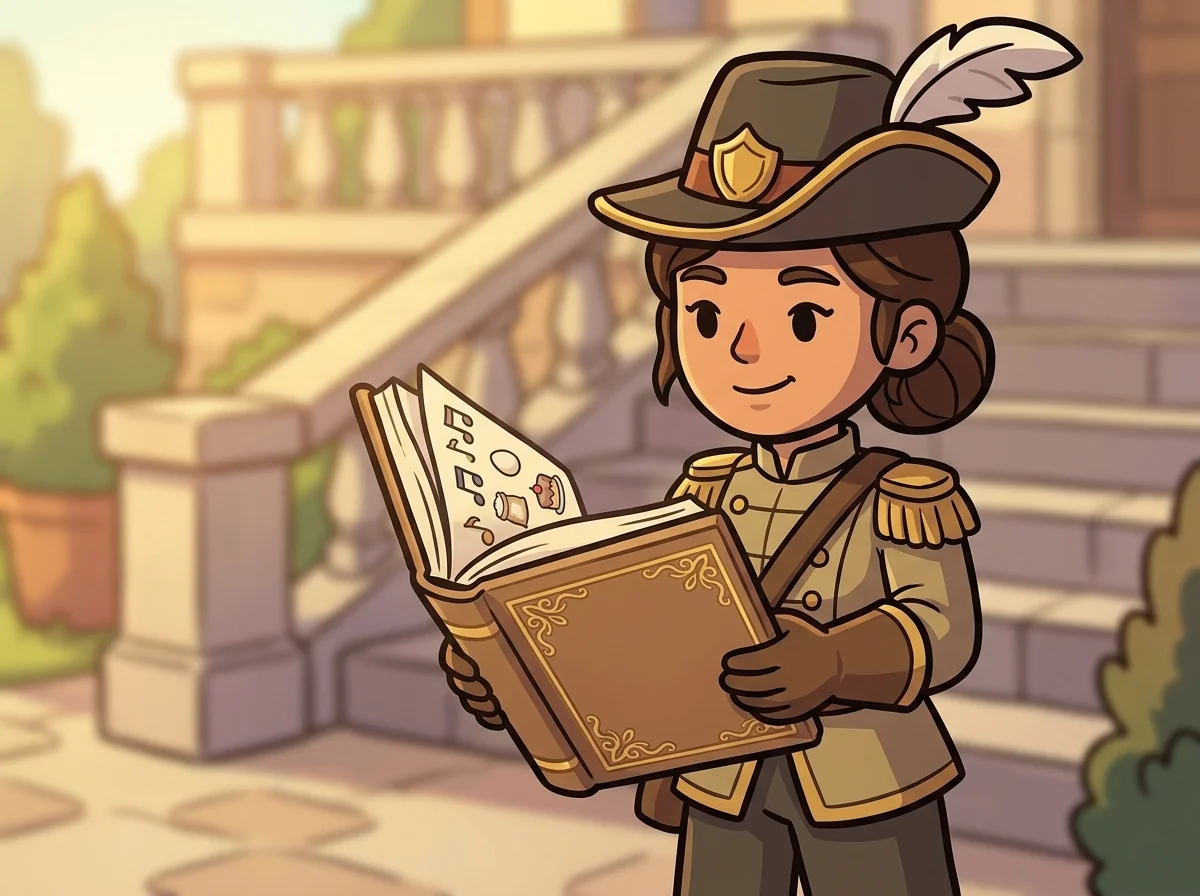
After that, Marshal saw ordered sequences everywhere — in recipes, where the eggs went in before the flour or the cake was ruined; in music, where the notes only made a tune in one arrangement; in the careful steps of anything that had to come out right.
A year later the EquationQuest academy, which had grown tired of children getting different answers to the very same sum, heard of a procession-marshal who "agreed the order first, so the muddle never came back." The academy master wrote to her. Marshal, who liked the idea of a quieter gate, accepted.
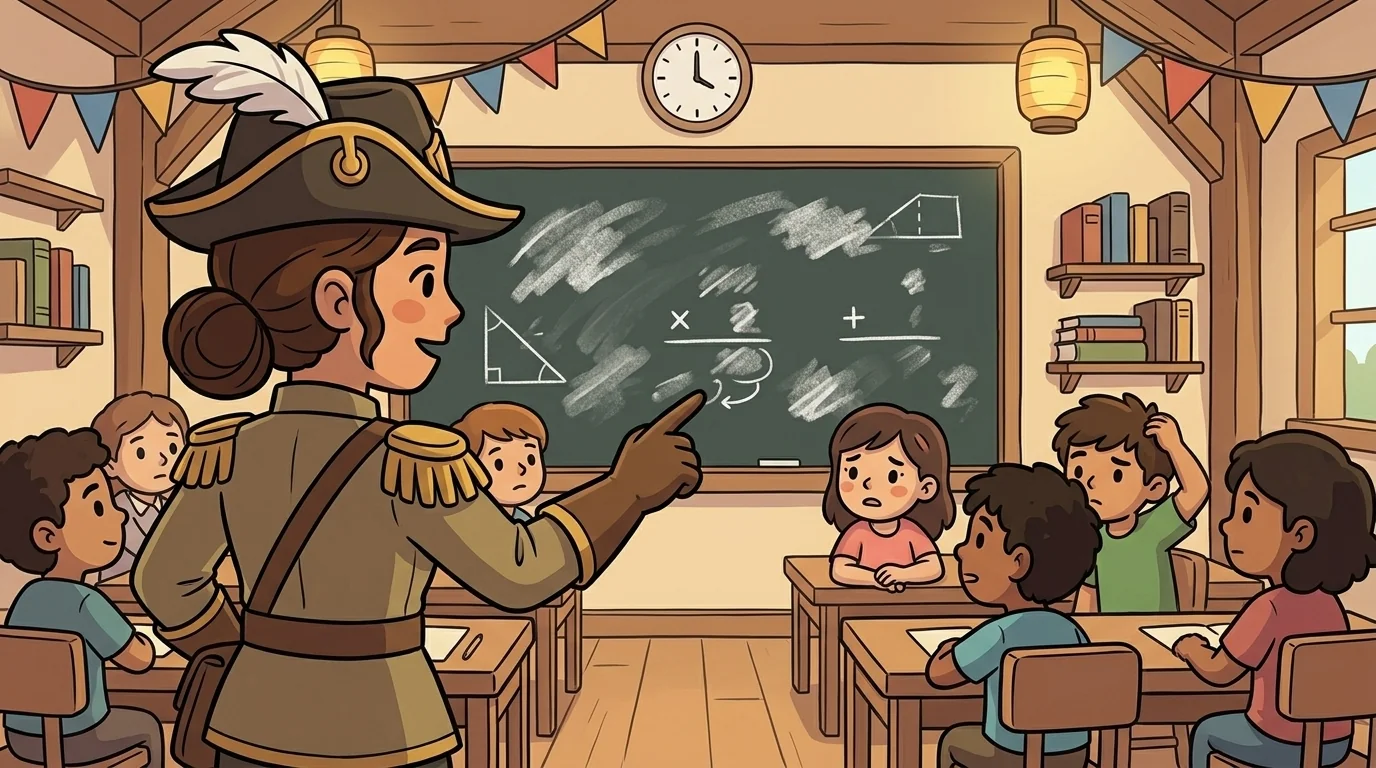
The board, Marshal found, was a procession of numbers all wanting through one gate at once. And like any procession, it needed an order agreed in advance.
She wrote on the board: 2 + 3 × 4.
"Two children solved this yesterday," she said. "One got 20. One got 14. Only one can be right. Why the difference?" The children leaned in. "Because they moved the parts in different orders. One added first — 2 + 3 = 5, then 5 × 4 = 20. One multiplied first — 3 × 4 = 12, then 2 + 12 = 14. Same parts. Different order. Different result."
"So which one's right?" asked a girl.
"Whichever one everybody agreed on," said Marshal. "And long ago, everybody did agree, so that sums would come out the same the world over. The order is: anything in brackets goes first. Then all the multiplying and dividing. Then, last, the adding and subtracting." She underlined the 3 × 4. "Multiplying comes before adding. So we do 3 × 4 = 12 first, then 2 + 12 = 14. Fourteen is right — not because it's kinder, but because it's the agreed order."
She wrote another: (2 + 3) × 4. "But brackets jump the queue. Now the 2 + 3 goes first — 5 — then 5 × 4 = 20. The brackets changed who goes first, so the answer changed too."
The children copied both, and saw how the little curved brackets could send a part to the front of the parade.
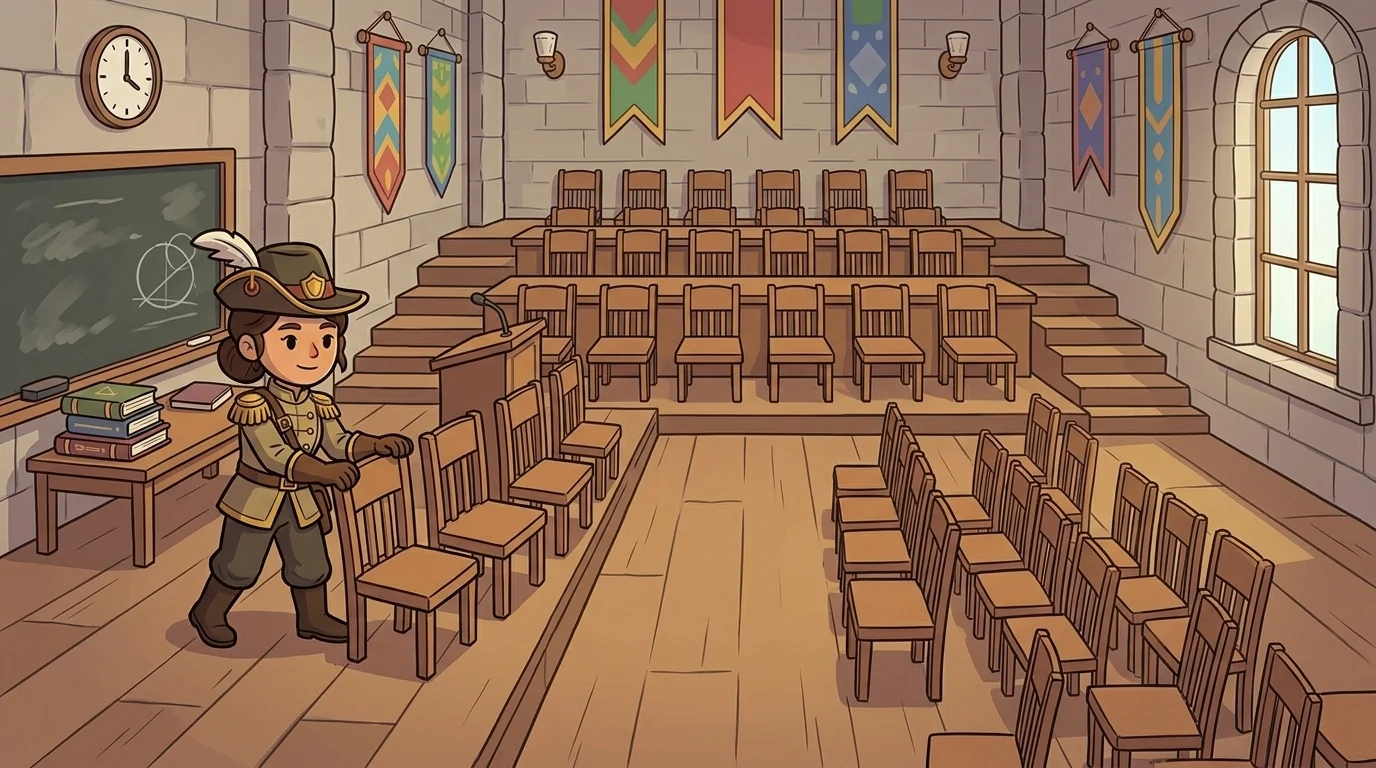
She still marshals the odd festival procession, when the capital asks and the academy can spare her, and the parades still come out smooth.
At the academy she tells the nervous children that order of operations is not a rule invented to trip them up. It is only a procession — the same agreement that lets a thousand marchers share one gate without ending up in the fountain. Once you know the order, the muddle never comes back.
"It isn't hard," she says. "It's just the order. Brackets, then times and divide, then plus and minus. Agree the order, and everyone gets the same answer."
When the hall empties, Marshal straightens the chairs into a neat file out of long habit, and feels the calm, orderly gladness of a gate through which everything has passed in its proper turn. She has felt it for twenty years, and it still steadies her, every time.
The EquationQuest ensemble
Marshal is part of EquationQuest's distributed-narrative cast. Each character embodies a different curricular primitive; together they teach the full subject.
-

Lever
Maintaining balance — do the same thing to both sides
-

Solo
Isolating the variable — moving everything else away from x
-

Undo
Inverse operations — addition ↔ subtraction, multiplication ↔ division
-

Spread
Distribution — multiplying across parentheses
-

Flipper
The sign-flip in inequalities when multiplying/dividing by a negative
-

Corral
Combining like terms — you can only add or subtract terms of the same kind; gather the like ones together
-

Leaven
Exponents — repeated multiplication; the small raised number counts how many times
-

Prise
Factoring — find the part two or more terms share and pull it out front
-

Stead
Substitution — put a known value in place of a variable, then simplify