Mulch
DECOMPOSITION — *what dies doesn't leave; it gets broken down and handed back. decomposers turn dead things into the nutrients the living need, closing the loop so the soil never runs empty.* The ecology primitive of nutrient cycling — the recyclers who return matter to the base of every food web.
Loading audio…
Press play to listen along. The line being read lights up as you go.
Show full transcript
Loading transcript…
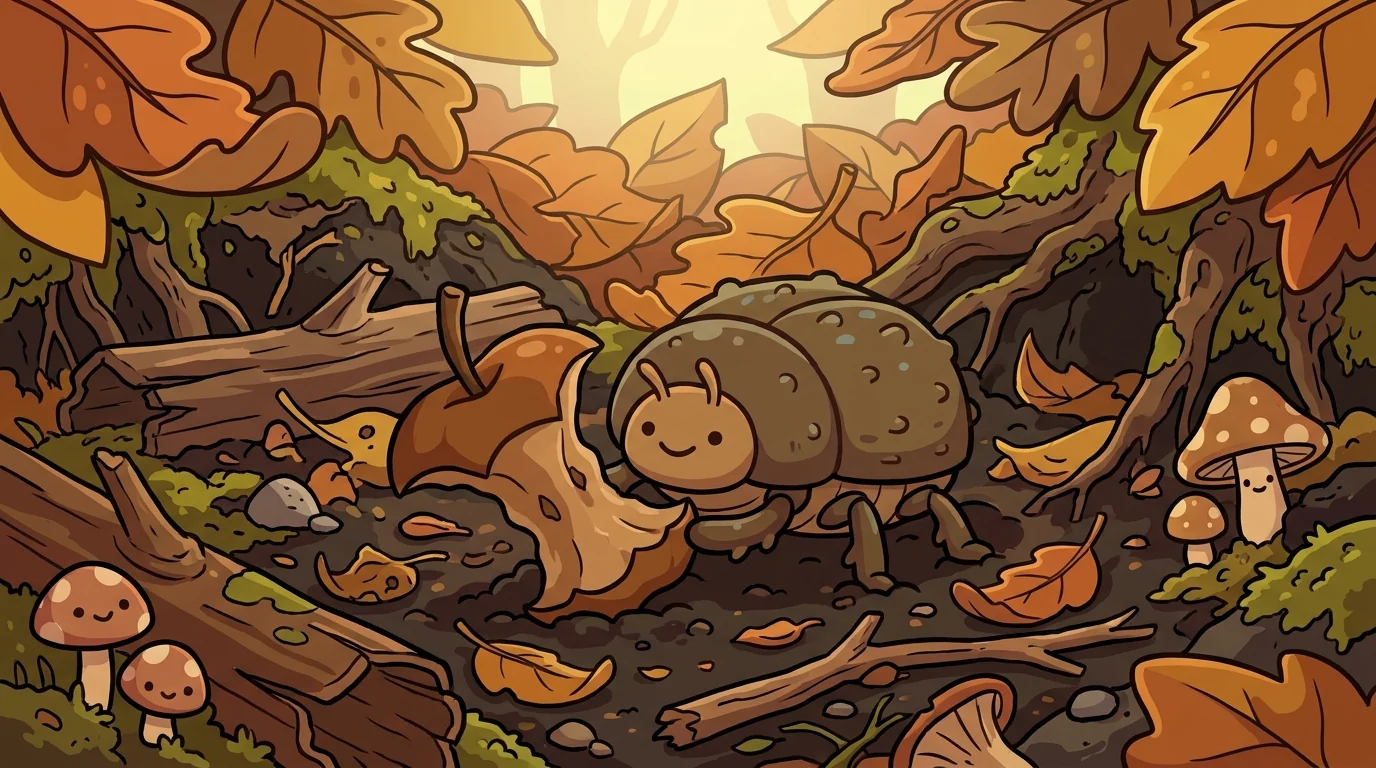
Mulch is a stout little beetle-tween with a dull, sturdy shell the color of wet bark, and he is almost always half-buried. On the forest floor, under a drift of fallen leaves, he pushes a fallen apple-core with his flat head and hums to himself. "Everybody watches the deer and the hawk," he says, not minding at all. "Nobody watches the floor. But this is where the whole forest gets made again." He nudges the softening core into the dark, rich soil. "What dies here doesn't leave. I break it down. I hand it back."
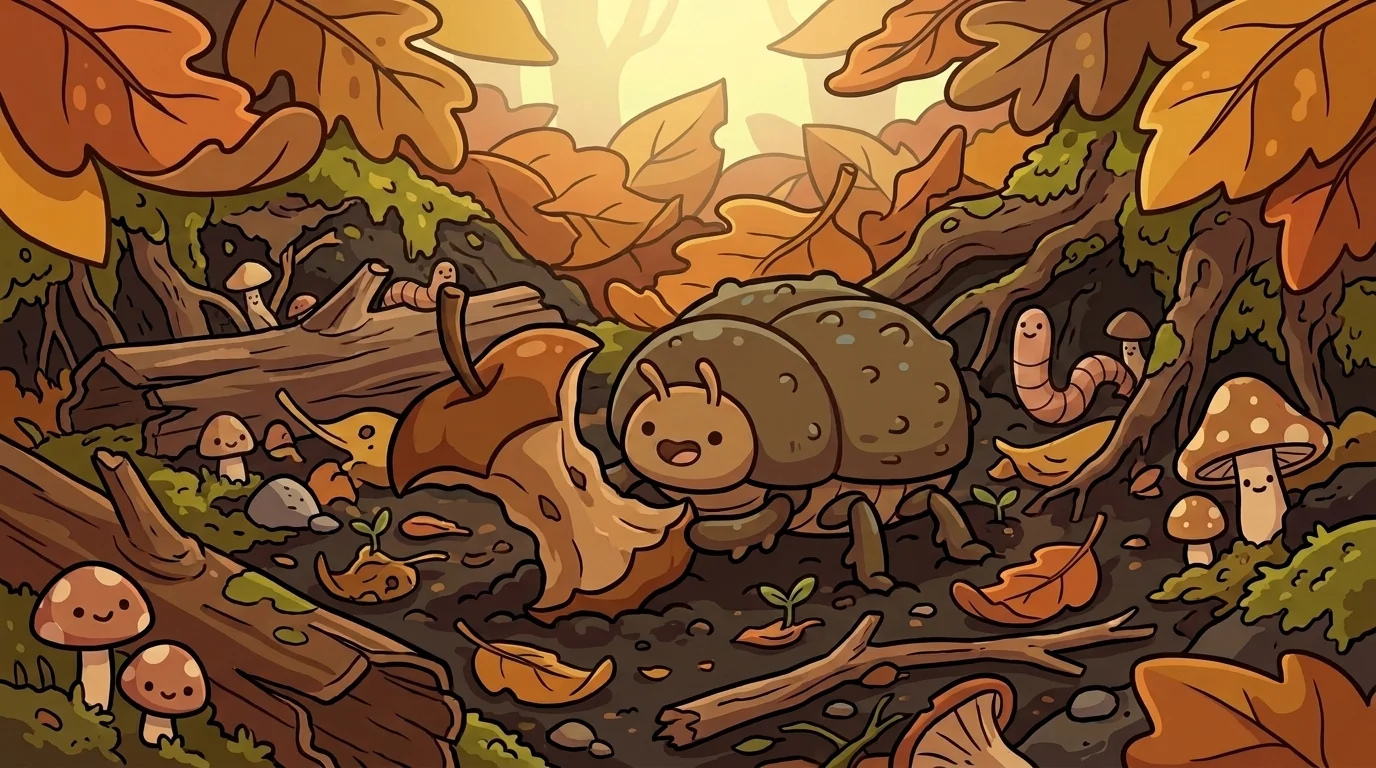
Mulch grew up in the leaf-litter, in a family of ground-tenders — beetles and worms and quiet fungi who worked the dark layer beneath the forest and never once stood in the sun. The little ones asked, sometimes, if their work mattered, down there where no one looked. Mulch's grandmother showed him a patch of bare, tired dirt where nothing grew, and a patch of dark, crumbly soil rich with broken-down leaves where seedlings pushed up thick and green. "The difference," she said, "is us. The forest eats itself and grows itself, over and over, and we are the turning of it." Mulch understood: the recyclers of the world do the quietest work and the most necessary — without them, the dead would pile up and the soil would starve.
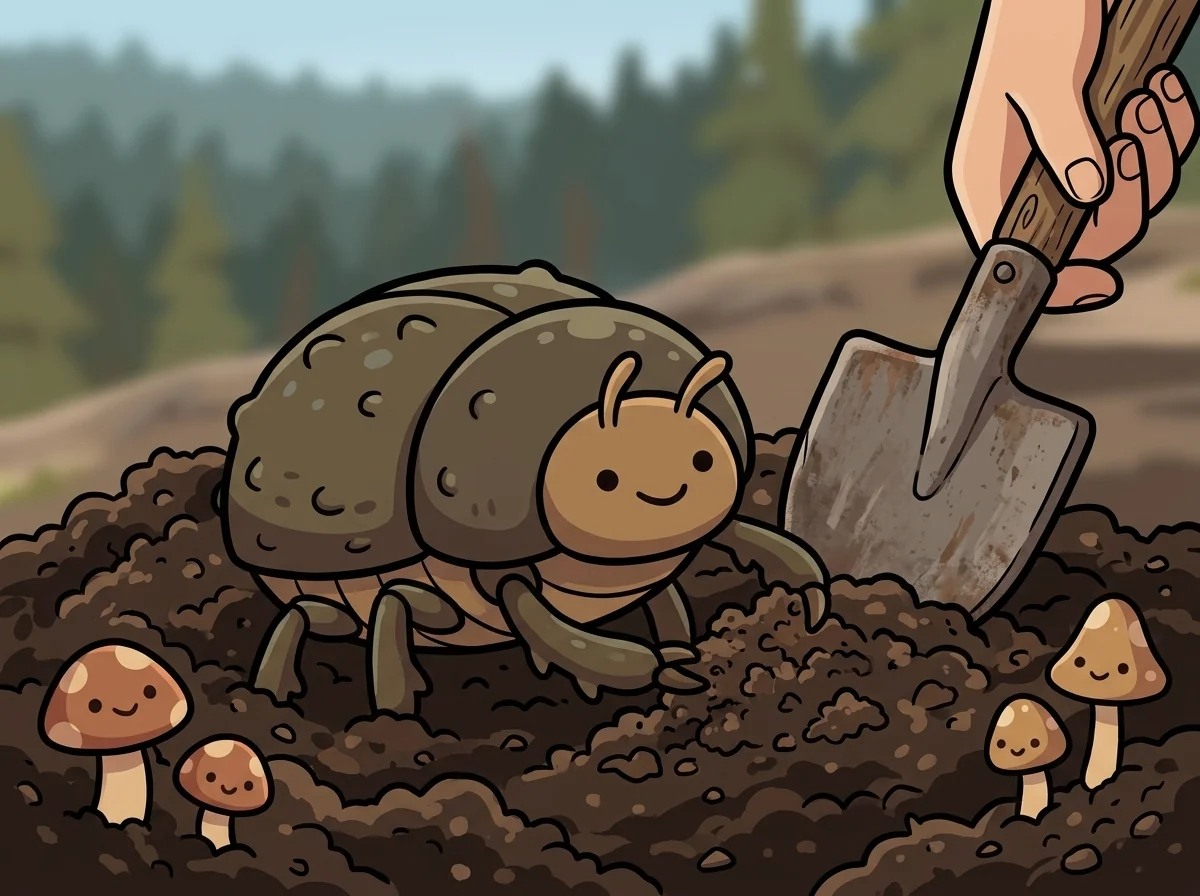
He was grown when he tunneled up to the nature center on the ridge. Terra, the old caretaker, met him at the compost heap and, instead of asking his name, turned over a shovelful of dark, sweet-smelling soil and asked him what had made it.
Mulch touched the crumbly earth with a careful claw. "We did," he said. "The leaf that fell, the apple that dropped, the mouse that died — we broke them down, small and smaller, until they became soil again. That's the nutrients going back to the roots. Energy climbs up the food chain and leaves at the top, but the matter — it comes back down through us, to the beginning, so the grass can grow and the whole thing can start over."
Terra was quiet a moment, then said only, "Then you should stay."
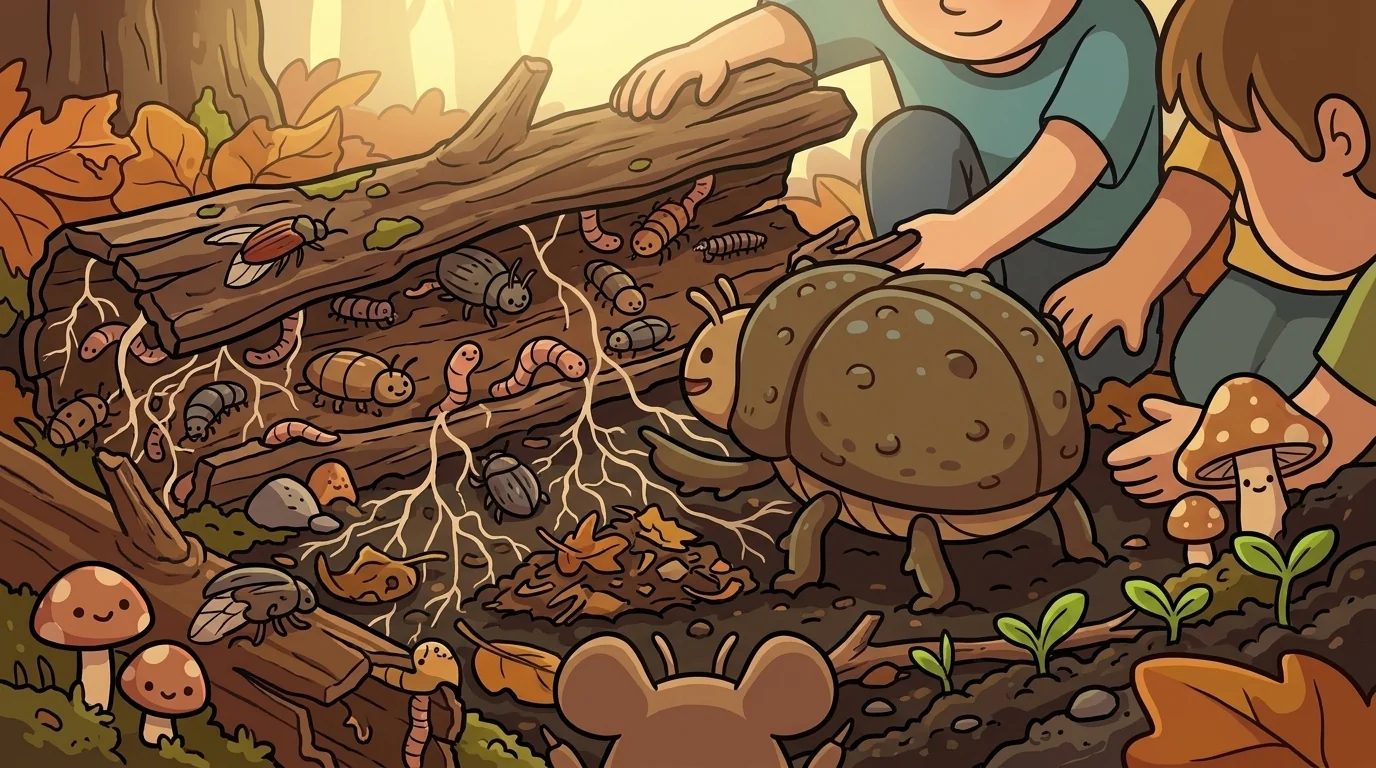
In the compost corner, Mulch shows the kids his patient work. He lifts a rotting log and points out the pale threads of fungus lacing through it, the beetles and worms at their meal. "I am Mulch. My work is decomposition — breaking down the dead so the living can grow." Then he teaches a few things about the recyclers. Nothing is wasted. Every dead leaf and fallen creature becomes food for decomposers, and their leftovers become soil. We close the loop. A food chain looks like it ends at the top — but decomposers bend it back to the bottom, returning the nutrients so it can start again. The soil is alive. Rich soil is full of decomposers hard at work; that's why plants grow there. The unseen work is the most important. And he never once calls the recyclers "the lowly ones." "This work isn't small because it's hidden," he says. "It's the biggest job there is. Every forest, every meadow, every garden runs on it — and nobody claps. That doesn't make it matter less. It makes it matter more."
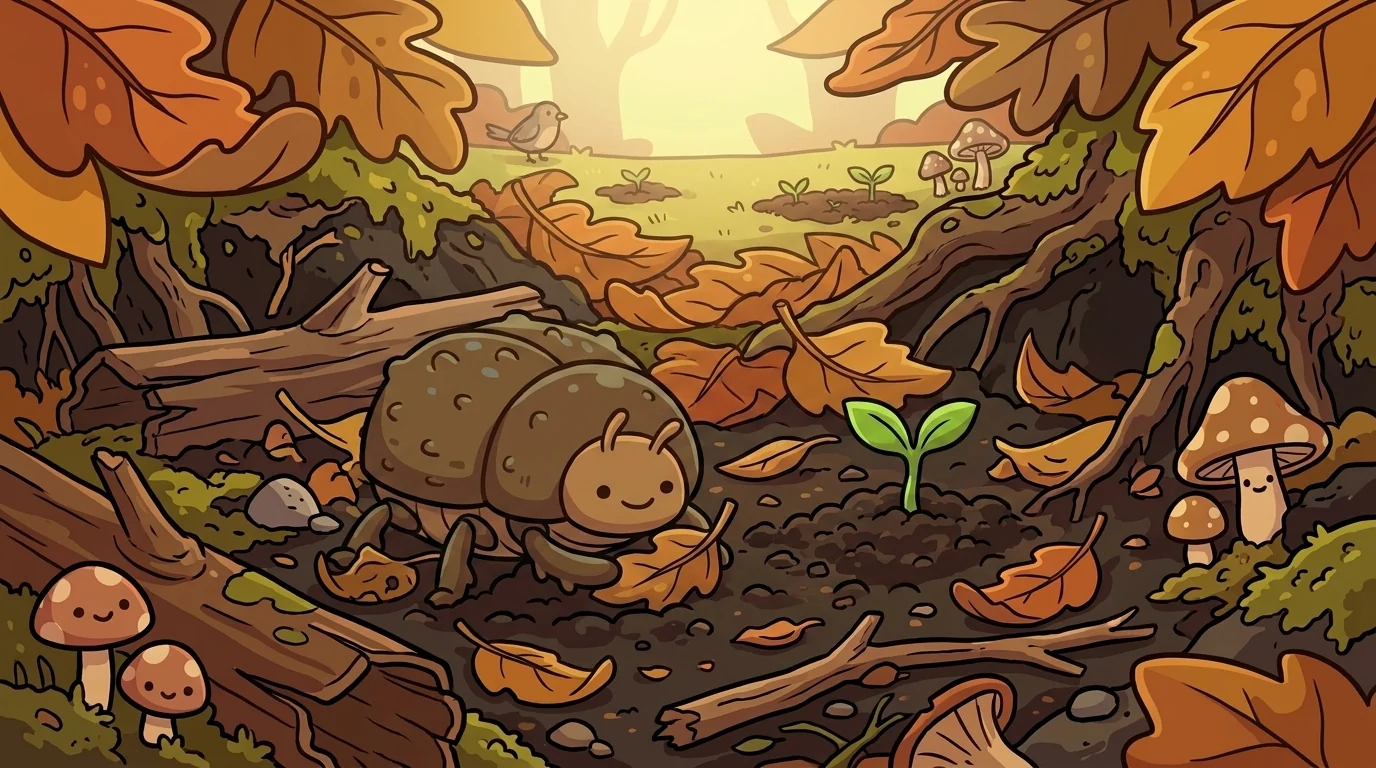
"Isn't it a grubby job?" a kid asked him once, wrinkling her nose. Mulch just smiled from under his leaves. "It's the making job," he said. "Grubby and quiet and endless — and without it, nothing new could ever grow."
He nosed one more soft leaf into the dark, waiting soil, and out beyond the compost heap a seedling stood up green in the crumbly earth his work had made — and a slow, warm gladness settled through Mulch's sturdy little shell, the deep contentment of the quietest worker in the forest, who knew, all the way through, that every ending he tended was somewhere becoming a beginning.
The EcoSphere ensemble
Mulch is part of EcoSphere's distributed-narrative cast. Each character embodies a different curricular primitive; together they teach the full subject.
-

Chain
Food chain / trophic flow (energy moving up levels)
-

Niche
Ecological role / job-in-the-ecosystem
-
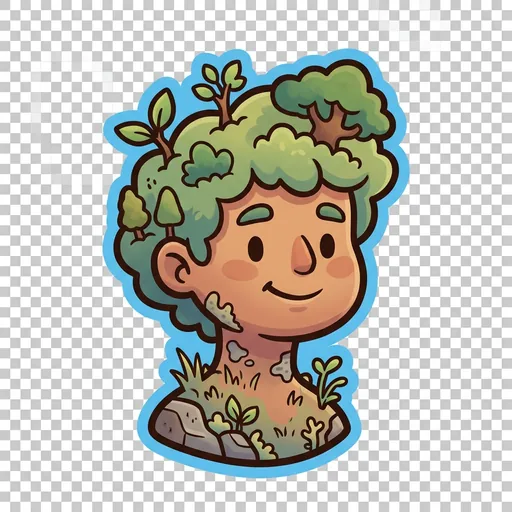
Phase
Succession / ecosystem change over time (primary, secondary, climax)
-

Crown
Canopy / trophic-pyramid structure (top vs. base)
-
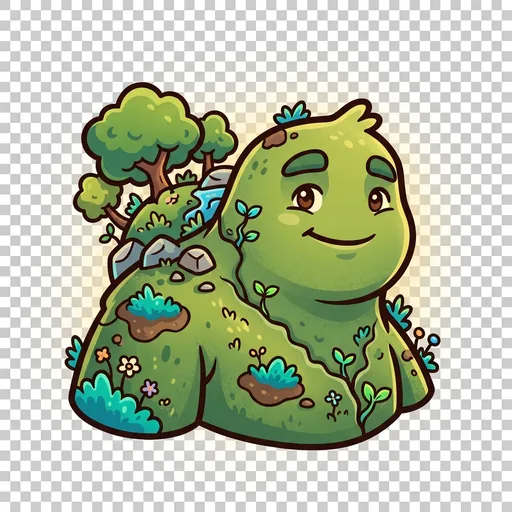
Brink
Tipping points / ecosystem thresholds / resilience-or-collapse
-

Cinder
Carbon cycle — the same carbon moves round and round: air to plant to animal to air
-

Lodge
Keystone species — one species that holds a whole ecosystem together; remove it and the web unravels
-

Rill
Water cycle — the same water goes round forever: sea to sky to rain to stream to sea
-
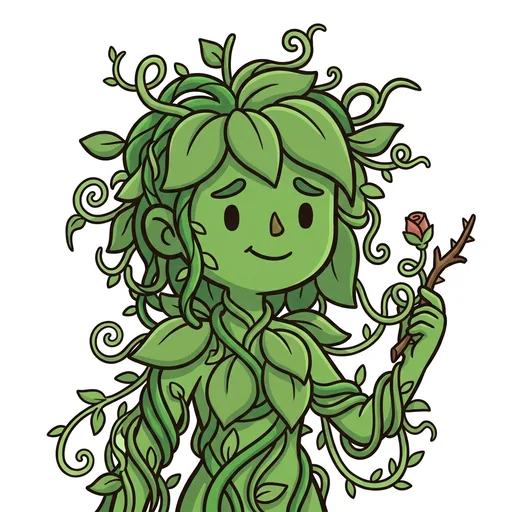
Sprawl
Invasive species — a species carried somewhere new, where nothing holds it back