Brink
TIPPING POINTS / ECOSYSTEM THRESHOLDS / RESILIENCE-OR-COLLAPSE — systems hold until they don't. Recognizing the thresholds at which an ecosystem shifts from one state to another, framed as witness-and-choose (not climate-doom).
Press play to listen along. The line being read lights up as you go.
Show full transcript
Loading transcript…
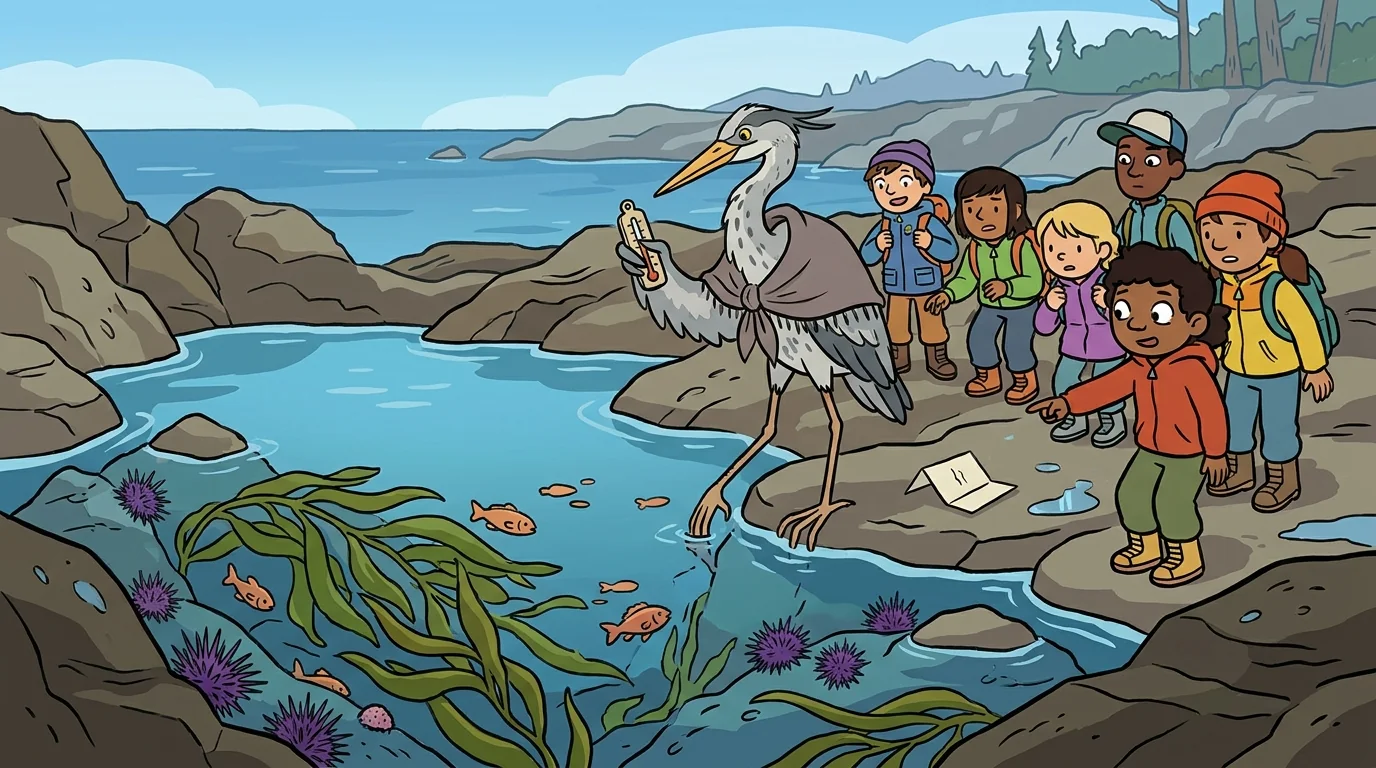
At the edge of the tide pool, a grey-flecked heron-elder named Brink stood very still and watched the water.
A cluster of nature-club kids fidgeted behind her. They'd come to see something dramatic — a collapse, a dying, a warning. Instead Brink was just looking. She lifted a small worn thermometer-charm from the cord at her neck and held it to the light, reading the number the sun laid across the glass.
"Nothing's happening," a boy muttered.
"Everything is happening," Brink said, without turning. "It's just happening slowly. That's the hard part to watch."
She dipped one long toe into the pool. Tiny fish scattered. The kelp near the rocks swayed thick and green, and among it moved a scatter of purple sea urchins, spines drifting.
"Count the urchins for me," she said.
The kids counted, arguing, landing on nine.
"Nine is fine," Brink said. "The kelp can feed nine urchins and still grow faster than they eat. Nine, twelve, even twenty — the forest holds." She unfolded a small card from a fold in her shawl and laid it on the wet rock. On it was written a number and a line. "But there is a count — right about here — where the urchins eat faster than the kelp can grow back. Cross that line, and in a season or two this whole green forest becomes bare rock. Not slowly. Suddenly." She looked at the boy. "You wanted something dramatic. The drama is the line. My whole job is to see it before we reach it."
Brink had learned to watch lines when she was very young, in elder-counting, which is slower than the counting most of us do.
Her family had been weather-companions — herons who traveled between villages carrying shared records of the seasons. When the fish came. When the bees thinned. When the storms shifted. It was patient, unglamorous work, and it had taught her something that had frightened her, once.
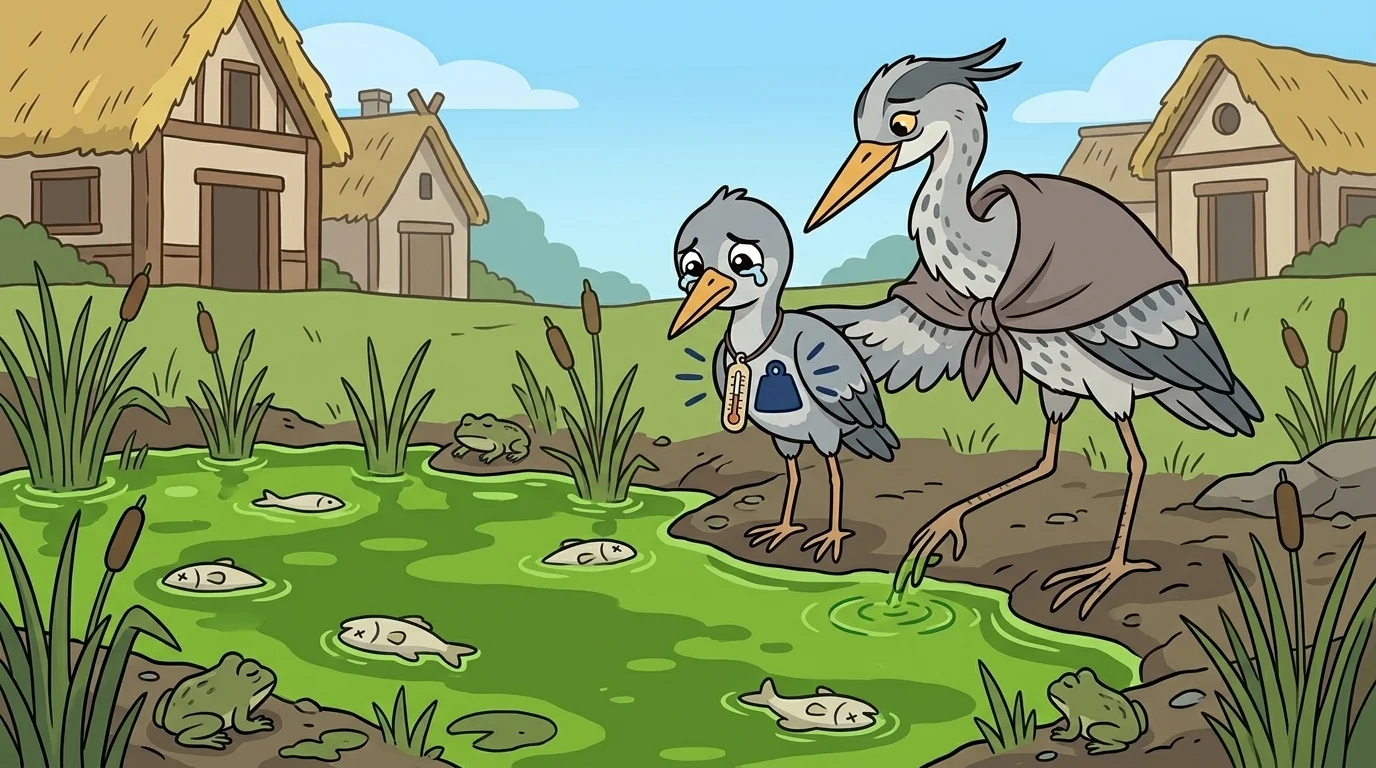
She was six the year the river-village pond went wrong. All summer it had looked the same to her — a little greener, a little warmer, but the same. The old herons kept saying, "Watch the pond," and she couldn't understand why. It looked fine. Then one hot week it turned, all at once, from a pond into a thick green soup, and the frogs went quiet, and the fish rolled up pale.
Brink remembered the exact feeling in her chest — a cold drop, a helpless weight — because she thought she had missed it. That she should have seen the moment and hadn't.
An old heron had settled beside her and read her face. "You feel like you failed to catch it," she said. "That heavy feeling — that's caring. Don't throw it away." She tapped the water. "It didn't turn overnight. It leaned toward the edge all summer. We couldn't see the exact step. But we could have seen it leaning." She looked at small Brink. "That's the work. Not predicting the doom. Noticing the lean. And the leaning gives you time."
The cold weight in Brink's chest didn't vanish. But it changed shape — from I failed into I can learn to watch. That, she found, she could carry.
She walked to the EcoSphere academy at one hundred and forty, because a place that studied living systems ought to understand the kind of change that arrives all at once.
Terra, who ran the academy, met her at the water gate and asked one question. "What is a tipping point?"
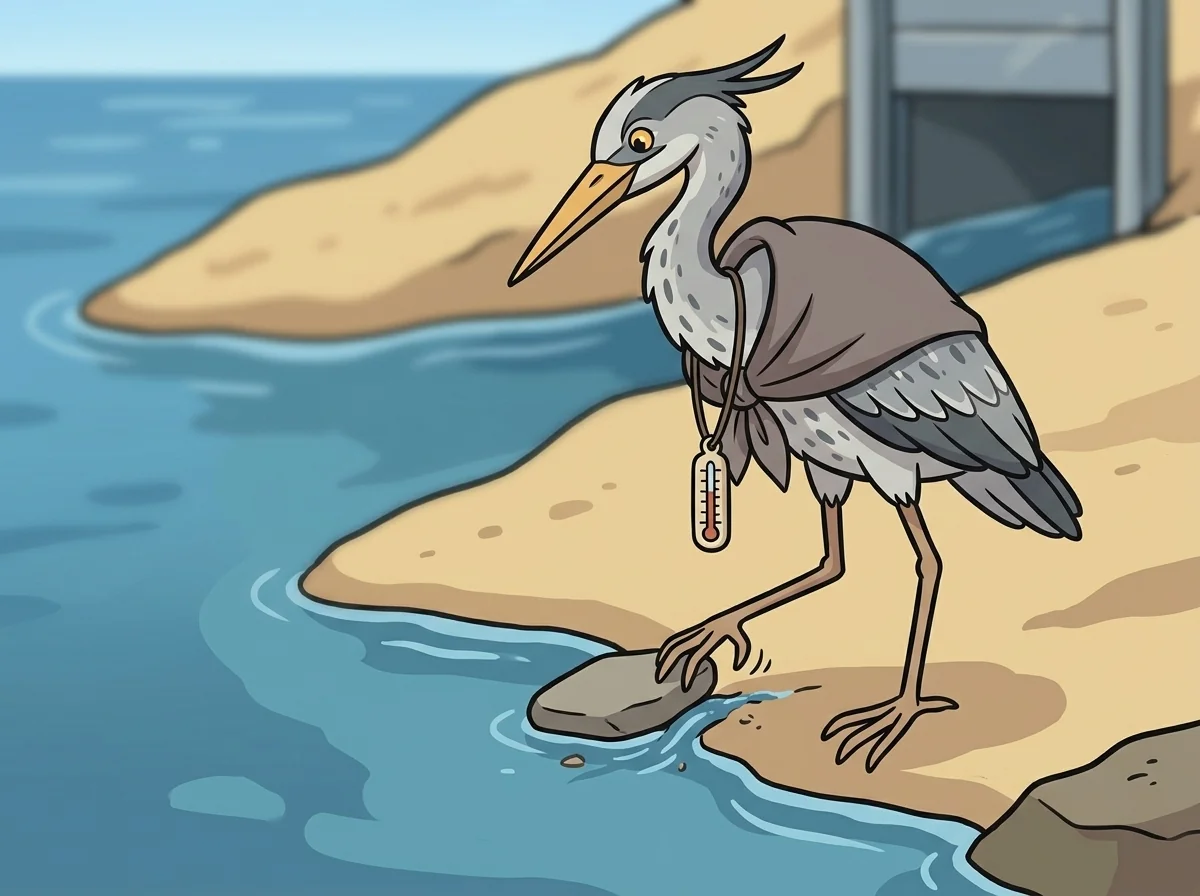
Brink didn't answer with a speech. She set a flat stone on the sandy bank and slowly pushed a trickle of water toward its base, grain by grain, until the sand beneath one edge gave way and the stone tipped over with a soft thud.
"There," she said. "Every grain before that one changed nothing you could see. The last grain changed everything. But it wasn't really the last grain's fault. It was all of them, leaning." She lifted the stone and set it back upright. "The skill isn't waiting for the thud. It's watching the sand."
Terra was quiet a long moment. "You are welcome here," she said.
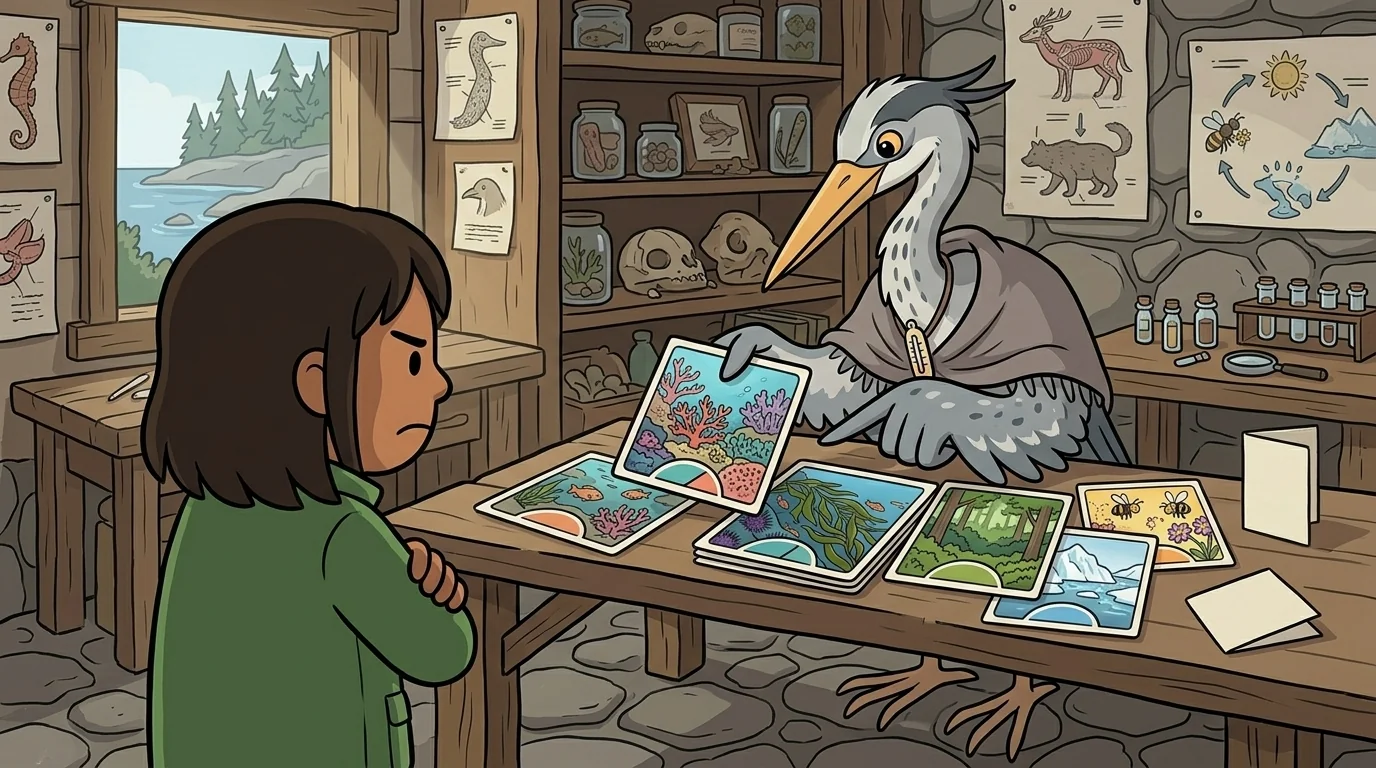
Brink's workshop filled up with kids who thought she was going to scare them.
One girl came in already braced, arms crossed, jaw set. She'd read about coral reefs bleaching and the Amazon thinning and she'd decided, somewhere on the walk over, that it was all going to end and there was nothing a kid could do. "So why even learn it," she said. "It's too big. It's already too late."
Brink didn't argue. She unfolded her whole stack of cards and spread them across the bench — coral, kelp, forest, ice, bees. "Read me one," she said.
The girl read the coral card. Her voice went thin.
"Now read the small line under it," Brink said.
Approaching in some regions. Held below in others.
"Held below," Brink repeated gently. "Not all of these lines get crossed. Lots of them are being held right now, by people watching the sand — scientists, towns, whole countries changing how they do things." She slid one card forward. "This is the part nobody tells you when they only want you scared: a threshold you can name is a threshold you can aim away from. Doom says it's already the thud. The data says it's still the leaning. Those are not the same." She met the girl's eyes. "And you did not push the sand. A kid's job was never to hold up the whole world alone. Your job is to learn to watch, and then join people who are already pushing the stone back upright."
The girl's crossed arms loosened, just slightly. "So what do I actually do?"
"One system," Brink said. "Not all of them today. One. Watch it. Notice if it's leaning. Then find the people acting on it and stand with them." She smiled. "The other cards will wait. They're patient. So am I."
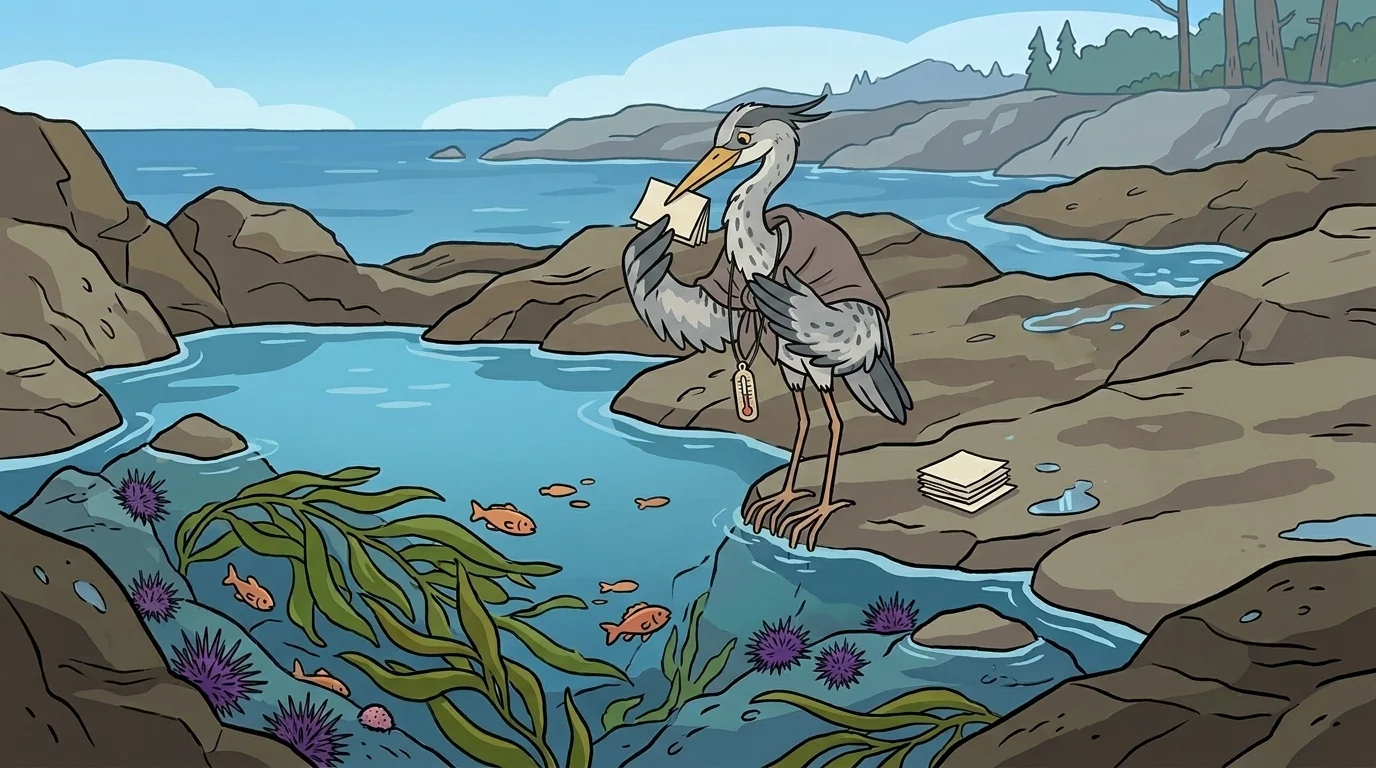
Later, when the workshop had emptied, the girl came back with a smaller question.
"When you look at all those cards," she said, "the hard ones — how do you not just feel awful?"
Brink thought about the green pond, and the cold drop in her chest, and the old heron's voice.
"I do feel it," she said. "Right here." She pressed a wing to her chest. "There's an ache when you love a living thing and you can see it leaning. I don't get rid of that ache. I'd be worried about myself if I could." She refolded the cards, one at a time, slow and careful. "But I put it next to something else — the fact that I got here in time to watch. That the line isn't crossed yet. That I'm not the only one looking." She set the folded stack back in her shawl. "The ache and the steadiness live in me at the same time. And when I hold them both, the ache stops feeling like drowning and starts feeling like caring that has somewhere to go."
The girl nodded slowly. Brink watched the tight set leave her shoulders, the same way, long ago, the cold weight had eased in her own small chest by a greener pond.
Outside, the tide slid back over the pool. Brink breathed out, and felt her chest go quiet and level — not empty, not crushed. Just steady, and watching, and warm.
The EcoSphere ensemble
Brink is part of EcoSphere's distributed-narrative cast. Each character embodies a different curricular primitive; together they teach the full subject.