Cinder
CARBON CYCLE — *the same carbon moves round and round — air to plant to animal to soil and back to air — and that flow is normal and balanced. the trouble is EXTRA carbon, dug up and burned faster than the cycle can tuck it away, thickening the blanket that keeps Earth warm.* The earth-systems primitive of carbon's journey and the greenhouse effect.
Loading audio…
Press play to listen along. The line being read lights up as you go.
Show full transcript
Loading transcript…
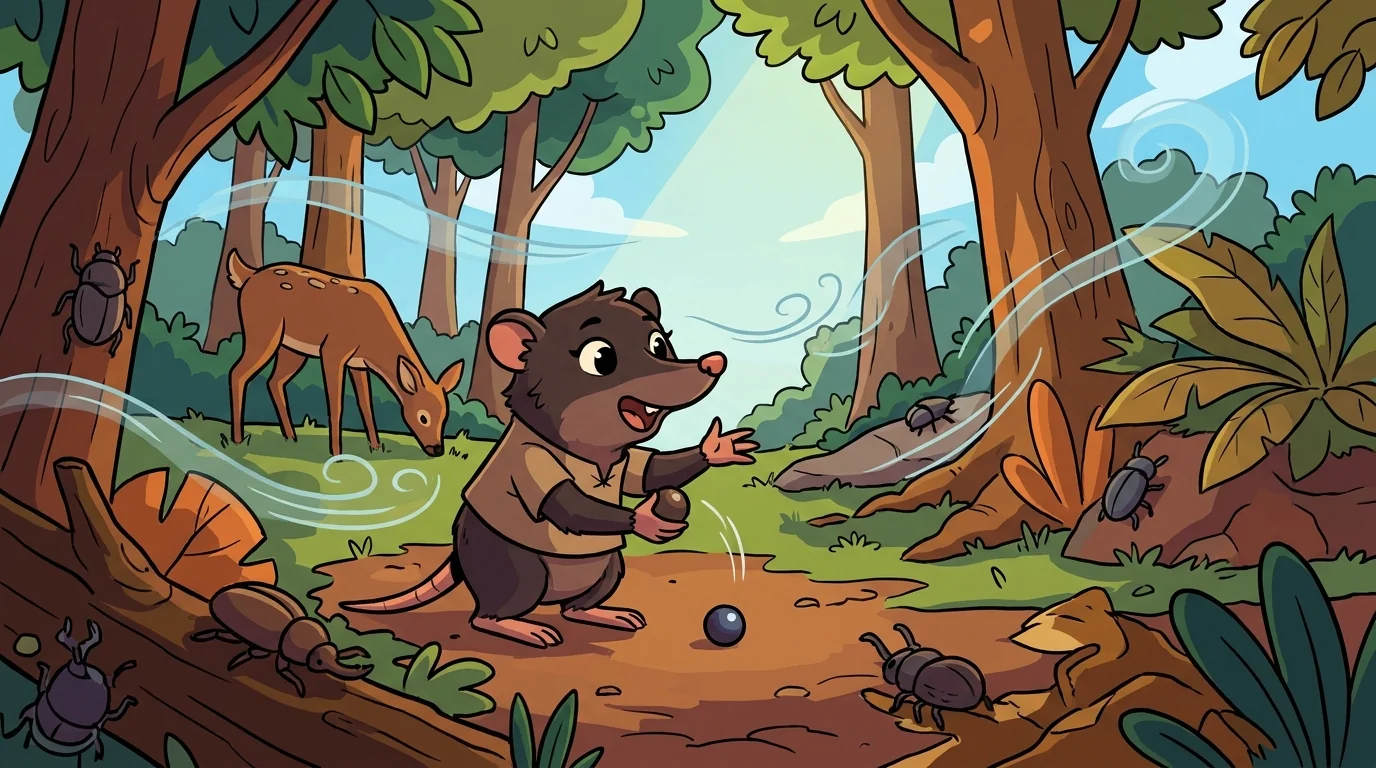
Cinder is a small, dark-furred shrew-tween, quick and bright-eyed, and between her paws she keeps a single dark bead she never puts down. "This is one bit of carbon," she says, rolling it. "Just one. And it has been everywhere. It's been air. It's been a leaf. It's been a deer, and a beetle, and the soil, and the air again. Round and round, for millions of years. It never wears out. It just keeps going."
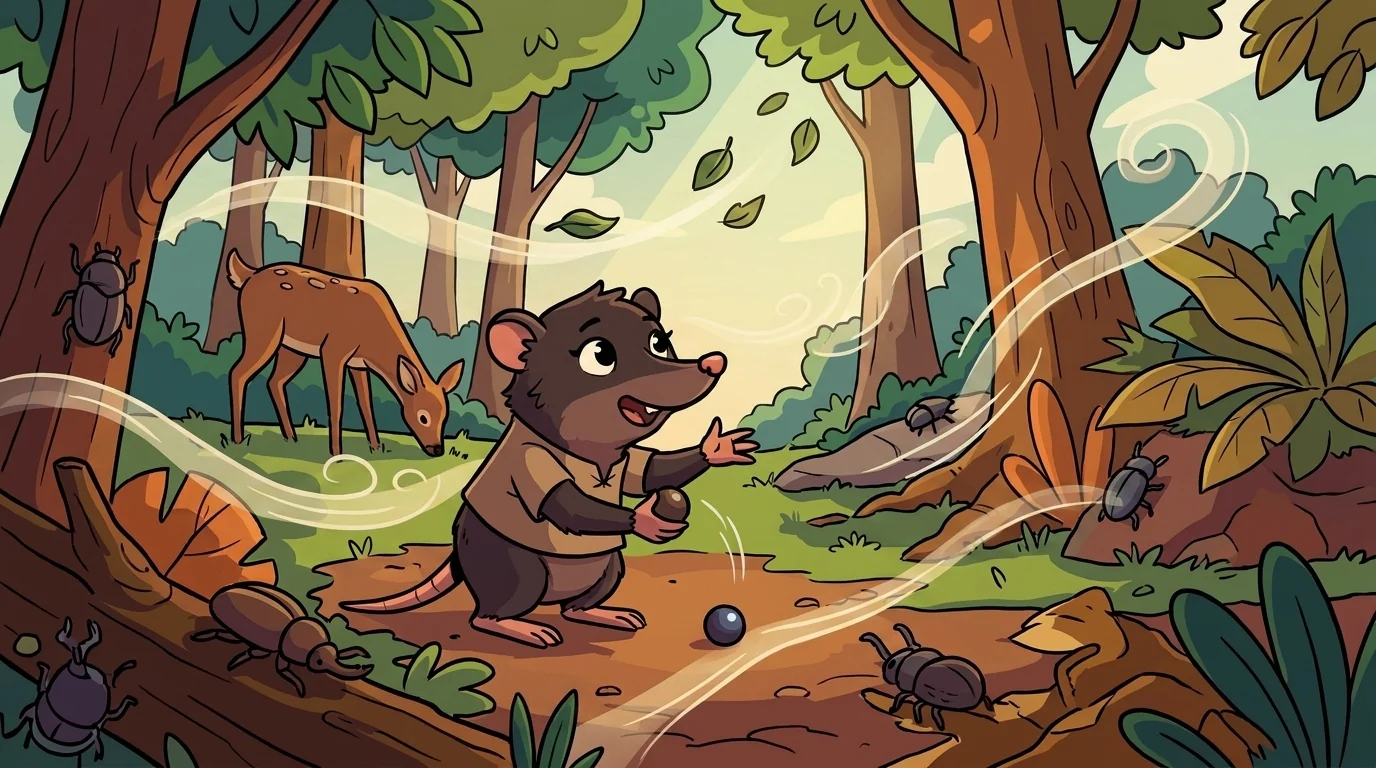
Cinder grew up telling the bead's story, in a family of cycle-watchers who followed the great slow loops of the world. She learned the carbon loop first, because it was the loop the whole living world runs on. A plant pulls carbon out of the air and builds a leaf. An animal eats the leaf and breathes some carbon back out. What dies goes to the soil, and the soil breathes carbon back to the air, and a plant pulls it in again. "Round and round," her grandmother said, rolling her own dark bead, "and it stays in balance, because the same amount goes up as comes down." Young Cinder loved that the carbon in her own breath had been in a fern once, and a dinosaur, and the sea — the same atoms, borrowed and handed on, forever.
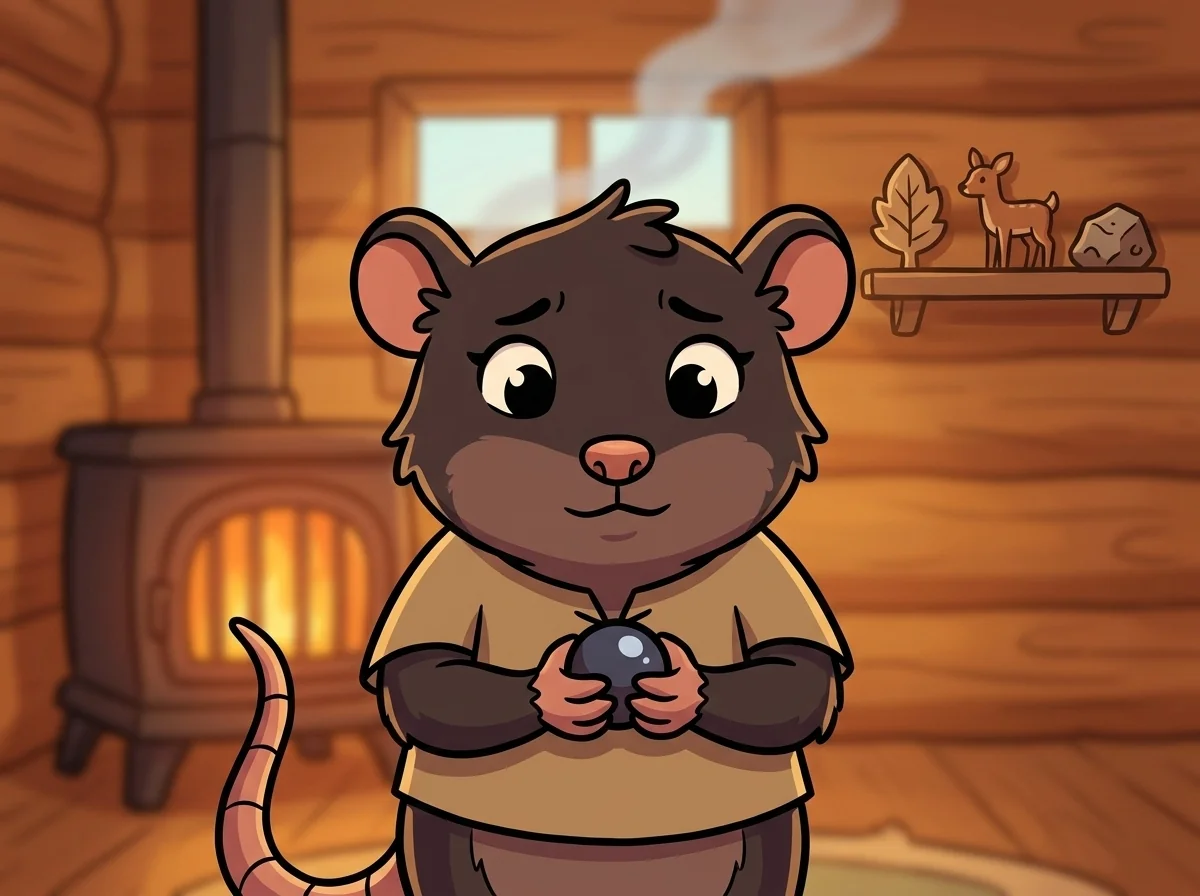
She was grown when she scurried up to the nature center on the ridge. Terra, the old caretaker, met her by the woodstove and, instead of asking her name, nodded at the smoke rising from the chimney and asked her where it was going.
Cinder held up her dark bead. "Up into the air — as carbon," she said. "That's the loop: air to plant to animal to soil to air, round and round, always in balance. But there's a catch now. We've been digging up carbon that was tucked away underground for millions of years — coal, oil — and burning it, adding it to the air faster than the loop can tuck it back. Extra carbon in the air thickens the blanket that keeps Earth warm, so the whole world warms up. The cycle isn't broken. It's just... overfilled. And that we can understand — and work on."
Terra was quiet a moment, then said only, "Then you should stay."
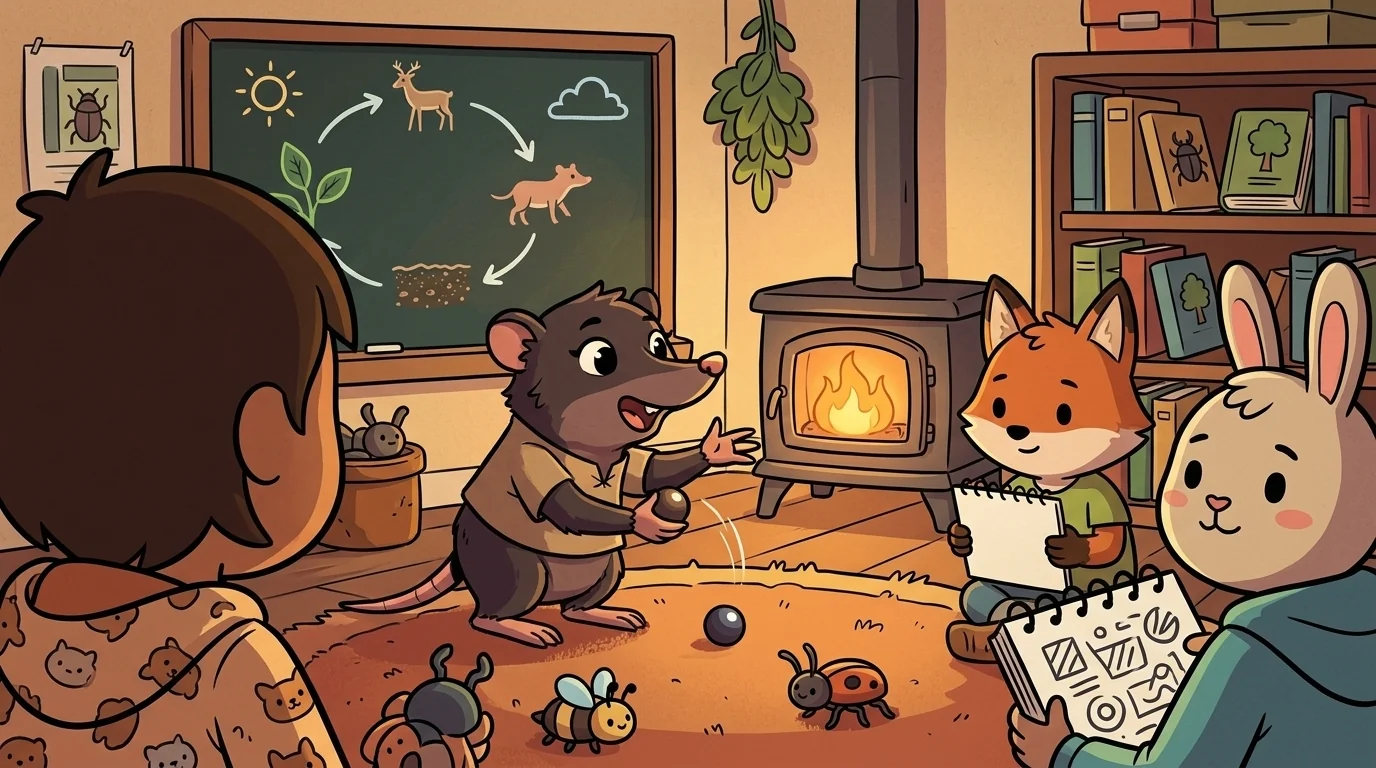
By the woodstove, Cinder shows the kids the loop and the catch. She rolls her bead from paw to paw — air, leaf, animal, soil, air. "I am Cinder. My idea is the carbon cycle. The loop is normal. The extra is the problem." Then she teaches a few things. The same carbon keeps cycling. It moves between air, plants, animals, and soil, over and over, and never runs out. Balance is the normal state. For ages, as much carbon went up as came down, so the air stayed steady. Extra carbon warms the world. Carbon in the air acts like a blanket, holding in the sun's warmth; dig up and burn old carbon, and the blanket thickens. Understandable means workable. And she never once says climate is too big or too scary to grasp. "It's not magic and it's not doom," she says. "It's a loop with too much added to it. And every bit of carbon we don't add, or that we help a forest or the ocean pull back down, thins the blanket a little. Big problems made of understandable parts can be worked on — by anyone who understands the parts."
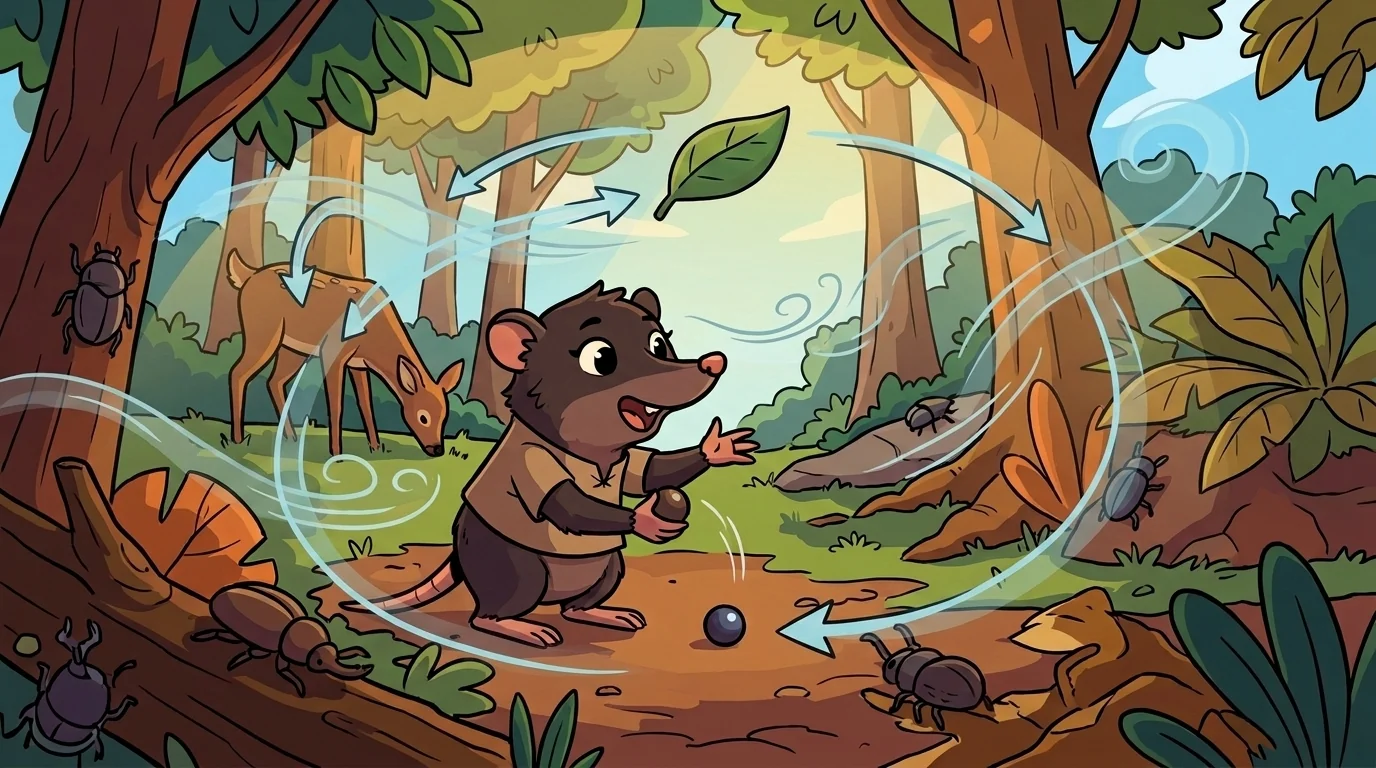
"Isn't the climate too big to even think about?" a kid asked her once, worried. Cinder rolled her bead into the kid's palm. "It's big," she said gently. "But it's not a mystery. It's carbon, moving in a loop, with too much added. Now you know the loop. That's where every fix starts."
She took her dark bead back and rolled it once more between her paws — air, leaf, animal, soil, air, the same tiny thing on its endless journey — and a calm, clear steadiness settled through her, the quiet gladness of a small creature holding a big truth she understood well enough to carry, and to hand on, without fear.
The EcoSphere ensemble
Cinder is part of EcoSphere's distributed-narrative cast. Each character embodies a different curricular primitive; together they teach the full subject.
-
Chain
Food chain / trophic flow (energy moving up levels)
-
Niche
Ecological role / job-in-the-ecosystem
-
Phase
Succession / ecosystem change over time (primary, secondary, climax)
-
Crown
Canopy / trophic-pyramid structure (top vs. base)
-
Brink
Tipping points / ecosystem thresholds / resilience-or-collapse
-

Lodge
Keystone species — one species that holds a whole ecosystem together; remove it and the web unravels
-
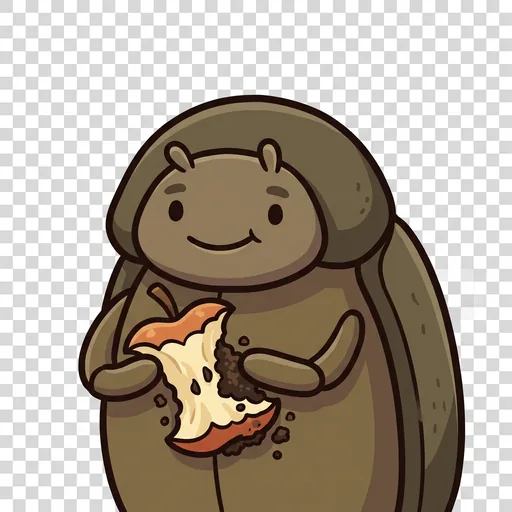
Mulch
Decomposition — what dies doesn't leave; it is broken down and handed back to the living
-

Rill
Water cycle — the same water goes round forever: sea to sky to rain to stream to sea
-
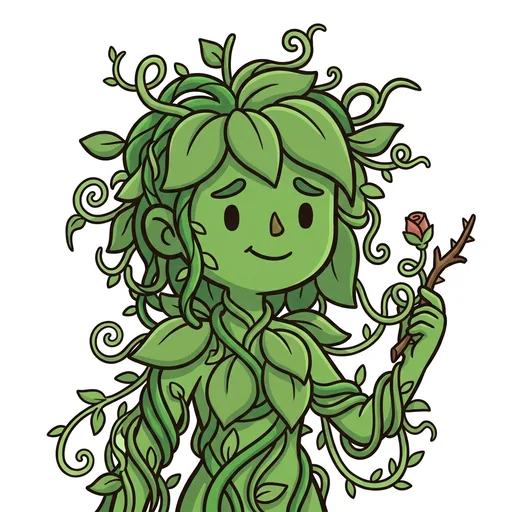
Sprawl
Invasive species — a species carried somewhere new, where nothing holds it back