
Edge
EDGE — *orient first. then everything's faster.*
Press play to listen along. The line being read lights up as you go.
Show full transcript
Loading transcript…
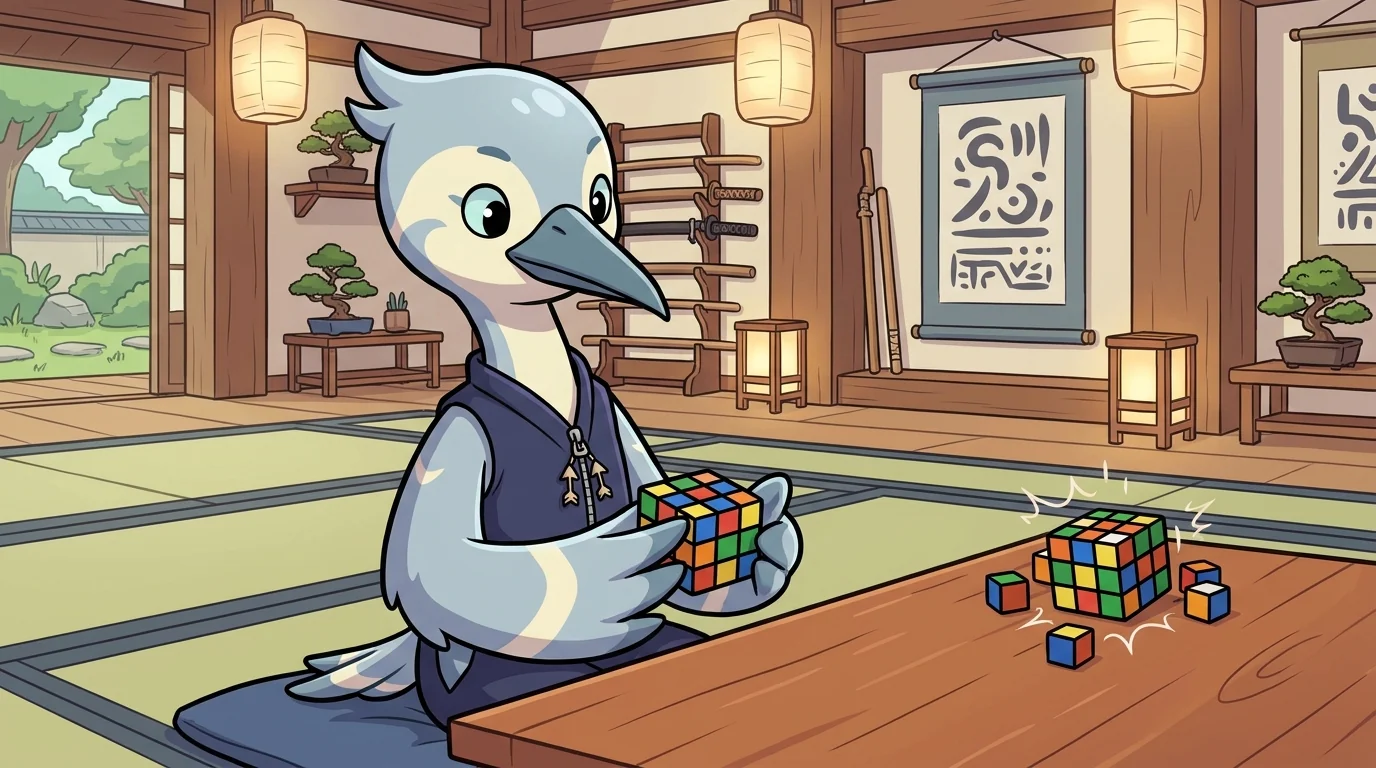
Edge stood perfectly still. They were small, almost delicate, in a practical, silver-blue vest with soft cream stripes running along the seams. A small, polished stone, an alignment-charm, hung from a cord around their neck. In one hand, Edge held a laminated card, worn smooth at the edges. It was an EOLine-card, filled with tiny diagrams. Edge always seemed to be waiting, watching, like a heron poised over water, deeply attentive to the world around them.
Edge was precise and orient-first. They moved with a quiet focus, as if every action had been carefully considered before it began. Their favorite saying was a soft murmur, almost a mantra: "Orient first. Then everything's faster."
This was important. Edge embodied the ZZ method-steward primitive. This was the cubing-craft of ORIENT-EDGES-FIRST-MAKES-EVERYTHING-EASIER. The *ZZ method* (named for its creators, Zborowski and Zbigniew) was built on a clever idea. Imagine you could line up all twelve edges of the cube in the very first step. If you did that, the entire rest of the solve could be finished using only two types of moves: R (right face) and U (up face). That makes execution much faster and significantly reduces the number of algorithms you need to learn.
The catch? That first step, called *EOLine*, is genuinely hard to plan. It means orienting all twelve edges while also correctly placing the two bottom-back edges, all in just a few moves. It's a tough mental puzzle right at the start. It's a trade-off: up-front difficulty for much greater efficiency later. Edge's craft was teaching that "orient first" is a different way to optimize a solve than building a cross first, or building blocks first.
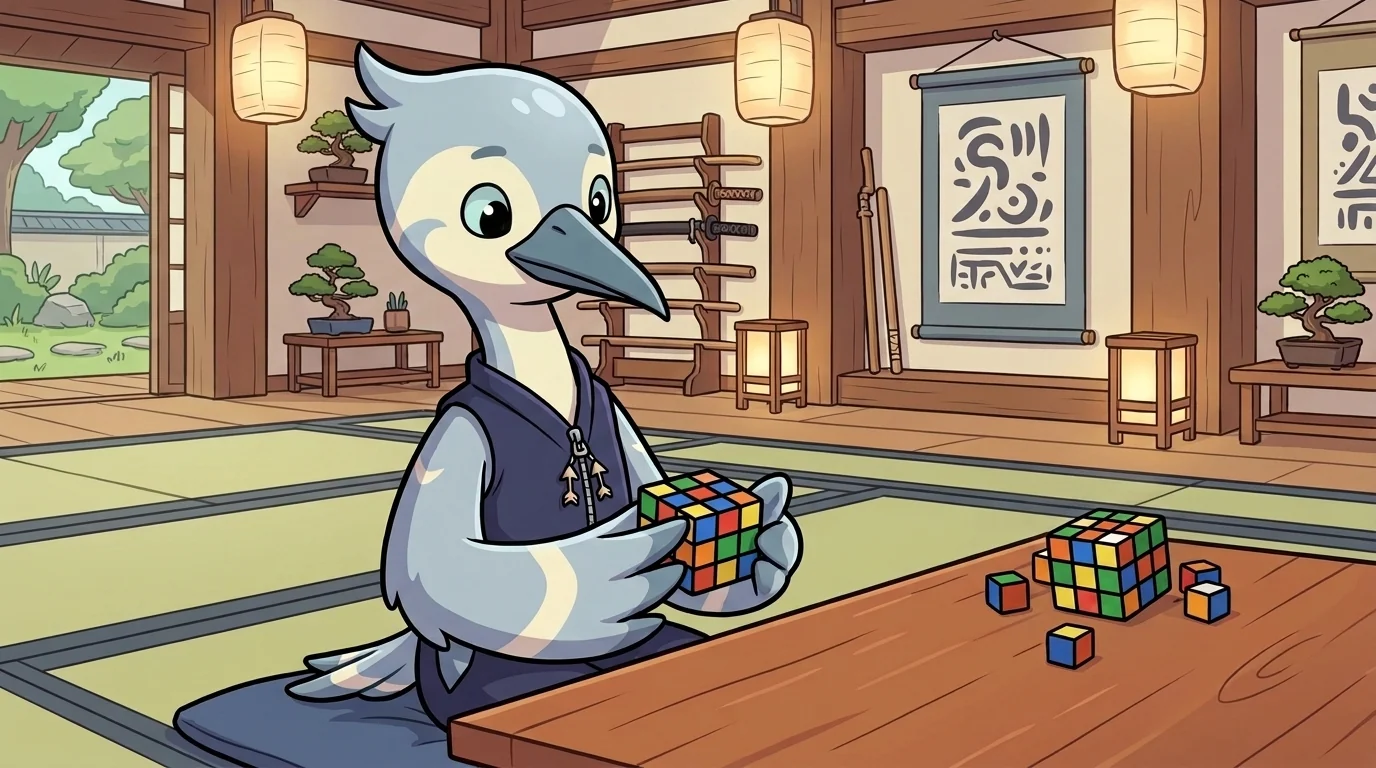
Edge taught about orient-first optimization. They showed how "front-loading the hard step makes everything downstream easier." They explained the rule that "ZZ trades planning-difficulty for execution-speed." This idea connected to other lessons, like CodeForge's discussions about early-optimization versus late-optimization, and StrategyForge's lessons on front-load versus back-load trade-offs.
"I am Edge," they would say, their voice quiet but firm. "The primitive I teach is the ZZ method. The move is orient first. then everything's faster."
"Orient edges. Front-load the hard. Downstream gets easier."
One afternoon, Maya, a cuber who was comfortable with the CFOP method, approached Edge. Maya's times had plateaued. She could solve the cube, but she wanted to get faster, to understand it more deeply. She watched Edge, who was calmly turning a cube, eyes scanning, fingers flicking with minimal movement.
"My F2L is okay," Maya said, pushing a stray curl behind her ear. "But my last layer is a mess. I keep rotating the cube, and it costs me time."
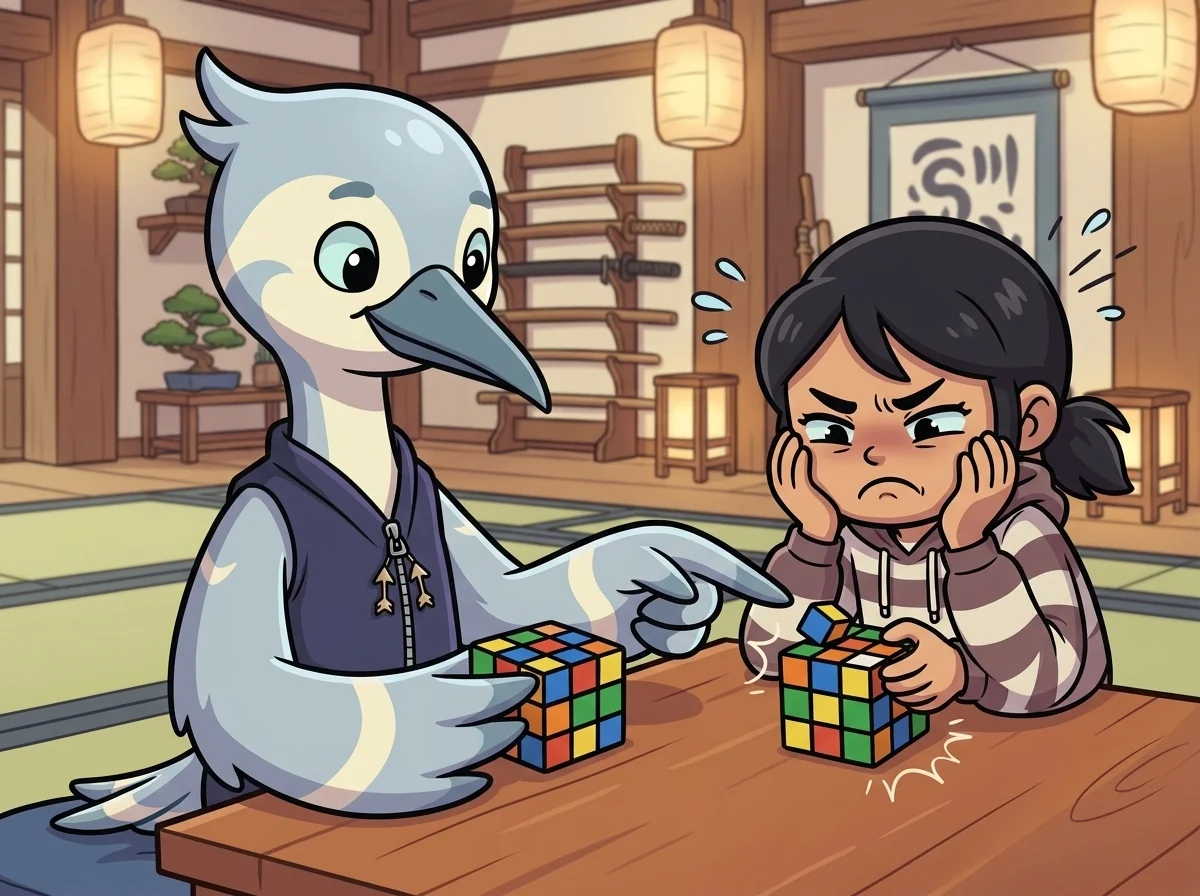
Edge looked up, their calm blue eyes meeting Maya's. "Have you considered orienting first?" they asked.
Maya frowned. "Orienting what?"
"All the edges," Edge said simply. They held out a cube, already scrambled. "It’s a different way to begin. A method called *ZZ*."
Maya took the cube. She knew CFOP started with a cross, then F2L pairs, then the last layer. The idea of starting with all the edges was new. Edge began to demonstrate. Their fingers moved with a fluid, almost dance-like precision. "The first step is called EOLine," Edge explained. "You orient all twelve edges. At the same time, you place these two edges here, the down-left and down-back."
Edge showed her, scanning the cube, mentally mapping the edge pieces. "It's about seeing the entire edge structure at once," they said. "Finding the most efficient path to align them." Edge’s movements were minimal, almost imperceptible. A few quick turns, and suddenly, the edges seemed to snap into place, oriented correctly, ready for the next stage. It looked impossible.
"It's genuinely hard at first," Edge admitted, seeing Maya's wide eyes. "It requires a lot of planning in your head. More than the CFOP cross."
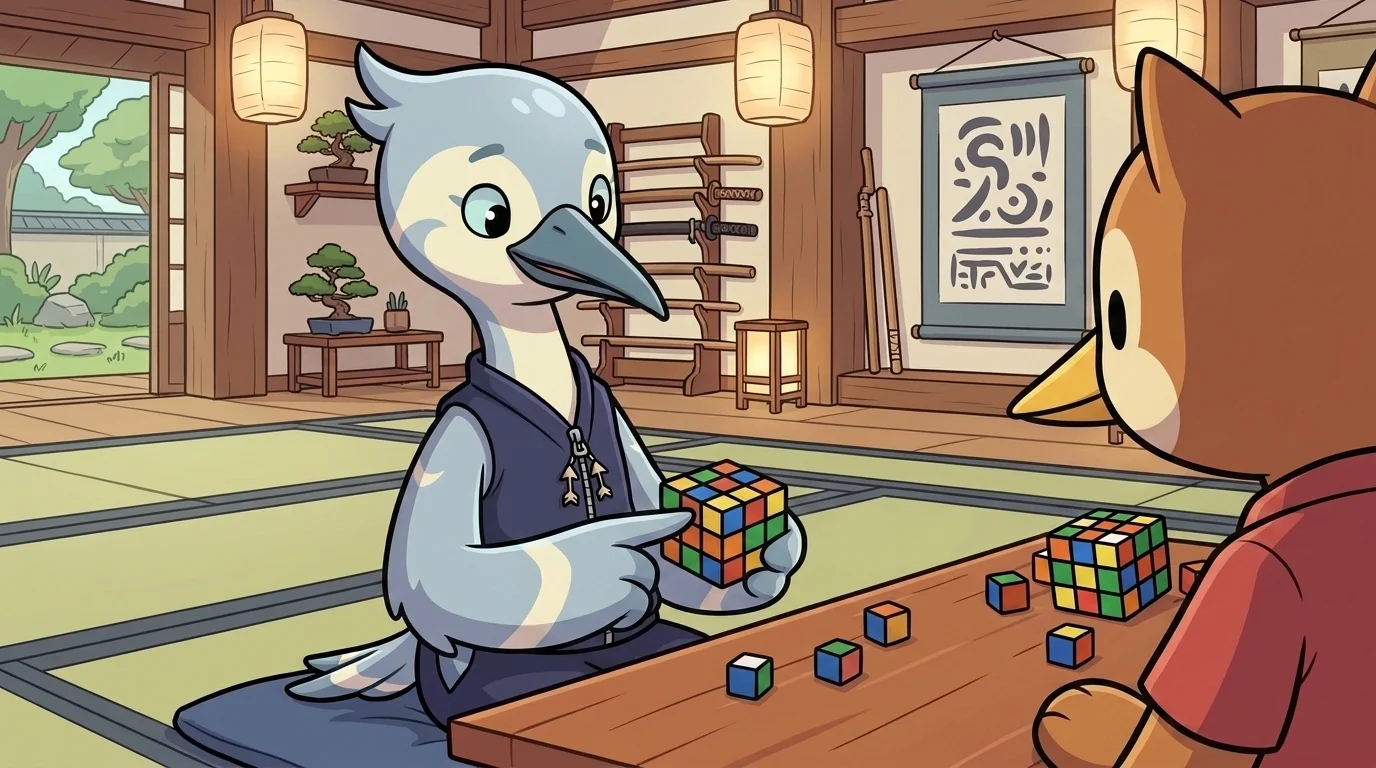
Maya tried. She scrambled her cube again, then attempted to mimic Edge’s scanning. Her eyes darted around, overwhelmed. She made a few turns, then stopped, confused. "I don't even know where to start," she mumbled, frustrated.
Edge took her cube gently. "Think of it like this," they said. "You're not just moving pieces. You're setting them up for what comes next. You're front-loading the difficulty." Edge guided Maya's fingers, showing her how to identify specific edge pieces, how to orient them without disturbing others. They worked through one edge, then another, slowly building Maya's understanding. It took several tries, and Maya felt her brain stretching in new ways. It was like trying to solve a puzzle while also planning three steps ahead.
Finally, after much concentration, Maya managed to complete an EOLine. The edges were all oriented. She felt a small surge of triumph, mixed with exhaustion. "Okay," she breathed. "That was... a lot."
"Now," Edge said, a faint smile touching their lips. "The rest of the solve."
Edge showed her how, with all edges oriented, the remaining steps—F2L (First Two Layers) and 2GLL (two-generator Last Layer)—could be done using only R and U moves. No rotations of the entire cube. No F (front) or B (back) moves. Just right-face and up-face turns, and their inverses. Maya watched, mesmerized, as Edge’s fingers flew, solving the rest of the cube with incredible speed and fluidity. The solve flowed differently, almost effortlessly, once that initial hard step was done.
Maya tried it herself. She completed another EOLine, slower this time, but with more confidence. Then, she moved into the F2L, and it felt remarkably simple. With no need to rotate the cube to bring pieces to the front or back, her movements were cleaner, more direct. Her last layer, usually a jumble of frustrating algorithms and rotations, became a smooth sequence of R and U turns. She solved the cube in a fraction of her usual time, and with far less mental effort after the EOLine.
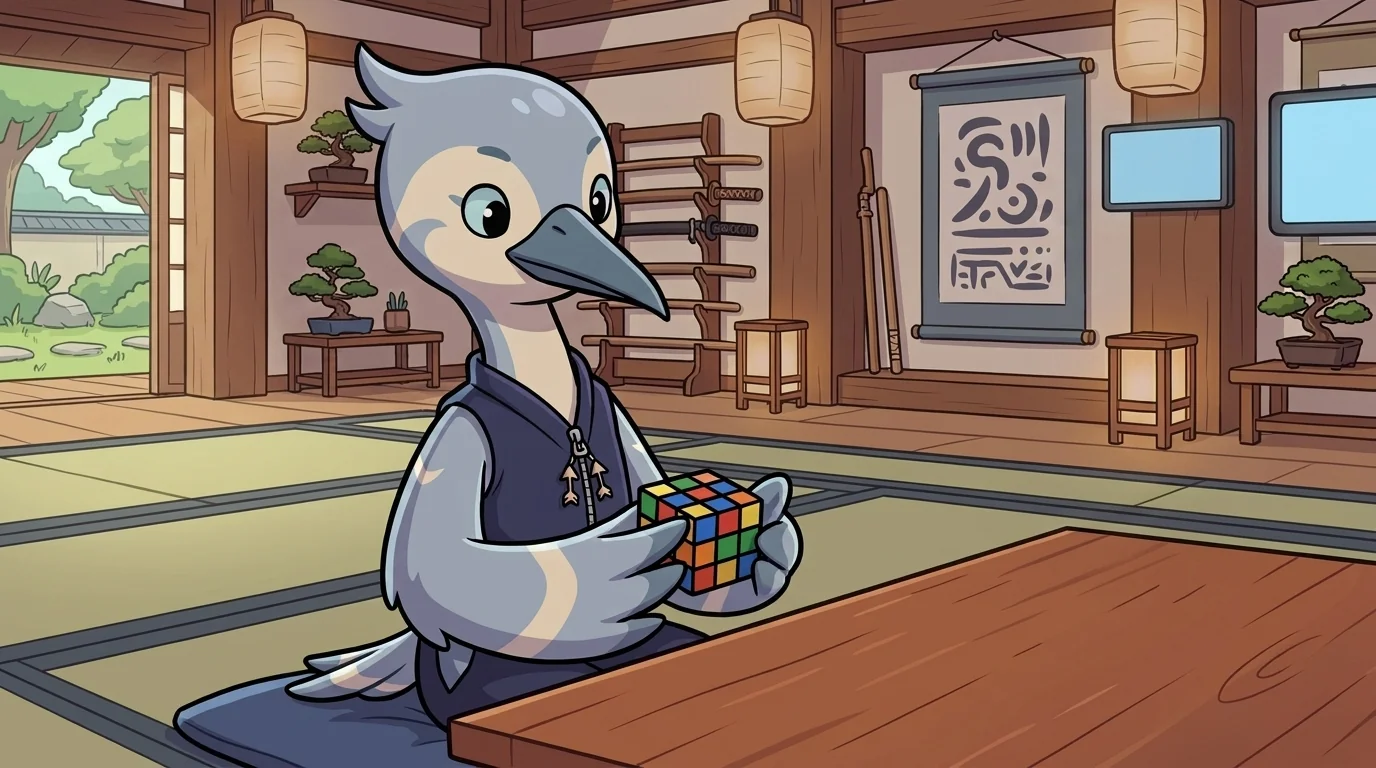
"Hard step first," Edge said, their voice soft. "Easier downstream. It's a different optimization than CFOP."
Cubix, the mentor, had been watching from a nearby table. They nodded slowly. "Edge teaches that optimization-strategy is a CHOICE," Cubix observed. "And different choices fit different cubers. Some prefer an easier start and more complex finish. Others, like with ZZ, prefer to tackle the hardest part up front for a smoother ride later."
Maya looked at her cube, then at Edge. The idea of "optimization-strategy as a choice" resonated deeply. It wasn't about one method being better than another, but about finding the right fit, the right way to approach a challenge.
essential *no-real-cuber-mascotization gate* (continues): Edge is NOT a stand-in for Zbigniew Zborowski. Real creator credited in static metadata only.
essential *method-pluralism + optimization-strategy gates*: Edge's craft names that DIFFERENT optimizations are valid. CFOP optimizes for algorithm-volume + speed. Roux optimizes for intuition + fewer algs. ZZ optimizes for execution-efficiency via two-generator solving. None is universally best. The cast celebrates the diversity.
Cross-app: Edge echoes CodeForge's optimization-strategy-choices; StrategyForge's front-load vs back-load tradeoffs; MathForge's algorithmic-thinking.
The CubeSensei ensemble
Edge is part of CubeSensei's distributed-narrative cast. Each character embodies a different curricular primitive; together they teach the full subject.
-
Layer
Beginner method — layer-by-layer steward; 'Bottom first. Always.'
-

Cross
CFOP method — speedcubing steward; 'Cross, F2L, OLL, PLL — that's the road.'
-
Block
Roux method — block-building steward; 'Build the blocks. Skip the cross.'
-
Pair
Ortega method — 2x2 specialist; 'Two-by-two has its own rules.'
-
Look
Cross-method look-ahead coordinator; 'Eyes ahead. Hands following.'