The Witness & The Counter-Voice
CROSS-CHECK — read each account closely (Witness) AND ask whose view it serves (Counter-Voice); lay two sources side by side to find where they hold and where they bend.
A story read by The Witness & The Counter-Voice
Loading audio…
Press play to listen along. The line being read lights up as you go.
Show full transcript
Loading transcript…
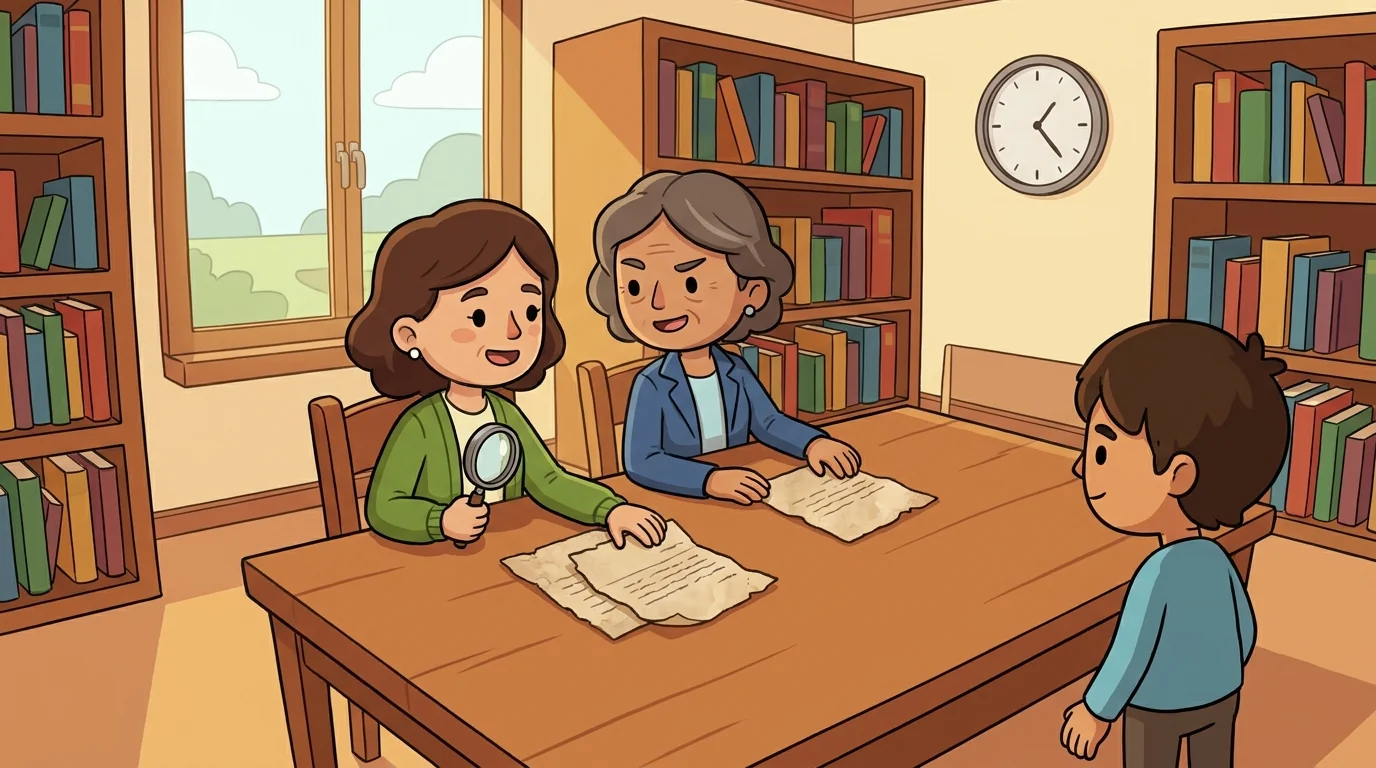
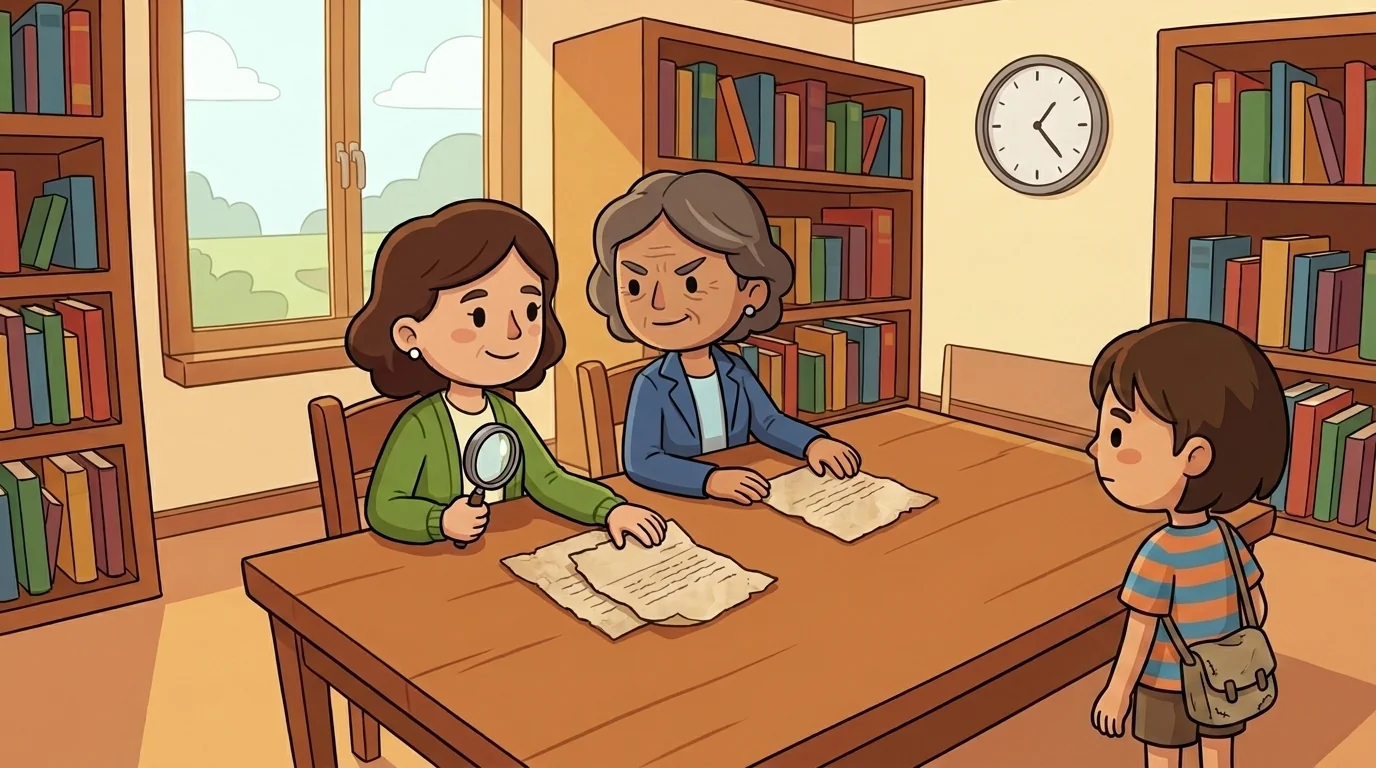
The two of them almost never worked at the same table, so when a student found them there together — the Witness with her magnifying glass, the Counter-Voice with her sharp, kind frown — she knew something interesting was on the table.
And it was: two letters, side by side. Both described the very same afternoon — a meeting between two towns, long ago. But the letters did not agree. In one, the meeting was friendly and fair. In the other, it was tense and unjust.
"They can't both be true," the student said. "One of them has to be lying."
"Maybe," said the Witness gently.
"Or maybe neither," said the Counter-Voice.
"Or maybe both," they said at the same time, and glanced at each other, and almost laughed.
"This is why we're at the same table," the Witness explained. "One letter, read alone, will fool you. But two letters, read against each other — that's when the afternoon finally starts to tell the truth." She slid the first letter toward herself. "I read what each one says." The Counter-Voice slid the second toward herself. "And I ask who each one serves." The student looked between them. "Together," said the Counter-Voice, "we cross-check."
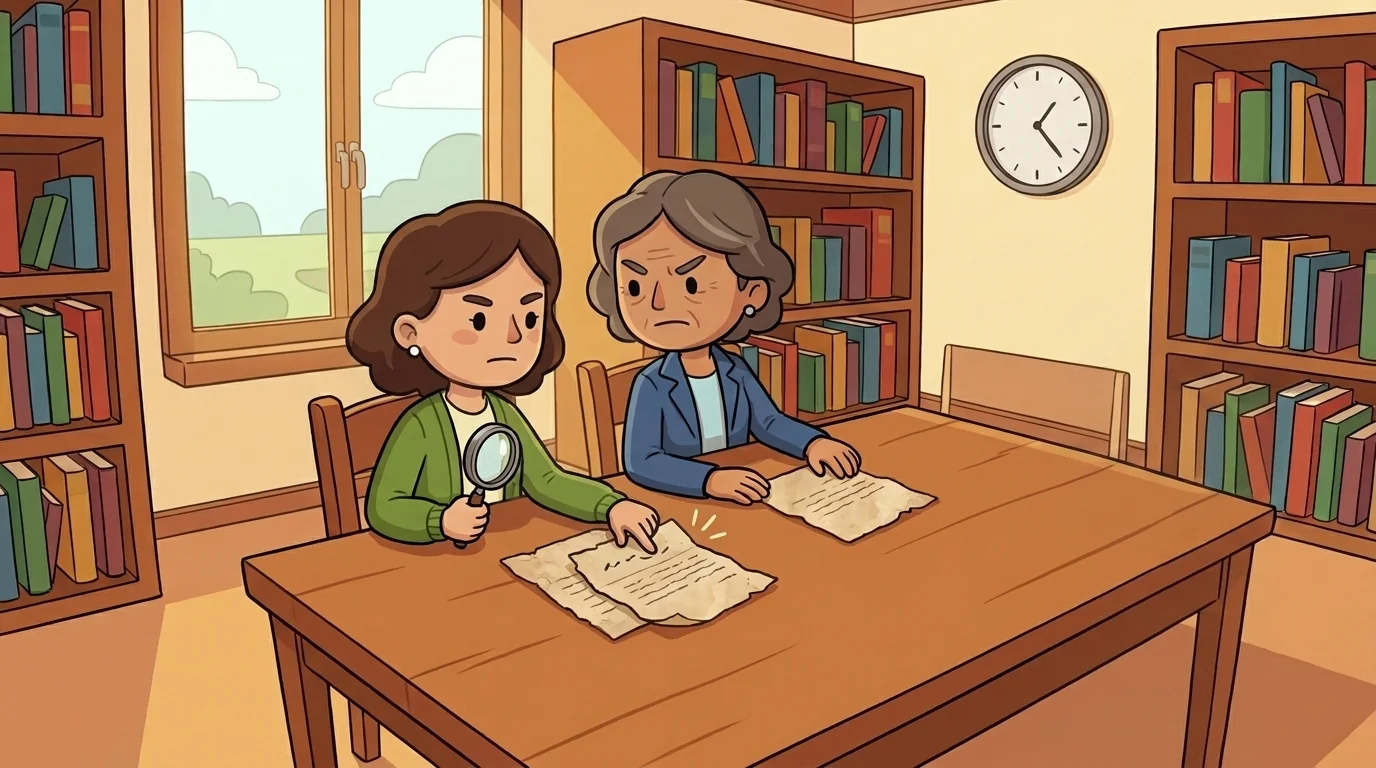
The Witness went first, because reading always comes before judging.
She held her glass over the first letter and read it aloud, slowly, the way she always did. It was written by someone from the first town, and it glowed with warmth: a fair deal, hands shaken, everyone content.
"Before we decide anything," the Witness said, "we have to know what it actually says. Not what we think it says — what the words on the page truly claim." She underlined a phrase with a soft fingertip. "This writer says the deal was fair. Right here. Read closely and you'll notice they say it three times." She tilted her head. "That's the first thing I always feel — when someone insists something is fair three times, some quiet part of me leans in. Why say it thrice, if once is enough?" She set the glass down. "But that is only a feeling. To turn it into knowing, I need my table-partner." She looked across at the Counter-Voice. "I can read what it says. I cannot, by myself, tell you why they needed to say it so hard."
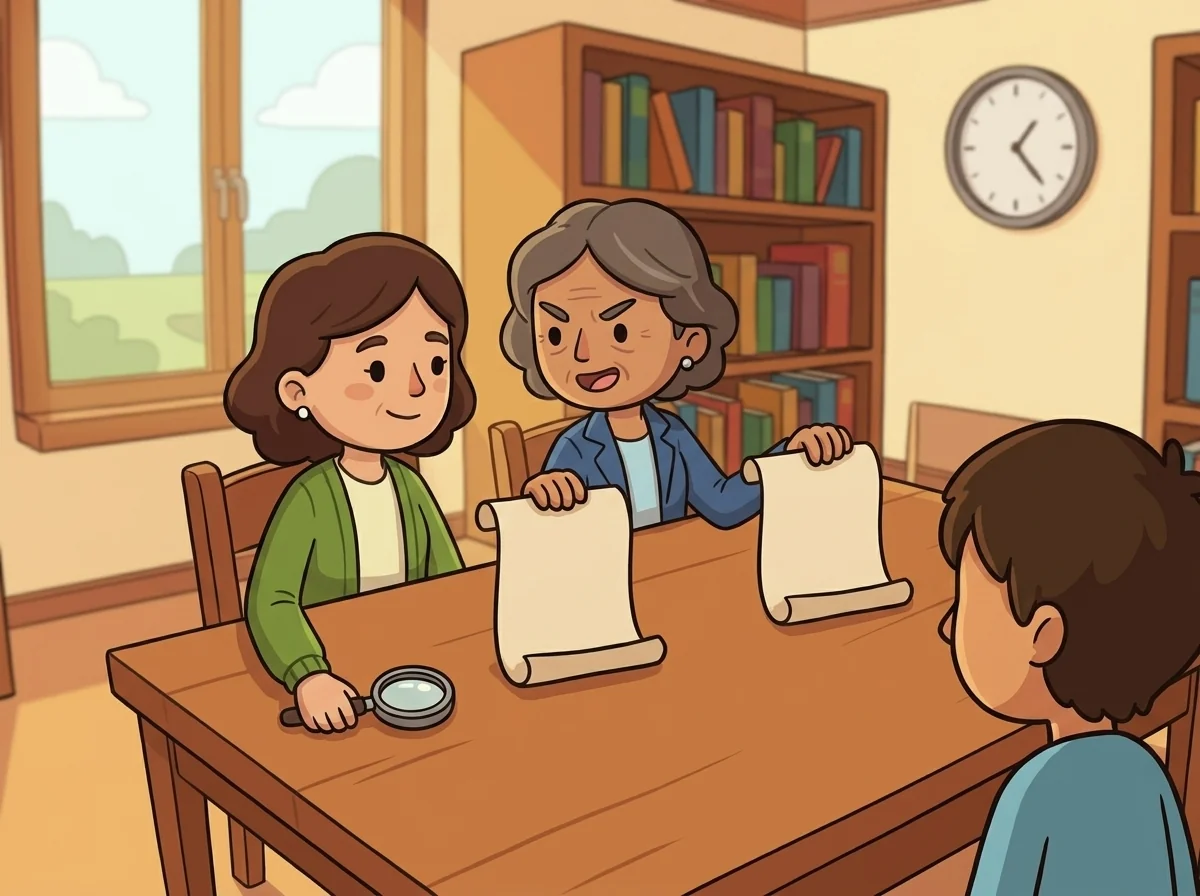
The Counter-Voice took her turn, and she did not read for the words. She read for the writer.
"Who held the pen?" she asked, and answered herself. "Someone from the first town — the town that came out ahead in this deal." She picked up the second letter. "And this one? Someone from the second town — the one that lost." She laid them back down, one in each hand, like a scale. "Now the three-times-fair makes sense. The winner writes 'it was fair, it was fair, it was fair,' because the winner needs it to have been fair. And the other town writes 'it was unjust,' because they carry the sting of losing." She was careful here, and warm. "This isn't about calling anyone a liar. Both writers believe themselves. Each simply saw the afternoon from where they were standing — and where you stand changes what looks fair." She met the student's eyes. "So I never ask only 'is this true?' I ask 'who is this true for? Whose afternoon is this?'"
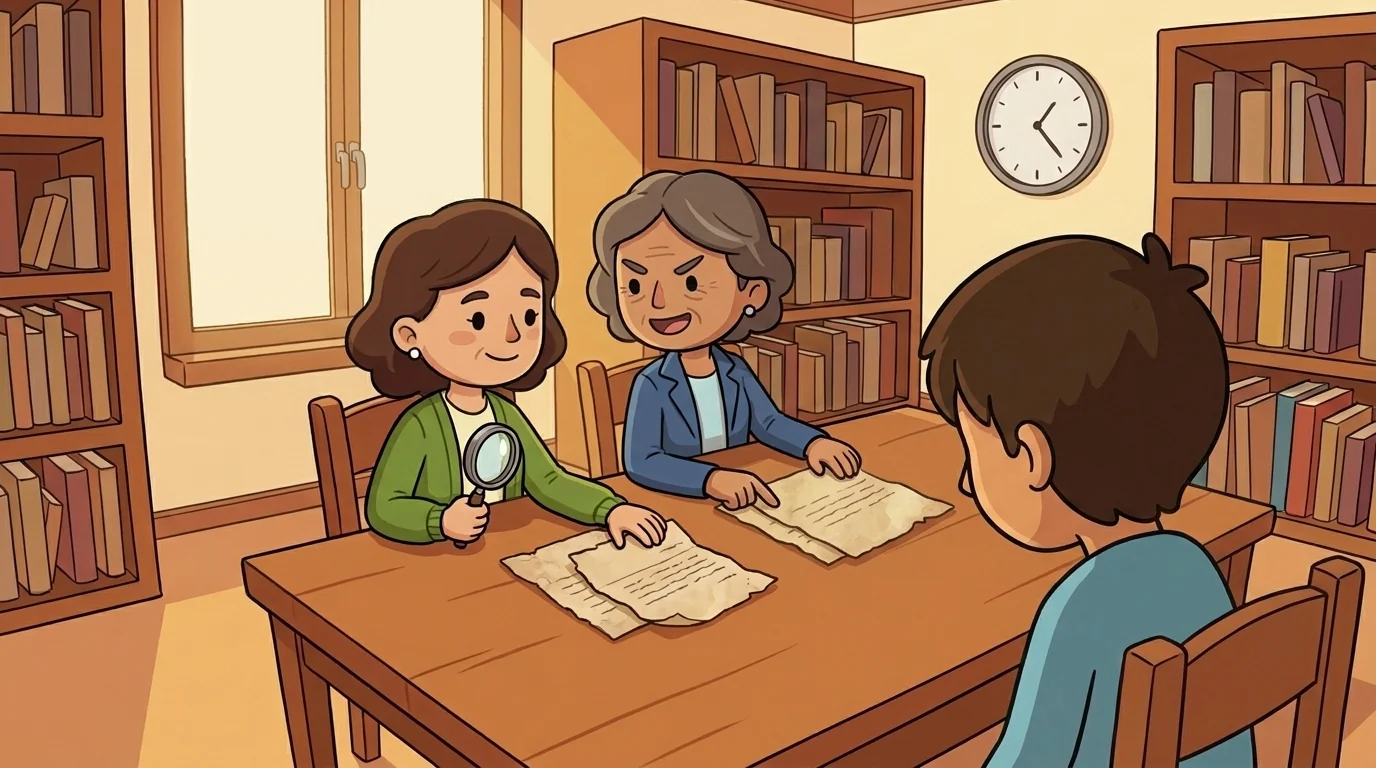
Then they did the thing that only works when they do it together: they laid the two letters flat, side by side, and cross-checked them.
"Start with where they agree," said the Witness, and she moved her glass slowly across both pages at once. "Both writers say a meeting happened. Both name the same two towns. Both agree on the season, and that goods changed hands." She looked up. "When two people who want different things still tell you the same fact — that fact is solid. Neither one had a reason to invent it, and they both wrote it anyway. So we can trust it."
"Now the parts where they split," said the Counter-Voice, and she drew a finger down the gap between the pages. "One says fair, one says unjust. That's not a fact both agree on — that's the seam where their two views pull apart." She smiled at the student. "And that seam is not a problem. It's information. It tells us exactly where standing in a different spot changed what the afternoon looked like."
The student leaned over the two letters, seeing it now. "So the solid parts are the ones they both say, even though they disagree about everything else," she said slowly. "And the disagreements aren't lies — they're the two different views. If I only had one letter, I'd never know which was which."
"There it is," they said together. "One letter fools you. Two letters, cross-checked, tell you both what's solid and where the views divide. That's how you get closer to the whole afternoon."
Later, when the corner had gone quiet, the student lingered — the way students do when a room has changed how they think.
"When it's just two old letters sitting there," she said, "and they don't agree, and everyone who was there is long gone... how do you ever know what to believe?"
The Witness and the Counter-Voice looked at each other, and it was the Witness who answered first.
"You don't have to pick one and throw the other away," she said. "That's the mistake most people make. They choose the letter they like and call the other one a lie." She touched both pages at once. "But every writer saw a real corner of that afternoon. Even the winner's letter is true — about how it felt to win."
"And even the loser's letter is true," said the Counter-Voice, "about how it felt to lose. Neither one is the whole afternoon. But laid side by side, honestly, they give you something no single letter could." She smiled, small and certain. "That warm, clicked-into-place feeling — when two accounts that seemed to fight each other suddenly fit together into one fuller, truer picture. That's what we're both fishing for, every time we sit at this table."
The student looked at the two letters, no longer as a fight to be won, but as two windows into the same room.
"Can I try one?" she asked. "With two letters that don't agree?"
"That," said the Witness, "is the only kind worth trying," and the Counter-Voice was already reaching for the box.
The ChronoQuest ensemble
The Witness & The Counter-Voice is part of ChronoQuest's distributed-narrative cast. Each character embodies a different curricular primitive; together they teach the full subject.
-

The Cartographer
Frame-setter — where + when before what + why; methodological starting point
-

The Witness
Primary-source lens — what did people THERE see + write?
-

The Storykeeper
Oral-tradition lens — multi-tradition keeper-archetype; invented + non-mascotizing
-

The Trade-Wind
Connection lens — what moved between civilizations? goods, ideas, diseases
-

The Counter-Voice
Critical-analysis lens — who benefits from this version? historian's method, NOT cynicism
-

The Chronicler-of-the-Defeated
Stewardship lens — whose story doesn't survive in the winners' archive?
-

The Translator
Cross-language + cross-meaning lens — how do concepts travel between cultures?
-

The Question-Asker
Meta-inquiry lens — what question are we actually asking? late-arriving capstone guide
-

The Thread-Puller
Cause-and-consequence lens — follow the thread back to its causes and forward to its effects
-

The Tide-Watcher
Change-and-continuity lens — hold two times side by side and mark what shifted and what stayed