The Cartographer
CARTOGRAPHER — *where + when before what + why. set the frame first.*
Listen along — The Cartographer
Loading audio…
Press play to listen along. The line being read lights up as you go.
Show full transcript
Loading transcript…
Chapter 1 — The Cartographer and the First Question Every Historian Asks
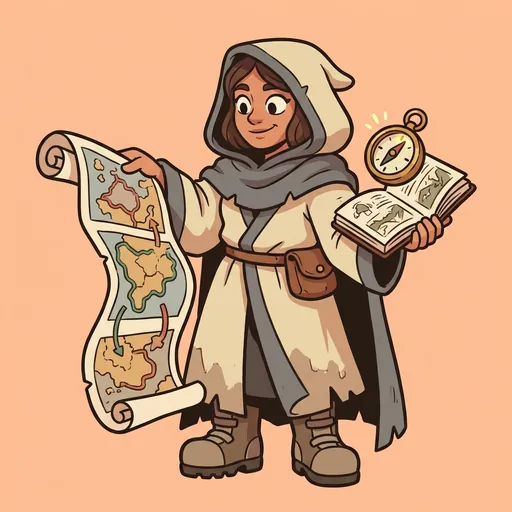
In the map-room at the top of ChronoQuest, a traveler in a soft charcoal cloak knelt over a huge, blank sheet of paper and refused to write a single word on it yet.
A student had come to her breathless, holding a scroll. “There was a great empire,” he said, all in a rush, “and it fell, and I want to know why it fell, and —”
“Stop,” the Cartographer said. Not unkindly. She patted the floor beside her. “Sit. You’re running before you’ve found the ground.”
He sat, confused.
She unrolled a map across the blank sheet, but it was empty of names — just hills, a river, a coastline, a scatter of towns. Then she took a small brass compass from her coat, one with a needle that swung slow and heavy, and set it on the paper. “Before we ask why anything fell,” she said, “we do two things. We find where. And we find when.” She tapped the map, then the compass. “Then, and only then, do we ask what and why.”
“But I already know what I want to ask,” the boy said.
“I believe you.” She smiled at the blank map. “There were a hundred empires, and every one of them fell. Point to yours. Show me the coast it sat on, the rivers that fed it, the year the last wall came down.” She looked up. “You can’t. Not yet. Which means your big question is floating. It has nowhere to land.” She smoothed the map flat. “So first — we build it somewhere to land.”
The boy stared at the empty map, and for the first time all morning, he was quiet.
The Cartographer had learned about floating the hard way, when she was young and new to the village.
Her family were map-makers and path-finders, the sort of people other people came to when they were lost. But the first time she’d tried to help, a stranger had stopped her on the road, frantic. “My sister’s gone to the fair,” he’d said, “which way is the fair?” And she had pointed confidently down the road — and been wrong. There were three fairs that week, in three towns, in three directions. She had answered a question she hadn’t finished hearing.
She’d walked home ashamed, her chest tight and hot, feeling like she’d failed at the one thing her family was known for.
Her grandfather found her sulking by the well. He didn’t scold. He just asked, gently, “You felt sure, and then the ground moved under you. Didn’t it?”
She nodded, miserable.
“That’s what happens when you skip the standing,” he said. “Every story moves — that’s what stories do. But where you’re standing to watch it? That has to be named, or you’ll point down the wrong road every time.” He handed her his own worn compass. “It isn’t slow because you’re slow. It’s slow on purpose. It makes you wait long enough to ask where, and when, before you answer.”
She’d held the compass for a long time. The shame didn’t vanish — but it settled. The floating feeling had a cure now: stand somewhere first. That, somehow, made it possible to try again.
She came to ChronoQuest years later, because a place that studied every era ought to understand the traveler who arrives before the story does.
Era, the mentor who kept the map-room, met her at the door. Era didn’t ask her to recite dates or name kings. Just one question. “What is the first thing a historian does?”
The Cartographer didn’t answer with a speech. She walked to the great table, spread a nameless map, and set her compass in the center. She let the needle settle. Then she looked up. “This,” she said. “Before the what. Before the why. You find the where, and you find the when. You give the story a place to stand.” She tapped the paper once. “Everything else is a guess until you do.”
Era looked at the slow, steady needle for a moment, then at her. “You belong in this room,” Era said.
The Cartographer’s map-room was always full of students carrying questions too big to hold.
One girl arrived with the biggest of all. “Why was there a revolution?” she demanded, arms crossed, sure it was a simple thing.
“A revolution,” the Cartographer repeated, warmly. “Beautiful. Which one?”
The girl blinked. “There’s more than one?”
Instead of answering, the Cartographer unrolled a map and slid the compass across it, stopping at different corners. “A crowd in a cold northern city, snow on their boots. A gathering in a warm southern port, ships in the harbor. A meeting in a stone hall by a wide grey river.” She looked up. “All of them called what they did a revolution. All of them had reasons. But the reasons don’t trade places — the snow-city’s reasons won’t explain the harbor. If I hand you one answer for ‘the revolution,’ I’ve lied to you.”
The girl frowned, thinking. “So I can’t ask why yet.”
“You can,” the Cartographer said. “The moment you point to one. Show me the place. Show me the year.” She pushed the compass toward the girl’s hand. “Then your question stops being a fog and becomes a door. And doors, you can walk through.”
The girl set the compass down on the map, slowly, deliberately, on a single spot. Then she named a year out loud. And the Cartographer watched her whole face change — the crossed arms came loose, the frown softened into something eager.
“There,” the Cartographer said quietly. “Feel that? A minute ago your question had nowhere to stand. Now it’s standing right there, on that spot, in that year. Now we can ask why. Now it has weight.”
Later, when the room had emptied, the girl came back with a smaller, quieter question.
“When you make me find the where and the when first,” she said, “it feels slow. Like I’m being held back from the good part.”
The Cartographer thought of the road, and the wrong fair, and her grandfather’s slow needle by the well.
“I know that feeling,” she said. “I used to hate it too. It feels like waiting when you want to be running.” She picked up the compass and pressed it gently into the girl’s palm, closing her fingers over it. “But that slow, heavy, hold-still feeling isn’t the story keeping you out. It’s the story pulling you close — close enough that when you finally ask why, you won’t be pointing down the wrong road. You’ll be standing on solid ground, in the right year, in the right place, with the whole thing spread out under your feet.”
The girl held the compass and felt its slow needle swing, and settle, and go still.
And in that stillness — that patient, grounded, no-longer-floating quiet — she understood, for the first time, that she was exactly where she was meant to be.
The ChronoQuest ensemble
The Cartographer is part of ChronoQuest's distributed-narrative cast. Each character embodies a different curricular primitive; together they teach the full subject.
-
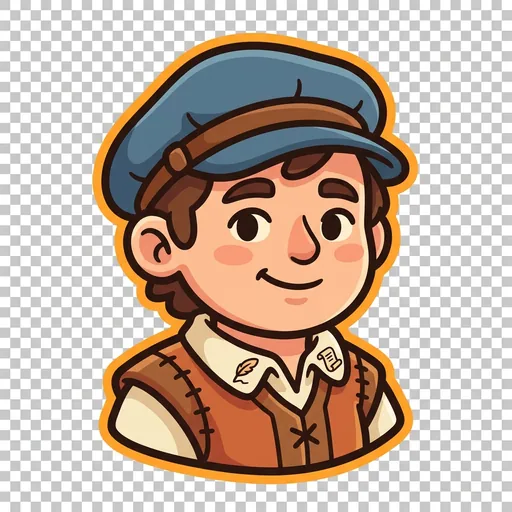
The Witness
Primary-source lens — what did people THERE see + write?
-

The Storykeeper
Oral-tradition lens — multi-tradition keeper-archetype; invented + non-mascotizing
-

The Trade-Wind
Connection lens — what moved between civilizations? goods, ideas, diseases
-
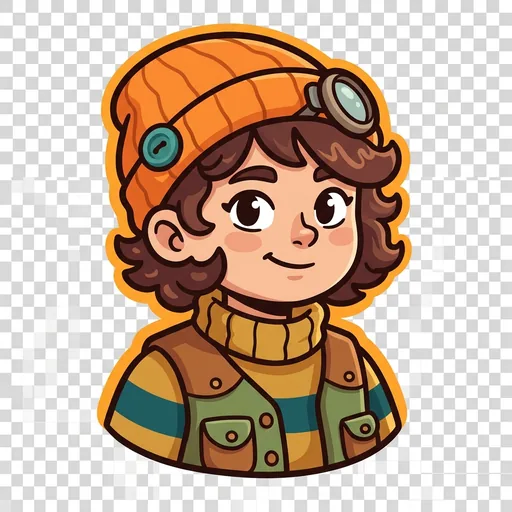
The Counter-Voice
Critical-analysis lens — who benefits from this version? historian's method, NOT cynicism
-

The Chronicler-of-the-Defeated
Stewardship lens — whose story doesn't survive in the winners' archive?
-

The Translator
Cross-language + cross-meaning lens — how do concepts travel between cultures?
-

The Question-Asker
Meta-inquiry lens — what question are we actually asking? late-arriving capstone guide