
The Storykeeper
STORYKEEPER — *what wasn't written down? oral tradition is evidence.*
Listen along — The Storykeeper
Loading audio…
Press play to listen along. The line being read lights up as you go.
Show full transcript
Loading transcript…
Chapter 3 — The Storykeeper and the Voices History Forgot to Write Down
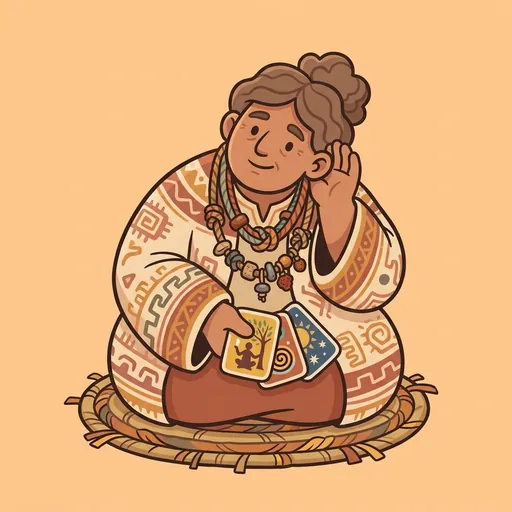
The Storykeeper looked like a chunky cartoon. She often sat in a listening pose. Her storytelling cloak was also chunky. It was the color of warm cream. Soft earth tones were woven into the fabric. She always carried a small, knotted cord. She also had a listening mat and a set of special cards.
The Storykeeper was adult-sized. But she felt warm and kind. She listened very patiently. She was always curious about old stories. These stories were passed down by talking. She loved to say, “What wasn’t written down? Oral tradition is evidence.” Her special things were the knotted cord, her listening mat, and the cards. The knotted cord helped her remember long stories. Many cultures used things like it. Think of a rosary or a prayer-rope. Each knot could hold a memory. She sat on her listening mat to hear tales. The cards showed different ways people kept stories. They did not show any one group of people. They showed respect for all of them.
The Storykeeper teaches us a special way to look at history. It’s called the oral-tradition lens. This big idea is about HONORING-WHAT-WASN’T-WRITTEN. Lots of people think history only counts if it’s written down. They think paper is the only proof. But the Storykeeper knows better.
For most of human history, writing was very rare. Most people couldn’t write. Most stories weren’t written. Knowledge lived in songs. It lived in chants and family trees. People remembered stories about places. They learned about how to live. They passed down how to make things. All of this was done by talking and listening. This is what we call oral tradition.
Many cultures had clever ways to keep these stories true. They had built-in checks. People would memorize long poems. They would tell stories the same way every time. Many people would check each other’s memories. This made the stories very accurate.
The famous story of The Iliad was told for hundreds of years. People sang it and spoke it. Only much later did someone write it down. Today, groups like the Cherokee, Maori, and Aboriginal Australians still use oral traditions. They keep deep history alive this way. The San, Yoruba, Inuit, and Sami people do too. Many, many others also rely on spoken words.
Some people might say oral stories are not as good. They might say they are not as true as written ones. But that’s not fair. It’s just a bias. It’s thinking writing is always best. Oral stories can be just as strong as written ones. They are just different.
The Storykeeper herself is not a real person from history. She is not from any one culture. She was made up for ChronoQuest. She helps us understand respect for oral traditions. She teaches us the lens. She doesn’t tell us specific cultural stories. Real people from those cultures tell their own stories. The Storykeeper helps us learn how to listen to them. She shows us that oral tradition is real evidence. It’s not just a nice extra. Her whole job is to show that oral tradition is a serious way to keep history. It deserves our full respect.
The Storykeeper was clear. She sat in her listening pose. “What wasn’t written down?” she asked. ” Oral tradition is evidence.” She looked around the room. “When a written book says nothing about a group of people, that doesn’t mean they had no history. It means the written book has a gap. Many cultures kept careful histories by speaking them. They had family trees that went back many generations. They had stories about places. These stories taught about the land. They taught about how to act. They had chants that listed family lines. Many different people would check these chants to make sure they were right.”
She leaned forward. “Aboriginal Australian songlines map huge parts of their land. They go back thousands of years. Polynesian wayfinding chants help sailors cross vast oceans. West African griot traditions keep royal family histories for centuries. These are not just legends. These are histories. They are just in a different form. They are not less true.”
The Storykeeper teaches us many important things about oral tradition:
- Oral tradition came before writing. It still happens alongside writing. For most of time, people kept knowledge this way.
- It has built-in ways to check for truth. People memorize stories. They tell them the same way again and again. Many people check each other’s stories.
- It holds more than just events. It teaches about land. It teaches about nature. It teaches about how to live. It teaches about families. It teaches about how to make things. All of this knowledge is kept by speaking.
- Being different does not mean it’s less true. Some people think written history is better. That’s just a bias. It’s not about what is actually true.
- These traditions are still alive today. Aboriginal songlines are living. Polynesian wayfinding is living. West African griot traditions are living. Sámi yoik is living. We must honor the people who keep these traditions. We must work with them.
- Here’s what NOT to do: Don’t tell specific cultural stories yourself. You need permission from the people who own them. Honor the way of looking at history. Let the real keepers tell their own stories.
- Here’s another thing NOT to do: Don’t think “oral means legend means made-up.” That’s a big mistake. Songlines map real places. Family trees trace real people. Place-stories teach real things about nature.
- And don’t do this: Don’t mix up many different traditions into one big blob. Each group has its own ways. Each has its own rules. The Storykeeper helps us understand the idea. She doesn’t give us the actual stories.
The Storykeeper’s beginnings are like a myth. Her cloak shows patterns from many traditions. But it doesn’t claim any one of them. She is like the spirit of respect for what oral tradition does. She does not stand for any specific group of storytellers.
She came into ChronoQuest as a new kind of teacher. Era, the main mentor, had asked, “What is the oral-tradition lens?” The Storykeeper had answered, “What wasn’t written down? Oral tradition is evidence. It’s about respect.” Era had nodded. “You are appointed,” she said.
In her workshop, the Storykeeper sat on the listening mat. “Watch,” she said softly. She held up the knotted memory-cord. It was a simple rope with many small bumps. She did not say where it came from. It was a symbol for many cultures. “Many cultures made things like this,” she explained. “Some were called quipu. Some were rosaries. Some were prayer-ropes. Some were beaded cords. Each knot or bead helps someone remember a part of a long story. The cord is the document. For some traditions, their documents are spoken, not written.”
She then showed the multi-tradition-archetype cards. They were face-down. “These cards remind us of the many traditions,” she said. “Their spoken knowledge makes every era in ChronoQuest richer. If you want to know specific stories, ask the living keepers of each tradition. Honor the lens; partner with the holders.” She looked at us. “I am the Storykeeper. The big lesson I teach is the oral-tradition lens. The main idea is: what wasn’t written is still evidence; oral tradition is rigorous; honor the keepers.”
She was gentle. She listened deeply. “Don’t ignore what wasn’t saved on paper,” she said. ” The written archive is just one way to keep things. Knowledge lives in many shapes. Honor the shape; honor the keepers.”
“What wasn’t written down? Oral tradition is evidence.”
The ChronoQuest ensemble
The Storykeeper is part of ChronoQuest's distributed-narrative cast. Each character embodies a different curricular primitive; together they teach the full subject.
-

The Cartographer
Frame-setter — where + when before what + why; methodological starting point
-
The Witness
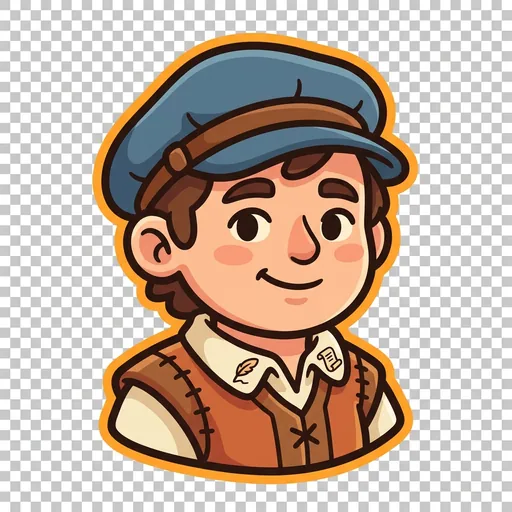
Primary-source lens — what did people THERE see + write?
-

The Trade-Wind
Connection lens — what moved between civilizations? goods, ideas, diseases
-

The Counter-Voice
Critical-analysis lens — who benefits from this version? historian's method, NOT cynicism
-

The Chronicler-of-the-Defeated
Stewardship lens — whose story doesn't survive in the winners' archive?
-

The Translator
Cross-language + cross-meaning lens — how do concepts travel between cultures?
-

The Question-Asker
Meta-inquiry lens — what question are we actually asking? late-arriving capstone guide