
Lilt
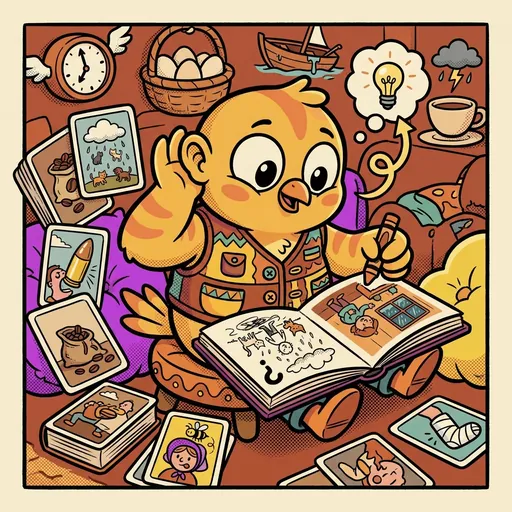
LILT — the literal isn't the meaning. follow the picture, not the words.
Listen along — Lilt
Loading audio…
Press play to listen along. The line being read lights up as you go.
Show full transcript
Loading transcript…
Chapter 4 — Lilt and the Picture Behind the Words
In the busy square of Laughtonia, a traveler in a floppy hat was quietly panicking, and a small saffron-yellow canary was about to save his whole evening.
The traveler clutched a scroll to his chest. He was pale. Around him the crowd chattered and laughed, but he stood frozen, mouthing the same worried words over and over. Lilt heard him from across the square. She hopped down from a lamppost, her chunky comedy-vest jingling with the little cards tucked in its pockets, and landed lightly beside him.
“The innkeeper,” the traveler whispered, “told me to break a leg before my speech. Why would he wish me INJURED? Is this how you welcome guests here?”
Behind Lilt, two of the younger cast members started to giggle. She turned and gave them one soft look, and the giggle died instantly. This was not funny to the traveler. His hands were shaking.
Lilt pulled a card from her vest. She held it up and drew, right there on the spot, a quick sketch — a stick figure with its leg bent at a funny angle, a big CRACK! bubble above it. “That,” she said gently, “is what the words say.” Then she flipped the card and drew a stage, a spotlight, a bowing performer, a clapping crowd. “And that is what the words actually mean. Good luck. In my province, when we love a performer, we tell them to break a leg.”
The traveler stared. His shoulders came down half an inch. “So… he wasn’t threatening me.”
“He was rooting for you,” said Lilt. “The words lied. The picture told the truth.”
Lilt had not always trusted the pictures. When she was very small, she took everything exactly as it was said.
The first time bit hardest. Her grandmother had asked her to keep an eye out for a lost button, and little Lilt had spent the whole afternoon miserable, convinced she was supposed to somehow pluck out her own eye and set it on the windowsill to watch. She hadn’t done it — but she’d cried, sure she was failing at a simple chore, sure something was wrong with the way her head worked.
Her grandmother found her hiccuping in the corner and didn’t laugh. She just sat down on the floor beside her.
“You heard the words honestly,” her grandmother said. “That’s not a mistake. That’s careful listening.” She smoothed Lilt’s ruffled feathers. “But some phrases aren’t built out of their words, little one. They’re built out of a picture everyone in a place has quietly agreed to see. Keep an eye out — it just means stay watchful. Nobody’s eye goes anywhere.”
Lilt sniffled. “How was I supposed to know?”
“You weren’t, yet. So we learn them together, one picture at a time.” Her grandmother handed her a small blank notebook. “Draw the silly picture the words make. Then draw the true one beside it. Once you can see both, they stop tricking you.”
That heavy, ashamed feeling didn’t vanish all at once. But it had a shape now, and a plan. And drawing the two pictures side by side felt, somehow, like turning a scary thing into a game.
Lilt walked to Witquest at twelve, notebook fat with drawings, because a place that studied wordplay ought to understand the words that never meant what they said.
The old mentor met her at the gate and asked one thing. “It’s raining cats and dogs. What does that mean?”
Lilt didn’t answer straight off. She opened her notebook to a fresh page and drew, fast: fluffy cats in tiny raincoats tumbling from the clouds, little dogs splashing into puddles below. She held it up. “This is what the words paint.” Then she turned the page and drew a grey downpour, sheets of rain off a dark sky. “This is what it means. Just heavy rain.” She looked up. “The trick is never in the words. It’s in the picture behind them.”
The mentor studied both drawings for a long moment. “You belong here,” he said.
Lilt’s workshop filled up with kids who thought the way she used to — the honest, literal ones, and the ones still learning the language.
A boy came in one afternoon, arms crossed, cheeks red. “Everyone laughed at me,” he said. “My friend said he was pulling my leg and I said nobody was even touching my leg, and they all —” He stopped, jaw tight. “I feel stupid.”
Lilt knew that exact red-cheeked, jaw-tight feeling. She’d worn it on the floor of her grandmother’s kitchen.
“You’re not stupid,” she said. “You heard it right. The words really do say someone’s tugging your leg.” She pulled out her deck and drew it — a boy yanking another boy’s ankle. “See? Honest picture.” She flipped the card. “But here’s the one your friend meant.” She drew two kids laughing, one winking. “Pulling your leg means teasing you, gently. Joking. No leg involved.”
The boy uncrossed his arms a little. “Then why say leg?”
“Because a long time ago someone made that picture, and it stuck.” Lilt shrugged warmly. “Half these phrases are fossils — old pictures carried into new days. Bite the bullet?” She drew a wincing soldier. “From a time before pain medicine, when there was nothing to hold onto but a bit of metal. Now it just means: face the hard thing bravely.” She tapped the page. “You didn’t fail. You just grew up with different pictures than they did. So we trade. I’ll show you mine — and you tell me one from your home nobody here would guess.”
The boy thought. Then, quietly: “We say the soup is getting cold.”
“And it means?”
“Hurry up. You’re taking too long.”
Lilt beamed and drew a steaming bowl going still. “That’s a gorgeous picture. I’m keeping it.” And the boy, for the first time since he’d come in, laughed.
Later, when the square had emptied, the traveler found Lilt again. He’d given his speech. He looked lighter.
“I keep thinking,” he said, “about how many pictures I don’t know here. How many times I’ll get it wrong.”
Lilt sat with that a moment. She thought of the button, and the eye, and the floor of a kitchen a long time ago.
“You will get some wrong,” she said honestly. “But getting it wrong isn’t the same as being wrong. It just means you’re standing at the edge of a picture you haven’t been shown yet.” She nudged her notebook toward him. “And every single time someone shows you one, gently, without laughing — you get to feel your shoulders come down. That little drop. That’s the whole thing I love about this. Not being right. Being let in.”
The traveler tucked his scroll away and smiled — a real one now, easy and unguarded. And Lilt watched the last of the worry lift off him, and felt her own chest go soft and warm, the way it always did when someone stopped feeling foreign and started feeling welcome.
The WitQuest ensemble
Lilt is part of WitQuest's distributed-narrative cast. Each character embodies a different curricular primitive; together they teach the full subject.
-

Quirk
Puns and double-meanings
-

Knot
Riddles (compressed-info puzzles where you decode the answer from constrained clues)
-

Switch
Anagrams (rearranging letters to form a different word — "listen" → "silent")
-

Hop
Lateral thinking (finding a non-obvious angle on a problem; sidestepping the assumed framing)
-
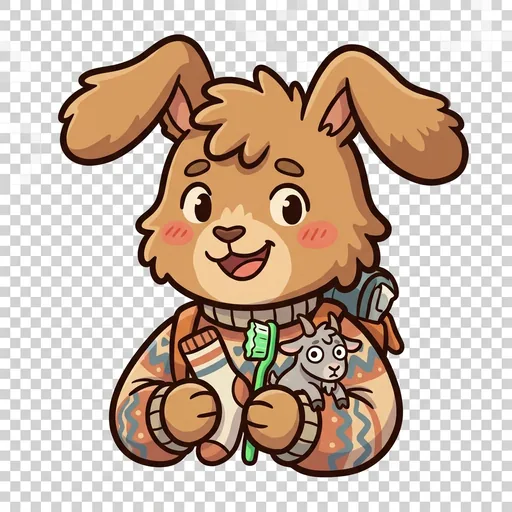
Trip
The rule of three (two beats set a pattern; the third breaks it — the break is the laugh)
-
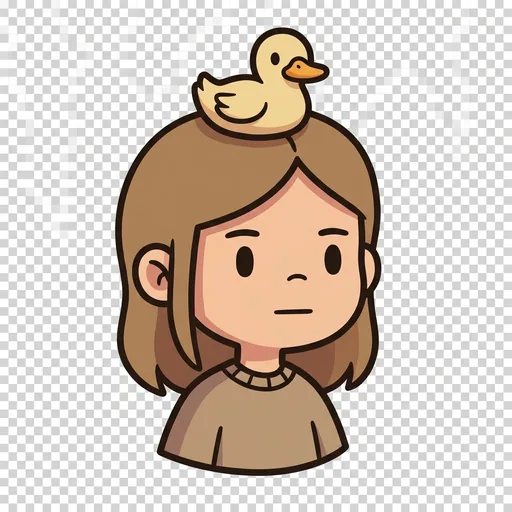
Dry
Deadpan delivery (saying something ridiculous with a calm, serious face — the flat delivery is the joke)
-

Boomerang
The callback (bringing back an earlier joke later, when it's half-forgotten — funnier the second time)
-

Topper
The topper / escalation (capping a joke with an even bigger one, raising the stakes each time)
-

Straight
The straight man / the setup (reacting normally so the absurdity stands out — comedy needs someone to be normal)