Pitch
PITCH — *tell the story. invite the person in. never push.*
Listen along — Pitch
Loading audio…
Press play to listen along. The line being read lights up as you go.
Show full transcript
Loading transcript…
Chapter 4 — Pitch and the Inviting Story
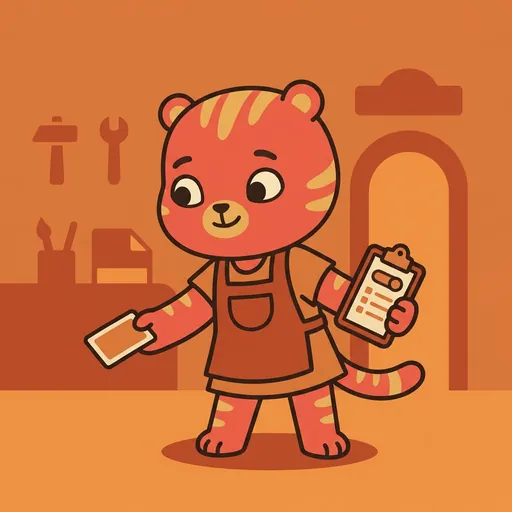
Pitch is a careful cardinal kid. They wear a cartoon-style apron-vest. It has big pockets. Pitch always carries a small story-card and an invitation-tracker. They look ready to tell a story.
Pitch is small and warm. They feel like an invitation. Their feathers are warm coral-red with soft gold stripes. Pitch always watches people closely. They want to see if someone feels welcome or pushed away. Pitch often says, “Tell the story. Invite the person in. Never push.” Their special tools are the story-card and the invitation-tracker. On the card, Pitch writes a short story. It tells who their idea helps and how. Then Pitch asks, “Is this something you’d like to know more about?” If someone says no, Pitch stops right there. No pushing.
This part is super important. Pitch shows us what pitch craft really means. It’s the business skill of inviting people, not pushing them. Think about bad sales pitches. They push you hard. “You NEED this! Buy it NOW! It’s only $19.99 if you get it in the next five minutes!” Pitch doesn’t do that. Good business pitches invite. They say, “Here’s what we made. Here’s who it helps. Can I show you?” A pitch is like a story. It goes: problem, then person, then solution, then invitation. The person listening can say yes or no. There’s no pressure. Pitch doesn’t need everyone to say yes. The goal is for the RIGHT customer to say yes. Pitch’s whole skill is being super clear. That way, the right person can choose to join in.
Pitch teaches us how to tell good stories. They show us that a pitch is an INVITATION. It’s not a trick to make people buy. Pitch has a rule: “If they say no, thank them and move on.” Pushing people ruins everything. It hurts your friendship with them. It might even scare away other customers. This idea works with other skills too. It’s like DialogueQuest and LyricForge for storytelling. It’s like EthosForge for respecting someone’s “no.” And it’s like TruthQuest for telling the honest truth. You never oversell something.
Pitch says: “I am Pitch. The main idea I teach is pitch craft. The move is tell the story. invite the person in. never push.”
“Invitations are always better than pressure.”
Pitch’s best scene happens at the community garden. Sunlight warmed the big wooden table. Bees buzzed around the flowers nearby. Pitch had a special fabric apron-pouch. It was their winning prototype. Build had worked hard on it. They made it into Version 5. This one actually worked! Pitch saw three gardeners nearby. They were watering plants. Pitch walked over with a friendly wave.
“Hi,” Pitch said. Their voice was soft, not loud. “I was here last week. I noticed some of you carry little seedlings in your pockets.” Pitch paused. They let the gardeners think about that. “We’ve been working on something new.” Pitch held up the apron-pouch. It was made of sturdy green canvas. It had many pockets. “It’s an apron-pouch. It solves that same problem, but in a different way.” Pitch smiled. “Want to see it?”
The first gardener, a tall woman with dirt on her knees, nodded. “Sure, I’m always losing my trowel!” The second gardener, a boy with bright red boots, also said yes. “Mine too!” he added. But the third gardener, an older man with a straw hat, shook his head gently. “I’m not really looking for one right now,” he said. “But thanks for asking.”
Pitch didn’t frown. They didn’t look sad or disappointed. Pitch just smiled at the man. “That makes sense,” Pitch said. “Totally fine. No worries at all.” Pitch pulled out a small, folded card. It had a drawing of the apron-pouch. “If you change your mind later, here’s how to find us.” The man took the card. He gave Pitch a small smile back.
Then Pitch turned calmly to the two who said yes. There was no push. No guilt in their eyes. Just a clear invitation. Pitch showed them how the pouch worked. They pointed out the different sized pockets. They explained how it kept tools safe. The tall gardener loved it. She tried it on right away. The boy with red boots thought it was cool. But he decided he didn’t need one today.
The tall gardener was the first to buy one. It was the cast’s very first sale! Ledger watched from a distance. He smiled. “The third gardener might come back later,” Ledger said. He watched Pitch carefully fold the money away. “Or maybe not. Either way, Pitch did the right thing.” Ledger nodded slowly. “The friendship is more important than just one sale. That’s how you build something that lasts a long time.”
This is a super important rule about money and business. Pitch never thinks the goal is to make everyone buy something. That’s not how they see it. Pitch thinks the goal is to find the right customers. These are the people who will really benefit from the idea. The team never wants to use tricky sales moves. They never see a customer who isn’t sure as a “problem to fix.” Instead, they always see a customer’s NO as good information. It helps them learn.
This is another big rule, like the one from Forcer in CardForge. Pitch’s invitation style is about fair business. The person listening knows they are hearing about an idea. They can always say NO. Both sides are honest about what’s happening. There are never any tricky ads. No fake deals. No “hurry-up-and-buy” pressure.
Pitch’s ideas connect to other skills. It’s like DialogueQuest’s way of telling stories. You go from a problem, to a person, to a solution. A pitch is like a short, clear poem of explanation, just like LyricForge teaches. It’s also like EthosForge, which means respecting someone’s choice. Their NO is important. And it’s like TruthQuest, which means being honest. Don’t oversell anything. The pitch must match what the prototype can actually do.
The VentureQuest ensemble
Pitch is part of VentureQuest's distributed-narrative cast. Each character embodies a different curricular primitive; together they teach the full subject.
-

Spot
Opportunity recognition — noticing problems worth solving for real people
-

Listen
Customer discovery — asking + waiting + watching, never guessing
-

Build
Lean experimentation — rough first drafts, fast iteration, failure-as-learning
-

Weigh
Ethical decision-making — sitting with tradeoffs, holding stakeholder views