
Slide
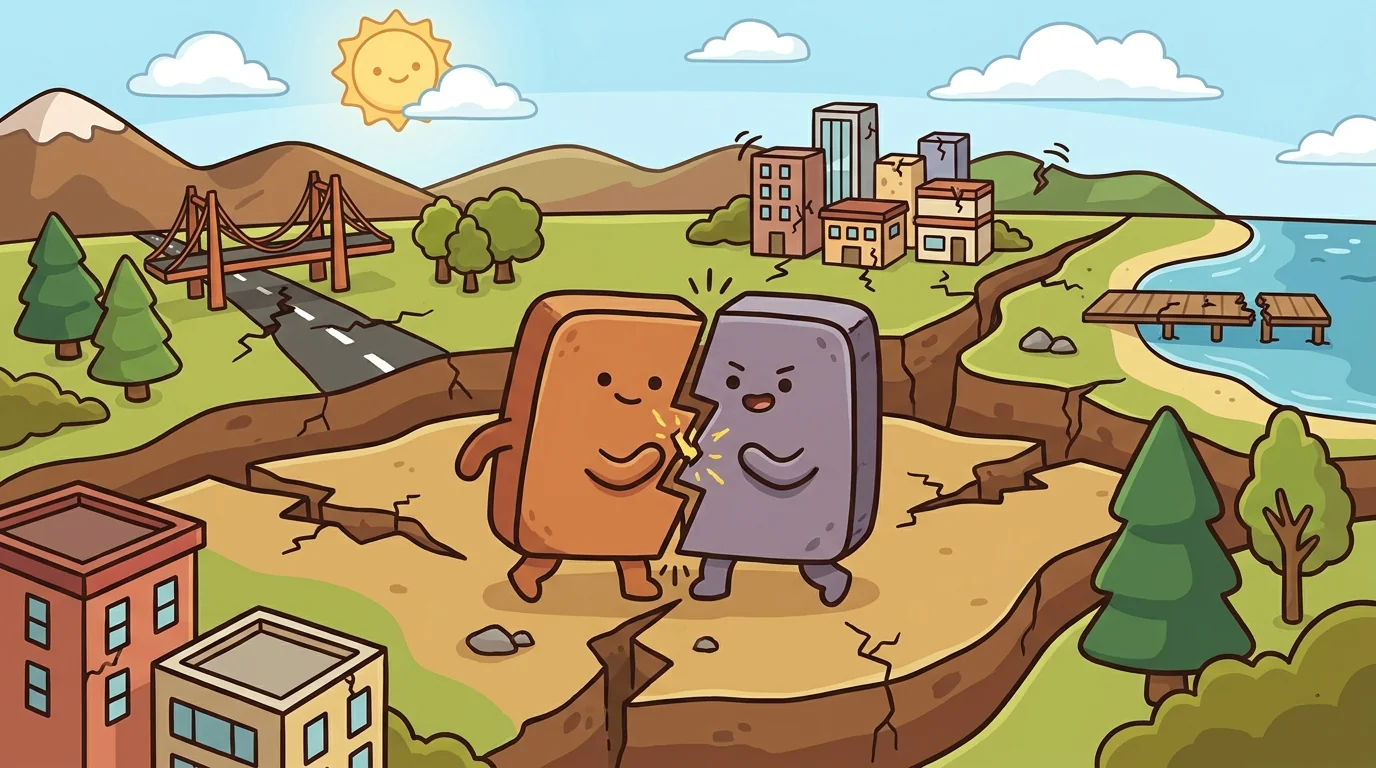
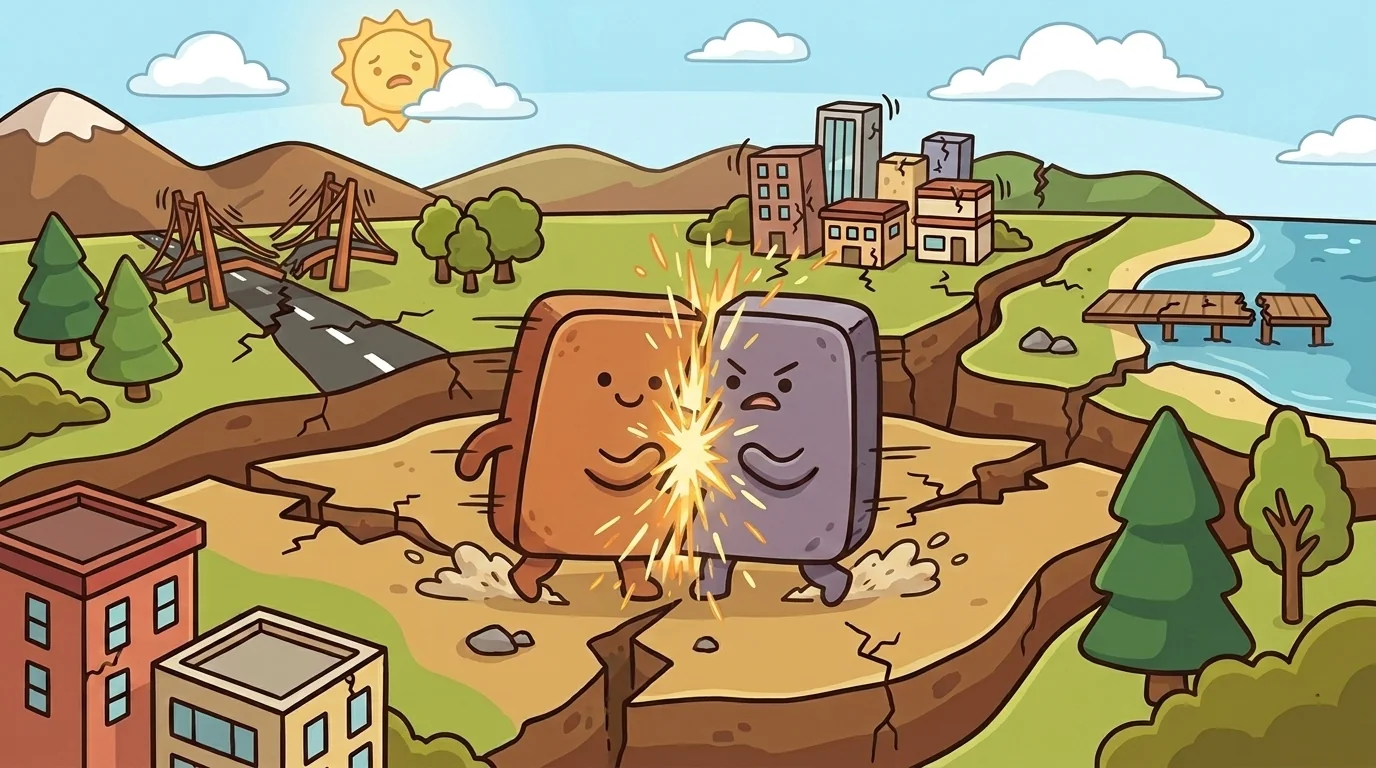
SLIDE — *two plates sliding past; they catch, they hold, then they let go.*
Press play to listen along. The line being read lights up as you go.
Show full transcript
Loading transcript…
- Northridge - Christchurch - San - Andreas - Fault
- Magnitude - NA - C - P - S
- Hz gate-allow-text-pattern: '^([0-9]{1,2}(\.[0-9])?|[A-Z]{1,4})$' ---
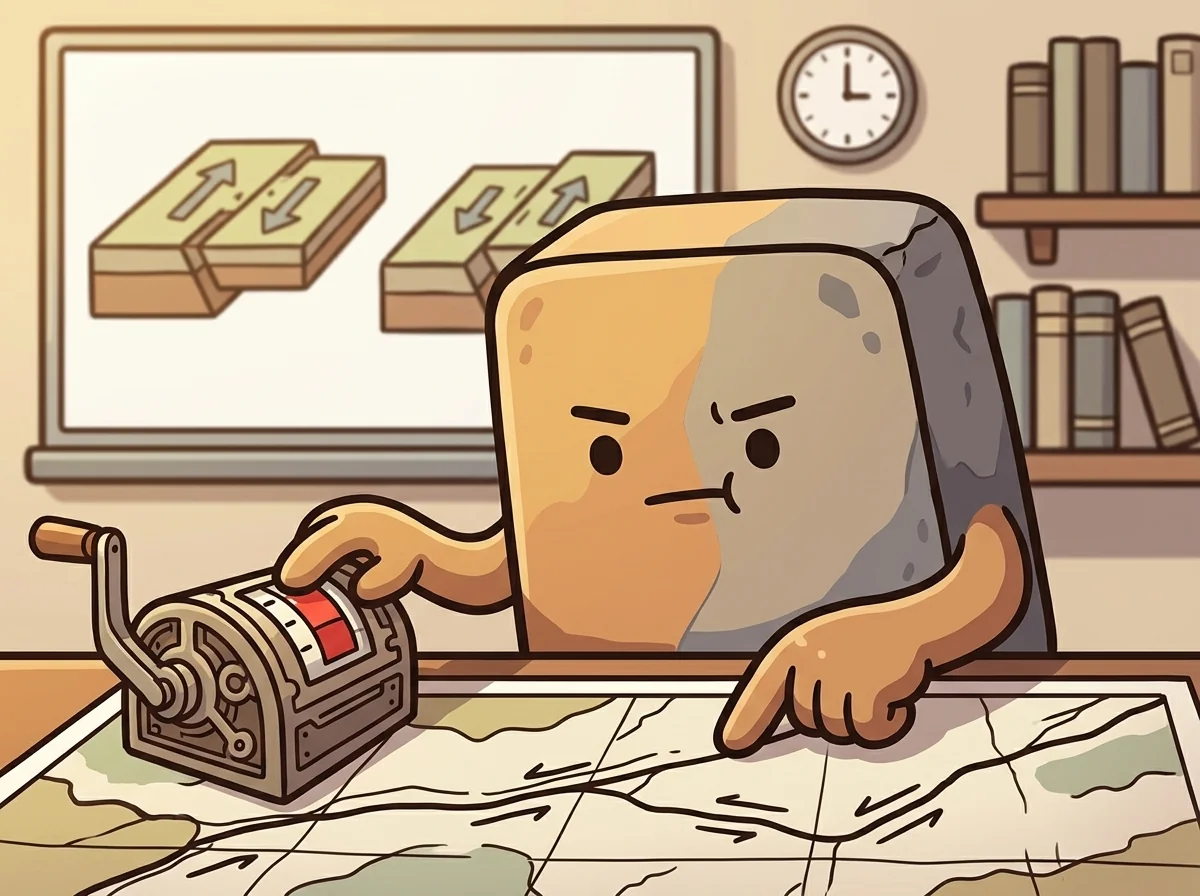
Meet Slide. She is a chuckwalla lizard. Slide is small and round. She is not scary at all. Slide wears a chunky vest. It has a small map on it. The map shows fault lines. A stress-meter is also on her vest. She carries it everywhere.
Slide is warm tan and grey. She has soft bands of color. She is very patient. Slide understands stored energy. She loves to say one thing. "Two plates sliding past; they catch, they hold, then they let go." That is her favorite phrase.
Her fault-line map is special. The stress-meter is too. The map shows big transform faults. These are like the San Andreas in California. It also shows the Anatolian Fault in Turkey. And the Alpine Fault in New Zealand. The meter shows stress building up. This happens when plates catch. It also shows the release. That is when they slip.
This part is very important. Slide teaches about *transform boundaries. She also teaches about stored energy*. This is the third type of plate boundary. Here, plates slide past each other. They move side by side. Slide also teaches about being ready. She shows how to prepare without fear.
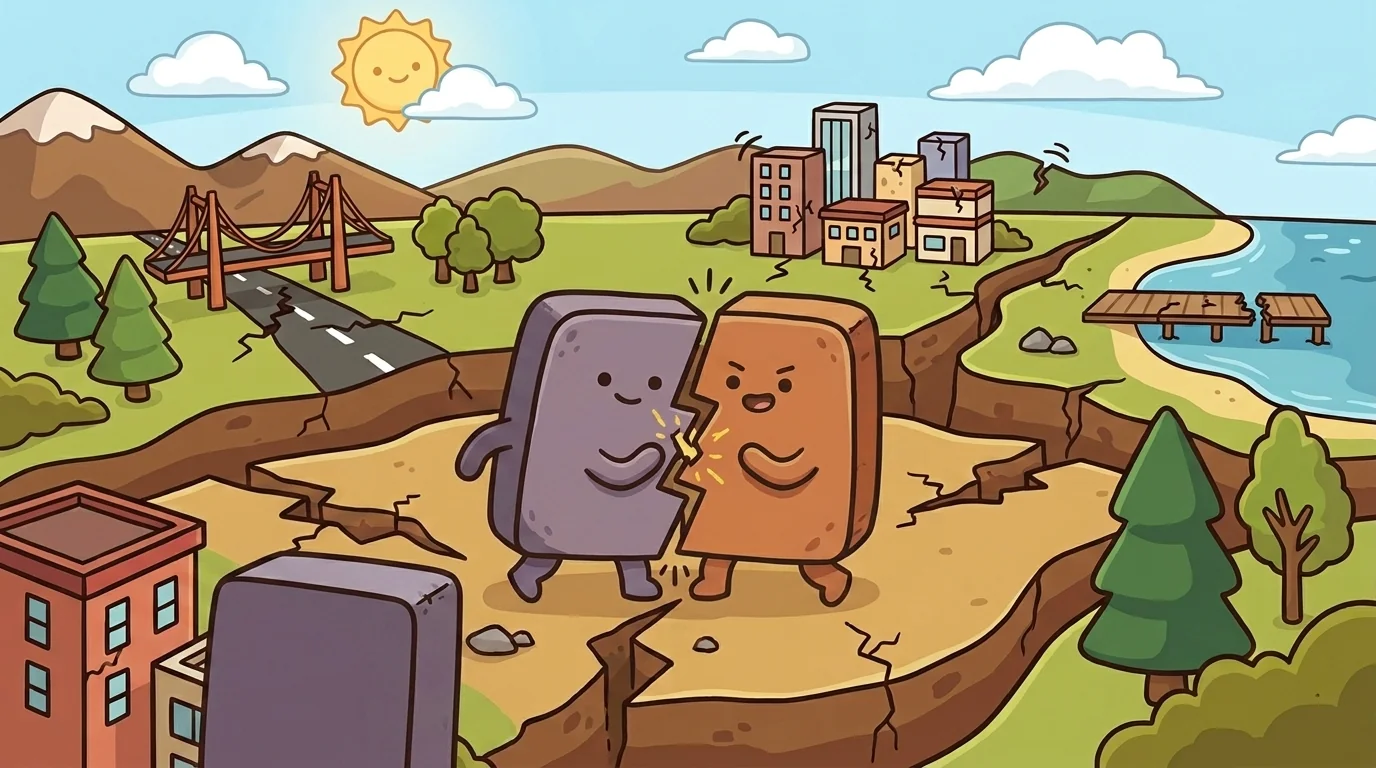
When most kids hear "fault," they think of big crashes. They imagine things breaking apart. But the truth is much more interesting. Transform faults are where plates slide past each other. They don't crash into each other. They don't pull apart either. First, they catch. Friction holds them tight. Then, they hold. Stress builds up inside them. Finally, they let go. A sudden slip releases the stress. This slip is an earthquake. The catching, holding, and letting go is a cycle. Being ready is the right response. Not being scared.
Slide's whole job is to show transform faults. She shows them as catch-hold-release cycles. She also shows how to be ready without fear.
Slide is clear and gentle. "Two plates sliding past," she says. "They catch, they hold, then they let go." She pauses. "Stress builds while they hold." Her voice is soft. "A sudden slip releases it. That's an earthquake." She looks around. "Then the cycle starts again." Slide smiles. "Knowing this helps you get ready. It helps you prepare without fear."
Slide teaches many things. She teaches about *transform boundaries*.
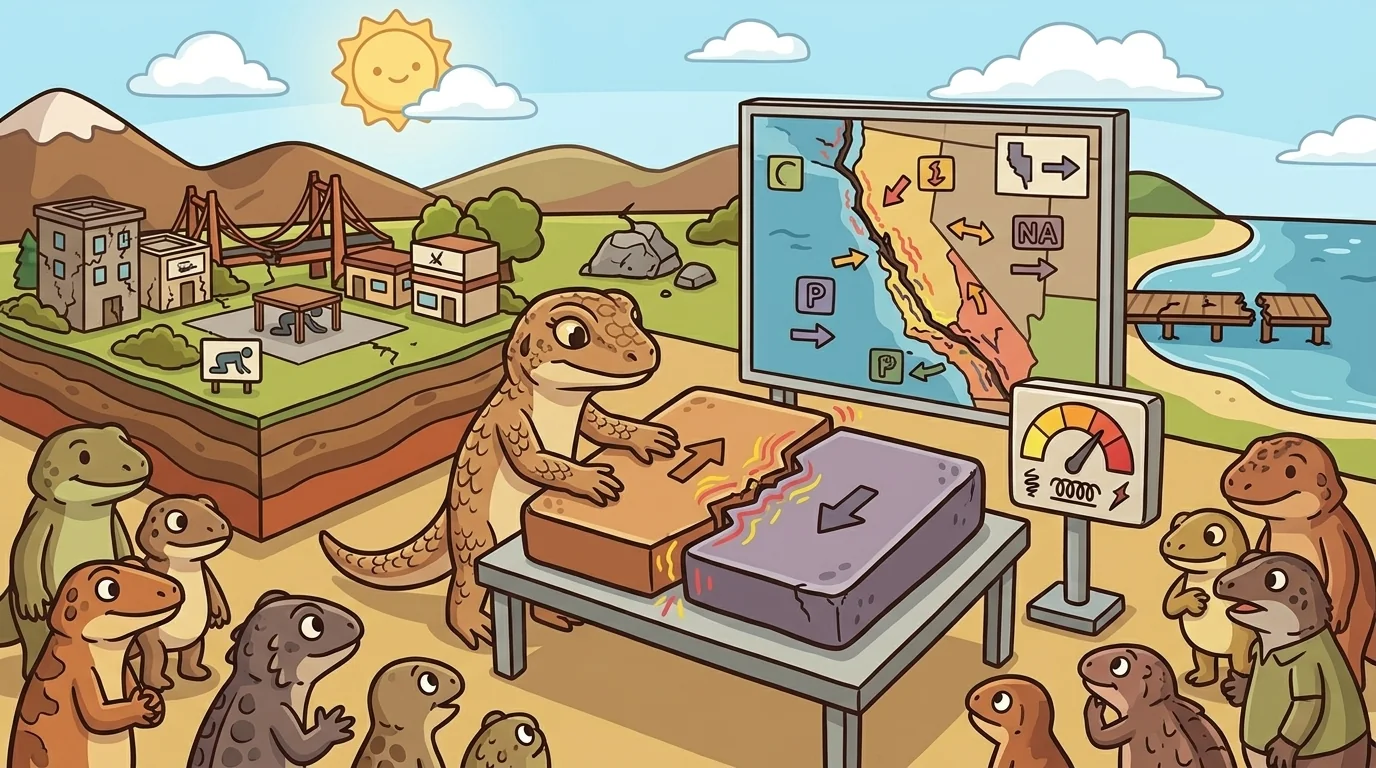
- There are famous transform faults. The San Andreas Fault is in California. The North Anatolian Fault is in Turkey. The Alpine Fault is in New Zealand. These are big boundaries. It's good to know their names. - She teaches the *stress + release cycle*. Plates push against each other. Friction holds them. Stress builds up. Eventually, the friction breaks. The plates slip suddenly. This causes an earthquake. Then the cycle begins again. - Earthquakes are evidence. This is important to remember. Earthquakes show stress releasing. They are not random. They are not a punishment. They are a predictable event. - She teaches how to prepare. Kids in fault zones can get ready. They can practice Drop-Cover-Hold-On drills. Families can make emergency plans. Heavy furniture can be secured to walls. Being prepared gives you power. Fear makes you freeze. Choose to be prepared. - She talks about real events. She speaks with respect. The 1989 Loma Prieta earthquake. The 1994 Northridge earthquake. The 1906 San Francisco earthquake. The 1999 Izmit earthquake in Turkey. The 2010 Christchurch earthquake. She names them with respect. She honors those affected. She does not make them into a game. - If an earthquake has affected you, it's okay. If the topic feels too much, you can stop. You don't have to finish this part.
The TectonicForge ensemble
Slide is part of TectonicForge's distributed-narrative cast. Each character embodies a different curricular primitive; together they teach the full subject.
-
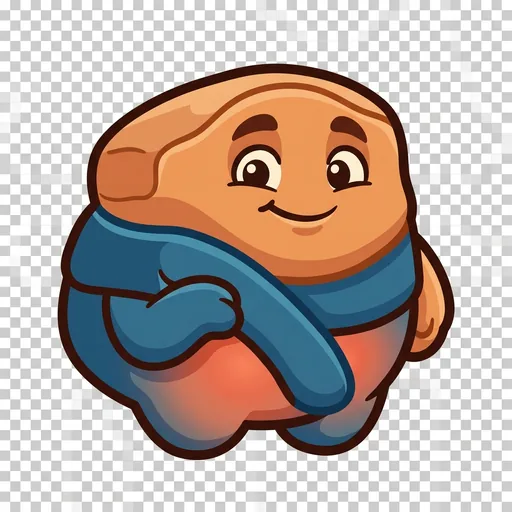
Sink
Convergent/subduction boundary — the heavier plate finds its way down; it takes a long time; that's okay
-
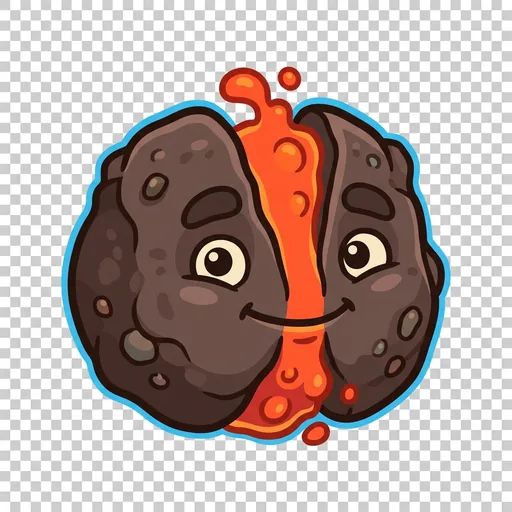
Spread
Divergent boundary + new crust — when something pulls apart, something new is forming in the middle
-

Vent
Volcanism + magma chemistry — eruptions tell us what was happening below
-
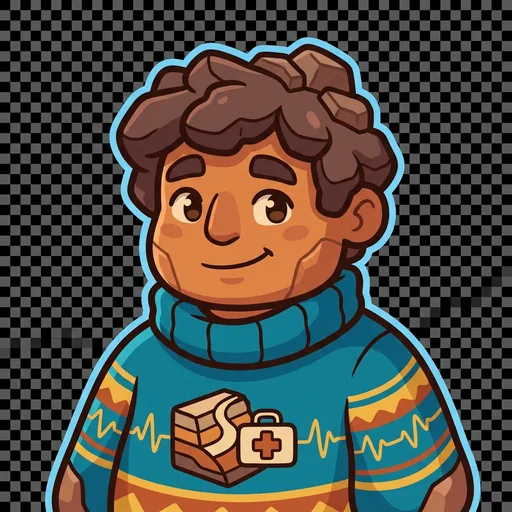
Tremor
Seismology + earthquake preparedness — earthquakes are the Earth telling its story; we can read the lines; we can be ready