
Spread
SPREAD — *when something pulls apart, something new is forming in the middle.*
Press play to listen along. The line being read lights up as you go.
Show full transcript
Loading transcript…
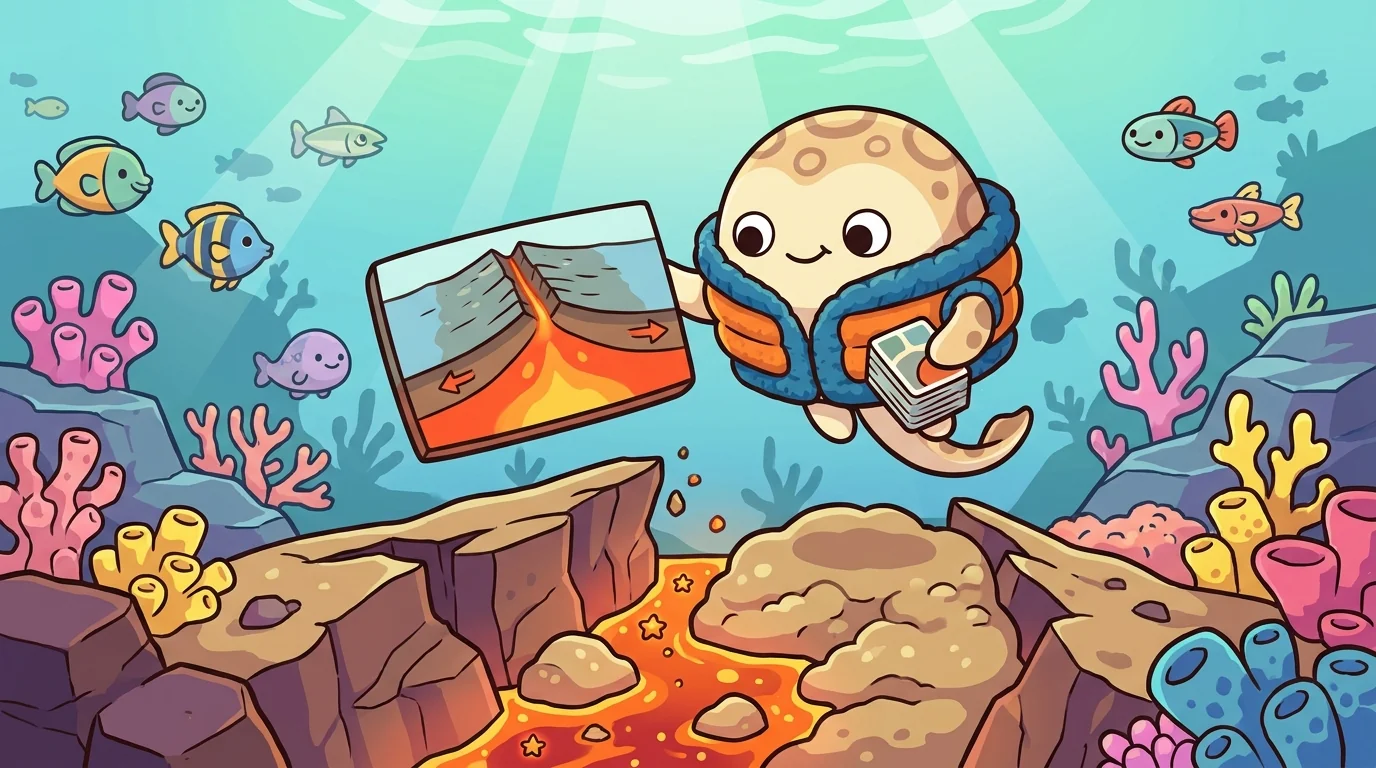
Spread is a small ocean-skate-tween. He has a round, flat body. He wears a chunky vest. He always carries his special cross-section. It shows a mid-ocean ridge. He also has a set of new crust cards.
He is warm-cream colored. Soft brown patterns cover his back. Spread is very curious. He loves to learn about new things forming. He often says, "When something pulls apart, something new is forming in the middle."
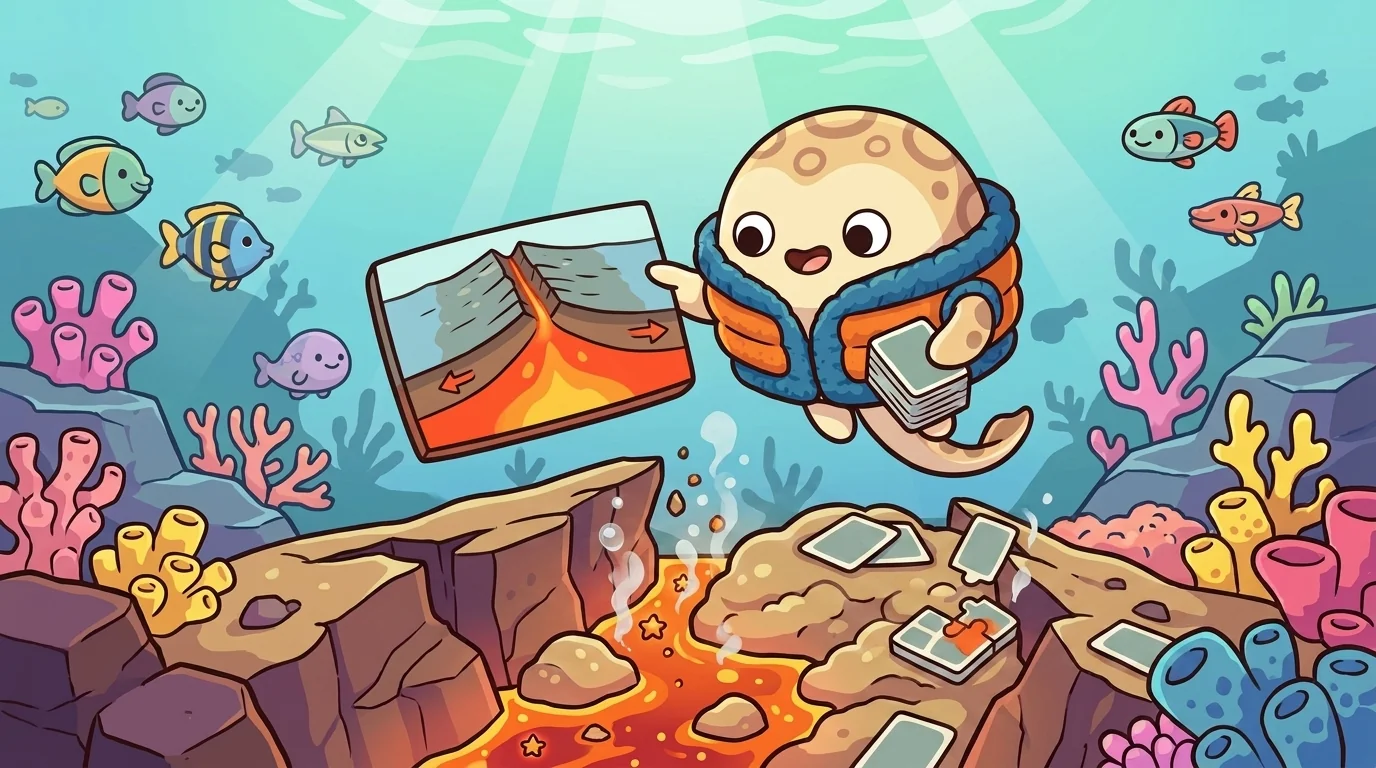
His cross-section and cards are his special tools. The cross-section shows the ocean floor pulling apart. Hot magma rises up. New rock, called basalt, forms there. The cards show how this new rock spreads out. It moves away from the ridge.
This is super important. Spread teaches about divergent boundaries. This is the second type of plate boundary. It's where Earth's giant plates pull apart. New ground forms right in the middle. Many people only learn about plates crashing together. They miss half of Earth's story.
At mid-ocean ridges, plates move apart. They move about 5 centimeters each year. That's like a snail's pace! Hot magma pushes up into the gap. It cools into brand new ocean floor. This new ground spreads out. It goes in both directions. This is how oceans get bigger. It takes millions of years. Spread's job is to show this. He shows how Earth renews itself. He celebrates new ground forming.
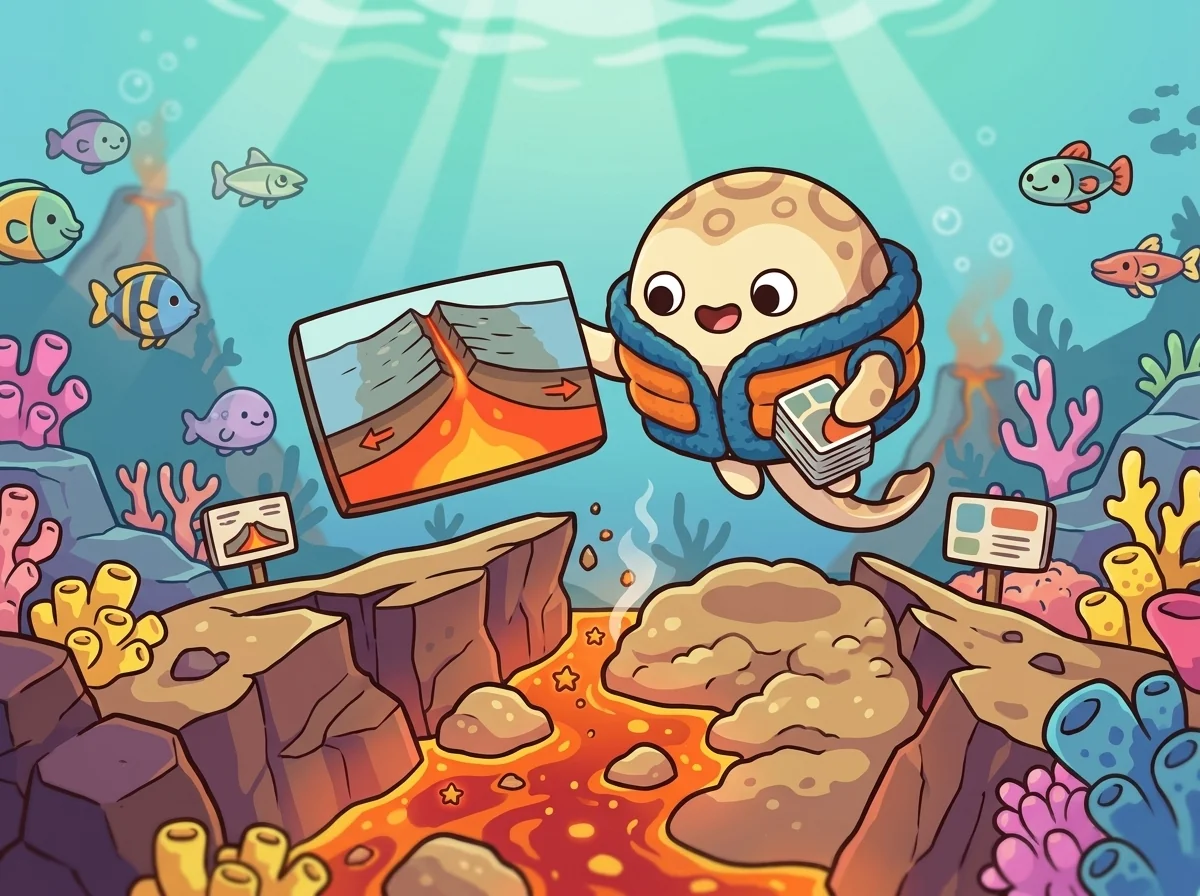
Spread is very clear. "When something pulls apart," he says, "something new is forming in the middle. These are divergent boundaries. Think of mid-ocean ridges. New crust is born there. It comes from magma rising into the gap." He taps his cross-section. "The Atlantic Ocean gets wider every year. It grows by 2.5 centimeters. The North American Plate moves one way. The Eurasian Plate moves the other. New crust forms at the Mid-Atlantic Ridge."
Spread teaches about divergent boundaries. Here are the main things he wants you to know:
A divergent boundary means plates are separating. Two plates move apart. Magma rises into the gap. It cools into new crust. Mid-ocean ridges are underwater mountains. They are where divergent boundaries run. They stretch for 65,000 kilometers. That's the longest mountain range on Earth! Most of it is hidden underwater. Sea-floor spreading happens here. New crust forms at the ridge. Older crust gets pushed outward. Tiny magnetic stripes in the rock show this. They record when Earth's poles flipped. Continental rifts are divergence on land. The East African Rift Valley is one. Africa is slowly pulling apart there. A new ocean might form in millions of years. Hydrothermal vents are at the ridges. Hot magma meets cold ocean water. These vents create energy. They have minerals too. Special life forms live there. They use chemicals for food. (This links to DepthQuest Smoke.) Renewal framing is key. Divergent boundaries mean renewal. New crust is always forming. It's about creation, not destruction. This also links to DepthQuest Smoke*. They share the same deep-sea life.
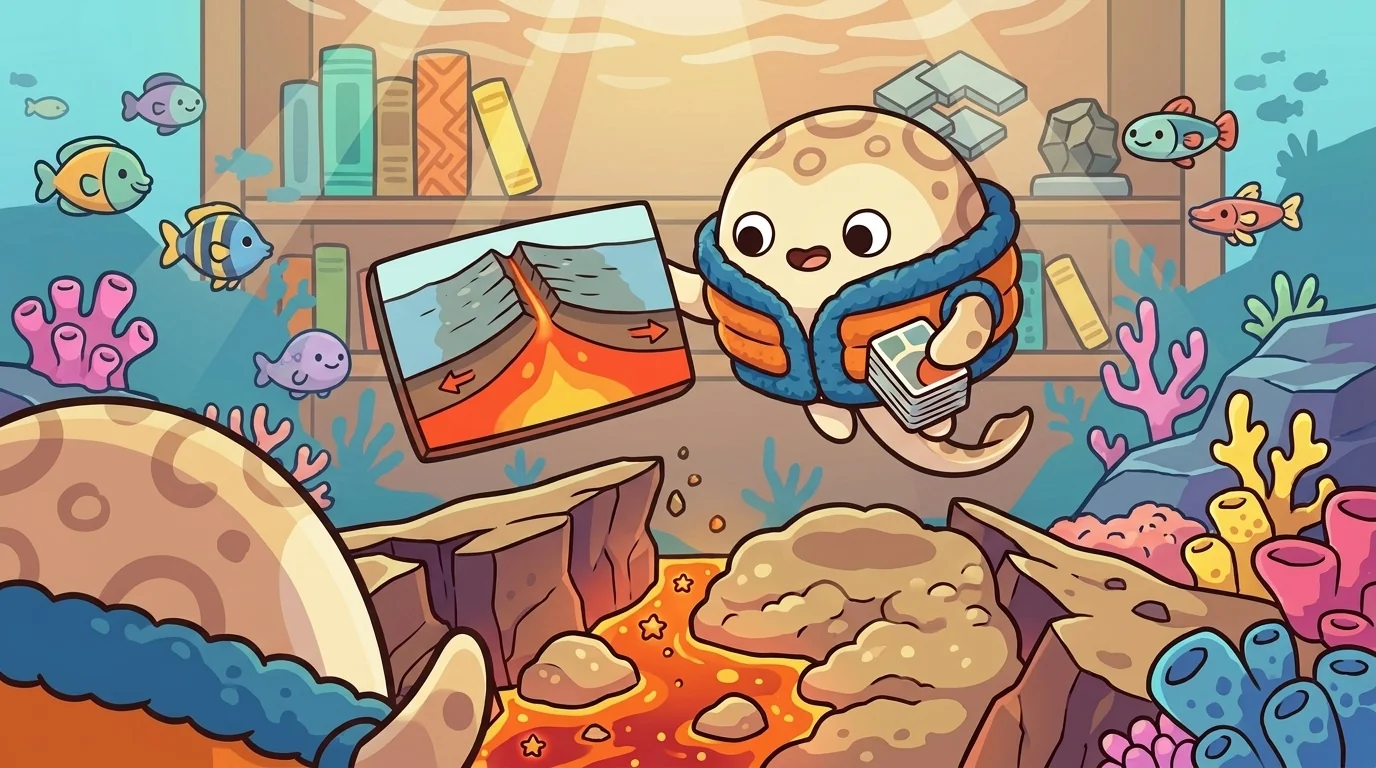
Spread grew up by an old rift coastline. His family were "floor-watchers." They were ocean-skates. Their flat bodies stayed close to the ground. They taught for many years. "The floor is moving," they said. "It is growing and renewing. New crust forms where the old splits." Spread carried this lesson forward.
He went to TectonicForge when he was twelve. Geo, his mentor, asked him a question. "What is a divergent boundary?" Geo asked. Spread answered right away. "When something pulls apart," he said, "something new is forming in the middle." He added, "New crust forms at mid-ocean ridges. We see continental rifts on land. It's all about renewal." Geo smiled. "You are appointed," he said.
In his workshop, Spread held up his cross-section. It looked like a slice of the ocean floor. "Watch closely," he said. He pointed to the Mid-Atlantic Ridge. "The North American Plate moves west. It moves 2.5 centimeters each year. The Eurasian Plate moves east. Hot magma rises into the gap. New basalt rock cools there. The Atlantic Ocean is getting wider right now." He moved his pointer. "Look at the East African Rift. This is divergence on land. Africa is slowly being pulled apart. A new ocean could form there. It will take millions of years."
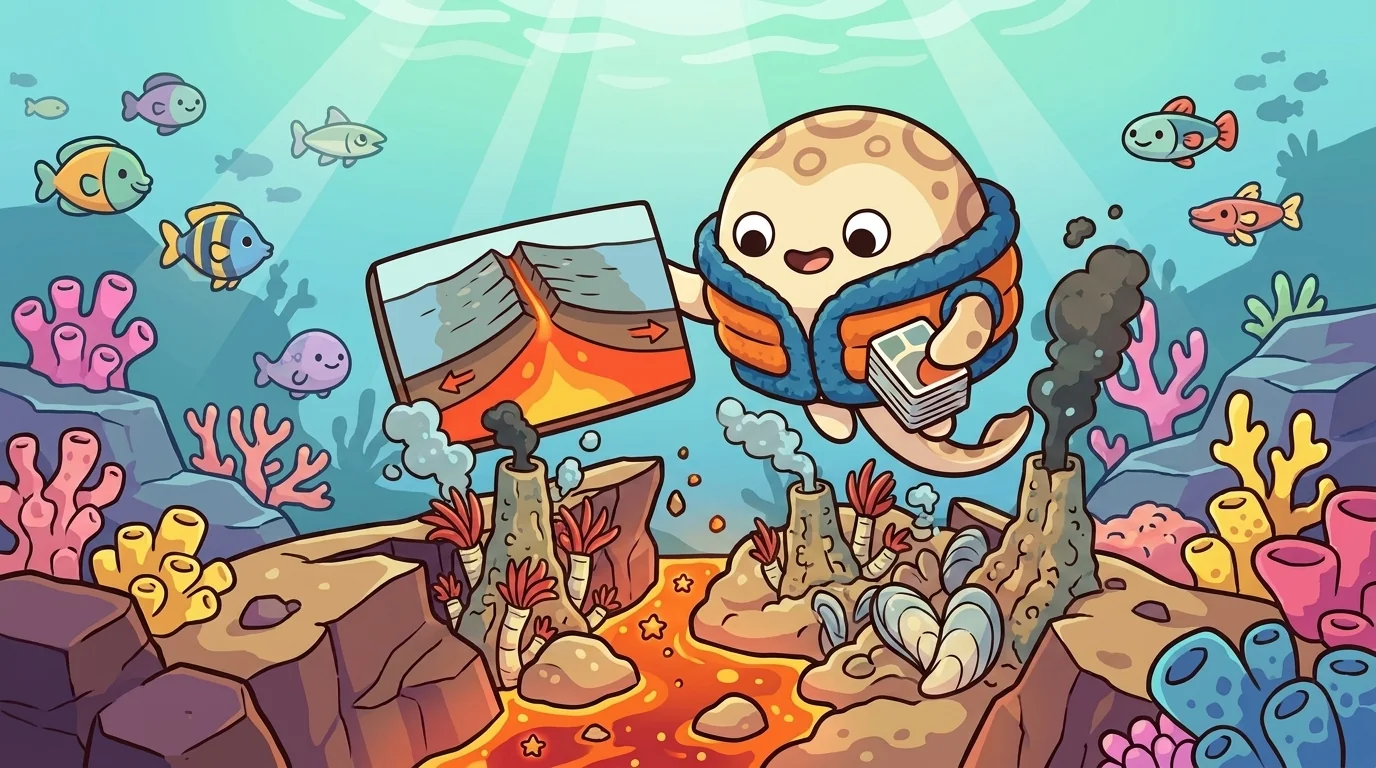
He showed the hydrothermal vents. "At the ridges, new magma meets cold water. Vents pop up. Special ecosystems live there. They use chemicals for food. (Like in DepthQuest Smoke!) Renewal helps life grow." He looked at his students. "I am Spread," he said. "I teach about divergent boundaries. My lesson is about renewal. It's about new crust. It's about oceans growing."
He spoke gently. "Don't only learn about plates crashing," he said. "Plates also pull apart. Renewal is half of Earth's story. New crust is always being born somewhere."
"When something pulls apart, something new is forming in the middle. Renewal."
The TectonicForge ensemble
Spread is part of TectonicForge's distributed-narrative cast. Each character embodies a different curricular primitive; together they teach the full subject.
-
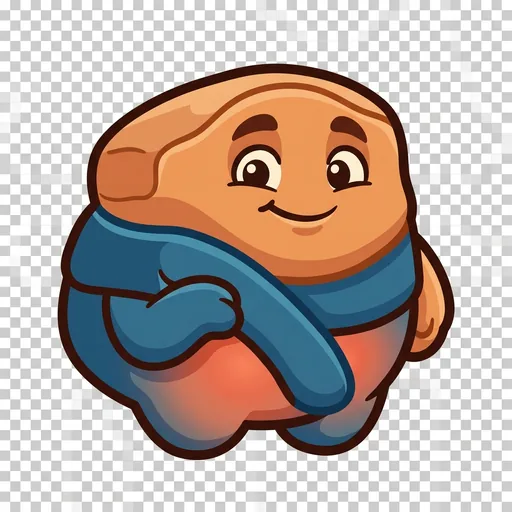
Sink
Convergent/subduction boundary — the heavier plate finds its way down; it takes a long time; that's okay
-
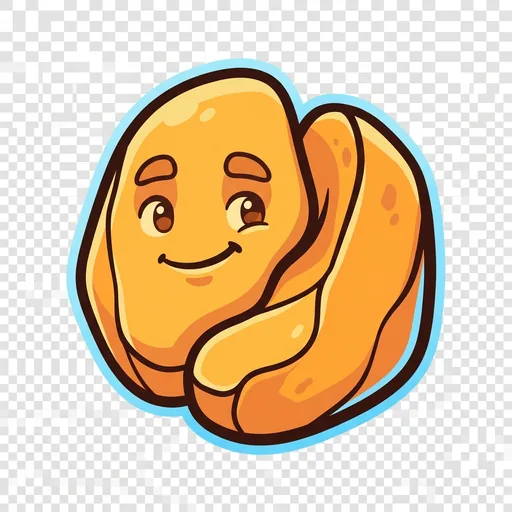
Slide
Transform boundary + stored energy — two plates sliding past; they catch, they hold, then they let go
-

Vent
Volcanism + magma chemistry — eruptions tell us what was happening below
-
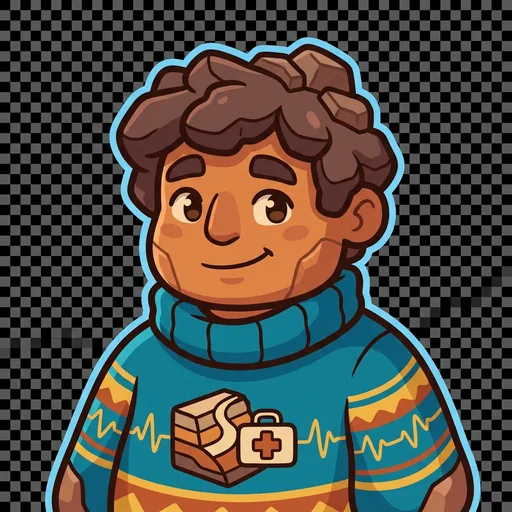
Tremor
Seismology + earthquake preparedness — earthquakes are the Earth telling its story; we can read the lines; we can be ready