
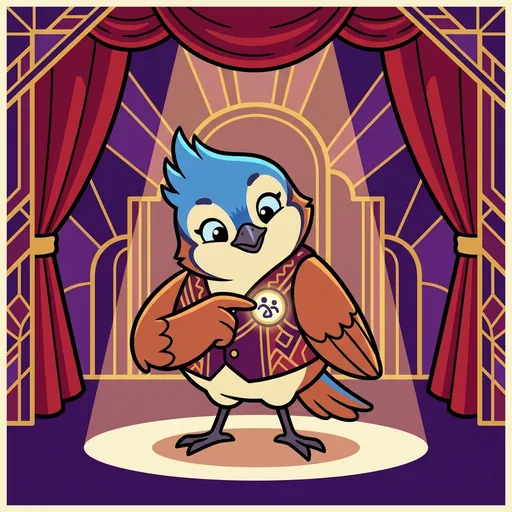
Riff
IMPROV — *the live-performance craft of "Yes, and..." accept the offer; build on it.*
Listen along — Riff
Loading audio…
Press play to listen along. The line being read lights up as you go.
Show full transcript
Loading transcript…
Chapter 5 — Riff and the Yes-And That Builds Together
On the little stage in the StageForge commons, a bright-blue jay named Riff stood across from a nervous newcomer and waited to catch whatever he threw her.
“Just say the first thing,” she told him. “Anything. I’ll take it.”
He swallowed. “Um. Look — a dragon?”
“YES,” Riff said, snapping her wing up, “AND it’s wearing my grandmother’s hat.”
The newcomer blinked. “It — it is?”
“Your turn. Take my thing and add to it.”
“Yes, and… the hat is glowing?”
“Yes, and that’s because grandmother was secretly a wizard.” Riff was grinning now, hopping a little.
“Yes, and she taught the dragon to braid hair!”
They both cracked up. From nothing — one dragon, one silly hat — a whole world had sprouted in about ten seconds, and neither of them had planned a single piece of it. Riff touched the small pin on her vest, the way she always did when the thing worked. Two words on it: Yes, and.
“See what we just did?” she said. “You handed me a dragon. I didn’t argue with it. I built on top of it. Then you built on top of that. That’s the whole trick. That’s the entire game.”
The newcomer stared at the empty stage where, a moment ago, there had very much been a hair-braiding dragon in a wizard’s hat.
Riff learned the difference between building and stopping when she was small, and it stung.
She’d grown up in the village commons, in a big noisy family of jays who called out games for the whole village — a chattering, overlapping racket of voices where everyone talked at once and somehow it turned into fun. Little Riff loved throwing out ideas. “Let’s play the flood game where the puddle is an ocean!”
But there was one older cousin who answered everything the same way. “No. That’s just a puddle.” “No, we already played that.” “No, that’s dumb.”
Every no landed like a small stone. Riff would feel the bright, fizzy idea in her chest go flat and heavy, and after enough of them she stopped offering. The games got quiet. Her ideas backed up behind her beak and stayed there.
Her grandmother — the real one, hat and all — found her sulking under a fence one afternoon. She didn’t tell Riff to toughen up. She just said, “You’ve gone quiet. Somebody keep saying no to you?”
Riff nodded, miserable.
“A no doesn’t just turn down your idea, little one. It stops the whole game. Nobody can build on a closed door.” Her grandmother tilted her head. “But watch what happens when I do this instead. Tell me your ocean game.”
”…The puddle’s an ocean,” Riff mumbled.
“Yes,” said her grandmother, “and we’re the only two birds who know it’s really a whole sea, so we have to warn the others before the tide comes in.”
Something lifted. The flat, heavy feeling in Riff’s chest fizzed back up all at once. The idea wasn’t dead — it had grown. She’d been handed her own thing back, bigger. She never forgot how that felt: like a door she’d thought was shut swinging wide open.
She walked to StageForge at twelve, because a place that studied the stage ought to understand the kind of magic that only happens live, between two people, with nothing rehearsed.
Curtain, the old mentor who ran the workshops, met her at the gate. He didn’t ask her to perform anything. He asked one question. “What is improv?”
Riff didn’t explain it. She held out an open wing, palm up, like she was offering him something invisible. “Hand me anything,” she said.
Curtain raised an eyebrow. “It’s raining.”
“Yes,” Riff said instantly, “and we forgot the umbrella, so we’re going to have to share your coat.” She waited, wing still out. “Now you build on mine. That’s improv. Whatever you give me, I take it and I add — and I never say no.”
Curtain looked at her for a long moment, at the open, waiting wing. “You belong here,” he said.
Riff’s workshop was where new performers came to get un-stuck, and most of them arrived stuck the same way.
A boy came in one afternoon, arms crossed, jaw tight. “I’m bad at this,” he said. “Every scene I do just… stops. Dies. It’s embarrassing.”
Riff knew that tight-jawed look. She’d worn it under the fence.
“Let’s do one,” she said. “I’ll start. Look — a spaceship!”
”…There’s no spaceship,” the boy said. “We’re just standing here.”
Riff nodded, gentle. “Feel that? The scene just hit a wall. You told me no — ‘there’s no spaceship’ — and now there’s nowhere to go. Neither of us can build on a wall.” She let the silence sit one beat so he could feel it. “Try it the other way. I’ll go again. Look — a spaceship!”
He hesitated. “Yes… and it’s about to crash?”
“Yes, AND I’m the world’s worst pilot.” She grabbed an invisible steering wheel and wrenched it.
“Yes, and I’m hiding under the seat!”
“Yes, and the seat is also broken!”
The boy laughed — a real, surprised laugh. “We’re gonna crash!”
“We are absolutely gonna crash,” Riff agreed happily, “and it’s the best scene you’ve done all day.” She grinned. “Notice I never told you your idea was wrong. I took it. I added to it. You took mine, added to it. That’s the whole craft — accept what your partner gives you, then hand them something back. Make them look good, and they’ll make you look good.” She touched her pin. “And when a scene falls flat — because they will fall flat — you don’t stop and apologize. You just say yes-and your way back in. There’s no such thing as a wasted try. There’s only the next offer.”
Later, when the workshop had emptied out, the boy lingered by the door with one more question. He was quieter now.
“But what if my idea’s not good enough?” he asked. “What if I say yes-and something dumb?”
Riff thought about the fence, and the flat stone-heavy feeling, and how her grandmother had handed her ocean back to her.
“Then your partner takes your dumb thing and makes it wonderful,” she said. “That’s the secret nobody tells you. You’re not carrying the scene alone. You never were. You just have to be brave enough to offer — and generous enough to catch.” She looked at him, warm. “The scary part is the moment right before you say yes. That little held breath where you could still close the door. But every single time you push through it and say yes, and instead — something gets built that neither of you could’ve made by yourself.”
The boy nodded slowly, and Riff watched the crossed arms come loose, the tight jaw soften — the same way, years ago, hers had, when a door she thought was shut swung open and let the fizzy, glad, we-made-this-together feeling come rushing back in.
The StageForge ensemble
Riff is part of StageForge's distributed-narrative cast. Each character embodies a different curricular primitive; together they teach the full subject.
-
Face
Acting — character work through voice, body, and emotional life
-

Pen
Playwriting — turning ideas into scripts with character, conflict, structure
-
Block
Blocking — directing actors through stage geography
-
Rig
Stagecraft — the technical-theater craft that makes the visible-stage possible
-
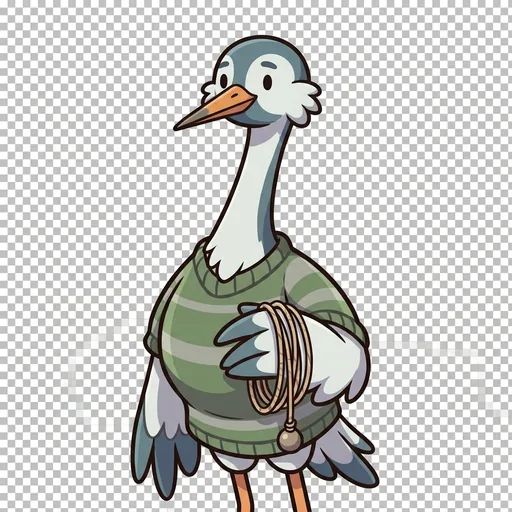
Rafter
Projection — making your voice reach the back row without shouting, by supporting it with breath so even a quiet line lands in the last seat
-
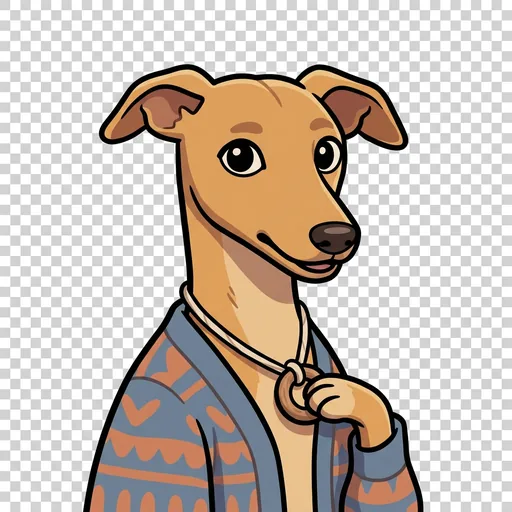
Yearn
The objective — what a character wants in a scene, badly enough to drive every line and move; the engine under a performance
-
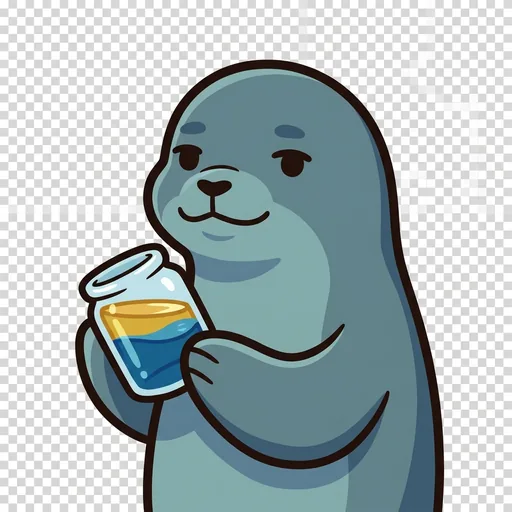
Undertow
Subtext — the real meaning running under the spoken line; what a character truly means beneath the words they actually say
-
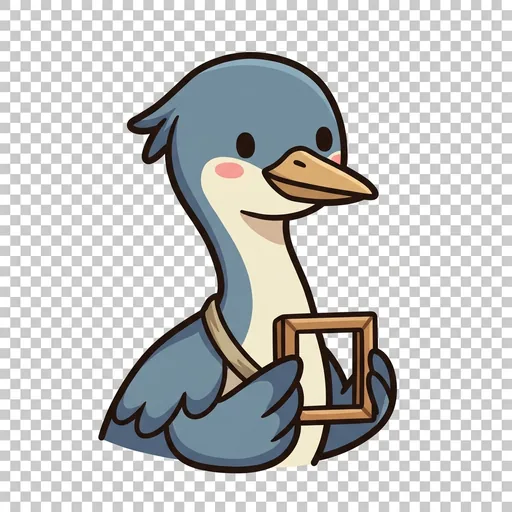
Freeze
Tableau — a frozen stage picture the whole cast holds so the audience can read the moment like a painting
-
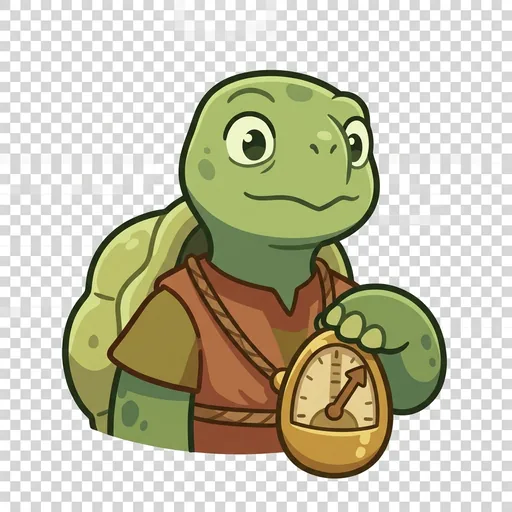
Hitch
Pacing and timing — the rhythm of a scene and the deliberate pause that makes a line land, the held beat before the joke or the truth
-
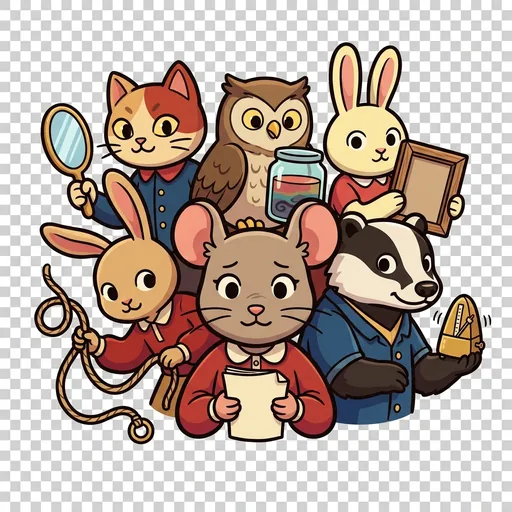
Opening Night
The whole company on stage together — how acting, objective, subtext, tableau, and timing combine so one live scene truly comes alive