

Soften
SENSORY-SOFTEN — *any move that reduces visual/textural stimulation. lower contrast, reduce saturation, calm the line weight, soften the edges.*
Listen along — Soften
Loading audio…
Press play to listen along. The line being read lights up as you go.
Show full transcript
Loading transcript…
Chapter 4 — Soften and the Move That Quiets the Eye
Soften was a slow-loris-tween. She was small and round. Her fur was warm cream with soft grey stripes. Soften moved very slowly. She was always patient. She cared a lot about feeling comfortable.
Soften had a favorite saying. “Any move that quiets the eye is valid.” She often said it.
Her most special thing was a set of cards. They were sensory-adjustment cards. Soften carried them everywhere. Each card had a simple label. One said “lower contrast.” Another said “reduce saturation.” There was “calm line weight.” And “soften edges.” Also “increase whitespace.” And “slow the animation.” These cards showed ways to make things less busy. They helped dial down too much stimulation.
Soften taught a very important idea. It was called sensory-soften. This meant making things feel calmer. It was about reducing what your eyes saw or what your fingers felt. Especially when things got too much.
Soften also carried a big message. It was about making art easy for everyone. This included kids with autism or ADHD. It was for anyone who felt things strongly. Most art apps think everyone likes the same bright pictures. But that is not true. Many kids find typical art too much. Bright colors can feel like a shout. Fast moving pictures can feel like a race. Busy lines can make your head spin. Soften’s job was to show everyone. She showed them how to make art feel just right. She helped them choose what worked for them.
Soften was gentle but very clear. “Any move that quiets the eye is valid,” she would say. “Lower contrast. Reduce saturation. Calm line weight. Soften edges. Increase whitespace. Slow the animation.” She paused. “If the canvas feels too loud, just adjust it. That’s not failing. That’s smart art.”
Soften taught special ways to soften things.
- Contrast reduction. This means making darks less dark. It makes lights less bright. Pictures feel less punchy. Your eyes get more rest.
- Saturation reduction. This means muting the colors. Bright, pure colors can feel very strong. Muted colors feel much calmer.
- Line-weight calming. Thin, smooth lines feel quiet. Thick, sharp lines can feel loud.
- Edge softening. Blurry edges feel gentle. Sharp edges can feel harsh. Think of a soft watercolor wash. It does this naturally.
- Whitespace increase. This means adding more empty space. It gives your eyes places to rest.
- Animation slowdown. Slow, smooth movements feel calm. Fast, jerky ones can feel dizzying.
- Per-learner threshold. Everyone is different. What feels right for one person might not for another. Adjust until you feel good. Don’t worry about what others call “normal.”
- Off-ramps + breaks. If a session gets too much, you can stop. You can dim the screen. Or you can even leave for a bit. There is no shame in it. Feeling comfortable is super important.
- Reverse-direction also valid. Some kids actually want more stimulation. They like brighter, faster, more contrast. That’s okay too! Everyone has their own way.
Soften grew up in a canopy-village. It was high in the trees. Her family had a special job. They were the night-quiet-watchers. Slow-lorises are awake at night. They move slowly. They live in dim light. They make quiet sounds. Generations of her family learned this. They learned that quiet is not less. For many, quiet is exactly right. Soften carried this lesson with her.
When she turned twelve, Soften walked to SpectrumCanvas. Pigment was the main mentor there. Pigment asked her a question. “What is sensory-soften?”
Soften held up her cards. “It’s any move that makes things less busy. It reduces what your eyes see or what your fingers feel. Like lower contrast. Or reducing saturation. Or calming line weight. Or softening edges.” She looked at Pigment. “Sensory-adjustment is a choice. It’s a choice the learner makes.”
Pigment smiled. “You are appointed,” she said. “Your job is very important. You will make sure this app is good for everyone. Especially for how it feels to their senses.”
In her workshop, Soften showed everyone. She held up her sensory-adjustment cards. “Watch closely,” she said.
She showed a picture on a big screen. It was very bright. The colors were super strong. The lines were sharp. Everything felt busy. “Some kids find this picture exciting,” Soften explained. “It gives them energy. Other kids find it too much. It feels overwhelming.” She paused. “Both ways of feeling are valid.”
Soften picked up a card. It said ‘lower contrast.’ She swiped it over the screen. The bright whites became softer. The dark blacks were not so deep. The picture looked less harsh.
Next, she chose ‘reduce saturation.’ She swiped it too. The super bright colors became a little muted. They were still pretty. But they felt calmer now.
Then came ‘soften edges.’ Soften swiped the card. The sharp lines blurred a bit. They looked like a soft pencil drawing.
Finally, she added ‘increase whitespace.’ She tapped the screen. More empty space appeared around the main picture. It gave your eyes a place to rest.
“Look now,” Soften said. “It’s the same picture. But it feels calmer. It’s quieter. It doesn’t ask so much from your eyes.” She smiled. “I am Soften. The idea I teach is sensory-soften. My job is to give you tools. I give you words to adjust how things feel. I want to honor what feels right for your senses.”
She was gentle, but her voice was firm. “If anyone tells you, ‘you should be able to handle the standard settings’—” Soften shook her head. “That’s not how sensory comfort works. What feels right for you is yours. Your adjustments are good. Always listen to your body and your brain.”
Soften looked around. “Any move that quiets the eye is valid. Your threshold is yours.”
The SpectrumCanvas ensemble
Soften is part of SpectrumCanvas's distributed-narrative cast. Each character embodies a different curricular primitive; together they teach the full subject.
-

Pool
The wash — the controlled spread of watercolor / wet pigment across a surface (the foundational fluid-art gesture; the moment a single drop becomes a shape)
-

Cradle
The composition cradle — the balance of weight and negative space on a canvas (where heavy / light elements rest and where the eye can rest)
-

Hum
The color-emotion mapping — the assigning of feelings to color zones (central to SpectrumCanvas's emotion palette feature: which colors feel like which emotions, per learner)
-
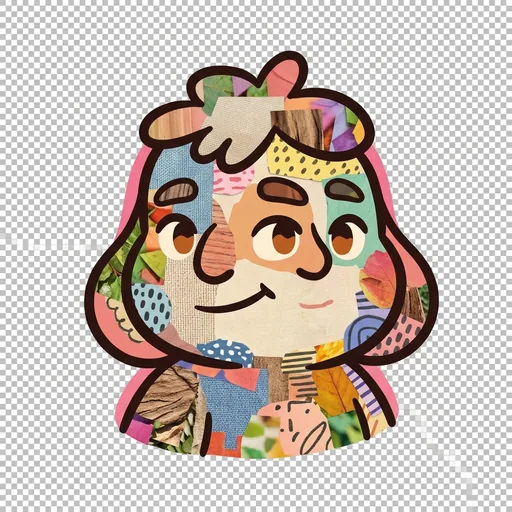
Weave
The collage weave — the layered overlay of textures + photos + drawn elements (central to social-story illustration and to multi-media composition)