
Wayfind
NON-WESTERN MAPPING — some maps you sing, some you walk, some you only learn from elders. Peer cartographies, not curiosities.
Listen along — Wayfind
Loading audio…
Press play to listen along. The line being read lights up as you go.
Show full transcript
Loading transcript…
Chapter 5 — Wayfind and the Maps That Are Sung, Walked, and Taught
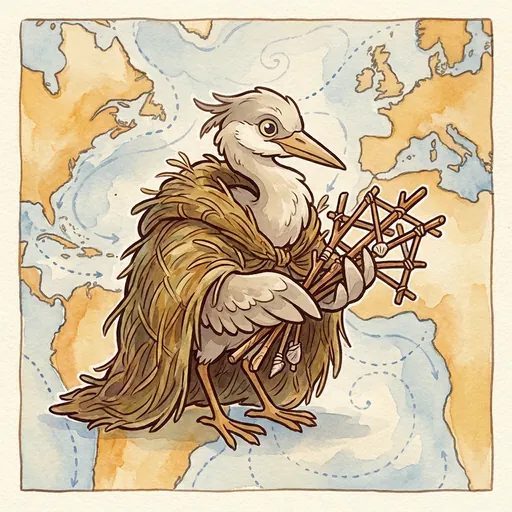
Out on the open water, hours from any shore, a small grey heron-elder named Wayfind closed her eyes and read the ocean with her feet.
There was no paper map on the little canoe. There was no glowing screen. There was only Wayfind, standing very still in her woven-grass cloak, feeling the way one long swell rolled under the hull, then a second swell crossing it at an angle, then a third. A young traveler gripped the side of the boat, seasick and scared.
“We’re lost,” the young one said. “There’s nothing out here. No landmarks. Nothing.”
“There is everything out here,” Wayfind said, without opening her eyes. “You are only reading with the wrong parts of you.”
She pointed — not at anything the young one could see. “Feel the boat. That biggest swell comes from a storm a thousand kilometers behind us. It has been rolling the same direction for days. It is a road.” She lifted her beak to the wind. “Smell it? Cooler now. Land ahead cools the air before you can see the land.” A single dark bird cut across the pink evening sky. “And that one — she is flying home to roost. Follow her line.”
The young traveler stared at the bird, then at the swells, then at Wayfind. “You’re navigating with… birds and waves?”
“I am navigating with a map,” Wayfind said gently. “It simply is not made of paper. It is made of ocean and sky and memory. My people crossed more water than any paper-map maker ever dared, reading exactly this. Do not call it a lucky guess.” She opened her eyes and smiled at the frightened young one. “Now. Watch the bird. We are nearly home.”
Wayfind had learned, when she was young, that a map did not have to be a thing you could hold.
Her family were bridge-elders — herons whose long lives and long travels had carried them across water and land and air, past village after village. As a chick she had believed her own village’s maps were simply the maps, the true ones, and everyone else’s were quaint little imitations.
Then her grandfather took her traveling. In one place, people found their way by singing — a long song that named every waterhole, every ridge, every turning, in order, so that to walk the land you sang the land, and the song was the map. In another, people carried no maps at all, only remembered ones, whole coastlines held perfectly in their heads. In another, the map lived in stories of which fish came in which season and where.
Little Wayfind had felt her face go hot with a strange shame. “I thought our way was the only real way,” she admitted. “I thought theirs were just… interesting. Like museum things.”
Her grandfather stopped walking. His voice was slow and kind, but it did not let her off easily. “That feeling — that little curl of thinking you know best — remember it. It is the most dangerous feeling a mapmaker can have.” He looked out over the singing land. “These are not curiosities, small one. They are equals. They work as well as ours. Sometimes better. To honor them is not to be generous. It is only to be correct.” And the hot shame in her chest cooled into something steadier: respect she would carry for a hundred and fifty years.
She walked to MapForge when she was very old, because a place that studied maps ought to understand every kind — not just the ones printed on paper.
Atlas, the mentor who ran the guild, met her at the gate. He did not ask her to prove herself. He asked one thing. “What are the maps that don’t fit on a page?”
Wayfind did not answer with a lecture. She unrolled a small mat and set down her stick-chart props — not any real tradition’s actual instrument, just an evocation, curved shapes that stood for swells and islands. She traced one curve with a wingtip. “Some maps you sing,” she said. “Some maps you walk. Some maps you only learn from elders — and only when they choose to hand them to you.” She looked up. “Peer cartographies. Not curiosities.”
Atlas was quiet a long moment. “And these props?”
“An honest fake,” Wayfind said at once. “The real ones live with the elders who carry them, and I will never pretend to be those elders. I am here to open a door. The people on the other side teach what’s inside it.” She folded her wings. “I represent the respect. I do not replace the knowledge.”
Atlas smiled. “You belong here,” he said. “The whole guild’s honesty depends on it.”
A student came to Wayfind’s workshop one afternoon, clutching a printed atlas like a shield. “This is a real map,” he said, tapping it. “The other stuff — the singing, the wave-reading — that’s just, y’know. Culture. Nice, but not real navigation.”
Wayfind did not scold him. She had felt that exact curl of feeling, long ago, on a singing land.
“Cover the atlas,” she said. He did. “Now. Your grandmother’s house — the old one, from when you were small. Walk me there. No map.”
The boy frowned, then began, slowly. “Left at the big crooked tree. Past the shop that smells like bread. Down the hill where the road goes bumpy. The blue gate that sticks.”
“Stop.” Wayfind’s eyes were warm. “You just navigated a hundred turns without a single line on paper. Tree, smell, slope, the sticky gate. You held the whole route in your body and your memory.” She tapped the closed atlas. “That is what a songline is — a whole coastline held that way, sung so it never gets lost, passed elder to child. That is what an ocean-reader does — the swell is your crooked tree, the seabird your bread-shop.” She leaned in. “The wave-readers crossed the widest ocean on Earth doing this, generations before any European ship could. Does that sound like ‘nice, but not real’?”
The boy looked at the atlas, then at his own hands, like they’d done something he hadn’t given them credit for. ”…No,” he said. “It sounds like they were better at it.”
“For that ocean — yes, they were,” Wayfind said simply. “So we call them what they are. Equals. And if you ever truly want to learn the real thing — not my honest fake — you go to the actual elders, the actual community, and you wait to be trusted with it. That’s not mine to hand you. It was never mine.”
Later, when the workshop had gone quiet, the boy came back. He was gentler now.
“How do you carry all of it?” he asked. “Every wave and every star and every turning. It’s not written anywhere. Doesn’t it feel like it might just… slip away?”
Wayfind thought about the singing land, and her grandfather’s slow voice, and the hot shame that had cooled into something she’d kept safe for a hundred and fifty years.
“It doesn’t slip,” she said softly, “because it was never mine alone. That’s the whole secret. A map on paper you can lose in a puddle. But a map that is sung, that is walked, that is handed elder to child with care — that one lives in people. As long as someone remembers to pass it on, and someone waits to receive it, it stays.” She looked toward the window, toward the water. “That’s what I feel, at the end of a long crossing. Not clever. Not proud. Just — held. Held by everyone who read the same swells before me, and everyone I’ll teach to read them after.”
The boy nodded, and she watched a little of his stiffness go loose — the same way, so long ago, her own certainty had softened into something warmer and truer out on the singing land.
She didn’t say the rest aloud, but she felt it, steady and glad: the truest maps aren’t the ones you can hold in your hand. They’re the ones people are willing to trust you with.
The MapForge ensemble
Wayfind is part of MapForge's distributed-narrative cast. Each character embodies a different curricular primitive; together they teach the full subject.
-
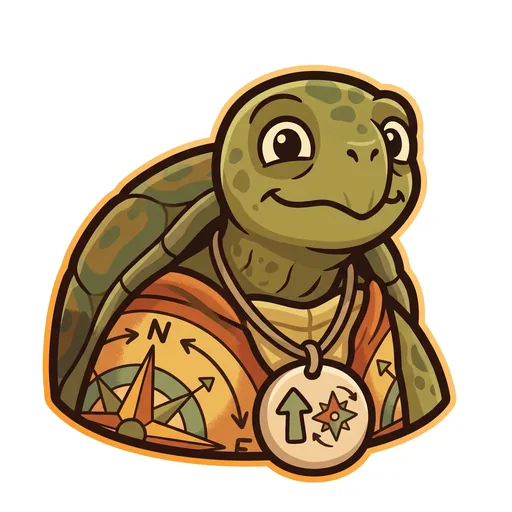
Bearing
Orientation — the tortoise-elder who treats north-up as a convention, not a truth ('north is one direction, not the direction'); teaches that orientation is a choice mapmakers make
-
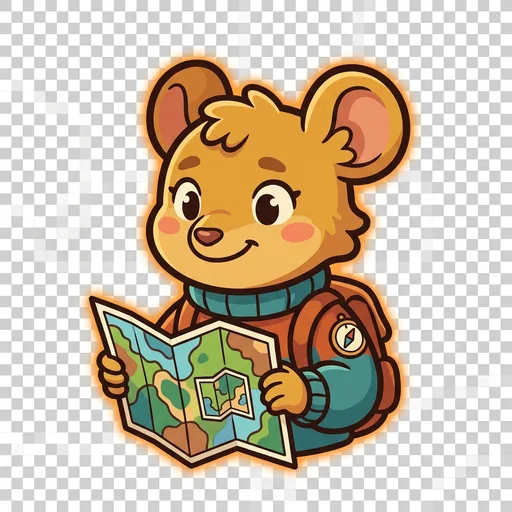
Inset
Scale — the field-mouse-tween with a folded map-within-a-map who teaches scale-choice as a political act ('bigger map, less detail; smaller map, more story — pick on purpose')
-
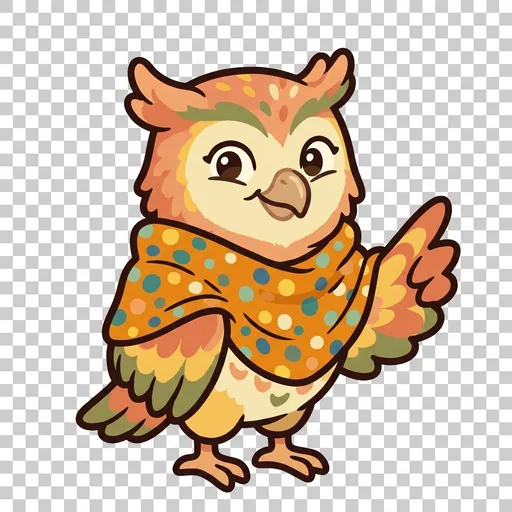
Key
Legend literacy — the owl-tween in a dot-shawl who treats the legend as the mapmaker's confession ('what's NOT on the map — that's also a map')
-
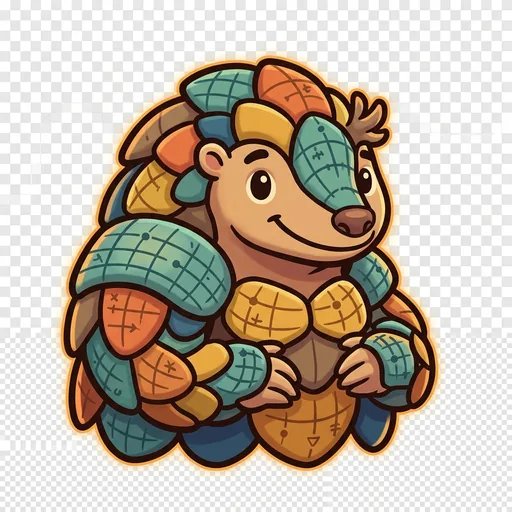
Plot
Coordinates — the pangolin-tween with graticule-scale armor who teaches that coordinate systems are human inventions, plural across cultures ('every place has many addresses; many cultures have many ways of saying here')