Underframe
HOMOLOGY — the same underlying skeleton, in the same order, beneath very different-looking limbs; a shared bony frame that reveals shared ancestry.
Loading audio…
Press play to listen along. The line being read lights up as you go.
Show full transcript
Loading transcript…
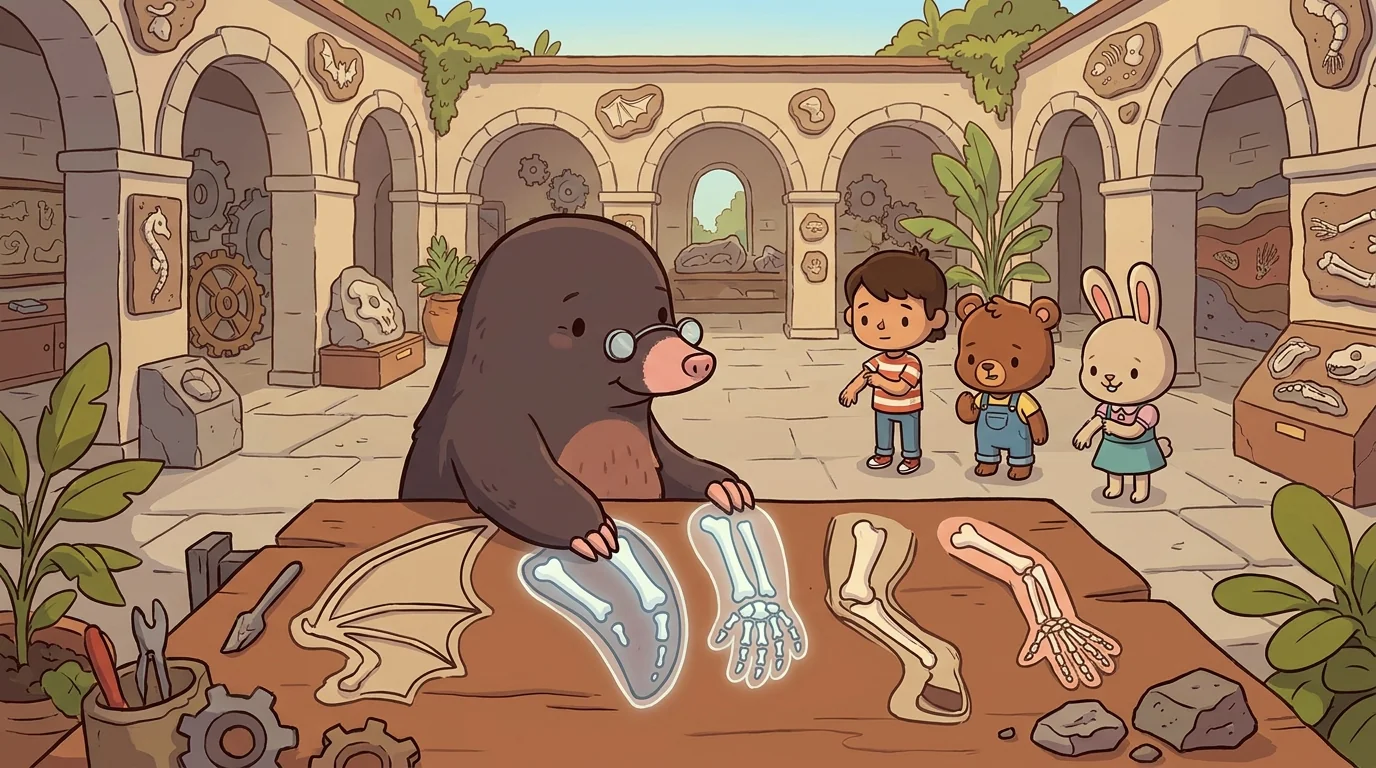
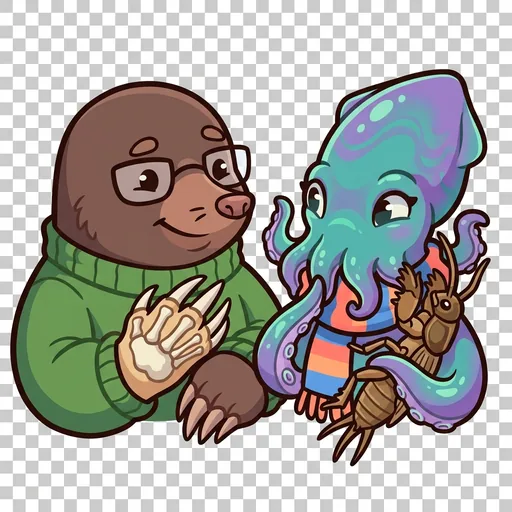
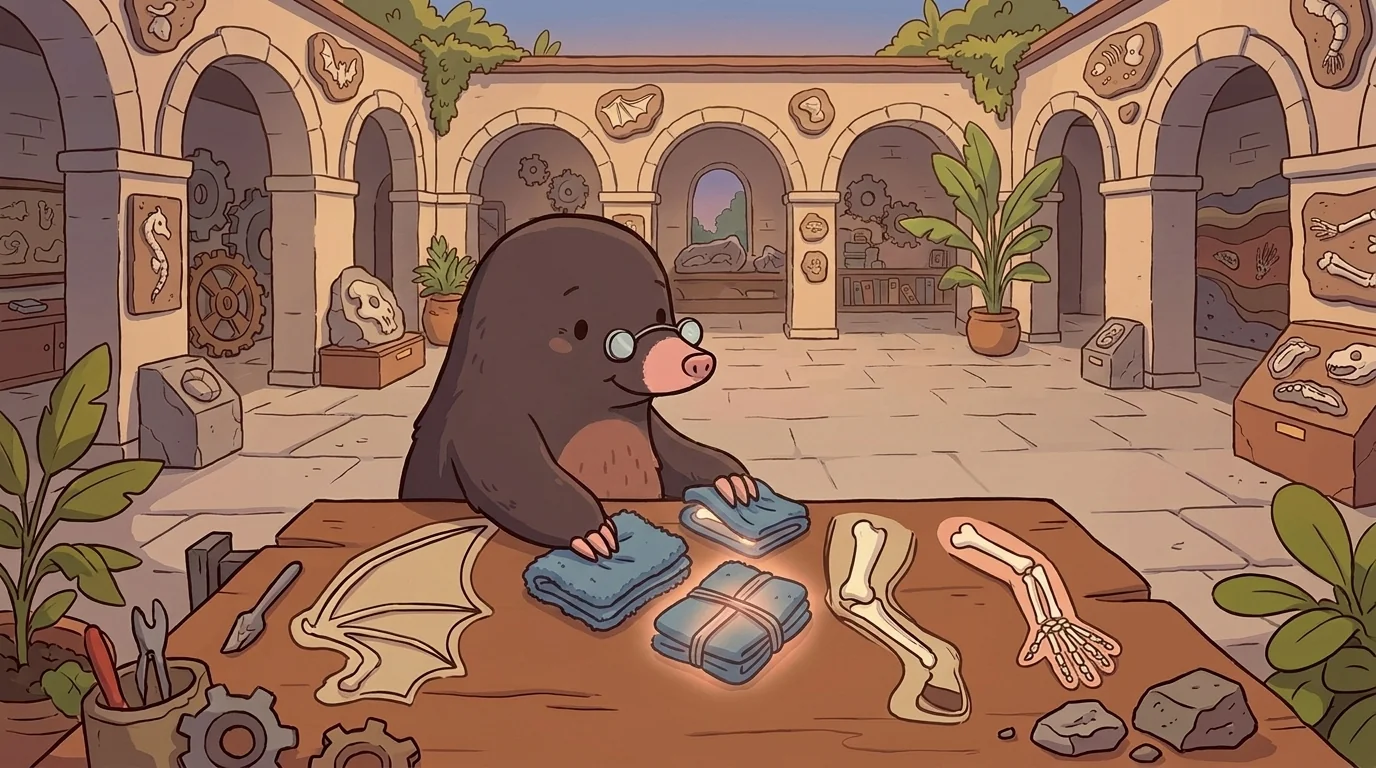
In the FossilForge courtyard, a velvet-coated mole spread four outlines across the workbench: a bat's wing, a whale's flipper, a horse's front leg, and the arm of a child.
"Four creatures," said Underframe, who did not see very well and so was in the habit of touching things to know them. "Nothing alike, on the outside. One flies. One swims. One gallops. One waves hello." She ran a small paw over each outline in turn. "But watch what my paw finds underneath."
She laid a second set of cards over the first — and now, inside each very different limb, the same bones glowed: one long bone at the top, then two bones side by side, then a little crowd of wrist bones, then the long fingers, fanned.
"The same frame," she said softly. "In the same order. In all four. A bat and a whale and a horse and you — under the skin, you are built from one plan."
The museum-club kids looked at their own arms.
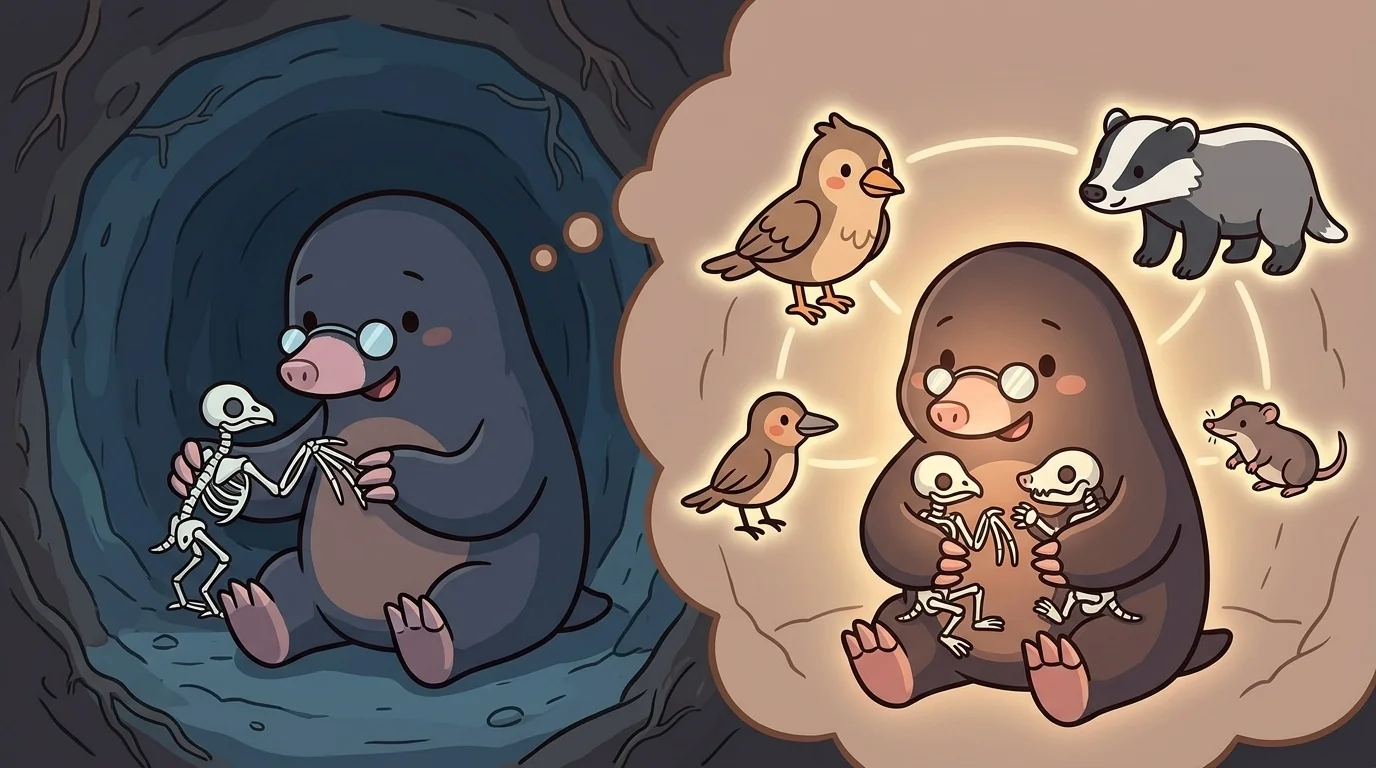
Underframe had learned to feel the frame beneath things because she could not rely on seeing them.
She was a mole, and the world came to her mostly through touch. As a young mole she had known the creatures of her hillside not by their fur or their colours — which she could barely make out — but by their bones, when she found them: the delicate frame of a fallen bird, the sturdy frame of a badger, the tiny frame of a shrew. And one day, laying a bird's wing-bones beside her own digging paw, she had felt her breath catch. The bones were the same. Fewer here, longer there, but the same bones, in the same order. A wing and a spade, built from one frame.
She remembered sitting in the cool dark of her tunnel with the two little skeletons side by side, feeling a warmth she had no word for yet — the sense that she was not a stranger among the creatures of the world, but a cousin. Under the fur and the feathers and the fins, they were all made the same way. She had never felt lonely underground again.
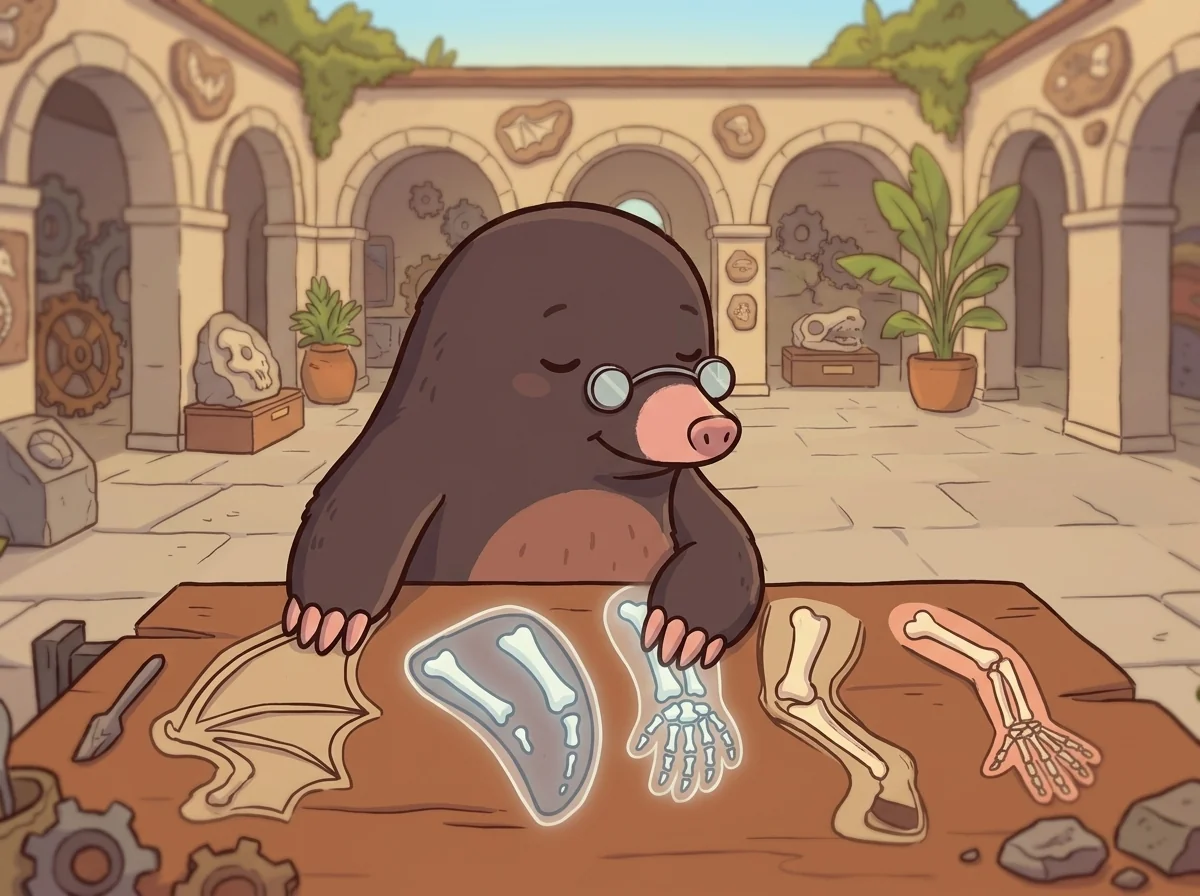
When she was older, Underframe dug her way, more or less, to the FossilForge academy, carrying a bundle of small paired skeletons wrapped in soft cloth.
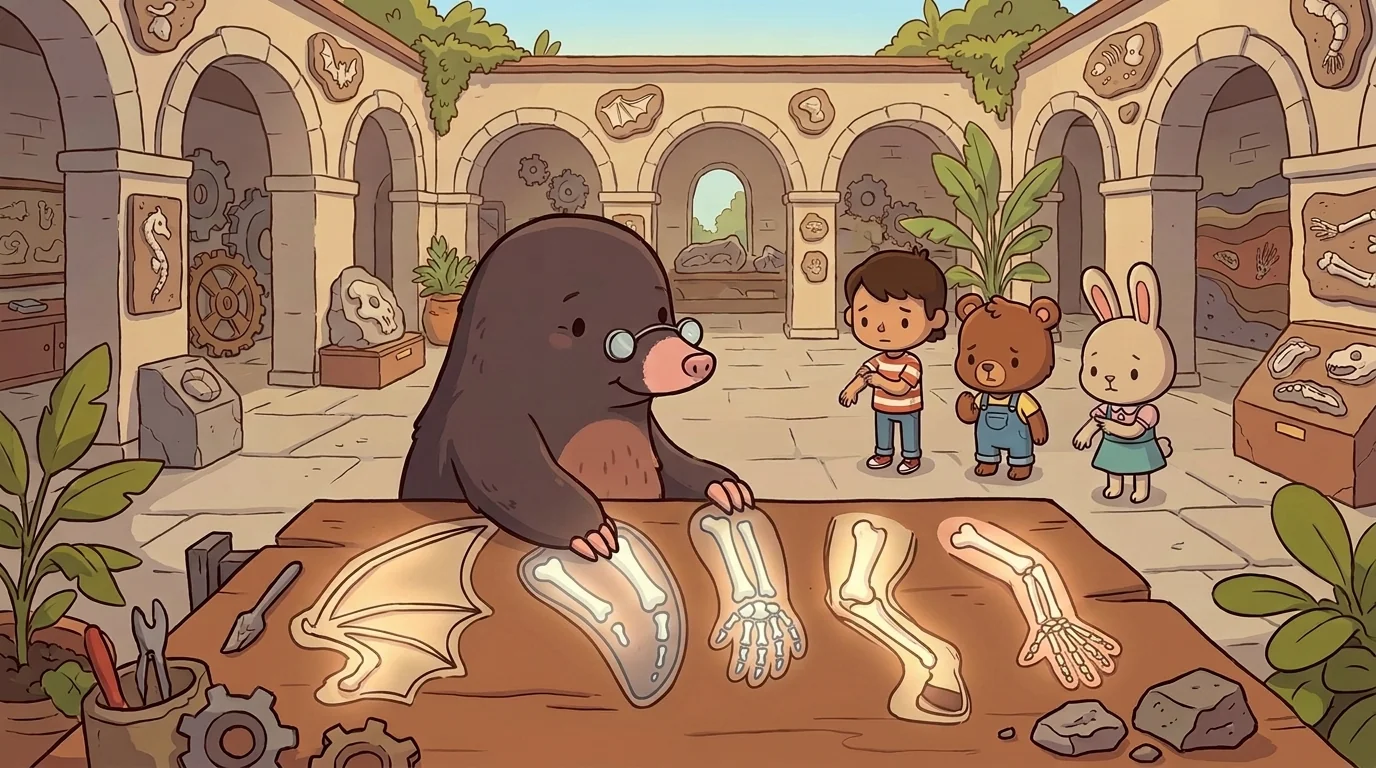
At the academy she taught the children to look past the outside.
"When two creatures share the same bones, in the same order, we call it homology," she said, laying the paired frames along the bench. "A bat's wing, a whale's flipper, a horse's leg, your arm — all have one bone at the top, two below, a cluster of little wrist bones, then the long finger-bones. The jobs are wildly different — flying, swimming, running, holding. But the frame is one frame."
"Why would a bat and a whale have the same bones?" asked a girl.
"Because long, long ago, they shared a grandparent," said Underframe. "One old creature with that frame — one upper bone, two lower, wrist, fingers. And its descendants spread out and out, into the air, into the sea, across the land, each bending that same frame to a new life. The bones didn't climb a ladder toward something better. They branched — the same frame, reaching in every direction at once." She touched the child's arm-outline gently. "So when you find the same bones under two different creatures, you have found a family. Not a ranking. A kinship."
She still keeps to her tunnels near the academy, and still knows every creature on the hillside by its frame.
The thing Underframe hopes the children carry is that likeness runs deeper than looks — that the creature least like you on the outside may be built, underneath, from the very same plan, and that finding that shared frame is one of the kindest discoveries there is. It does not make anyone higher or lower. It makes everyone cousins.
"Don't stop at the skin," she tells them, in her soft burrowing voice. "Feel for the frame underneath. When you find the same bones, in the same order — you've found family, across all that branching time."
When the courtyard empties, Underframe folds the little paired skeletons back into their cloth and holds them a moment in her paws, feeling again the deep, warm un-loneliness she first felt as a young mole in the dark: that she was never a stranger in the world, only a cousin who had learned to read the frame.
The FossilForge ensemble
Underframe is part of FossilForge's distributed-narrative cast. Each character embodies a different curricular primitive; together they teach the full subject.
-

Seam
Taxonomic + fossil-type classification — family-resemblance-matching (what KIND of organism?)
-
Span
Deep-time + geological chronology — scale-of-scales (WHEN did this organism live?)
-
Branch
Morphological adaptation + evolutionary change — branching-not-laddering
-
Field
Paleoenvironment + ecosystem reconstruction — fossils-as-a-place-story
-
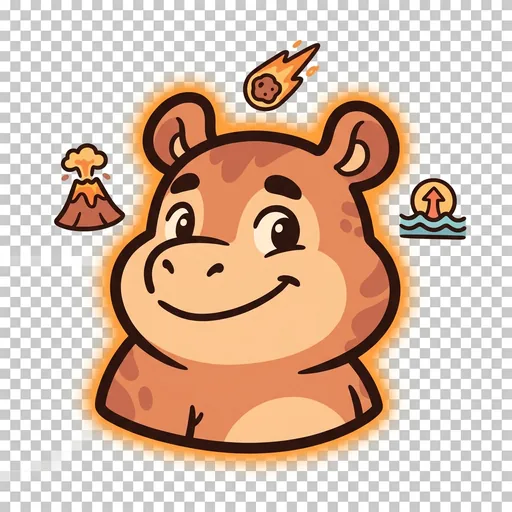
Last
Mass extinctions + extinction-event reasoning — witness-and-choose (cross-app cameo with EcoSphere Brink)
-
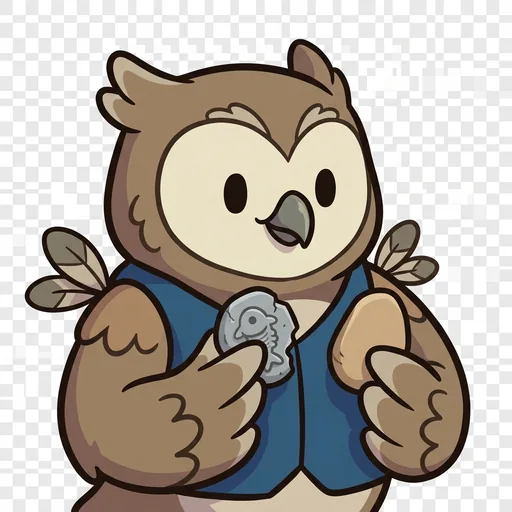
Blank
The incomplete record — the fossil record is a story with most of its pages missing
-
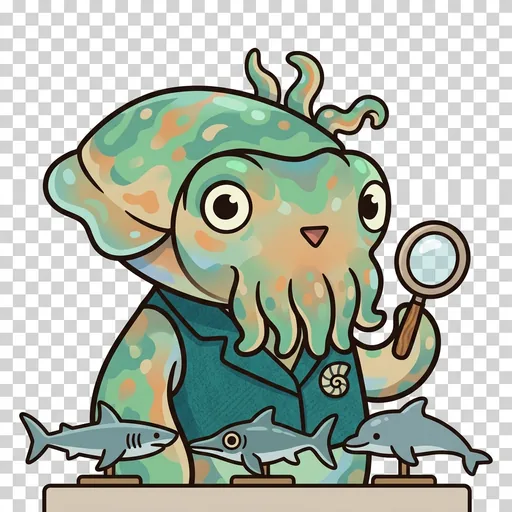
Guise
Convergent evolution — unrelated creatures arriving at the same outward form
-
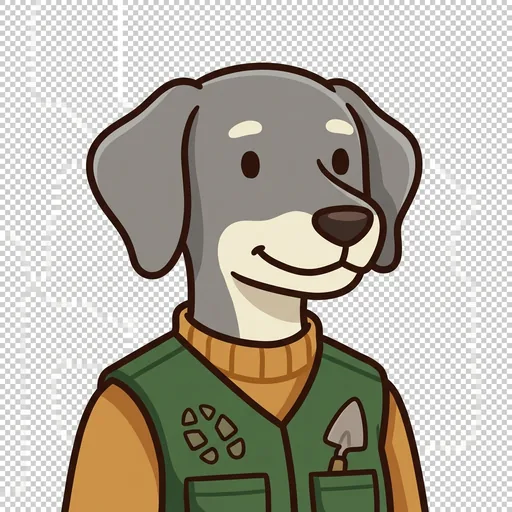
Imprint
Trace fossils — fossils of behaviour not bodies: footprints, burrows, trails
-
Seep
Fossilization — how a living thing rarely becomes a fossil: quick burial, slow mineral swap