Seep
FOSSILIZATION — how a living thing rarely becomes a fossil: quick burial, then mineral-rich water seeping in over ages until a stone copy keeps the shape after the life is gone.
Loading audio…
Press play to listen along. The line being read lights up as you go.
Show full transcript
Loading transcript…
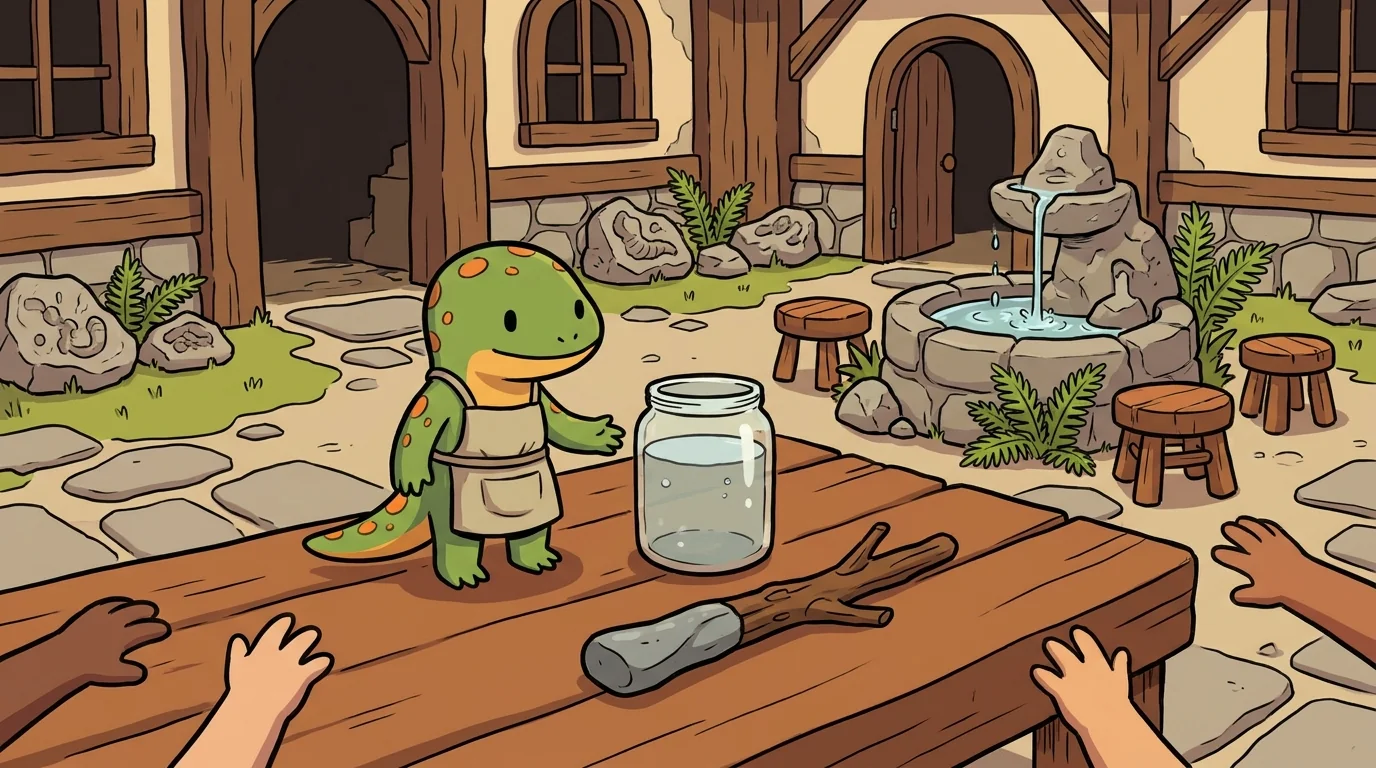
In the FossilForge courtyard, a small spotted newt set a jar of cloudy water on the workbench and, beside it, a twig.
The twig was the odd thing. One end was ordinary brown wood. The other end was grey and heavy and cold — stone, in the exact shape of wood, down to the little ridges of bark.
The museum-club kids passed it hand to hand, frowning.
"It's the same twig," said Seep. She did not talk fast; she talked at the speed of dripping water. "One end is still wood. The other end has been sitting in my spring for a long, long time. The water in my spring carries stone in it — so small you can't see it, dissolved like sugar in tea. Bit by bit, it seeps into every tiny hole in the wood and settles there. And when it settles in every space, you're left with —" she tapped the grey end — "wood-shaped stone. The wood is mostly gone. The shape stayed."
A girl held the twig to the light. "So it turned to stone," she said, "without falling apart first."
"That's the whole trick," said Seep. "Kept, before it could vanish."
Seep had learned to see it in the dripstone caves where she grew up.
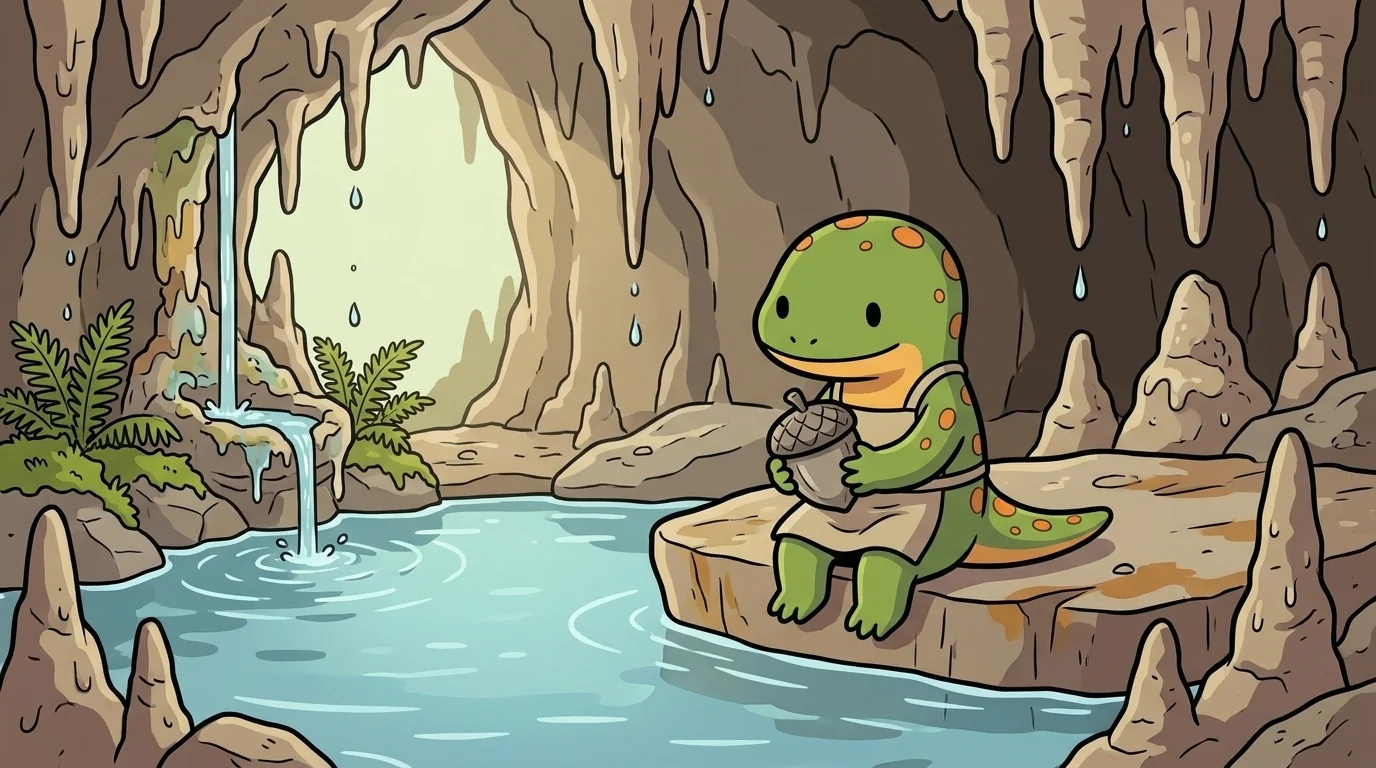
Her family lived by the mouth of a limestone cave, where water came through the rock so full of dissolved stone that it built things drip by patient drip — long stone icicles from the ceiling, slow stone mounds from the floor. As a small newt she had once dropped a favourite acorn into a shallow cave pool and forgotten it. Years later she found it again: an acorn, perfect in every ridge, and heavy as a pebble. The water had seeped into it until it was stone.
She remembered sitting very still with the stone acorn cupped in her paws, feeling something tender and enormous open up in her chest — that the slow, quiet, unhurried water had reached into a small soft thing and kept it, long after the acorn itself should have rotted into the mud and been forgotten. She had felt, for the first time, that lasting was not something a thing did on its own. It was something rare, and lucky, and gently done to it.
She never forgot the weight of that acorn in her paws.
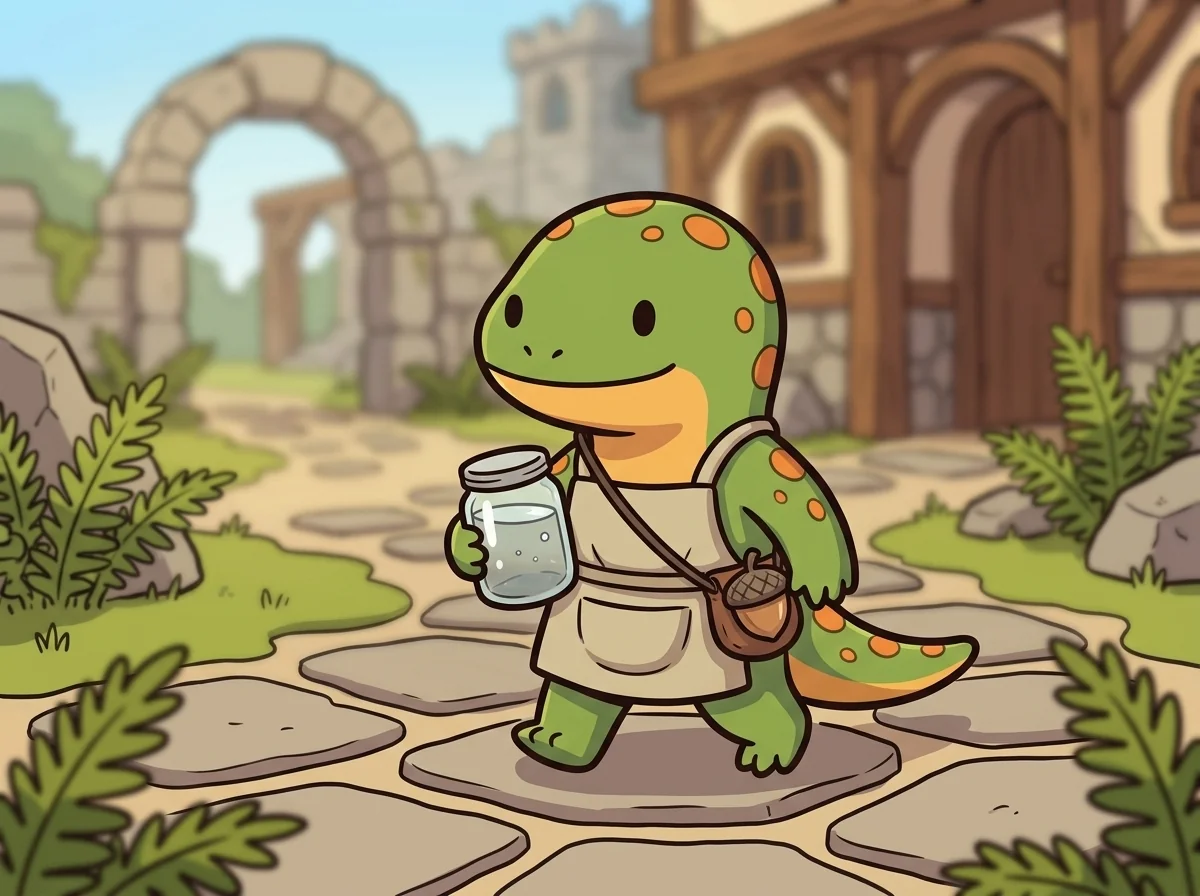
When she was older, Seep walked to the FossilForge academy with the stone acorn in her side-pouch and the cloudy spring-water in a sealed jar.
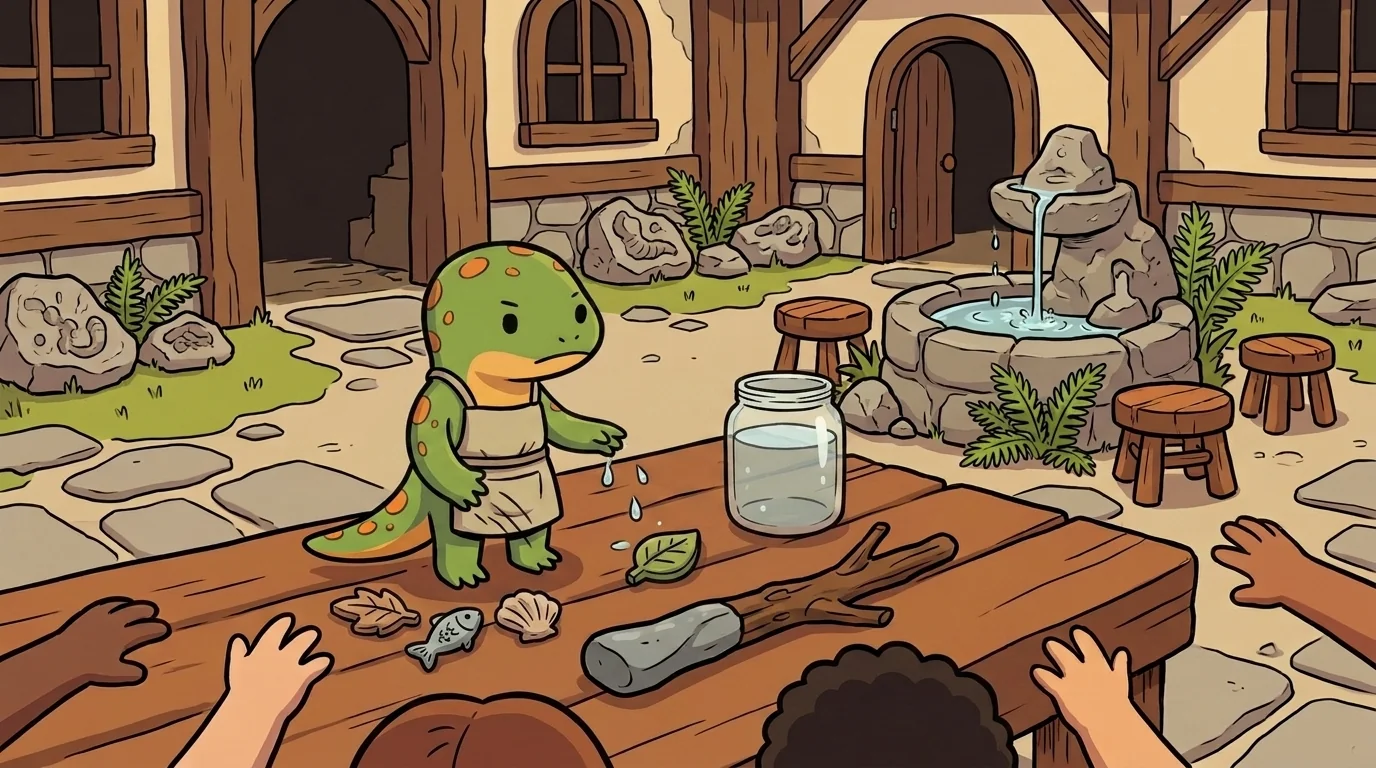
At the academy she taught the children the whole recipe, because she thought it was only fair they knew how rare a fossil is.
"A creature dies," she said, laying out small carved tokens on the bench: a leaf, a fish, a shell. "First — almost always — it is eaten, or it rots, or it washes away, and nothing is left. That is what happens to nearly everything that has ever lived." She swept most of the tokens off the bench, gently, into her paw. "But now and then, a very few are buried fast — under mud, under sand, under ash — before the eating and the rotting can finish. Buried and safe."
She left one token on the bench and dribbled a little cloudy water over it. "Then the seeping begins. Water carrying dissolved stone soaks down through the mud, into every tiny space in the buried thing, and settles, grain by grain, for ages and ages. The soft parts go. The stone stays, in their shape." She set the grey twig beside the token. "When the ground finally wears away above it, someone finds a fish, or a leaf, or a shell — made of stone."
"So most things never become fossils at all," said a boy quietly.
"Most things never do," Seep agreed. "A fossil isn't proof that a creature mattered more than the others. It only means it was buried fast, and the water was patient, and it got lucky. Every fossil is a small kept thing that, by rights, should have vanished."
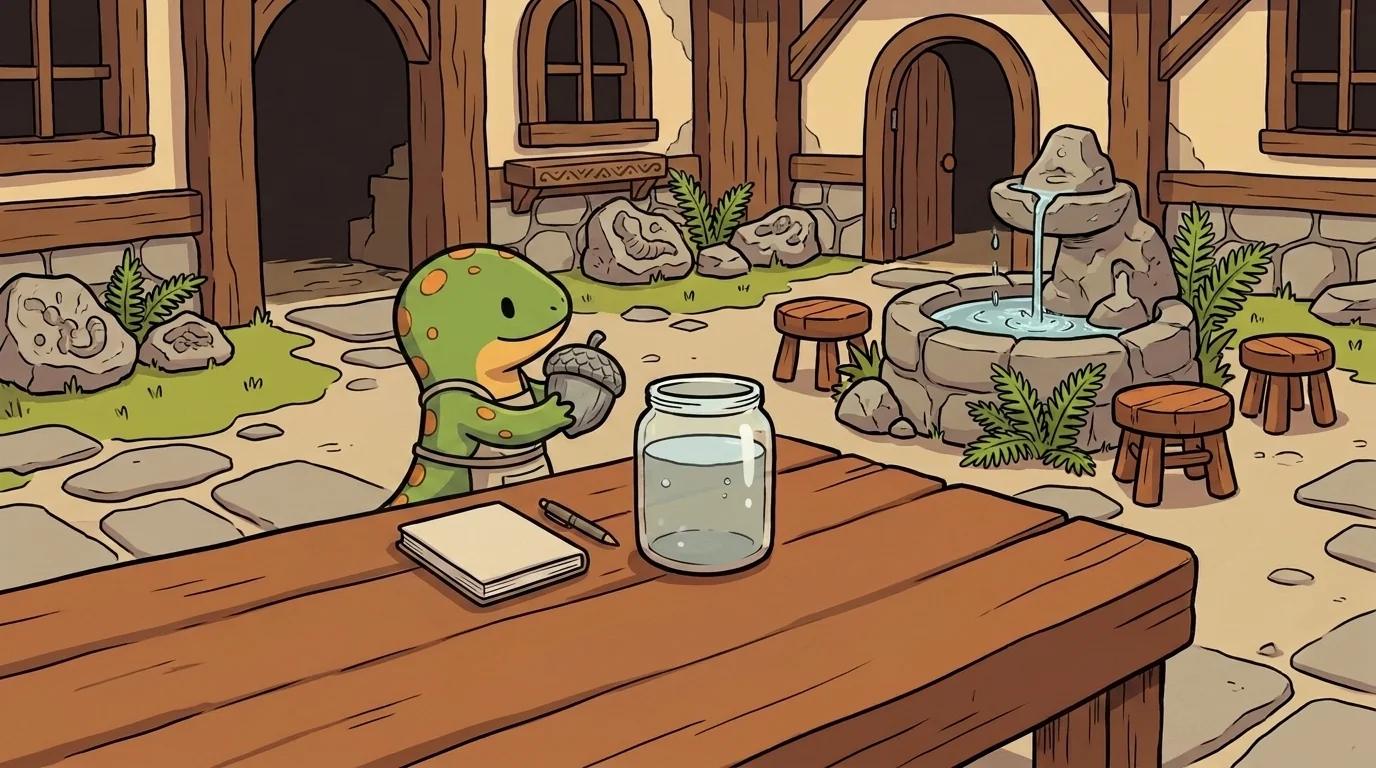
She still visits the dripstone caves when she can, and still keeps the stone acorn on the shelf above her workbench at the academy.
The thing Seep hopes the children carry is a gentle one: that being kept is rare and precious, and never a measure of worth. The countless creatures that left no fossil were no less real, no less alive, than the lucky few whose shapes the seeping water saved. A fossil is not a trophy. It is a small miracle of mud and patience.
"It isn't magic," she tells them, in her slow dripping voice. "It's only water, and time, and luck. But when you hold one, remember — you're holding something the whole world tried to erase, and couldn't."
When the courtyard empties, Seep lifts the stone acorn down and turns it once in her paws, feeling again the tender, steadying weight she first felt as a small newt by a cave pool — the quiet gladness of a thing kept, against all the odds, long enough to be held.
The FossilForge ensemble
Seep is part of FossilForge's distributed-narrative cast. Each character embodies a different curricular primitive; together they teach the full subject.
-

Seam
Taxonomic + fossil-type classification — family-resemblance-matching (what KIND of organism?)
-
Span
Deep-time + geological chronology — scale-of-scales (WHEN did this organism live?)
-
Branch
Morphological adaptation + evolutionary change — branching-not-laddering
-

Field
Paleoenvironment + ecosystem reconstruction — fossils-as-a-place-story
-

Last
Mass extinctions + extinction-event reasoning — witness-and-choose (cross-app cameo with EcoSphere Brink)
-

Blank
The incomplete record — the fossil record is a story with most of its pages missing
-
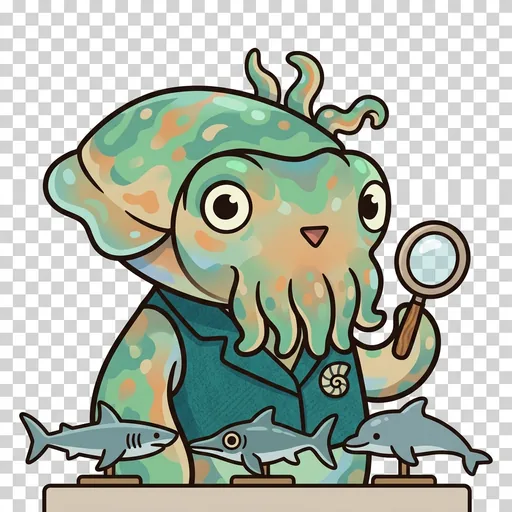
Guise
Convergent evolution — unrelated creatures arriving at the same outward form
-
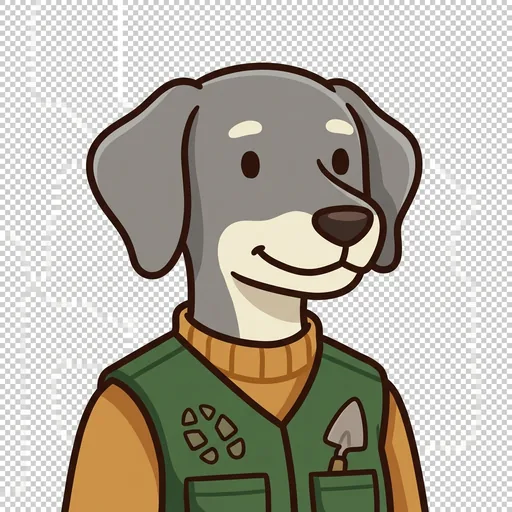
Imprint
Trace fossils — fossils of behaviour not bodies: footprints, burrows, trails
-
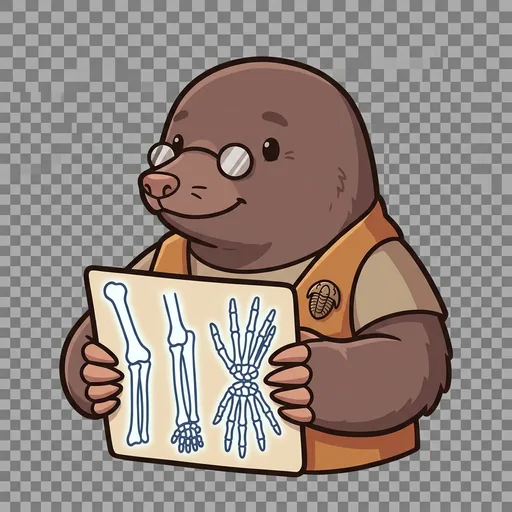
Underframe
Homology — the same underlying skeleton, in the same order, beneath different forms