Neap
TIDES — the moon (and the sun) pull the whole ocean. twice a day the sea rises and falls, a rhythm steady enough to set your life by.
Loading audio…
Press play to listen along. The line being read lights up as you go.
Show full transcript
Loading transcript…
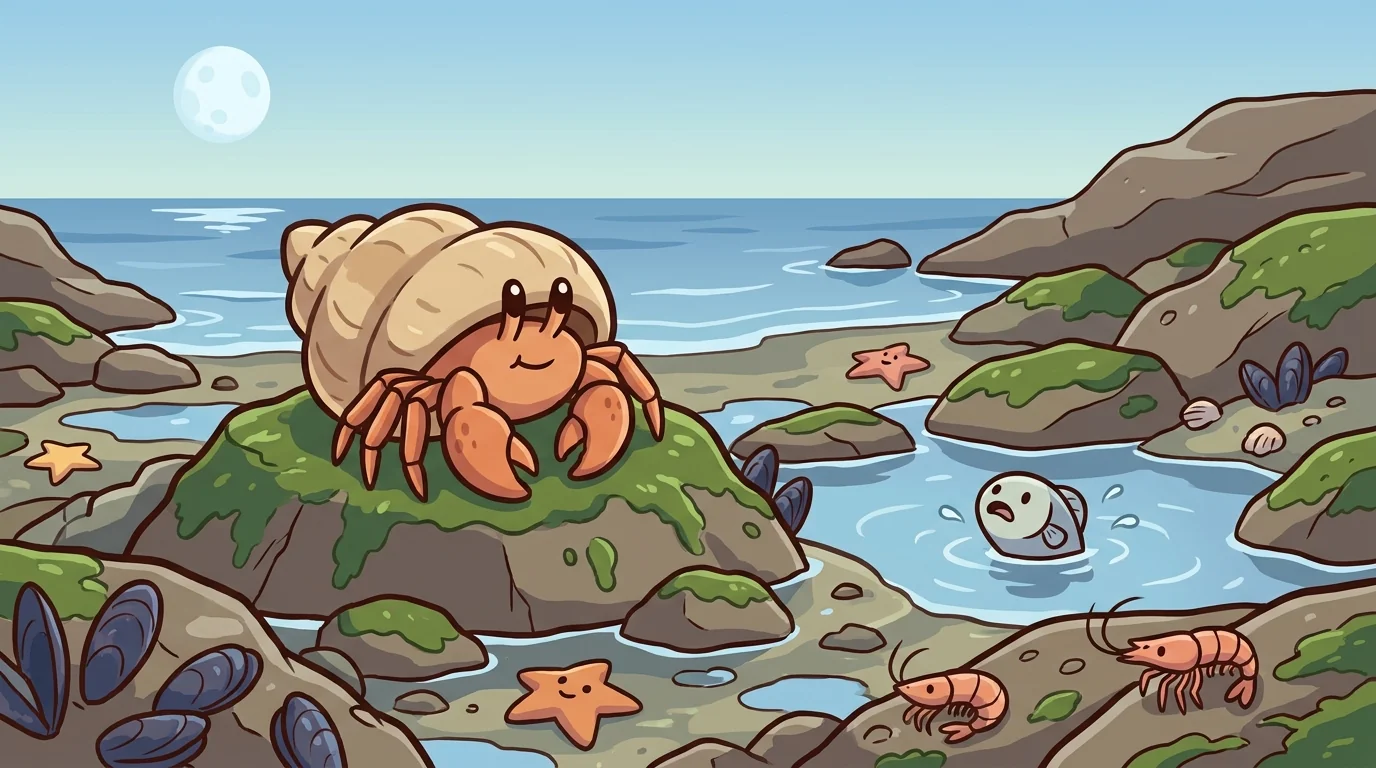
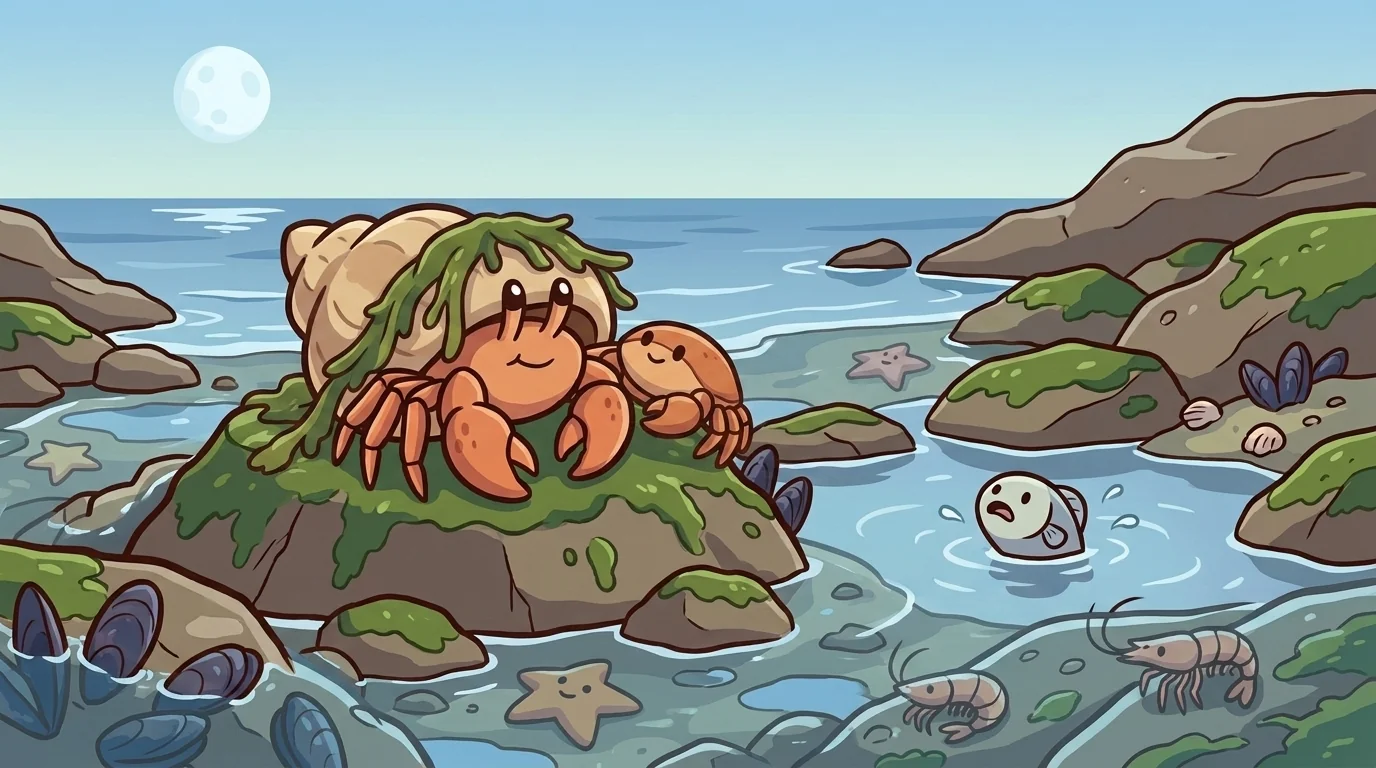
Neap sat on a wet rock at the edge of the shore, half his shell-borrowed home tucked under a fringe of seaweed, and watched the water do the one thing he trusted most in all the world: leave, exactly on time.
The tide was going out. It pulled back down the beach in slow, sighing steps, uncovering a glistening world — mussels clamped tight, a stranded starfish, a shining puddle full of trapped and irritated shrimp. Neap didn't scramble. He'd seen this a thousand times. He simply picked his way down to the fresh-bared rocks to breakfast on what the sea had left behind, unhurried, because he knew to the minute when it would all come rushing back.
A young fish flapped anxiously in a shrinking tide pool nearby. "The water's LEAVING," she gasped. "It's all draining away! Do something!"
"It's supposed to," Neap said around a mouthful of algae. "It'll be back in about six hours. Then it'll leave again. Then it'll come back. Twice a day, near enough, forever." He clicked his claws contentedly. "The sea keeps a beat. You could set a clock by it — folks do. I live by it."
"How do you know it comes back?"
"Because the moon's still up there, isn't it?" Neap tipped a claw at the pale daytime moon hanging over the water. "That's the one doing the pulling. Where the moon is, the sea leans toward it, and bulges, and that bulge sweeps around the world as the day turns. High, low, high, low." He settled deeper into the wet weed. "Same beat since long before crabs. It's the most reliable thing there is."
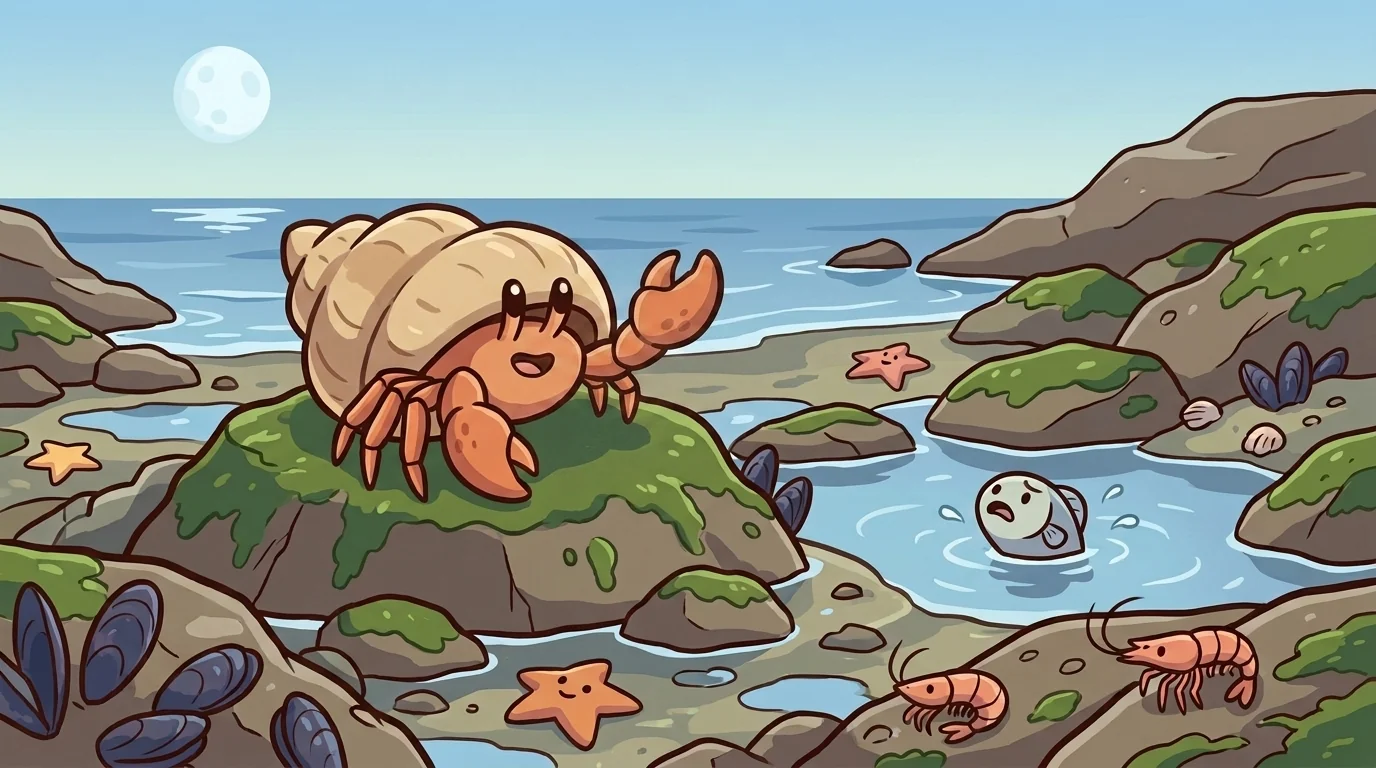
Neap hadn't always found the beat comforting.
When he was small and new to his shell, he'd wandered too far down the bared flats at low tide, poking at every wonder — and then the water came back. Not slowly, the way he tells it now. To a tiny crab it came fast, a rising cold edge racing up the sand toward him, and he'd frozen, certain the whole sea was coming to swallow him. His little heart drummed against his shell. It's going to cover everything. It's never going to stop.
An old hermit crab, shell crusted with tiny barnacles like jewels, sidestepped over to him as the water climbed.
"First big tide, is it," she said, unbothered, planting herself beside him. "Feels like the end of the world when you don't know the beat yet."
"It's not stopping," Neap whispered.
"It'll stop. It always stops, then it turns and goes back out. Watch the moon, not the water." She nudged him up toward a high crevice, calm as anything. "The sea isn't attacking you, little one. It's just breathing. In, out. The moon pulls it in, the world turns, it slides back out. Once you know the rhythm, the rising water isn't a monster — it's just the tide, being the tide, right on schedule."
They waited it out together in the high crevice, and sure enough, the water rose, and hung, and turned, and went. And the drowning panic in Neap's chest loosened — because the terrifying wall of rising sea had a name, and a reason, and a time it would turn around. It wasn't chaos coming to get him. It was just the beat.
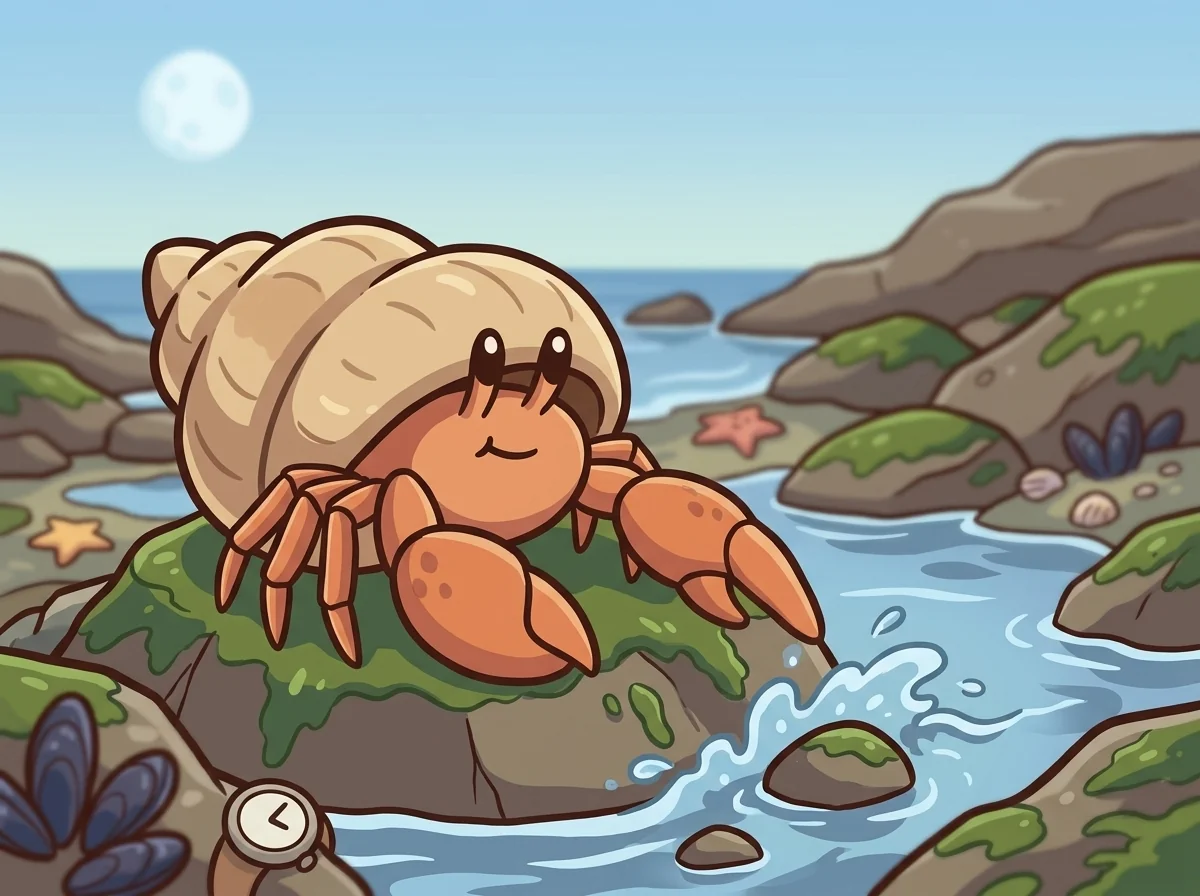
He clambered to DepthQuest at twelve, arriving right at high tide, naturally, because he'd timed the trip.
Marlin met him at the shoreline gate. He didn't test how fast Neap could scuttle. He asked one question. "What are the tides?"
Neap didn't answer straight off. He pointed one claw at the water's edge, then held very still — and a full minute later, the next small wave reached exactly the pebble he'd pointed at.
"They're the ocean, breathing," he said. "The moon's gravity pulls the water toward it, so the sea heaps up in a bulge on the moon's side — and the spinning of the world sweeps that bulge past every shore. High tide, low tide, twice a day, like clockwork. The sun helps too; when they line up you get the big tides, and when they pull sideways you get the gentle ones." He tapped the pebble the wave had found. "It's the one part of the whole wild ocean you can predict to the minute. I'm named for the gentle tides. But I know the whole beat."
Marlin looked at the pebble, wet exactly on time. "You keep the sea's schedule better than my own clock," he said. "You belong here."
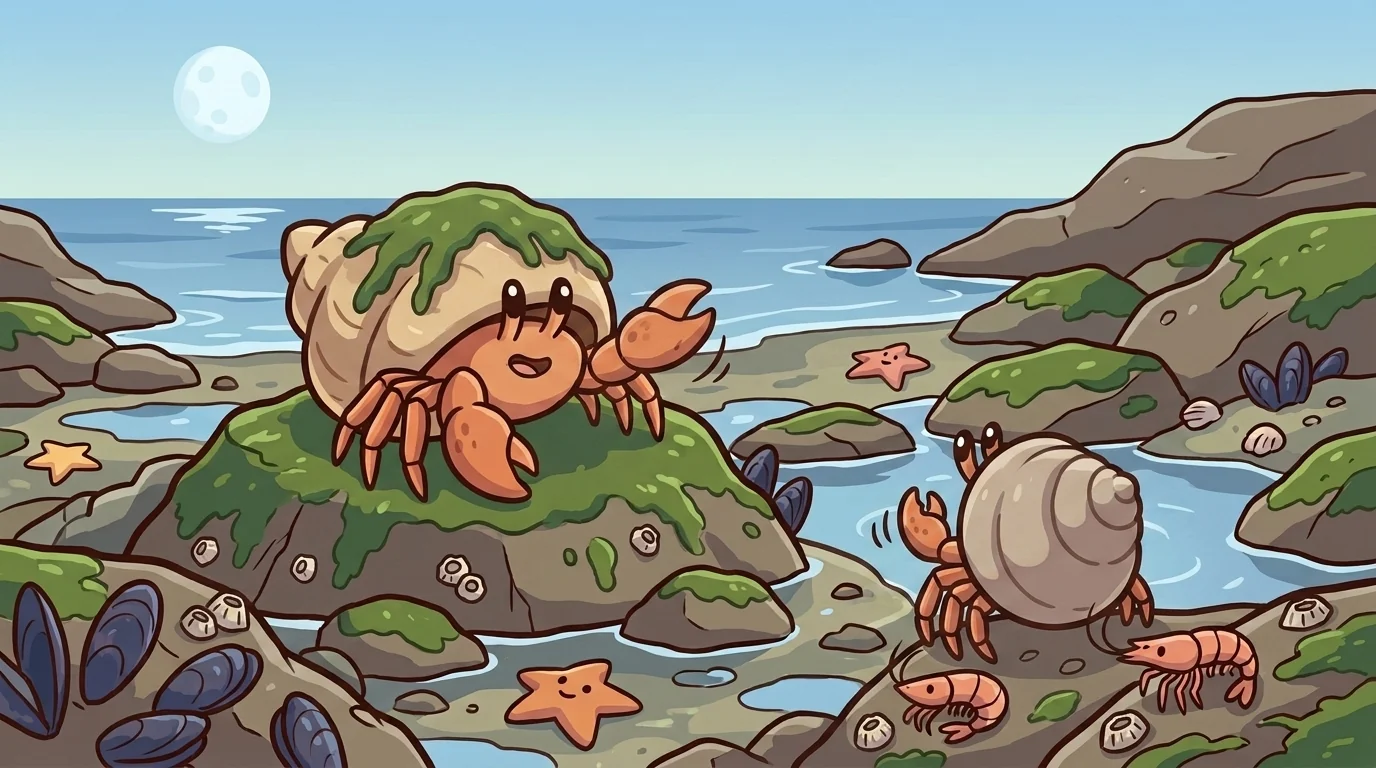
Neap's students were often the ones the rising water scared — the ones who'd heard the seas were climbing, and pictured the tide simply never turning back.
One skittered into his workshop, claws clenched. "The sea's getting higher," she said, fast and tight. "The water's coming up and it's not going to stop, it's going to swallow the whole shore—"
Neap knew that clench. He'd frozen just like it once, small on the bared flats.
"Come sit on the rock a minute," he said. "Watch the beat with me." He waited through one slow out-breath of the tide. "There. See it turn and go back out? That still happens. Every day. Now — you're right that the sea's average level is creeping up over the years, slowly, and that people who study the coasts take it seriously, and coastal towns are planning for it, and that's all true and I won't wave it away." He nodded at the retreating water. "But the daily beat still beats. The tide still turns. The change is slow and watched and being planned for — it isn't the tide forgetting how to go back out." He tapped the sand. "And you can't help a shore you've already imagined underwater."
She watched the water pull back down the beach, right on schedule. Her claws unclenched a little.
Later, as the tide crept back in around the workshop rock, the young crab returned with the real question, quiet.
"When something feels like it's rising and rising," she said, "and you're scared it won't stop — how do you not just freeze?"
Neap thought of the barnacled old hermit crab, and the moon, and the terror that had turned back into a rhythm.
"You find the beat," he said. "You stop staring at the scary rising edge and you look up at what's pulling it — and you learn its rhythm, so you know it turns. Almost everything that rises, turns and goes back out. Tides do. Hard days do. Fear does too, mostly." He settled into the wet weed as the familiar water reached him, right on time. "Once you know a thing keeps a beat, the rising stops being a monster. It's just the sea, breathing, and you breathing with it."
And the young crab felt the tight, rising panic in her own chest ease into something slow and steady — the deep comfort of a rhythm you can trust, in, out, the sea leaving and the sea returning, right on time, the way it always had.
The DepthQuest ensemble
Neap is part of DepthQuest's distributed-narrative cast. Each character embodies a different curricular primitive; together they teach the full subject.
-

Reef
Sunlit zone — coral + photosynthesis-zone biodiversity
-

Drift
Twilight zone — bioluminescent + migratory species
-

Press
Midnight zone — pressure + cold + giant-squid scale
-

Smoke
Abyss zone — hydrothermal vents + chemosynthesis
-

Trench
Hadal zone — deepest trenches + extreme-adaptation
-

Cling
Intertidal zone — the strip of shore underwater at high tide and open air at low; life that clings between the tides
-

Drizzle
Marine snow — the constant gentle fall of food from the sunlit top to the dark deep (the biological pump)
-

Gyre
Ocean currents — the great moving conveyor carrying water, heat, and life in slow giant loops
-
Sonar
Sound in the sea — light dies fast underwater but sound travels far; send a click and read the echo