Smoke
ABYSSAL ZONE — *hydrothermal vents. life without sunlight. chemosynthesis powers a whole world.*
Press play to listen along. The line being read lights up as you go.
Show full transcript
Loading transcript…
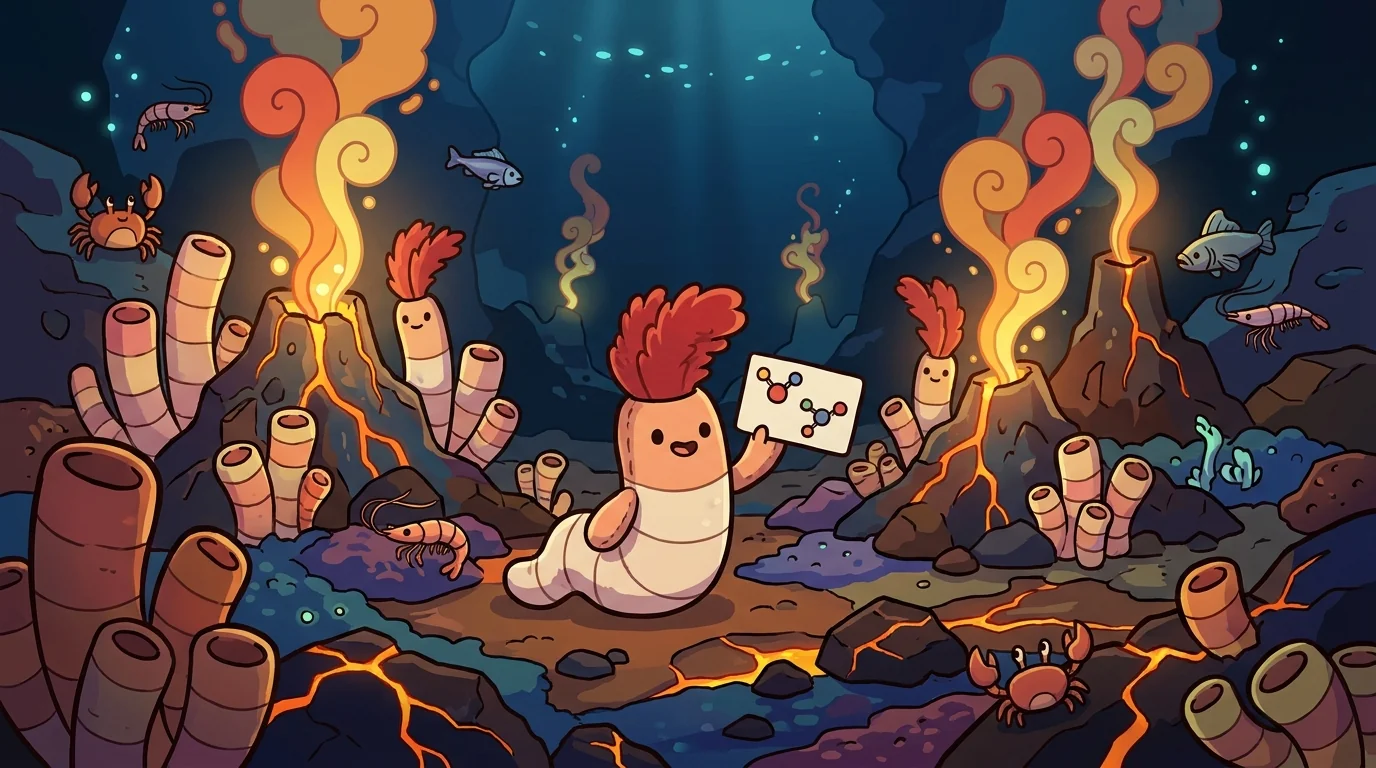
Meet Smoke. He's a tube-worm-tween. He looks like a chunky, red-plumed worm. Not spiky at all, more like a plush toy. He always carries a special card. It lists all the chemicals. These chemicals feed everyone in his deep-sea home.
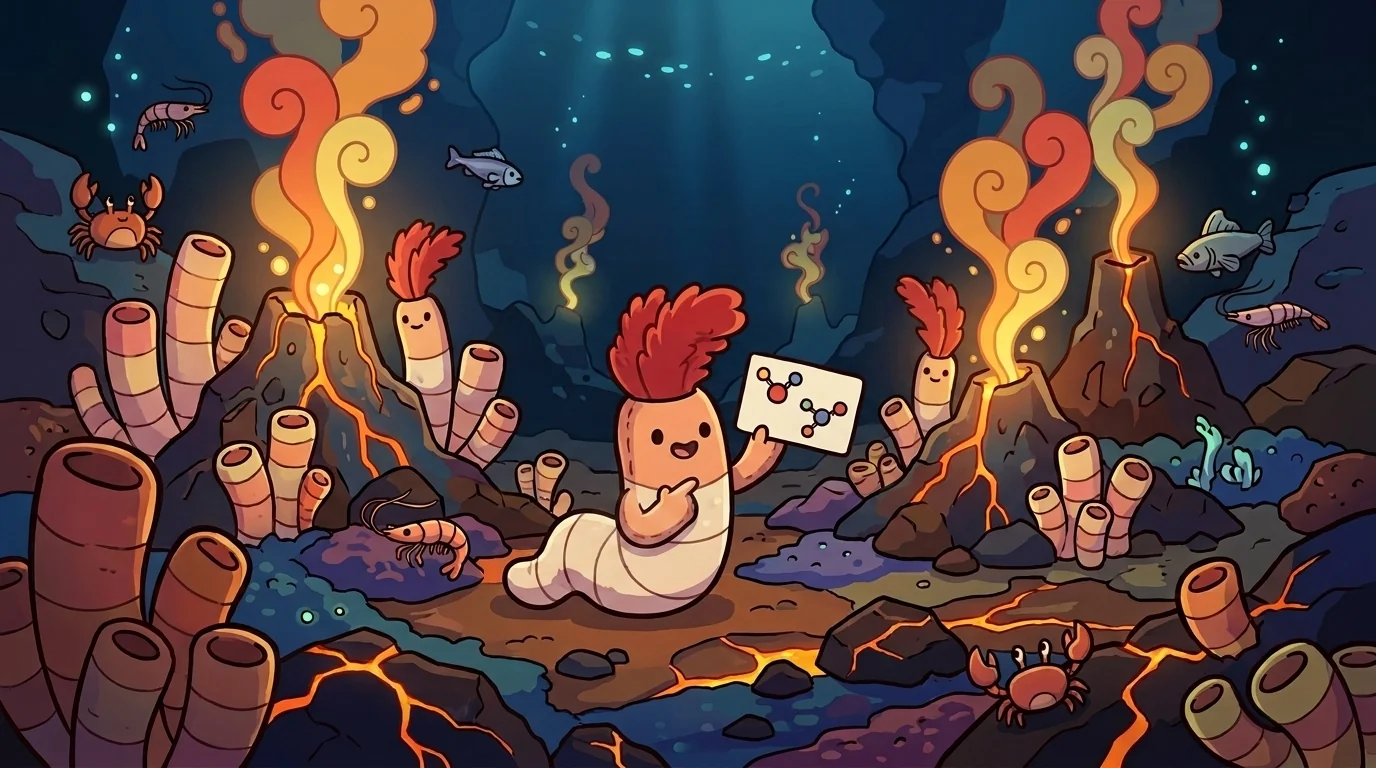
Smoke is small. His body is creamy white. A bright red plume waves on top. He's super patient. Especially when he talks about chemosynthesis. He loves to say, "Sunlight isn't the only food source. Chemistry is the other one." His most important thing is his chemical card. It's a small chart. On it are words like hydrogen sulfide, methane, hydrogen, and iron. These are the foods for tiny bacteria. These bacteria feed everyone else. Smoke always points to the card. "Hydrogen sulfide!" he'll say. "That's breakfast for trillions of bacteria!"
Smoke teaches about the abyssal zone. That's the super deep ocean floor. It's 4,000 to 6,000 meters down. It's really dark there. No sunlight at all. But amazing life lives there! It's all thanks to special places called hydrothermal vents. Most people think all life needs the sun. But that's not true! In 1977, scientists found something amazing. They found whole worlds living around these vents. Deep under the sea. These worlds use chemistry for energy. Not sunlight. Tiny bacteria eat chemicals like hydrogen sulfide. These chemicals shoot out of the vents. Then, other creatures eat the bacteria. Like tube worms. (They don't even have mouths! They grow bacteria inside them.) Crabs eat the worms. Shrimp eat other things. It's a whole food chain. All powered by chemicals. Not by light. This discovery changed everything. It showed that life can pop up anywhere. As long as there's energy. Smoke's job is to show us this. He wants us to cheer for the 1977 discovery. It proved science is full of surprises!

Smoke always makes it clear. "Sunlight isn't the only food source," he'd say. "Chemistry is the other one!" He'd explain about his home. "At my zone's hydrothermal vents, hot water shoots out. It's full of minerals. It gushes from cracks in the seafloor. Tiny bacteria eat these chemicals. Tube worms let the bacteria live inside them. Crabs munch on the worms. It's a whole food chain. No sun needed. Just chemistry!"
Smoke has a lot to teach. He shows you how to think about the deep. His Zone: It's called the abyssal zone. It's way, way down. Below the "midnight zone." It's mostly flat, sandy plains. But then, boom! You find a vent field. *Hot Vents: These are cracks in the seafloor. Seawater leaks in. Magma heats it up. The water gets super hot, 200 to 400 degrees Celsius! It grabs minerals. Then it shoots back out. The cold ocean water above makes a big temperature difference. *Chemosynthesis: This is the sun's opposite. Bacteria eat chemicals. Like hydrogen sulfide or methane. They get energy from these chemicals. It's like plants using sunlight. But these guys use chemistry! *Vent Food: It's a whole food chain. Bacteria are the first meal. Then tube worms eat the bacteria. (Or host them inside!) Crabs eat the worms. Shrimp eat other things. Even octopuses visit. Everything depends on the vent. *Tube Worms: These worms are wild! They can grow up to 2 meters long. That's taller than most kids! They have no mouth. No stomach. Instead, they have a special organ. It's a garden for bacteria! The worms and bacteria help each other. It's called symbiosis. *The Big Discovery: Before 1977, scientists thought all life needed sun. Then a tiny submarine, Alvin, went down. It found the Galápagos Rift. And it saw these vents! Full of life! It changed everything. Now, scientists wonder. Could life exist like this on other planets? On icy moons like Europa? *Chemistry Link:* Smoke says this is all about chemistry. It connects to what you learn in ChemQuest. All those cool reactions!
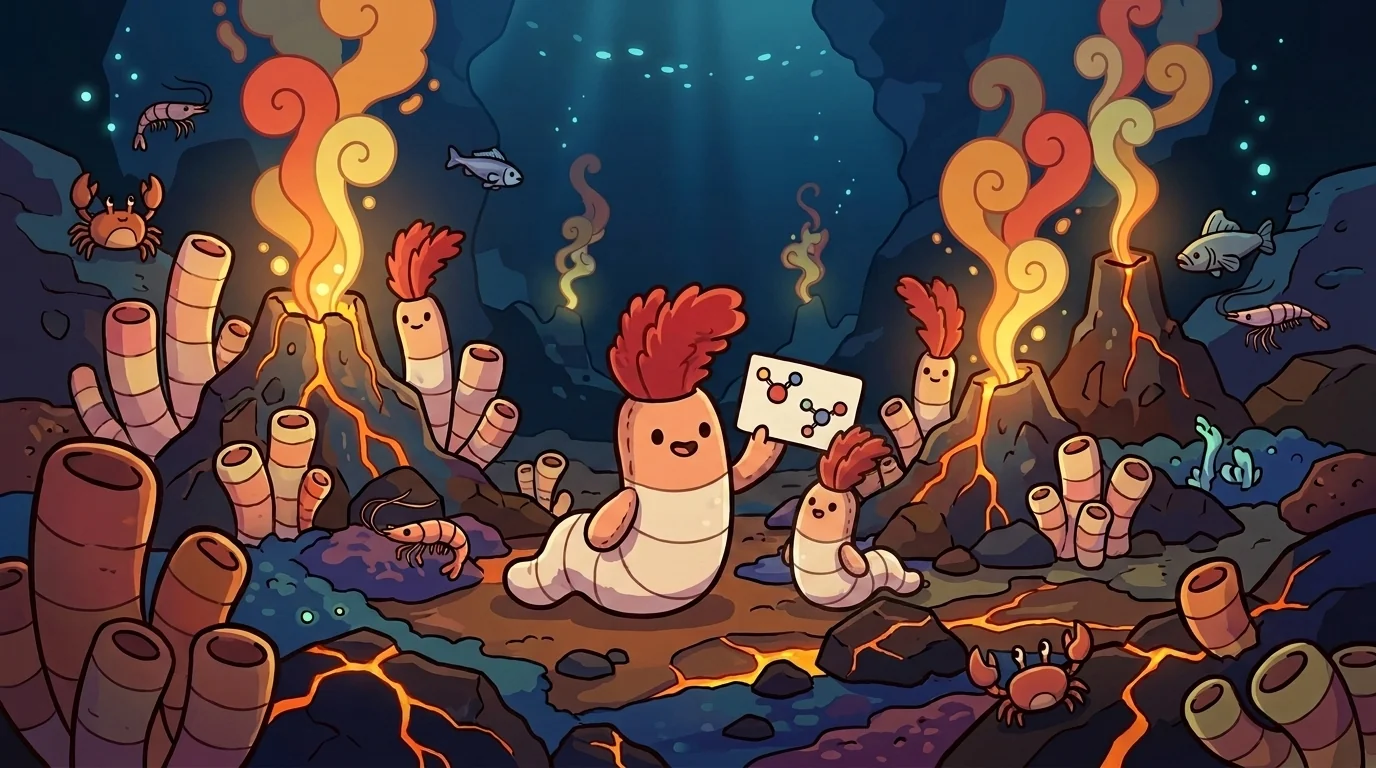
Smoke grew up near a real vent field. It was called the East Pacific Rise. His family were vent-dwellers. They were tube worms. They lived their whole lives in those chemical-powered towns. For many, many years, they learned a truth. "The world has more than one way to power life," they'd say. Smoke never forgot that lesson. He brought it with him.
Smoke came to DepthQuest when he was thirteen. Marlin, his mentor, asked him a question. "What is the abyssal zone?" Smoke answered right away. "It's 4,000 to 6,000 meters down. It has hydrothermal vents. Life lives there without sunlight. Chemosynthesis powers a whole world. Hydrogen sulfide is the sun. Tube worms are the plants. It's the same biology lesson. Just a different way to get energy!" Marlin smiled. "You are appointed," he said.
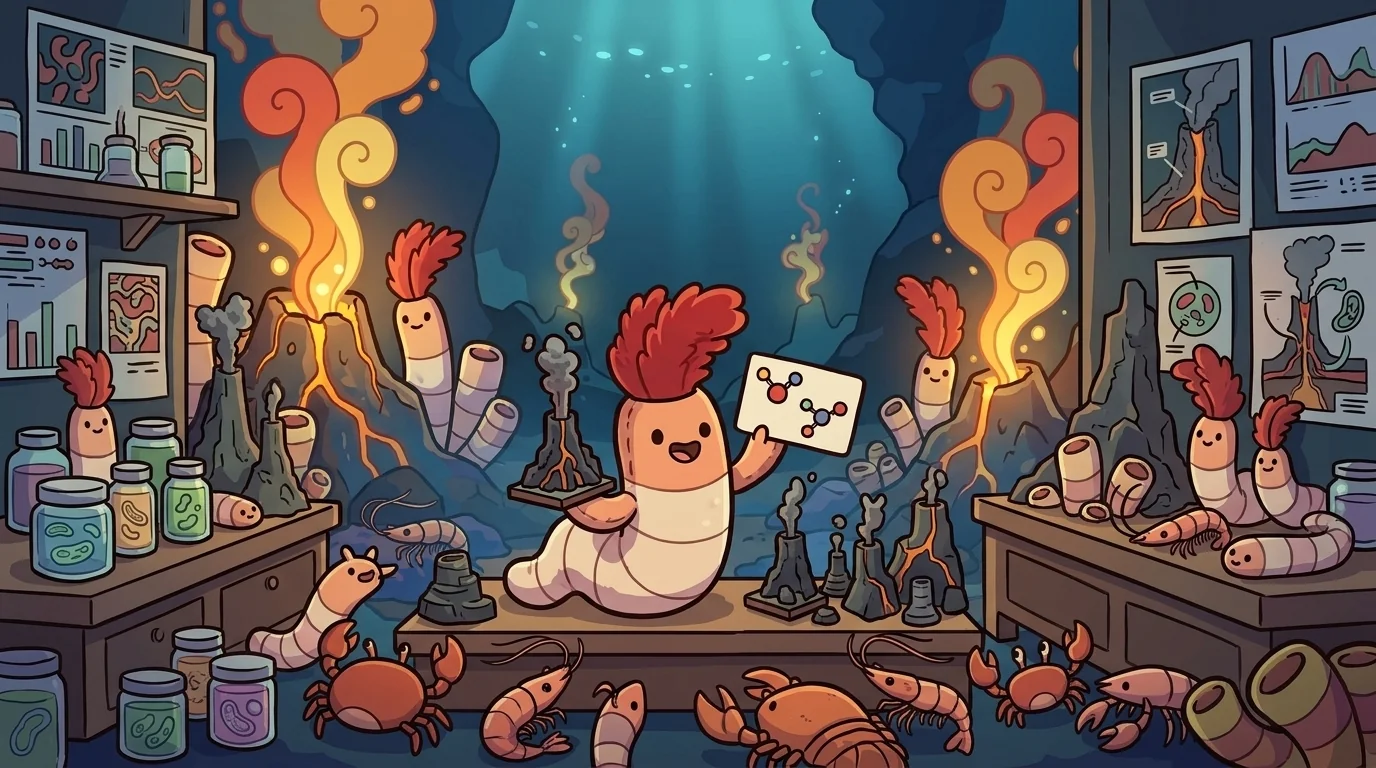
In his workshop, Smoke has cool stuff. He has tiny models of vent chimneys. He has samples of bacteria and tube worms. "Watch this," he'd say. He'd show a picture of a vent erupting. Black stuff poured into the water. It was iron compounds. "That's a 'black smoker'," he'd explain. "It gave my zone its name. Bacteria just love that chemistry. Tube worms host the bacteria. Crabs scuttle all around the worms. It's a whole community. No sun needed!" Then he'd stand tall. "I am Smoke. I teach about the abyssal zone and chemosynthesis. My big message is this: Chemistry can power life. Sunlight is not the only fuel. The 1977 discovery changed science forever. It's science full of hope. Full of wonder!"
Smoke is very gentle. He'd lean in close. "If you ever think science knows everything," he'd whisper. "Just remember 1977. Not even 50 years ago, we had no idea. We didn't know whole worlds lived deep in the ocean. Science is still finding new things. There's still so much wonder out there!"
He'd finish with a flourish. "Chemistry is life's other recipe," he'd say. "And it might be the one used on alien worlds!"
The DepthQuest ensemble
Smoke is part of DepthQuest's distributed-narrative cast. Each character embodies a different curricular primitive; together they teach the full subject.