
Cling
INTERTIDAL ZONE — *the strip of shore that is underwater at high tide and open air at low tide, twice a day, every day. the animals here are built for the in-between — clamp down, hold your water, wait out the dry hours.* The ocean-science primitive of intertidal life and adaptation to a world that floods and drains twice daily.
Loading audio…
Press play to listen along. The line being read lights up as you go.
Show full transcript
Loading transcript…
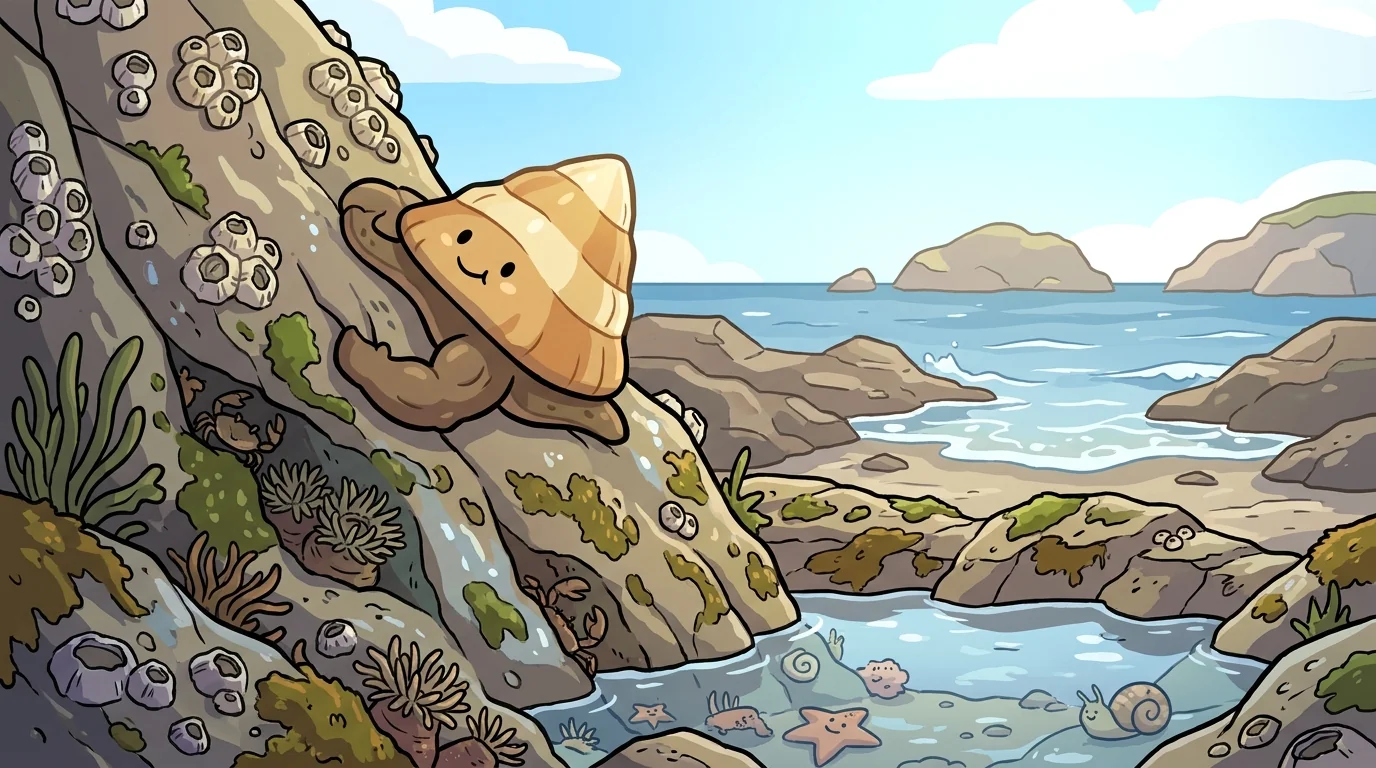
Cling is a young limpet — a small, tough cone of a shell with a strong foot underneath. She lives on a rock at the very edge of the sea, and twice a day her whole world changes completely. At high tide, the ocean covers her and she glides about, grazing. At low tide, the water drains away and leaves her out in the open air — so she clamps down hard onto her rock and waits. "This," she says, gripping tight, "is the in-between. And I am built for it."
Limpets are champions of holding on. Cling made the in-between her home.
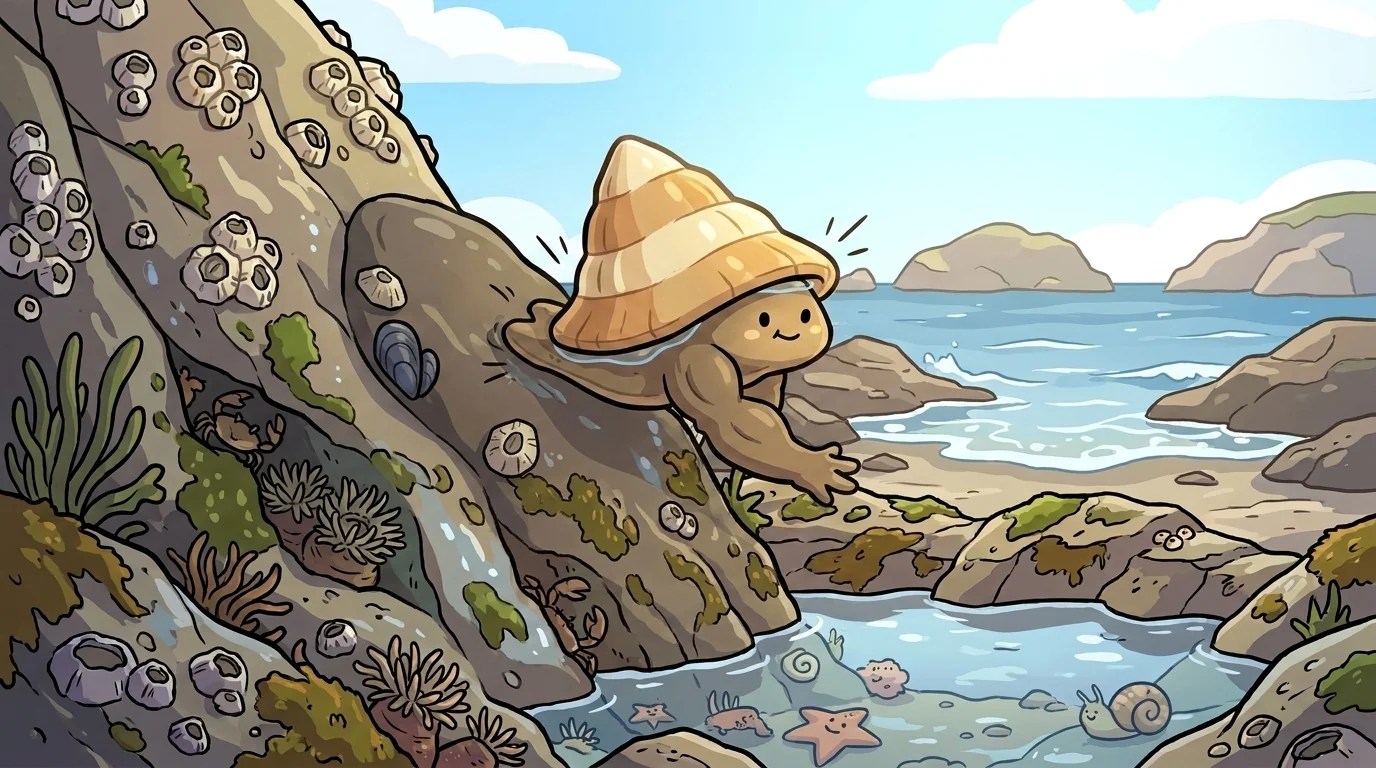
"Most sea animals get to be wet all the time," Cling says. "Not me. My strip of shore floods and drains twice every single day. High tide, I'm underwater. Low tide, I'm out in the air, in the sun, in the wind." She clamps her cone down onto the rock until it seals. "So when the water leaves, I clamp down and trap a little puddle of sea inside my shell. I hold my own water. I wait. I don't panic. The tide always comes back."
That is Cling's one tough marvel: she lives in the hardest, most changing strip of the whole ocean — and she's built to hold on through it.
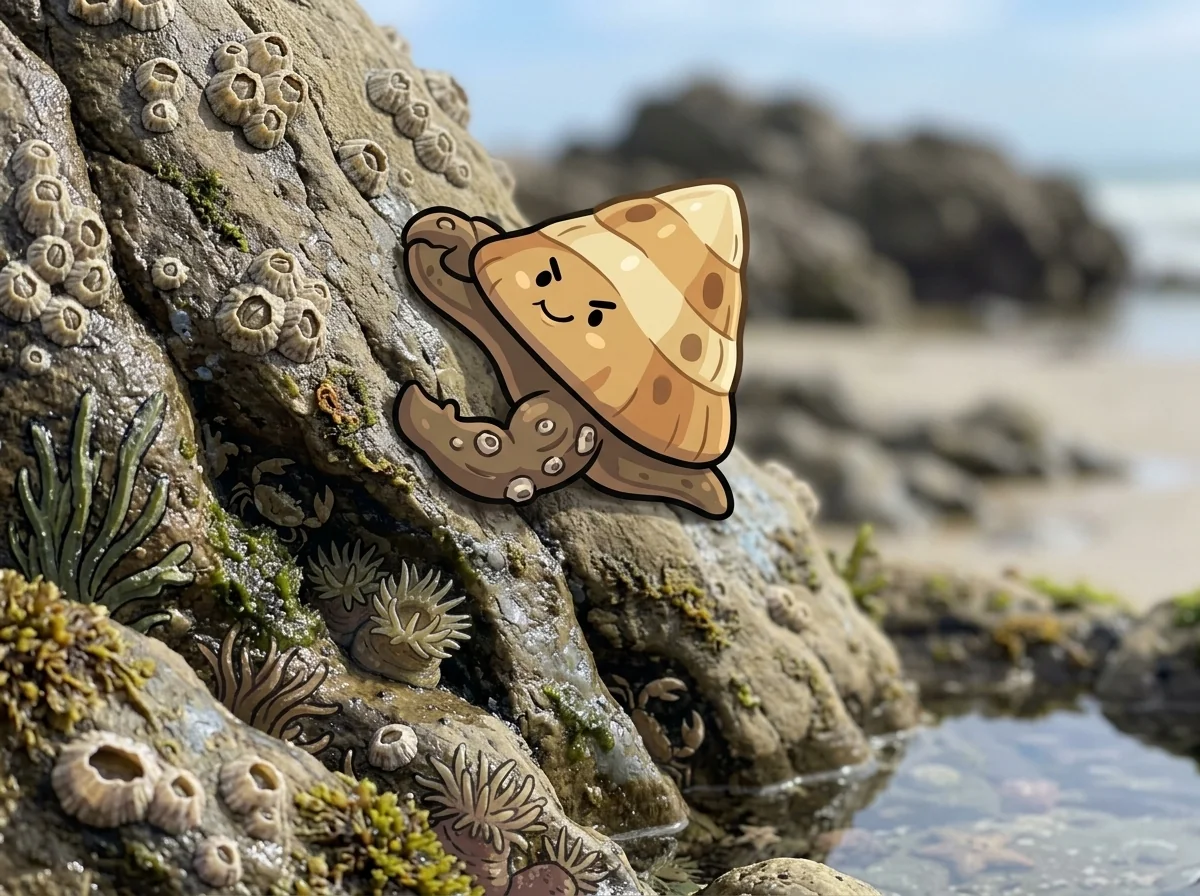
Cling grew up on the tide-line with her family, the "edge-holders," clamped to the same stretch of rock for generations. They taught the young ones the rule of the in-between. When the water goes, don't chase it and don't fear it — seal up, hold your water, and wait. The animals who ran out of patience dried out. The ones who clamped down and waited were still there when the tide rushed back. "The edge is hard," her mother told her, "but it's ours, and we know how to hold it." Young Cling learned that surviving the in-between isn't about being big or fast. It's about holding on.
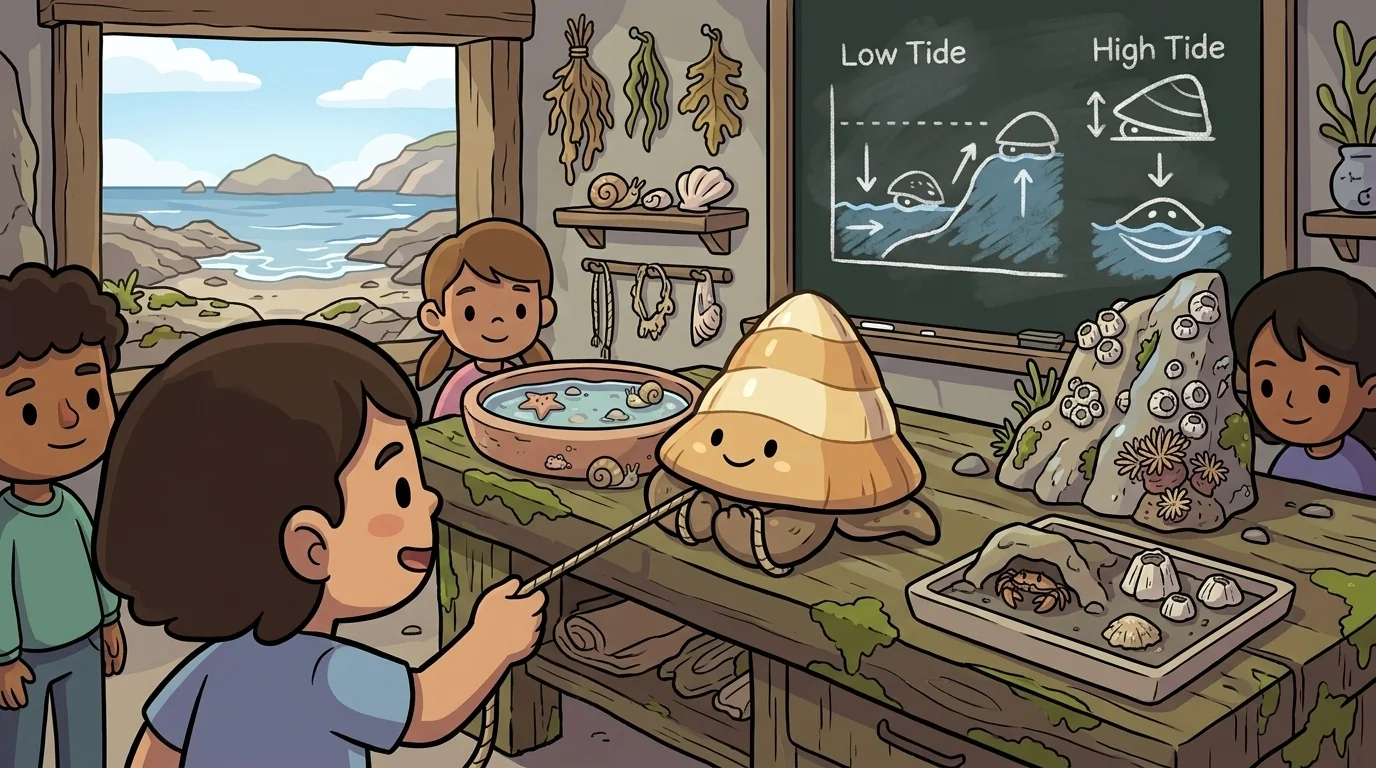
When she was grown, Cling came to DepthQuest. Marlin, her teacher, asked her, "What is the intertidal zone?"
Cling clamped her shell down onto the workshop bench with a soft seal. "It's the strip of shore between the tides," she said. "Underwater at high tide, open air at low tide, twice a day. The animals here are built for the in-between — limpets and barnacles clamp down and hold water, anemones tuck in, crabs hide in cool wet cracks. We don't fight the change. We're made to ride it. Seal up, wait, and the tide comes back." Marlin nodded. "You're in," he said.
In her workshop, Cling lets kids try to pry her off her rock — and they can't, because she's clamped down and sealed — and she teaches a few tough things about the in-between: Twice a day, it all changes. The intertidal floods and drains with the tides. Its animals live half in water, half in air. Clamp down and hold water. Limpets and barnacles seal up at low tide, trapping a little sea inside. That's how they don't dry out. Hide from the sun and wind. Crabs and snails tuck into cool, damp cracks and under seaweed to wait out the exposed hours. Hold on against the waves. At high tide the waves crash hard. Intertidal animals grip, glue, or wedge themselves so they aren't washed away. * It's a hard home, and a rich one. The in-between is tough, but it's packed with life — because animals that can take it have the whole strip to share.
Cling tells the kids, "Some low tides are long and hot and I want to give up. That's not weakness — that's just the in-between being hard. So I clamp down a little tighter and wait a little longer. The tide always comes back."
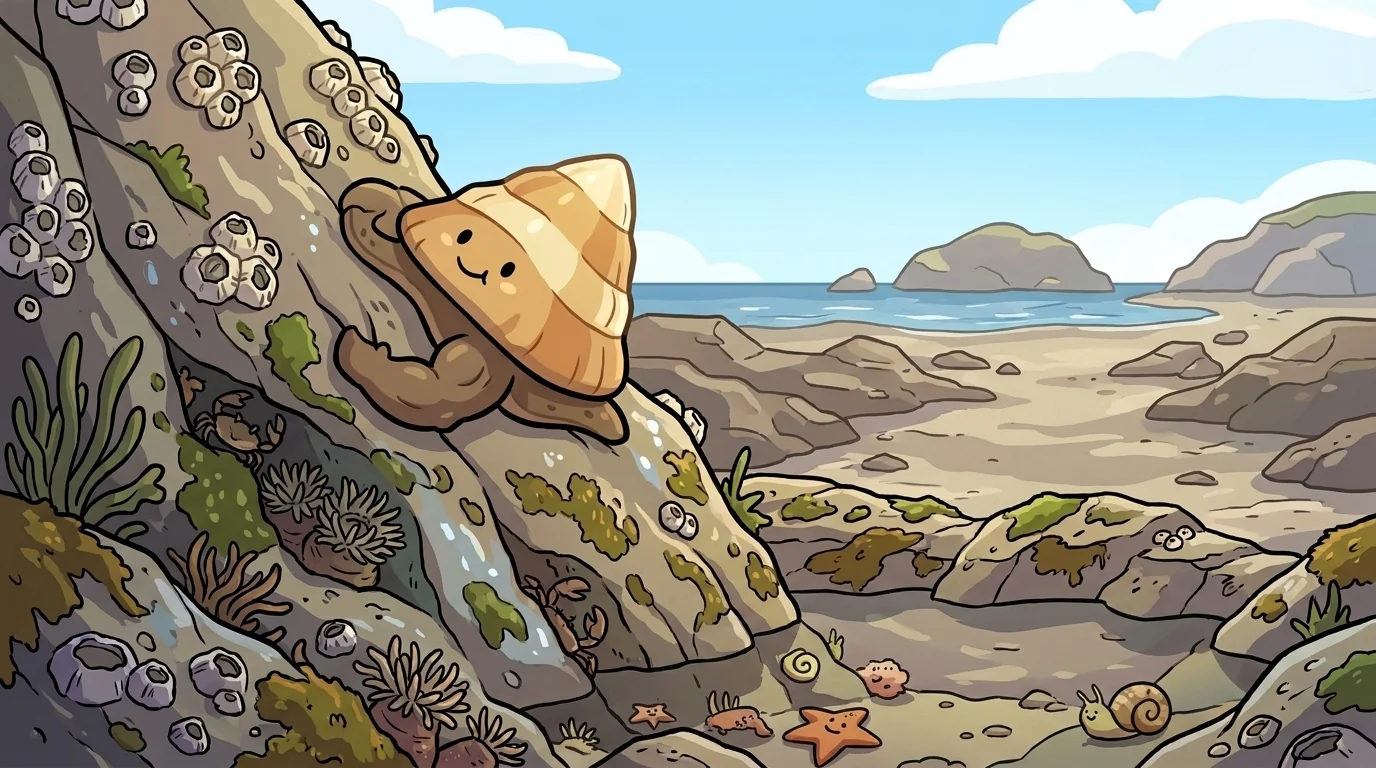
Cling clamps down onto her rock as the water drains away, sealing her little puddle of sea inside, and she settles in to wait — and there is no fear in it, only a steady, patient gladness, the sure and quiet contentment of a small tough creature who knows, all the way through, that the tide will come back and cover her again.
The DepthQuest ensemble
Cling is part of DepthQuest's distributed-narrative cast. Each character embodies a different curricular primitive; together they teach the full subject.
-

Reef
Sunlit zone — coral + photosynthesis-zone biodiversity
-

Drift
Twilight zone — bioluminescent + migratory species
-

Press
Midnight zone — pressure + cold + giant-squid scale
-

Smoke
Abyss zone — hydrothermal vents + chemosynthesis
-

Trench
Hadal zone — deepest trenches + extreme-adaptation
-

Drizzle
Marine snow — the constant gentle fall of food from the sunlit top to the dark deep (the biological pump)
-

Gyre
Ocean currents — the great moving conveyor carrying water, heat, and life in slow giant loops
-

Neap
Tides — the moon and sun pull the whole ocean; twice a day the sea rises and falls
-
Sonar
Sound in the sea — light dies fast underwater but sound travels far; send a click and read the echo