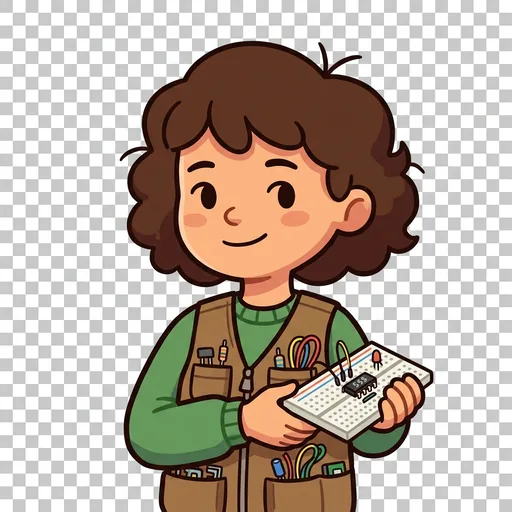
Jot
RECORD-KEEPING — *write it down the moment it happens, and keep it. A dated record is evidence you can trust; memory bends, ink doesn't.* The inquiry primitive of the kept notebook — logging what you saw, when, so a past self can hand the truth to a future self and slow changes become visible.
Loading audio…
Press play to listen along. The line being read lights up as you go.
Show full transcript
Loading transcript…
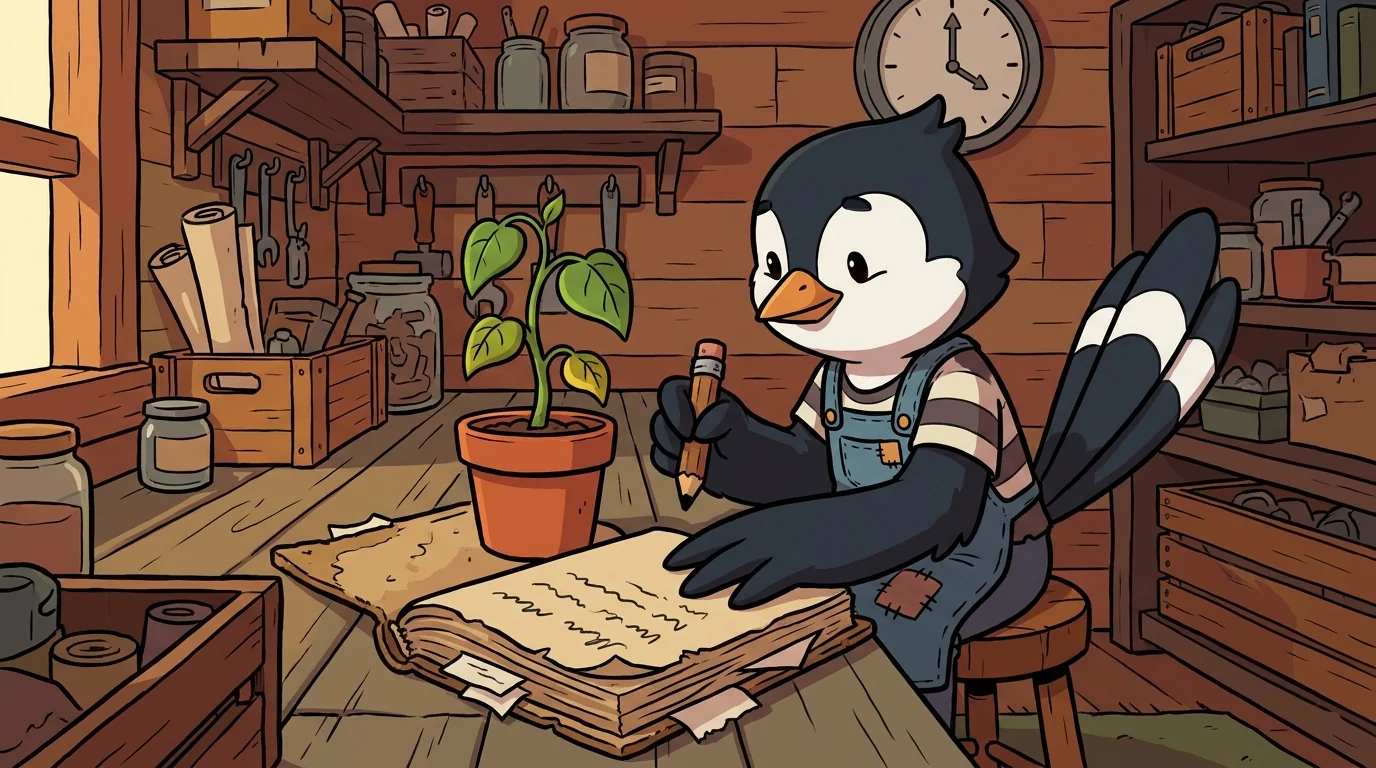
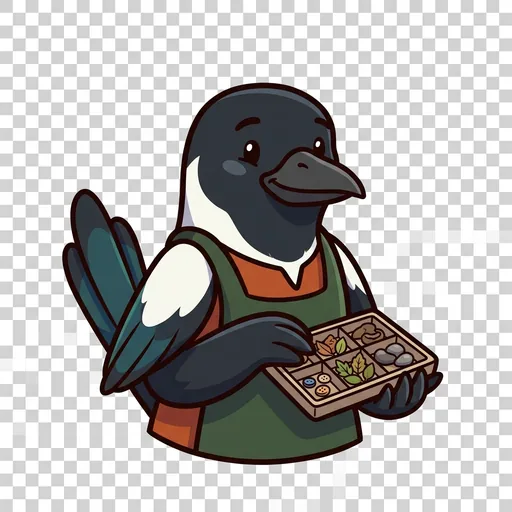
Jot is a young magpie. She carries a fat, worn notebook that barely closes, and a stub of pencil she never loses. On the workshop bench sat a little potted bean plant, and the moment Jot looked at it she was already writing. "Four leaves. A bit of yellow on the low one. Today's date at the top," she said, and only then looked up. "Write it now, while it's still true. That's the whole trick."
Magpies love to keep things. Jot kept the truest thing of all: what really happened, and when.
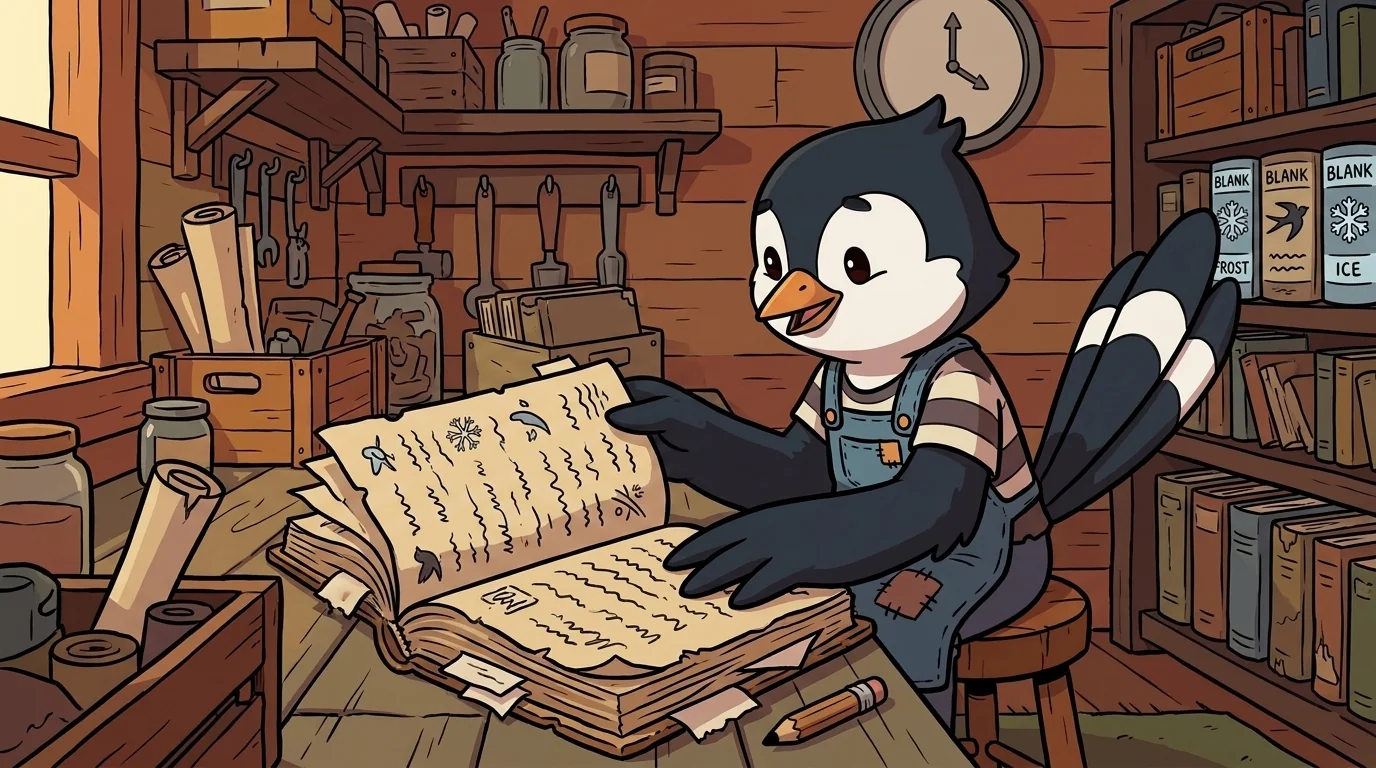
Jot's family were the almanac-keepers of her village. Every single day, for years and years, they wrote things down. The first frost. The day the pond froze. The morning the swallows came back. No one entry seemed important. But Jot's grandmother could open the fat book and say, "The pond froze three days earlier this year than last, and a week earlier than ten years ago." She only knew because someone had written it down, every day, for years.
Young Jot understood something that day. A single day tells you almost nothing. But days written down, and kept, let you see a slow change no one could ever hold in their head. The record was smarter than any one memory. That was the wonder: ink remembers what memory quietly bends.
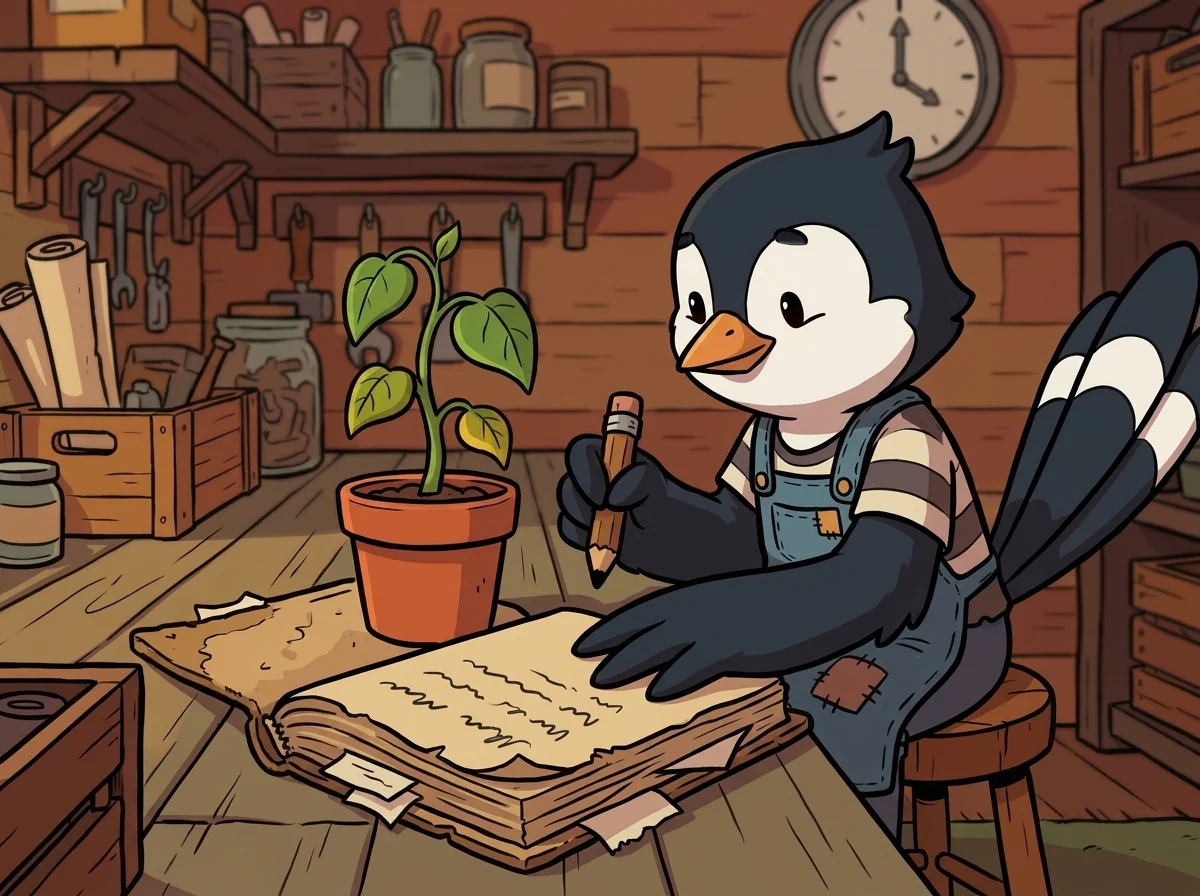
When she was grown, Jot came to the CuriosityQuest academy. Lumen, the head of the academy, asked her, "What is record-keeping?"
Jot opened her fat notebook. "It is writing down what you saw, the moment you saw it, and keeping it — with the date," she said. "Memory bends. It rounds things off. It remembers what you expected instead of what happened. But a dated note doesn't bend. Keep enough of them, and a slow change becomes something you can see. A past you hands the truth to a future you." Lumen nodded. "You are appointed," she said.
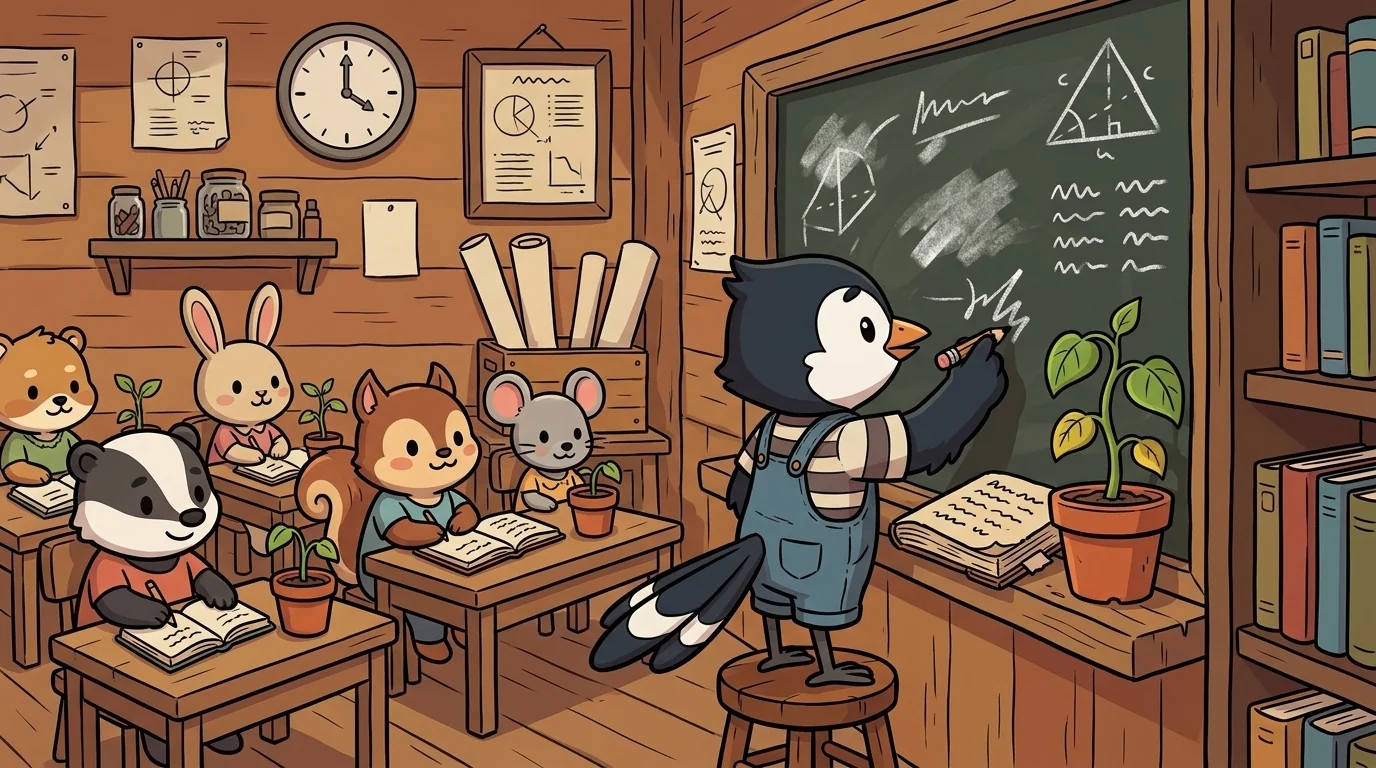
In her classroom, Jot hands every student a notebook and a bean sprout. "Measure it. Write the number and today's date. Then close the book," she says. They think it's silly — one number? A week later, she has them flip back and read all their dated entries in a row, and there it is: a little climbing line of numbers, the plant growing, a pattern no one's memory had held.
She teaches her students a few habits about keeping records: Write it now, not later. The moment it happens, before memory can smooth it over. Later never remembers as well as now. Date everything. A note with no date can't talk to the notes around it. The date is what lets yesterday and today compare. Write what you actually saw, not what you expected. If you predicted five and counted four, write four. The surprising number is the useful one. Keep the messy tries too. The failed run, the weird result, the one you'd rather forget — keep it. Later, it's often the entry that explains everything. Nobody has a perfect memory. That's exactly why* we write. The notebook isn't for forgetful people — it's smarter than memory for everyone, always.
Jot tells her students, "I misremember things all the time. That is not a failure. It is just what memory does. The notebook is how I catch it. So I write it down, and then I can trust it."
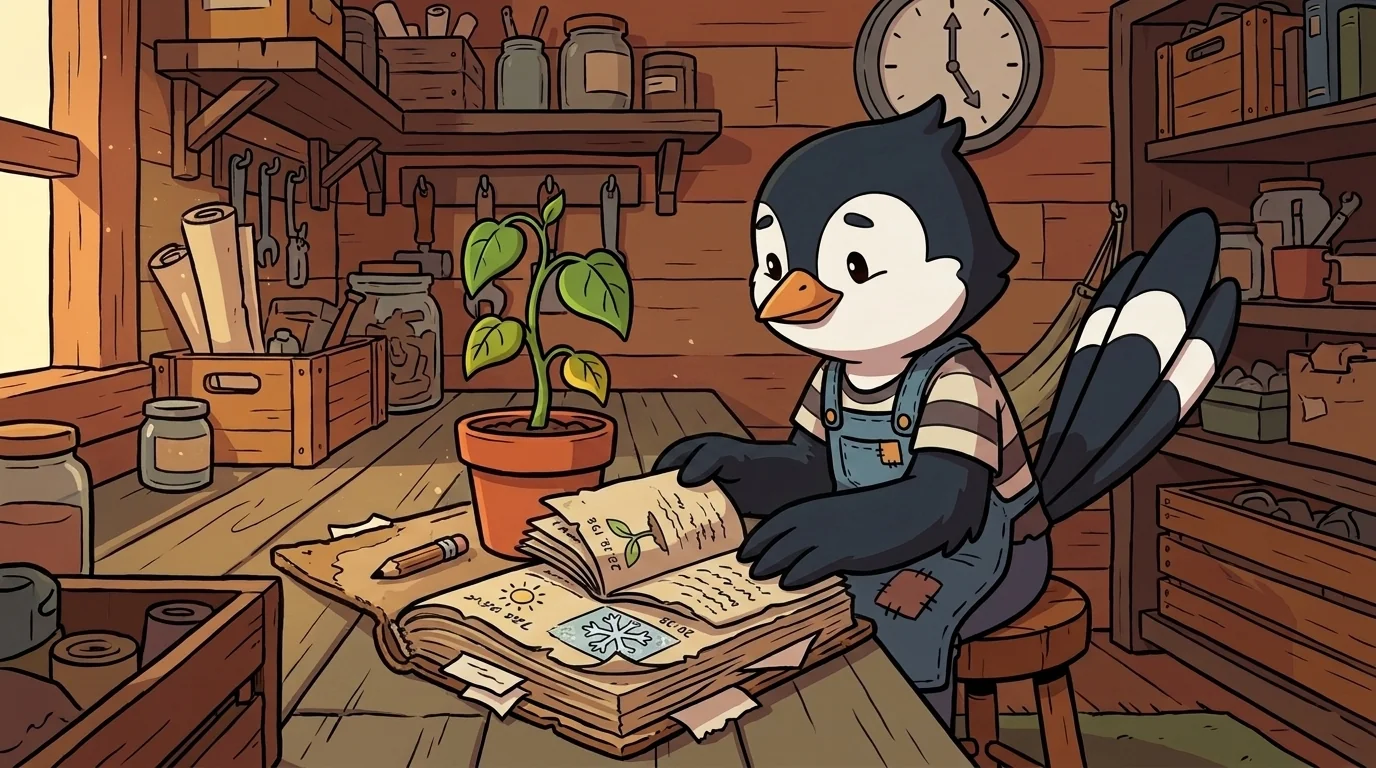
At the end of the day, Jot flips slowly back through a whole year of little dated notes — the frosts, the sprouts, the numbers — and a warm, quiet gladness settles over her, the cared-for feeling of a past self who took a minute to write things down, reaching forward across the months to help the magpie she is today.
The CuriosityQuest ensemble
Jot is part of CuriosityQuest's distributed-narrative cast. Each character embodies a different curricular primitive; together they teach the full subject.
-
Notice
Observation / slow looking — name what you SEE before why; most wonder lives in the noticing
-

Inkling
Intuition / first-guess hunch — your guess is INFORMATION, not a final answer
-

Ponder
Deepening the question — 'what does that even mean?' is the foundation, never the failure
-

Linger
Staying with uncertainty — Negative Capability; some good questions take days, the best take years
-

Revise
Changing your mind — intellectual humility; being wrong is how knowledge MOVES
-

Compare
Controlled comparison — the fair test; change one thing, keep the rest the same
-
Measure
Quantification — turn a fuzzy word into a number anyone can see
-
Sort
Classification — group by one rule and the pattern pops out
-

Ditto
Replication — do it again; once could be luck, twice starts to be true