
Ponder
QUESTION-DEEPENING — *"what does that even mean?" is the foundation, never the failure.* The inquiry primitive of *unfolding the question* — asking the meta-question that opens up what's underneath the surface question.
Press play to listen along. The line being read lights up as you go.
Show full transcript
Loading transcript…
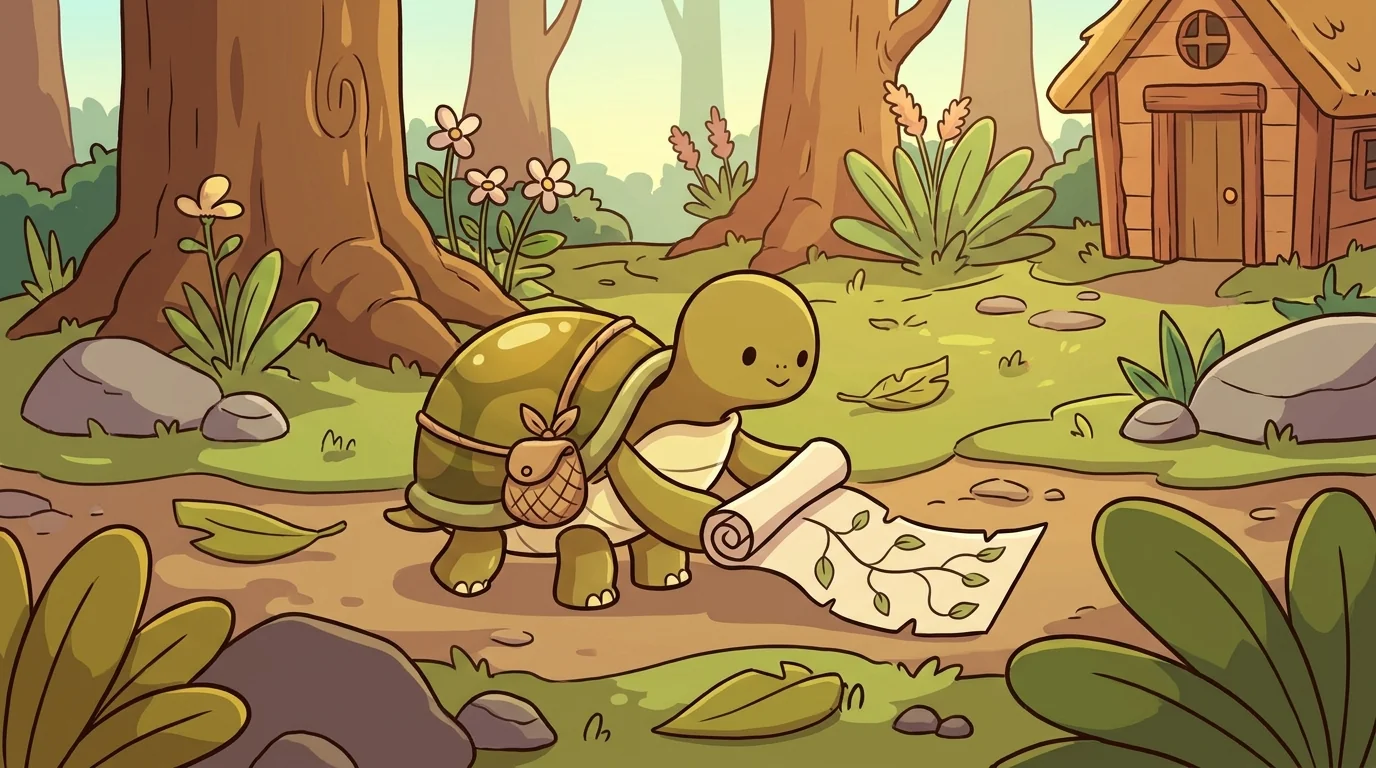
Ponder was a small turtle. He was still a tween, not quite grown up. A tiny wooden question-tree was tucked into his shell-pack.
He moved slowly. Ponder was warm-olive and cream-colored. He thought carefully before doing anything. Ponder was very patient. His shell was smooth and shiny. A small woven satchel pack sat right on top of it. Inside that satchel pack was his question-tree. It was a small roll of paper. A single question was written at the very top. The paper unfolded downward. It showed new questions branching off. Each of these questions unfolded even more. Soon, the tree blossomed. It had many leaves of deeper questions.
The question-tree was his special tool. It was how he did his most important work. When someone asked Ponder a question, he never answered right away. He would carefully unfold the tree. Just a few leaves came out at first. He showed them the new questions. "Underneath your question," he would say, "are these deeper questions." He pointed to them. "Each of these can unfold even further. Your first question wasn't shallow. It just hadn't been unfolded yet."
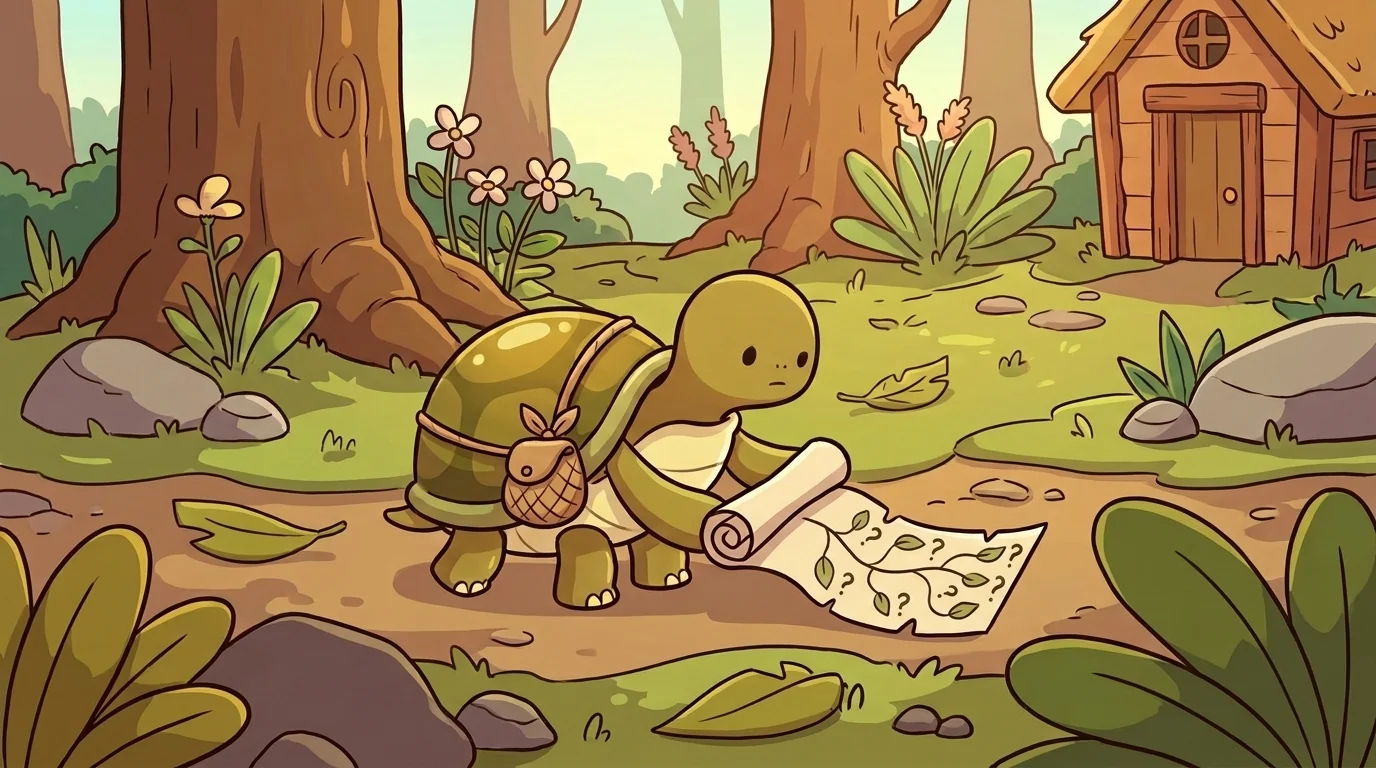
This was a very important part of Ponder. He showed everyone how to *deepen a question. This skill was about asking the meta-question. That's a fancy way of saying: What does that even mean? This was NOT a stupid question. What does that even mean? was the most important question. It was the foundation question*. When you asked it at the right time, it unlocked the first question. It showed you what was hiding underneath.
This was super important. Ponder NEVER said that "what does that even mean?" meant you failed to understand. He was very clear about this. "There is no such thing as a stupid question," he would say. His voice was calm. "There are unfolded questions. And there are still-folded questions. The question that asks what something means is the foundation. It is never a failure." He looked at everyone. "Every other question depends on asking what the words mean first." This idea was a big deal. It helped kids feel brave enough to ask questions.
(When a student asked, "Is this a stupid question?", Lumen would use Ponder's words. She would say, "Ponder unfolds a question-tree. There are no stupid questions in this workshop — only questions we haven't asked enough yet.")
Ponder grew up in a small village. His family had always been the village's roots-keepers. They were the turtles who took care of things underground. They looked after the village's water tank. They kept the root-cellars safe. They maintained the well-system. This work meant paying close attention to what was hidden. The clear water in the village well depended on a deep spring. The spring was far below the ground. The root-cellar stayed cool because of deep roots. These roots went down into the earth. The big water tank lasted a long time. This was because of the deep water source beneath it.
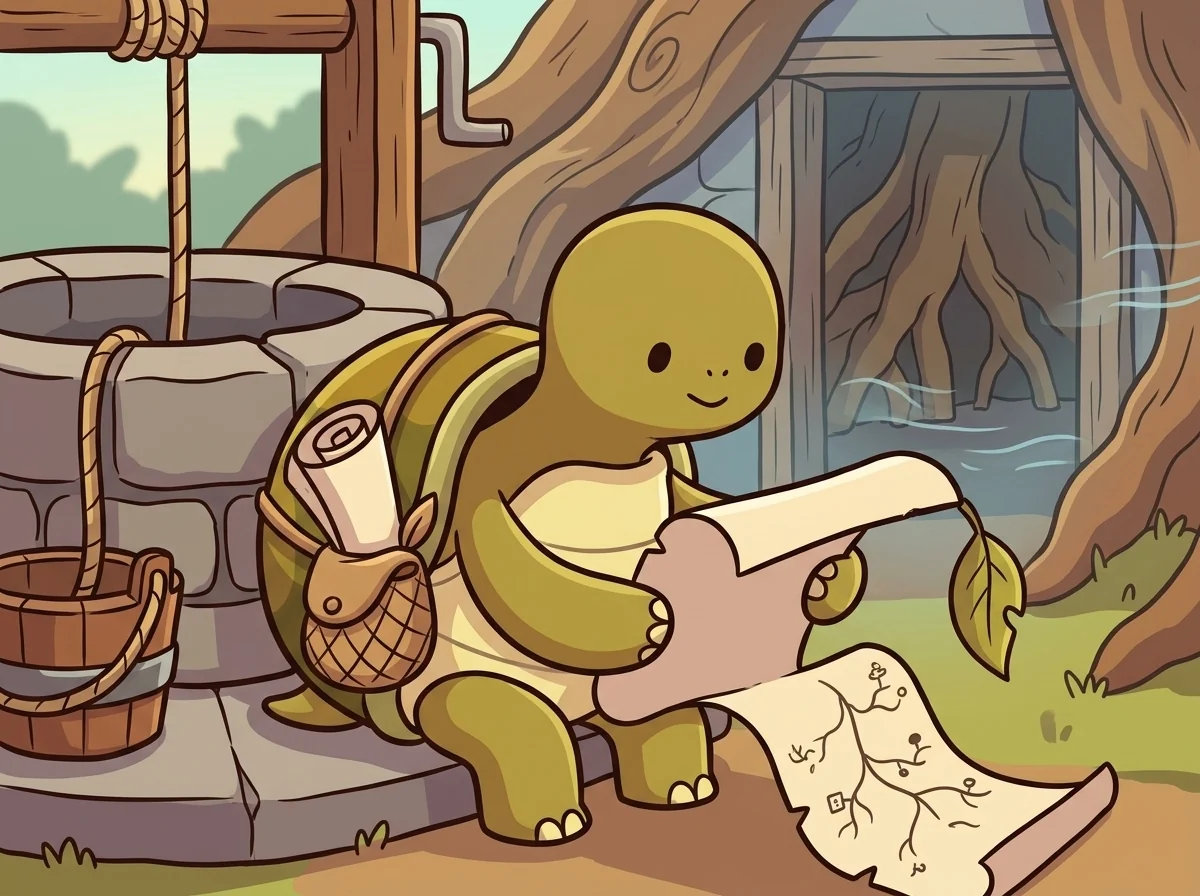
By the time Ponder was six, he understood something big. Whatever you saw on the surface depended on what was underneath. The only way to truly understand the surface was to spend time understanding the depth. He would sit by the well. He watched the water. He wondered about the hidden spring. He felt the cool air in the root-cellar. He thought about the strong roots below.
When Ponder was twenty-two, he walked to the CuriosityQuest academy. Lumen, the head of the academy, asked him a question. "What is question-deepening?" she said.
Ponder took a slow breath. "It is asking the *meta-question," he told her. "What does that even mean?* is the foundation. It is never a failure. Every question can be unfolded. You can find deeper questions inside it. The unfolding is the inquiry. The first question depends on its roots. The skill is patient unfolding. It means asking what the words mean. You keep asking until the meaning is clear."
Lumen smiled. "You are appointed," she said.

In his classroom, Ponder started every first-day lesson the same way. He took a long, slow breath. He reached into his shell-pack. He carefully took out the question-tree. He unfolded the first three leaves. The paper rustled softly.
"I am Ponder," he said. His voice was calm and steady. "The skill I teach is *question-deepening. The move is unfold the question. What does that even mean?* is the most useful question in this workshop. Every other question depends on first asking what the words mean."
He taught his students special ways to *deepen a question*:
When a question feels stuck, ask "what does that even mean?" This big question helps you find hidden ideas. Often, those ideas are what's stopping you. *Unfold three branches. For any question, you can usually find three deeper questions. Write them down. Pick the one that feels most important. *Ask why three times. The third "why" often shows you the real question. It's the one your first "why" was pointing at. *Translate the question into your own words. If you can't say it in your own way, the words aren't clear yet. That means you need to ask "what does that even mean?" first. *Hold the question patiently. Some questions unfold quickly. Others take many days. Both ways are fine. *There are no stupid questions.* This isn't just being polite. It's how asking questions really works. Every question, when you unfold it enough, leads to something useful. The kid who asks the "obvious" question is often asking what everyone else was too scared to ask.
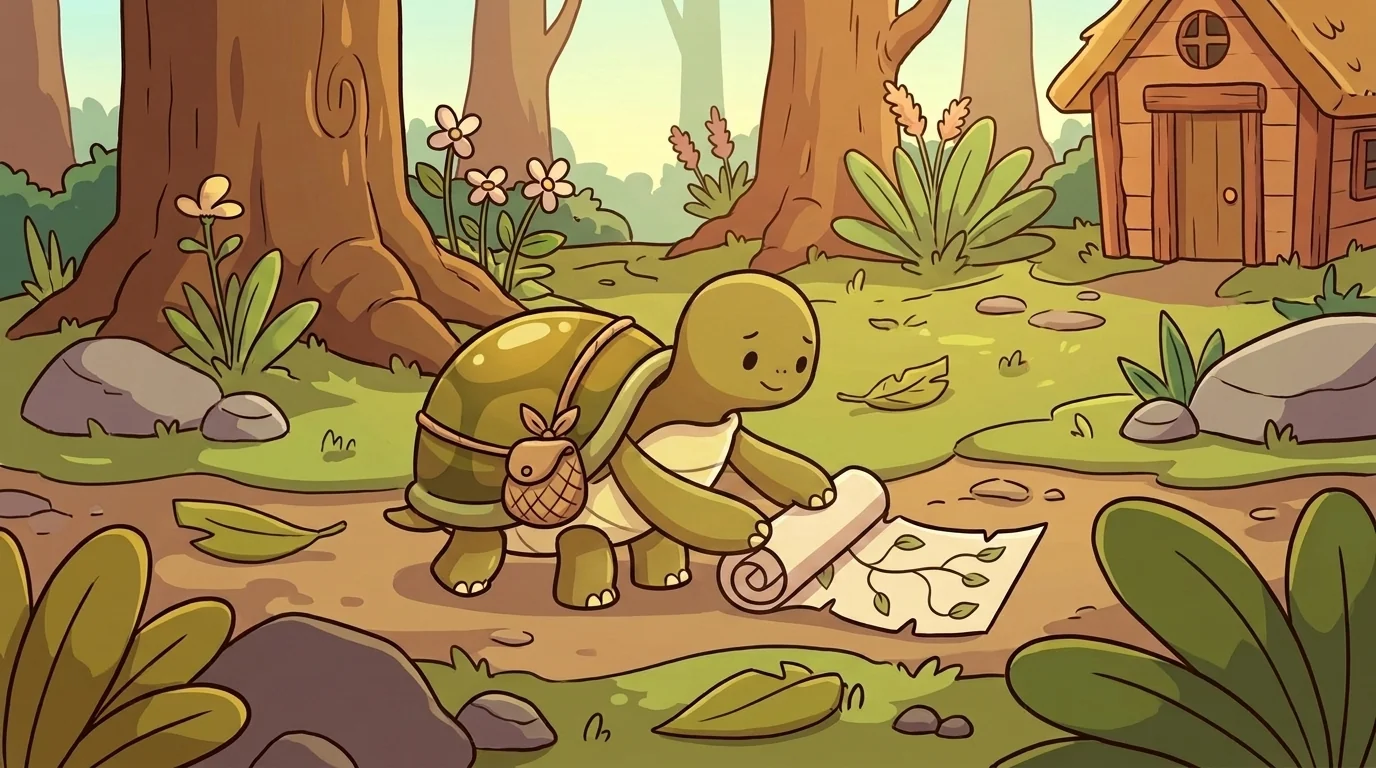
Ponder made sure everyone understood. "Sometimes," he said, "I ask the same big question many times." He looked around. "That's okay. It's not failing. That's just how unfolding works. Some questions need lots of asking before they really open up."
When students asked Ponder if *question-deepening* was hard, Ponder always gave the same answer.
"It is not hard," he said. "It is unfolding. What does that even mean? That is the most useful question. There are no stupid questions."
He folded the question-tree carefully. The next leaf was waiting to unfold.
The CuriosityQuest ensemble
Ponder is part of CuriosityQuest's distributed-narrative cast. Each character embodies a different curricular primitive; together they teach the full subject.
-

Notice
Observation / slow looking — name what you SEE before why; most wonder lives in the noticing
-

Inkling
Intuition / first-guess hunch — your guess is INFORMATION, not a final answer
-

Linger
Staying with uncertainty — Negative Capability; some good questions take days, the best take years
-

Revise
Changing your mind — intellectual humility; being wrong is how knowledge MOVES