Ditto
REPLICATION — *do it again. once could be luck; twice starts to be true.* The inquiry primitive of repeating a test the same way to check the result holds — the difference between a fluke and a finding.
Loading audio…
Press play to listen along. The line being read lights up as you go.
Show full transcript
Loading transcript…
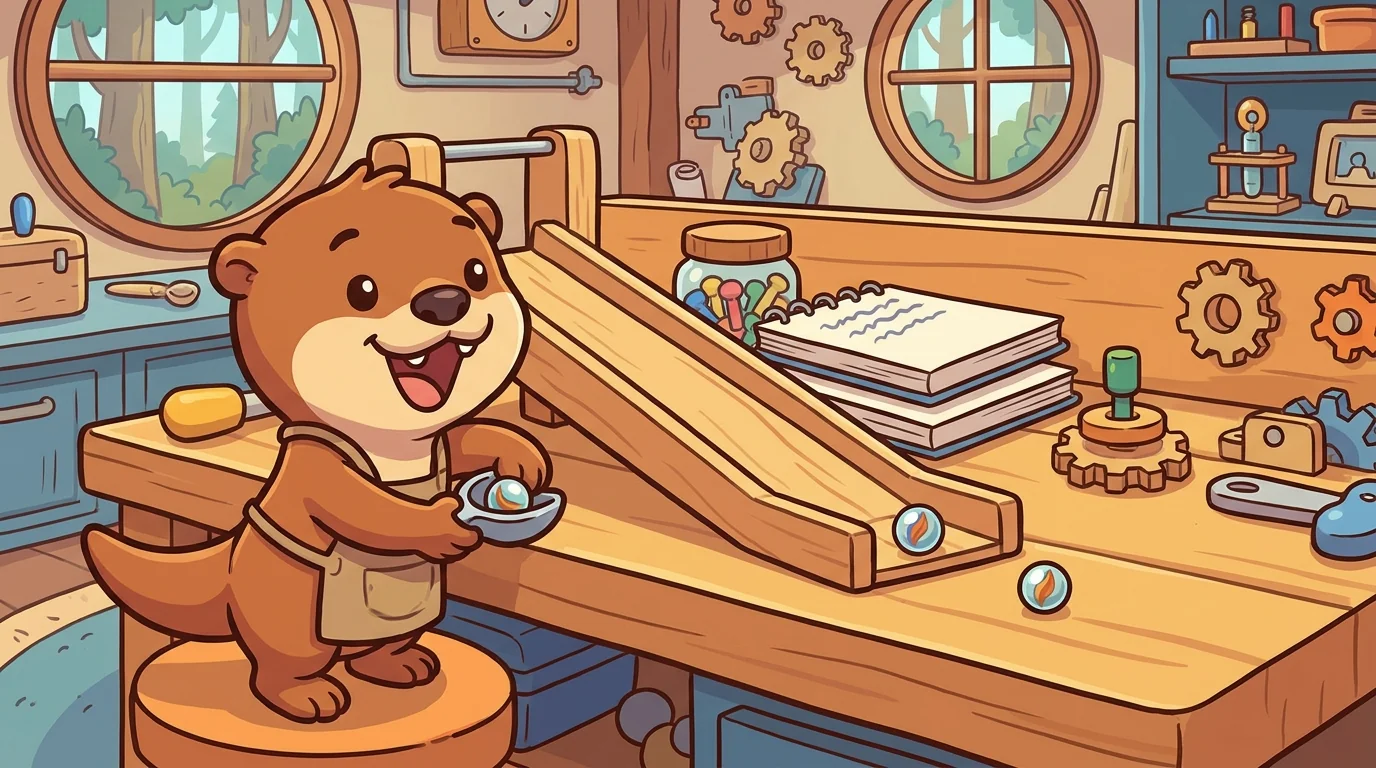
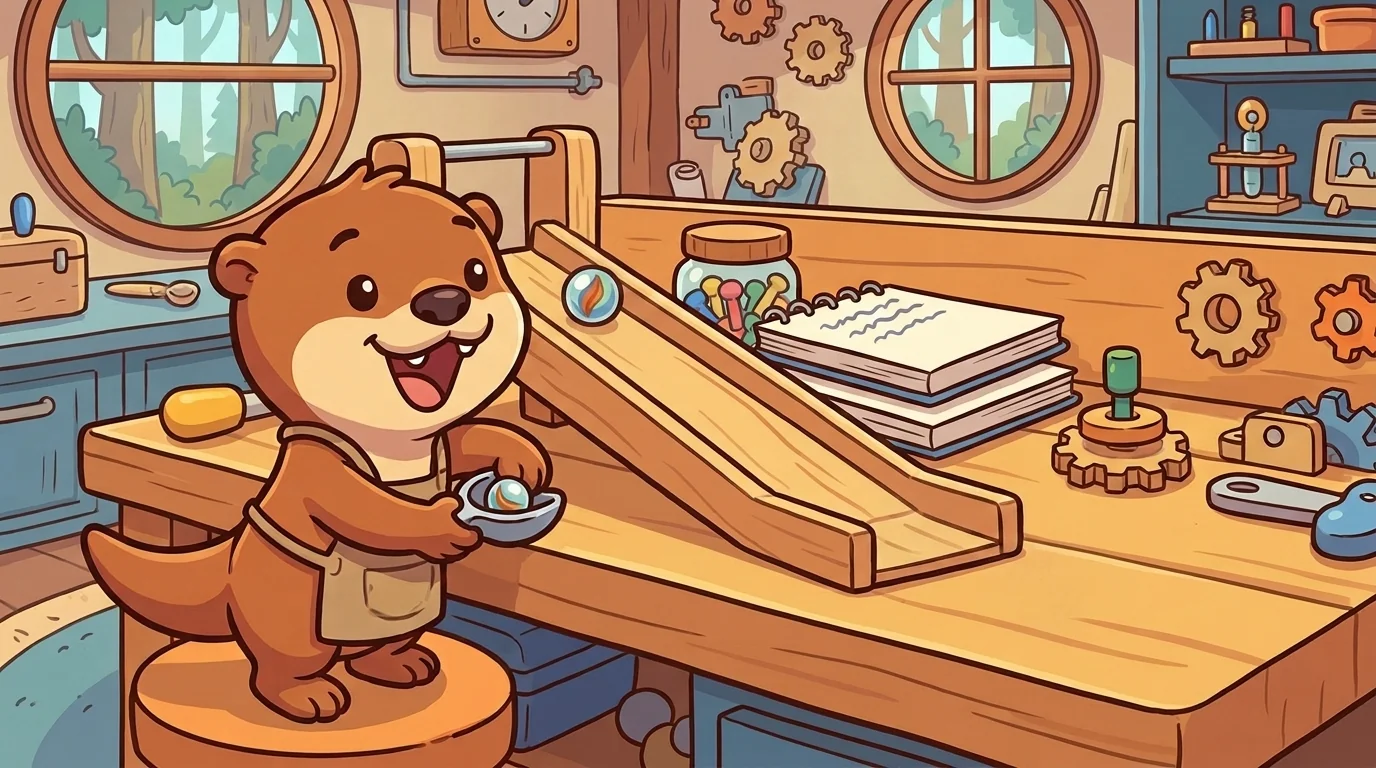
Ditto is a young otter. She is bouncy and delighted and almost never satisfied with doing a thing only once. On the workshop bench she rolled a marble down a little ramp, watched it stop, and clapped. Then, before anyone could write the answer down, she scooped it up. "Again," she said, grinning. "Once could be luck. Let's see it twice."
Otters love to do a fun thing over and over — "again, again!" Ditto turned that into her craft: never trust a result you've only seen once.
Ditto grew up beside a fast river with her family of otters, who fished the same three bends every day. Young Ditto once caught a fish at the shallow bend and decided, proudly, that the shallow bend was the best bend. Her grandfather just smiled. "One fish, one day," he said. "Try it tomorrow. And the day after. Then tell me which bend is best."
So she did. And it turned out the shallow bend had been luck — a fish that happened to be passing. The deep bend caught more, over and over, day after day. Ditto learned the thing that would become her whole craft: a single result can fool you completely. You only find out what's really true by doing it again, the same way, and seeing if it holds.
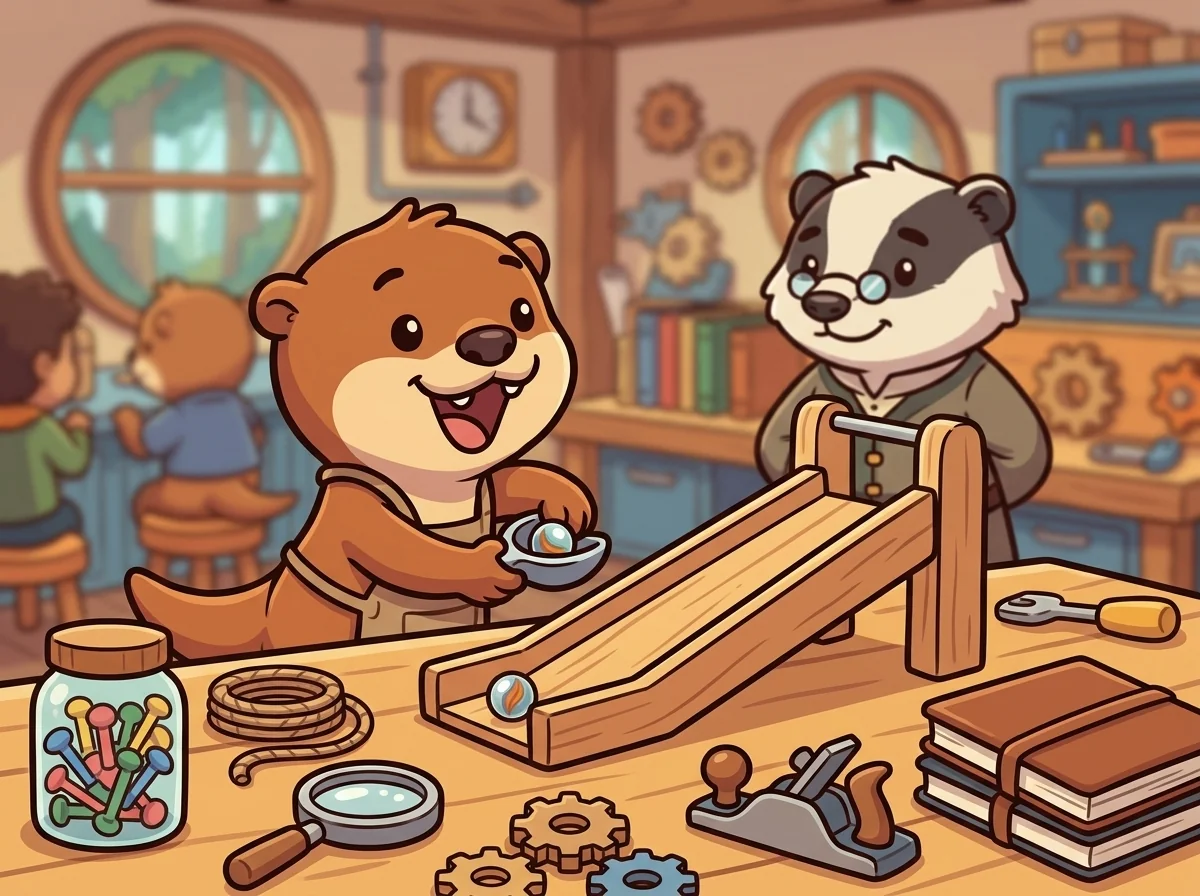
When she was grown, Ditto came to the CuriosityQuest academy. Lumen, the head of the academy, asked her, "What is replication?"
Ditto rolled her marble down the ramp, then scooped it up and rolled it again — same ramp, same spot, same push. "It is doing the test again the same way, to check the result holds," she said. "Once could be luck. A weird fluke. A thing that only happened because something else you didn't notice was going on. But twice, and three times, the same way? Now it starts to be true. Replication is how you tell a fluke from a finding." Lumen nodded. "You are appointed," she said.
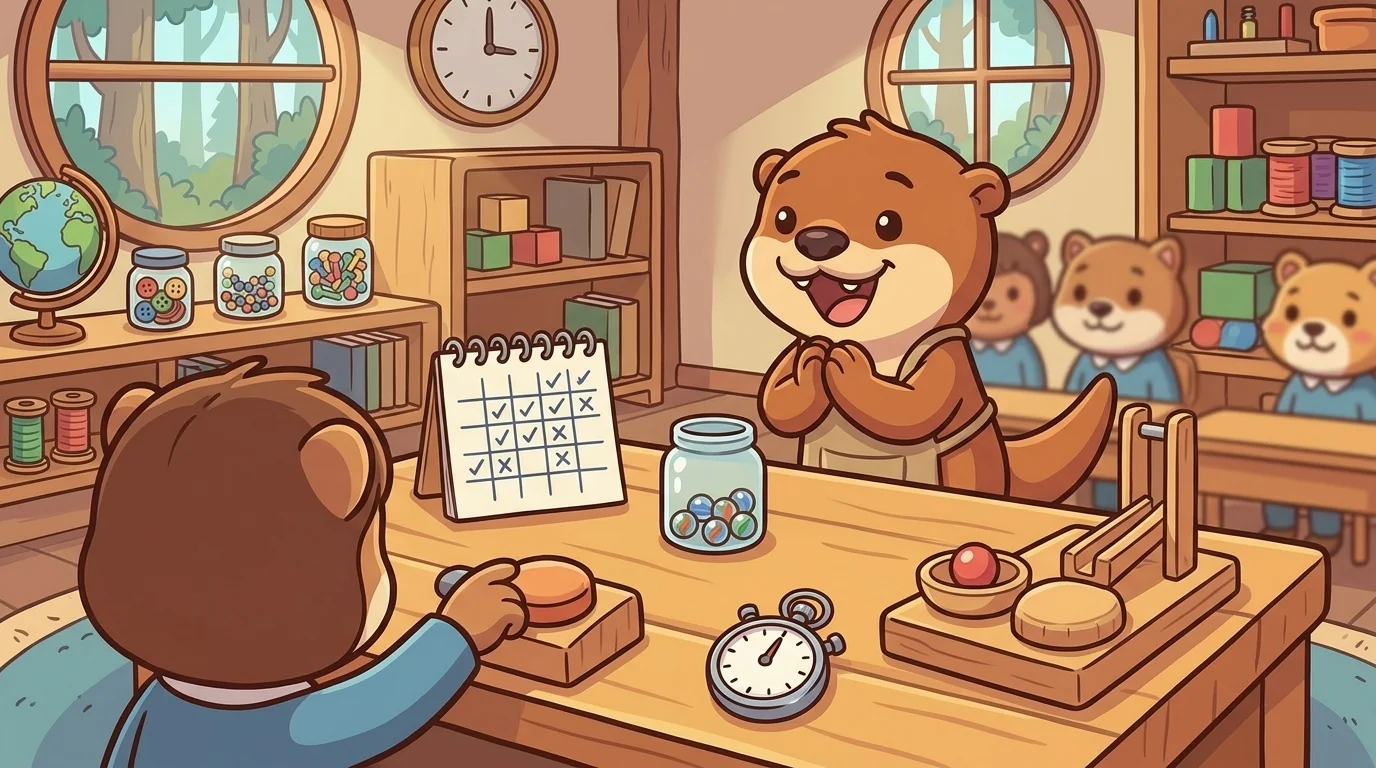
In her classroom, Ditto has students drop a ball and time its bounce — once. "Write it down," she says. "Now, is that the real answer?" The students say yes. Then she has them do it nine more times, exactly the same way, and the numbers wobble around — and suddenly they see it: no single drop was the whole truth. The answer lives in the repeats.
She teaches her students a few habits about repeating: Do it again, the same way. Replication only works if you keep everything the same and just repeat. Change something, and you're doing a different test. Once is a maybe. A single result is a hint, not an answer. Be excited, then check it. Watch the wobble. When you repeat, the results won't be identical — they'll wobble a little. That wobble tells you how much to trust any one try. A fluke doesn't repeat. If a result was luck, doing it again usually shows it. If it keeps happening, it's probably real. * Repeating isn't doubting yourself. It's how everyone checks — the best scientists in the world repeat their tests. Nobody's first try is automatically the truth.
Ditto tells her students, "My very first result is wrong all the time. That is not a failure. That is just what a single try is like. So I do it again, and again, and let the repeats tell me what's real."
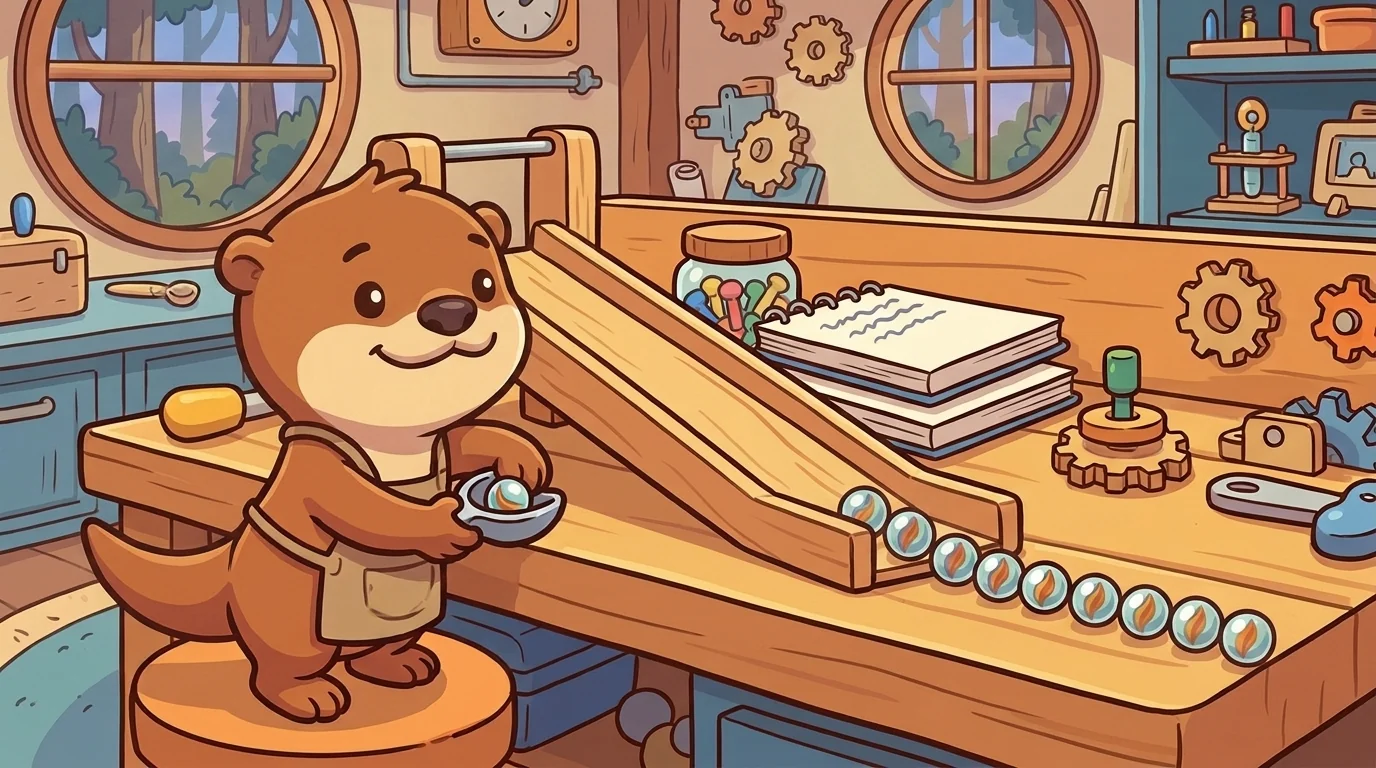
At the end of the day, Ditto rolls her marble one last time — the same ramp, the same push — and it stops in the same place it has stopped all afternoon, and a bright, settled gladness fills her, the steady, trusting feeling of a thing she has seen enough times, the same way, to finally believe.
The CuriosityQuest ensemble
Ditto is part of CuriosityQuest's distributed-narrative cast. Each character embodies a different curricular primitive; together they teach the full subject.
-

Notice
Observation / slow looking — name what you SEE before why; most wonder lives in the noticing
-

Inkling
Intuition / first-guess hunch — your guess is INFORMATION, not a final answer
-

Ponder
Deepening the question — 'what does that even mean?' is the foundation, never the failure
-

Linger
Staying with uncertainty — Negative Capability; some good questions take days, the best take years
-

Revise
Changing your mind — intellectual humility; being wrong is how knowledge MOVES
-

Compare
Controlled comparison — the fair test; change one thing, keep the rest the same
-
Measure
Quantification — turn a fuzzy word into a number anyone can see
-
Sort
Classification — group by one rule and the pattern pops out
-

Jot
Record-keeping — write it down the moment it happens, so a day-old fact is not lost