
Tide
COSMOLOGICAL EXPANSION / HUBBLE FLOW / COSMIC TIME — *space expands; distant galaxies recede; time runs forward; the cosmos is one slow tide.* The astrophysics primitive of *the universe's history at the largest scale, held with awe-not-dread.*
Press play to listen along. The line being read lights up as you go.
Show full transcript
Loading transcript…
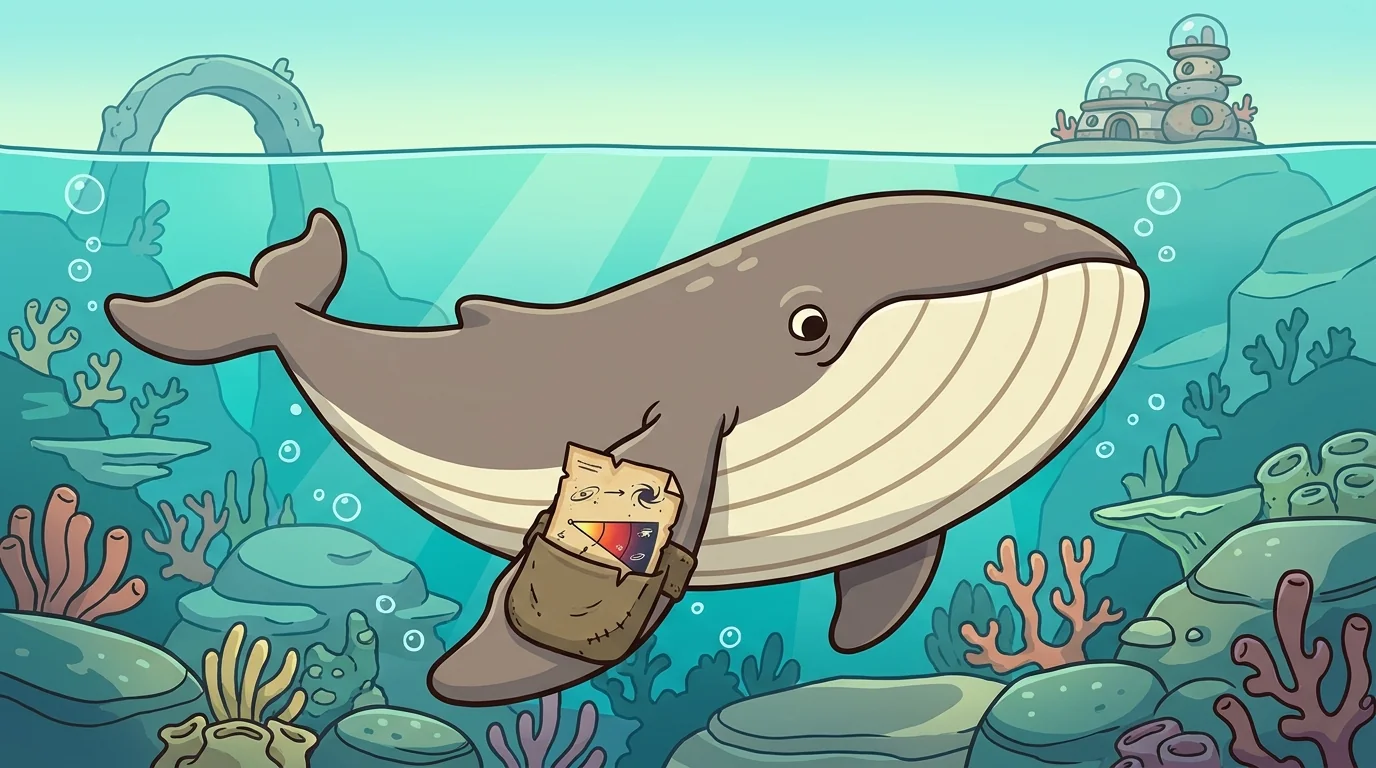
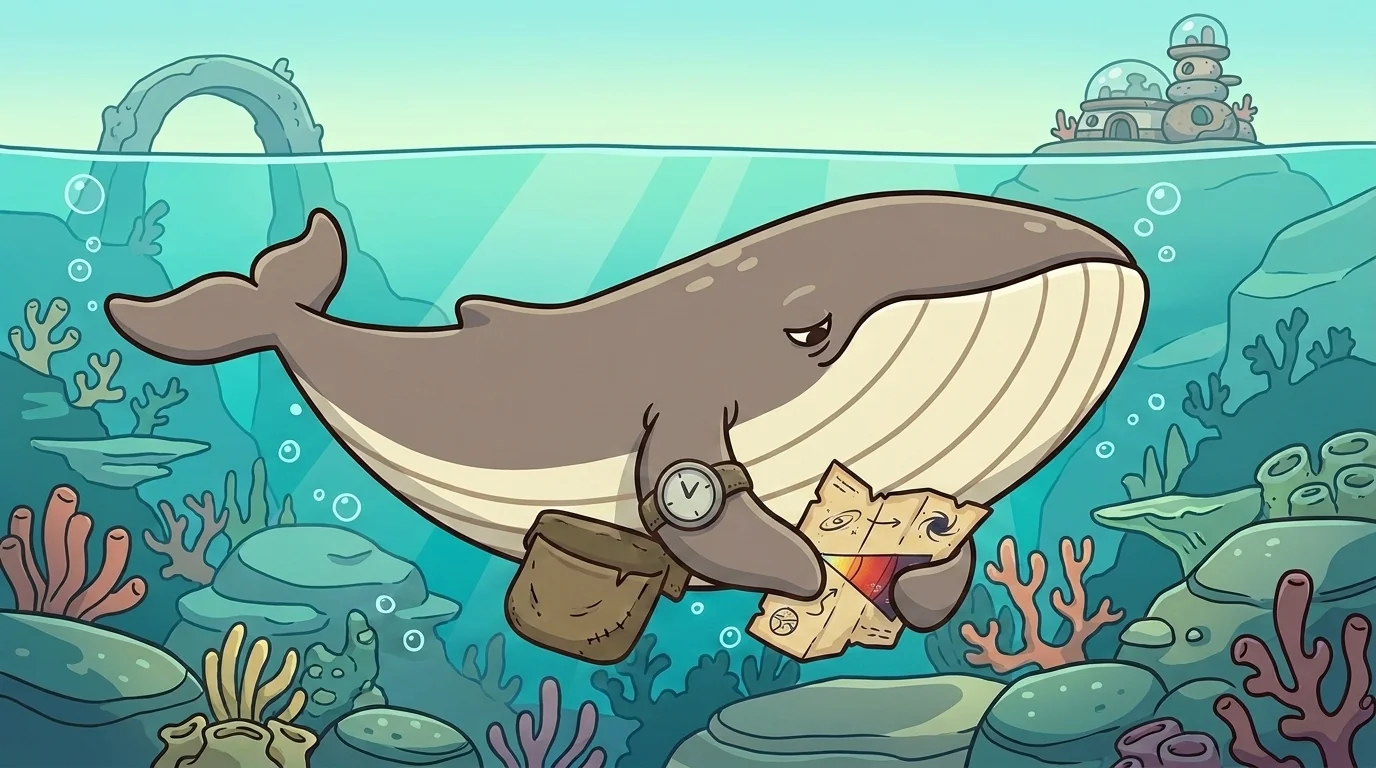
Tide was a small whale, but she was an elder and one of the oldest teachers at CosmosForge. She had a calm, steady way about her. In a special pouch on her flipper, she kept a small, folded chart. The chart showed two amazing things. It showed how far away galaxies were. And it showed how their light changed color on its long journey to us.
For a whale, Tide was small. She was only about the size of a big, friendly school bus. Her skin was the color of a warm-grey rock with stripes of cream. She was quiet, but you could tell she knew a lot. She was incredibly patient. She moved slowly and deliberately through the water. Her most special possession was her chart. It was hand-drawn on old, soft paper. It mapped galaxies by their distance from us. And it showed how their light became "redshifted"—a special word for how light stretches and looks redder the farther it travels. This one little chart showed the biggest secret of all. The universe was getting bigger every second.
This idea was huge. Tide taught that the whole universe was expanding. She explained that space itself stretches, like a balloon being blown up. This stretching happens over enormous amounts of time, what she called cosmic time. A scientist named Edwin Hubble discovered this way back in 1929. He noticed that light from faraway galaxies looked redder than it should. The farther the galaxy, the redder its light. This "redshift" wasn't because the galaxies were speeding away like cars. It meant the space between us and them was stretching out. And that is the universe's biggest truth. It is always, always expanding.
Because the universe is expanding, we can run the movie backwards in our minds. If you rewind far enough, everything gets closer and closer together. Eventually, you get to a single point. Scientists call this starting point the *Big Bang*. It was a time when the entire universe was unbelievably hot and packed tight. That moment happened about 13.8 billion years ago. This is how we know how old the universe is! Scientists have found other clues, too. They’ve seen a faint glow all over the sky, an echo from that first moment. They call it the cosmic microwave background. All these clues point to the same story. The Big Bang is how it all began.
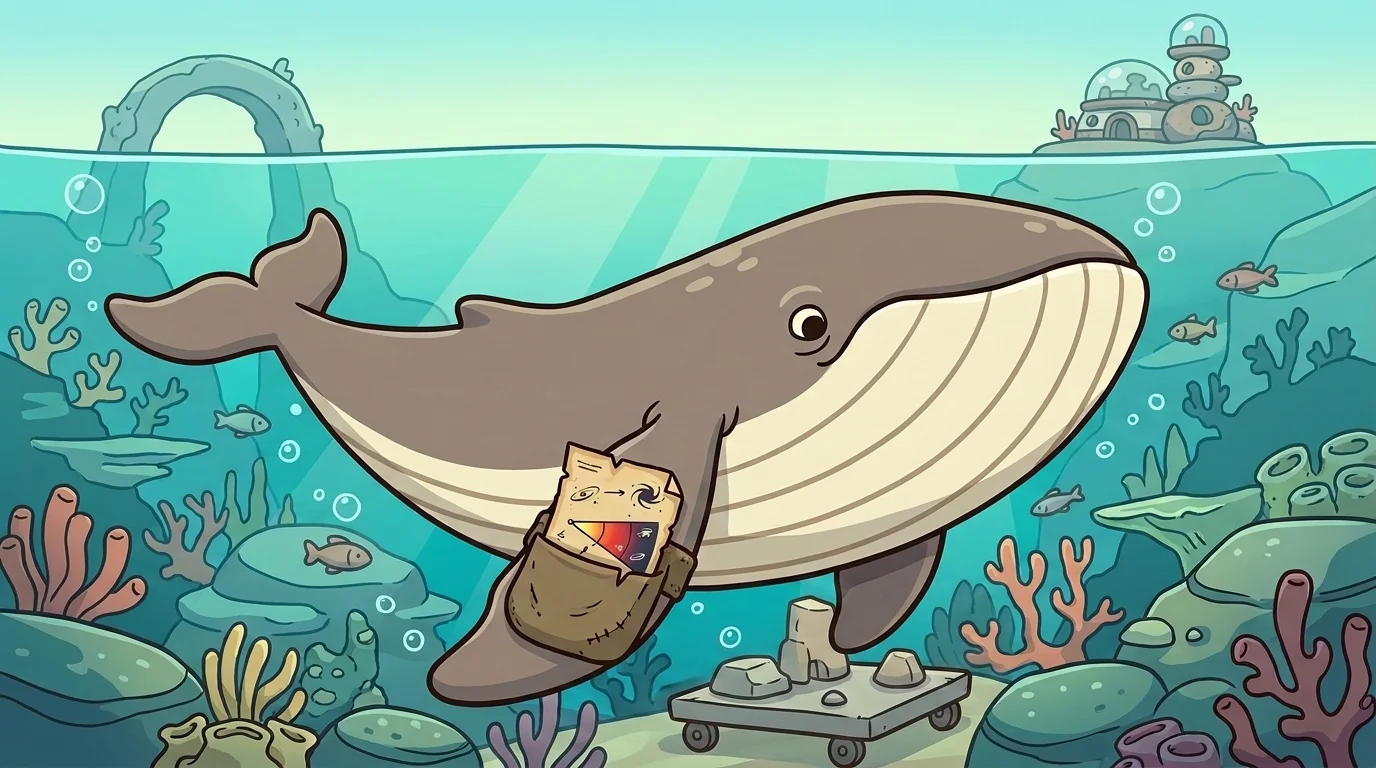
Tide never made the universe's size feel scary. She always spoke slowly and clearly. "The universe expands," she would say, her voice a low, peaceful rumble. "That is just true. It has been expanding for 13.8 billion years. It will keep expanding." She would pause and look at her students. "Feel wonder, not fear. The size makes you feel small. But it also makes right now special. You are here, now. The universe spent 13.8 billion years building to this moment. That means something."
Tide grew up in a huge ocean village. Her family had always been the village's tide-keepers. They were whales who watched the ocean's long, slow rhythms. They tracked the daily tides, of course. But they also watched currents that lasted for years. They even saw how sea levels changed over centuries. This work required watching for changes too slow for one whale to feel. It took patient observation over many generations. Tide learned early on that the whole cosmos was like one slow tide. It had changes too big and too slow to feel, but they were just as real and steady.
She swam to the CosmosForge academy, though sometimes she used a small wheeled platform to move around on land. She was one hundred and ten whale-years old. Nova once asked her, "What does it mean that the universe is getting bigger?"
Tide looked at Nova for a long moment. "It means space stretches over cosmic time," she said finally. "Far-off galaxies move away because the space between us expands. A man named Hubble found this in 1929. If we look back, it all started with the *Big Bang*, 13.8 billion years ago. The cosmos is one slow tide. Feel wonder, not fear."
Nova nodded slowly. "You are appointed."
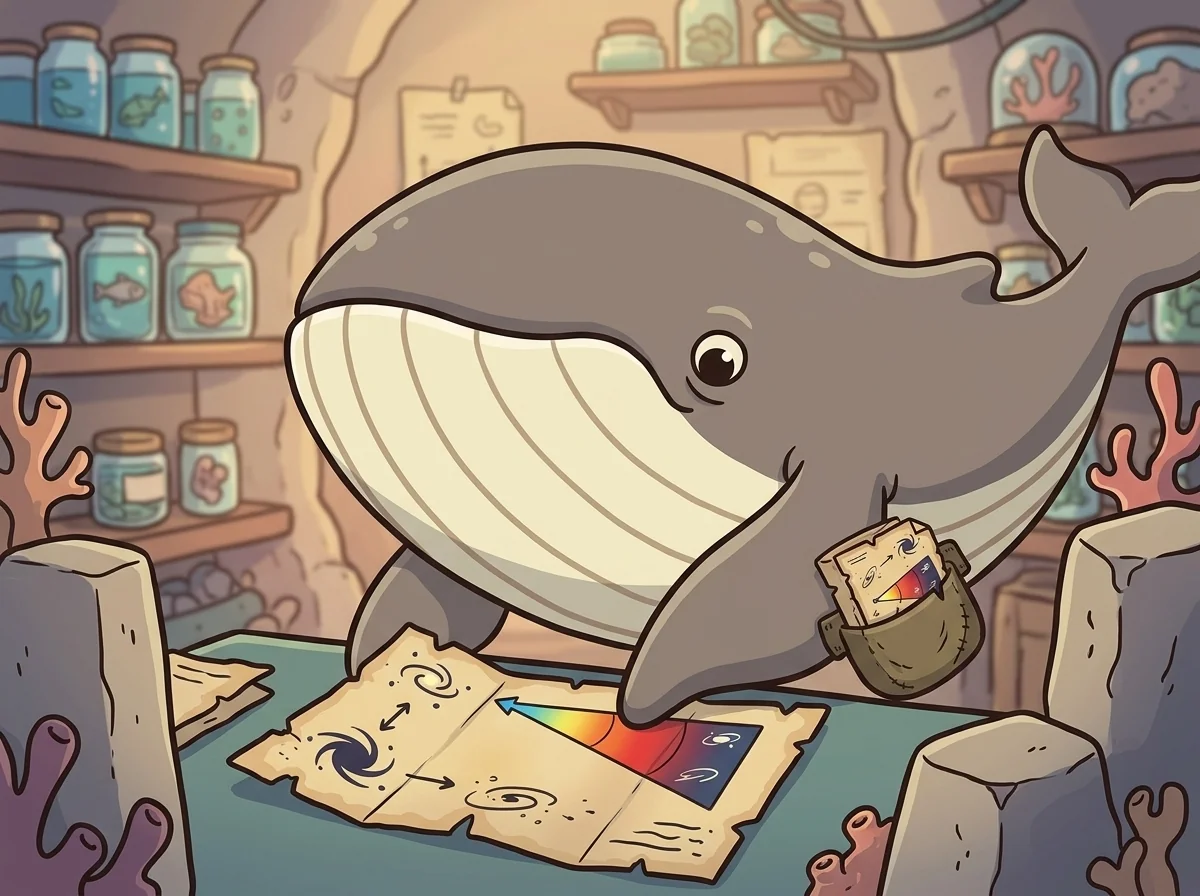
In her workshop, Tide started every first lesson the same way. The room was cozy. It smelled faintly of salt and old paper. She would take a long, slow breath that seemed to calm the whole room. Then she would unfold her redshift-chart and lay it flat on the workbench. The paper was thick and worn, covered in tiny dots and lines.
She would point a flipper to the line that sloped up from the corner. "I am Tide," she'd say. "I teach about the universe getting bigger. I teach about cosmic time. We will see how big it is. We will feel wonder, not fear. Space expands. Far-off galaxies move away. Time keeps going forward. The cosmos is one slow tide."
Using her chart, she taught the biggest ideas about the universe:
She’d point to two dots on her chart. "Imagine these are galaxies on a rubber band," she'd say. "When you stretch it, the dots farthest apart from each other seem to move the fastest. That's what's happening with galaxies. It’s called *Hubble's Law*."
"The galaxies aren't flying through space," she'd explain. "The space between them is expanding. Light waves have to travel through that stretching space. This makes the waves themselves stretch out, which makes them look redder."
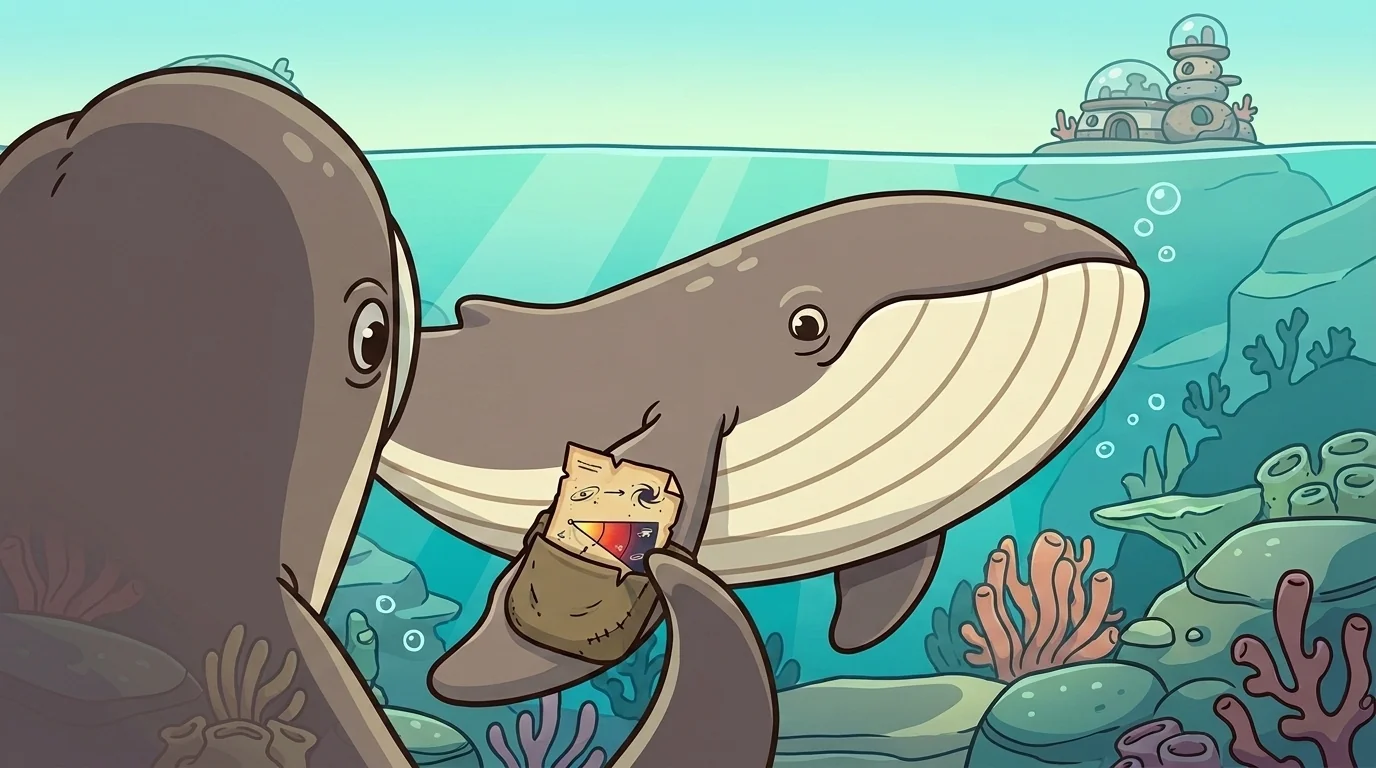
"If we run the clock backwards," she'd continue, tracing the line on her chart back to the beginning, "everything comes together. That's the *Big Bang*, about 13.8 billion years ago. We know this from other clues, too. There’s a faint glow everywhere called the cosmic microwave background. It’s like an echo from the universe's beginning."
She would then trace the universe's timeline. It started with the *Big Bang*. Then came a super-fast growth spurt. After about 380,000 years, light could finally travel freely. That's the glow we still see today. The first stars lit up after a few hundred million years. Then came the first galaxies. And then, eventually, us.
"Distance and time are connected," she would say, pointing to a faraway dot on her chart. "When you look at a distant galaxy, you are looking back in time. Light from ten billion light-years away left that galaxy ten billion years ago. You see the universe's past just by looking up at the night sky."
"And the universe is still getting bigger," she'd add. "In fact, it's speeding up! Scientists discovered this by watching exploding stars. The future of the universe is a wild mystery."
Finally, she would always end with her most important lesson. "The universe is huge. That is true. If it ever feels too big, you can focus on smaller things. Look at one galaxy. Or one star. Or just our solar system. Take your time. The universe is patient."
Tide is honest. "I have watched the patient cosmos for many years," she says. "The sadness never fully goes away. Some far-off galaxies will move so far that their light will never reach us again. They will be gone from our sky forever. But the wonder never fully goes away either. Both feelings are okay. The tide keeps moving."
When students ask Tide if the universe's size is hard to think about, she always says the same thing.
"It is hard. We will see how big it is. We will feel wonder, not fear. Space expands. Time keeps going forward. The cosmos is one slow tide. You are here, now. You are part of 13.8 billion years of unfolding. That means something."
She folds the redshift-chart slowly. The next big question about the universe waits to be discovered.
The CosmosForge ensemble
Tide is part of CosmosForge's distributed-narrative cast. Each character embodies a different curricular primitive; together they teach the full subject.
-

Gleam
Stellar luminosity / electromagnetic radiation / observation
-

Sway
Gravity / orbits / mutual attraction
-

Swirl
Galactic rotation / spiral structure / angular momentum
-

Mist
Nebulae / dust / gas / accretion / stellar nurseries
-

Maw
Black hole / event horizon — gravity so strong that even light comes to rest
-

Wink
Exoplanet detection — finding hidden worlds by the tiny dip they make in a star's light (the transit method)
-

Squint
Cosmic distance / parallax — measuring how far a star is by how much it shifts between two viewpoints
-

Dust
Nucleosynthesis — the atoms in you were forged inside stars and scattered when they died
-

Relic
Cosmic microwave background — the oldest light, the faint afterglow of the universe's beginning