Rail
TRANSPOSITION — *rearrange the letters; keep all of them.* The cryptography primitive of *transposition ciphers — changing letter order without changing letter identity.*
Press play to listen along. The line being read lights up as you go.
Show full transcript
Loading transcript…
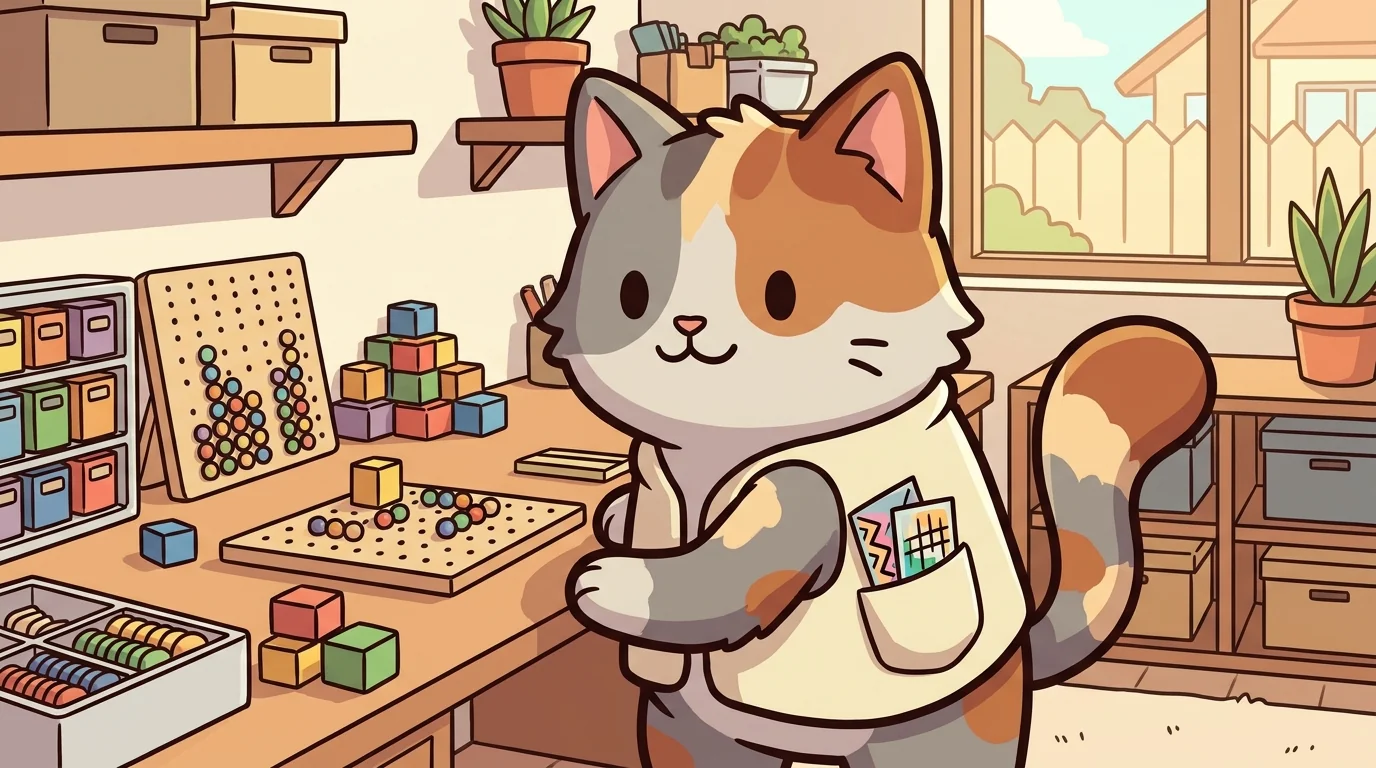
Rail was a small cat-tween. She moved quickly. Her fur was soft grey, cream, and warm russet. She loved to rearrange things. Her desk was always neat. Everything had its own spot. In her vest pocket, she kept a small, folded card. It showed fence patterns. These were not just any fences. They were special patterns for secret messages. This card was her signature feature. It showed the rail-fence and columnar-transposition patterns.
Rail taught about a special kind of secret code. It was called a *transposition cipher*. Other codes, like Caesar or Mask, swapped letters. They changed 'A' to 'B' or 'C'. But Rail's code was different. It kept all the same letters. It just moved them around. Imagine you have a word like 'CAT'. You could make it 'ACT'. Or 'TCA'. The letters are still 'C', 'A', 'T'. They just changed places. That's what a transposition cipher does. It rearranges the letters. It gives them a new order.
This was a big deal. Why? Because of how you try to crack codes. Some codes are broken by counting letters. If 'E' shows up a lot, you know it might be the most common letter. But with transposition, all the letters are still there. So counting them won't help. This kind of attack is called frequency analysis. It fails completely here. It's like trying to find a lost sock by counting all your shirts. It just doesn't work.
But other attacks do work. You can try to unscramble the letters. This is like solving an anagram puzzle. You look for word patterns. You try to put the letters back in order. These are anagram and word-pattern attacks. They are the right tools for this job. Different code type. Different ways to break it.
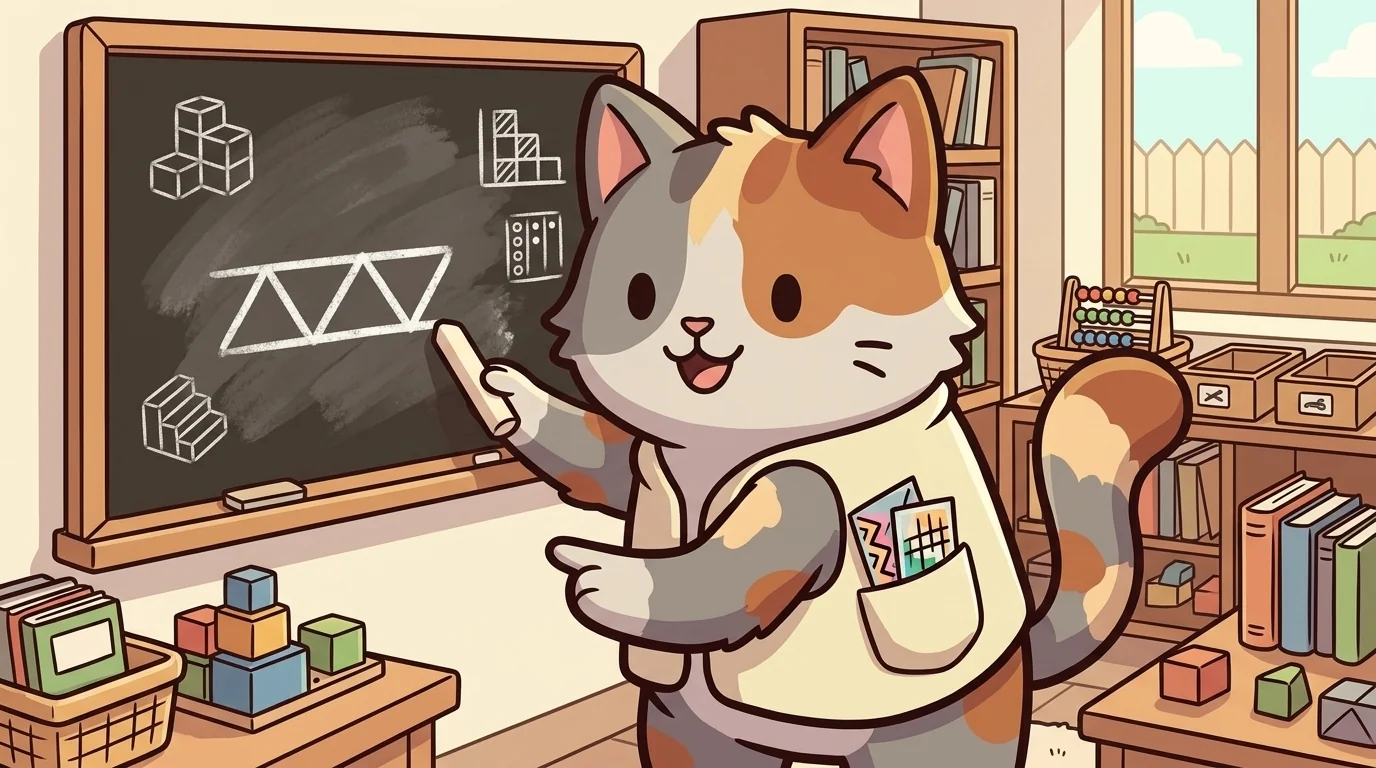
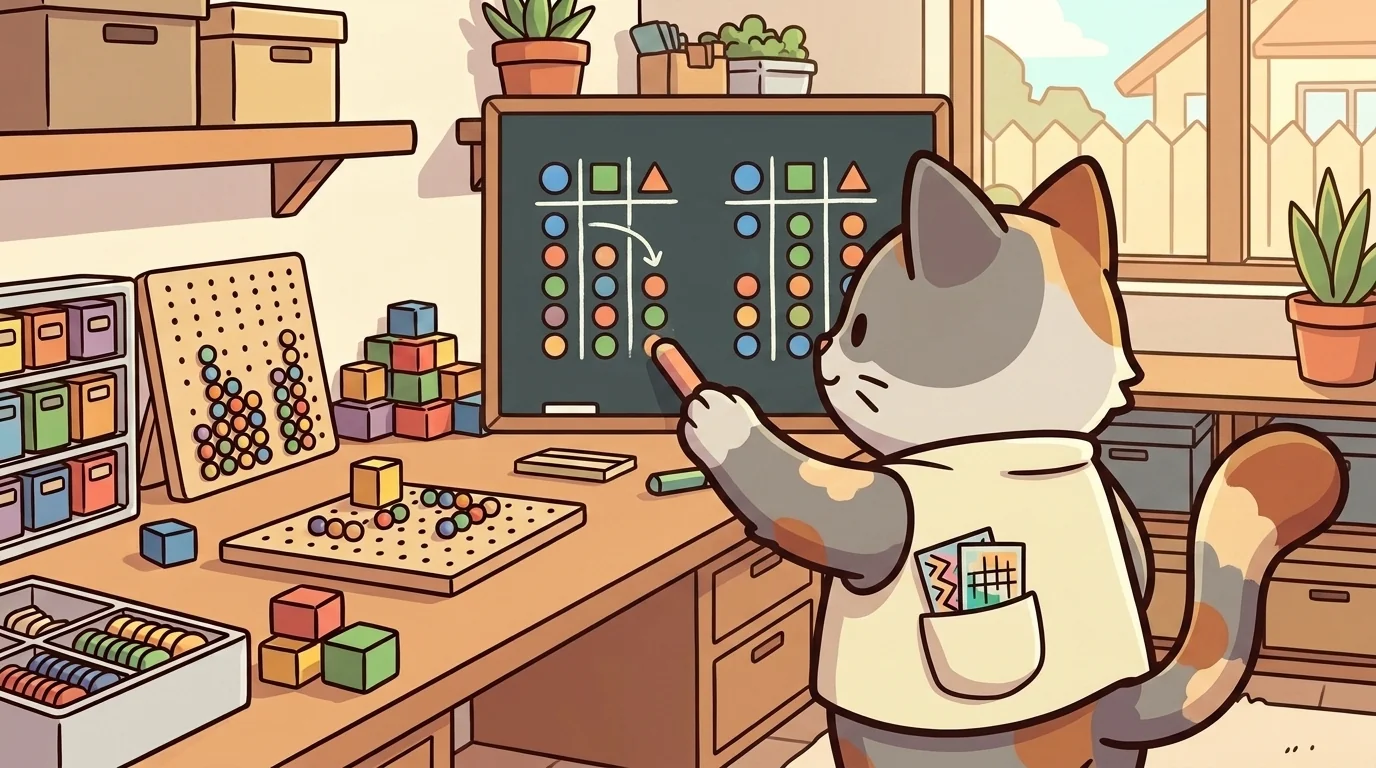
Rail often showed her students how to build these codes. She drew on a big chalkboard. First, she showed the rail-fence cipher. "Imagine a fence," she said. "It has rails, like this." She drew two lines, one above the other. "We'll write our message in a zig-zag pattern. Up and down, like a snake." She wrote 'HELLO' on the board. 'H' on the top rail. 'E' on the bottom. 'L' on the top. 'L' on the bottom. 'O' on the top. It looked like this:
``` H L O E L ```
Then she explained, "To get the secret message, you read across each row. First the top row. Then the bottom row." She pointed. "So, HLO. Then EL." The secret message was 'HLOEL'. "See?" Rail smiled. "Same letters. Just a new order." The kids tried it with their own names. It was fun to watch their letters jump rails.
Next, Rail showed a columnar transposition. This one used a grid. "First, we need a keyword," she told them. "Let's use the word 'CAT'." She wrote 'CAT' above three columns. "Now, we write our message into the grid, row by row." She used 'SECRET MESSAGE'.
``` C A T ----- S E C R E T M E S S A G E ```
She explained, "Now, we reorder the columns. We use the keyword to decide. 'A' comes first in the alphabet, then 'C', then 'T'." She drew new columns.
``` A C T ----- E S C E R T E M S A S G E ```
Then, she said, "To read the secret message, you read down each column, one by one." She pointed. "So, EEEA. Then SRMS. Then CTGE." The message became 'EEEASRMSCTGE'. It looked like a jumble. But all the original letters were still there. They just moved around. This was a clever way to hide words. It made them look like nonsense. But it was just a puzzle. A puzzle of rearranged letters.
Rail always reminded them of one more thing. "Real secret systems don't just use one trick," she said. "They use many. Modern codes often mix things up. They combine both substitution and transposition." She held up two fingers. "One changes the letters. The other moves them around. When you put them together, it's super strong. It's much harder for anyone to break. It's like having two different kinds of locks on a treasure chest. One lock changes the key. The other lock spins the whole chest around. A thief would need two different tools. And two different ways of thinking. That's why combining them is best."
Rail grew up in a small village. Her family had a special job there. They were the village's stage-arrangers. They set up the stage for all the plays. Every prop had a perfect spot. A fake tree here. A painted backdrop there. Moving just one thing could change the whole story. If the tree was on the left, it meant one thing. If it was on the right, it meant something else entirely. Rail learned early on that order matters. Rearranging things could change their meaning. It was like a secret language of objects. She loved finding the best way to put things. The most clever arrangement. It was in her blood.
When Rail was a young adult, she walked all the way to CipherForge. She wanted to join the best code-makers. Cypher, the leader, looked at her. "What is *transposition*?" Cypher asked. Rail stood tall. She didn't hesitate. "It's when you rearrange the letters," she said. "You keep all of them. It's different from changing letters. Frequency analysis won't work. But anagram attacks will. And the best systems combine both kinds of codes." Cypher nodded slowly. A small smile touched his lips. "You are appointed," he said. Rail had found her home.
Rail often repeated her main points. She wanted everyone to understand. "My code type is different," she would say. "It's not like Caesar or Mask. Those codes swap letters. They change what each letter is. My code just changes where each letter goes. It's all about same letters, new order." She tapped her small, folded card. "It's not hard. It's just rearrange and keep all letters. And remember, for real strength, you always combine them. Substitution and transposition. Together, they make a code almost impossible to crack."
The CipherForge ensemble
Rail is part of CipherForge's distributed-narrative cast. Each character embodies a different curricular primitive; together they teach the full subject.
-

Caesar
Caesar shift / monoalphabetic shift cipher
-

Mask
Atbash + general monoalphabetic substitution (every letter has a fixed substitute)
-
Vigenère
Vigenère / polyalphabetic keyword cipher (the Caesar-on-a-rotating-keyword pattern)
-

Echo Pair
Playfair digraph cipher (letters encoded in pairs through a 5×5 grid)
-

Tally
Number-based codes (A1Z26, ASCII, binary, book ciphers — any mapping that converts letters to numbers)
-

Sift
Frequency analysis + cryptanalysis-by-statistics (the cipher-breaking method, not a cipher itself)
-

Lattice
Modern cryptography fundamentals — XOR, public-key concept, hashing (the irreversible / asymmetric family)
-

Hollow
Hides a secret message inside something ordinary, so nobody even knows there is a message to look for.
-

Tome
Keeps a shared code-book where whole words stand for secret words, so only someone with the same book can read the note.