
Caesar
CAESAR SHIFT — *the simplest cipher: shift every letter by a fixed number.* The cryptography primitive of *substitution by uniform alphabet rotation — the entry point to symmetric-key cryptography.*
Press play to listen along. The line being read lights up as you go.
Show full transcript
Loading transcript…
- "A" - "B" - "C"

- "WASD" gate-allow-text-pattern: '^[A-Z]{1,6}$' ---

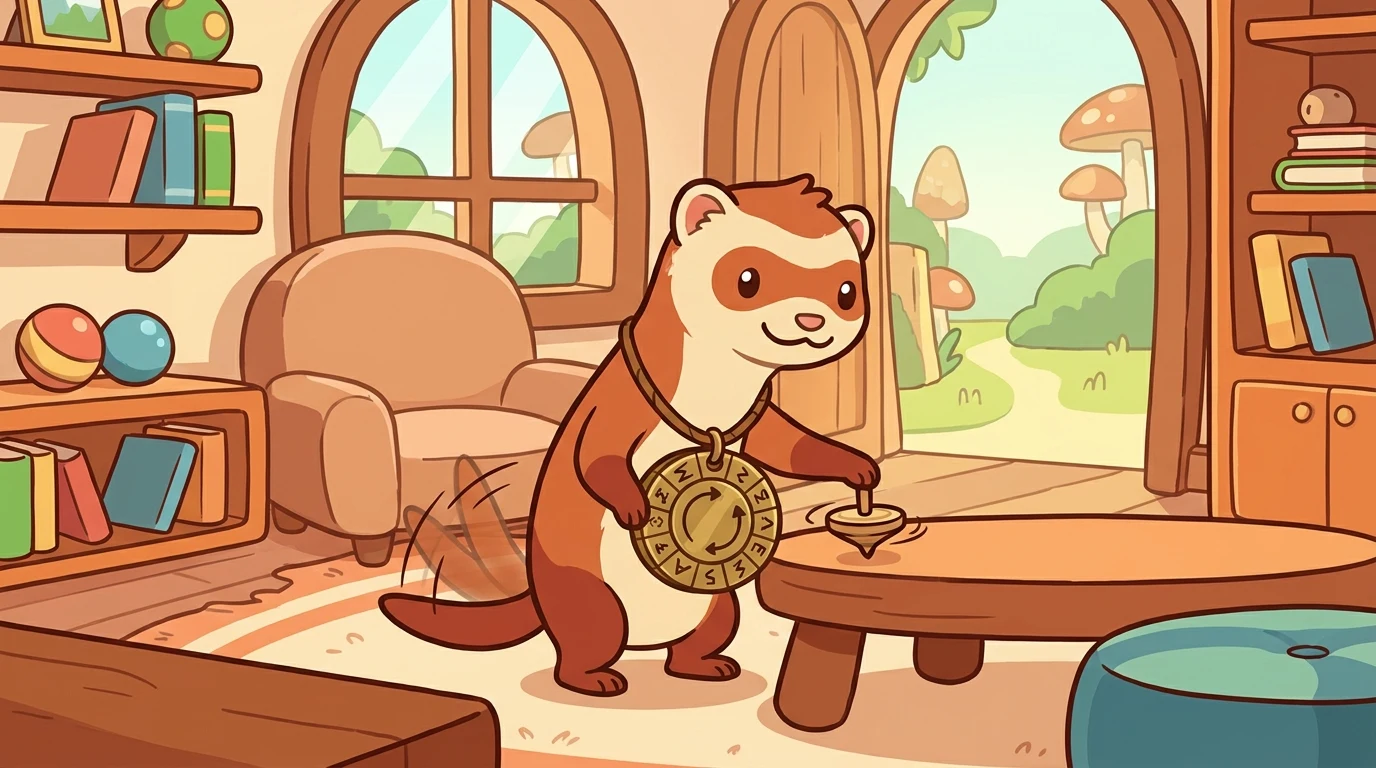
Her special thing was the brass cipher-wheel. It was a pendant. It had two shiny brass circles. One circle sat inside the other. Each circle had the alphabet carved on its edge. A tiny rivet held them together. The inner circle could spin around. Caesar would spin the inner circle. She would line up 'A' on the inside. Then she'd find 'D' on the outside. Now, every letter on the outer circle pointed to a new letter. It was shifted by three places. That's the *Caesar shift cipher*.
The cipher was named after a very old leader. His name was Julius Caesar. He used this trick to send secret messages. Our Caesar teaches the trick. She doesn't teach about the old leader himself.
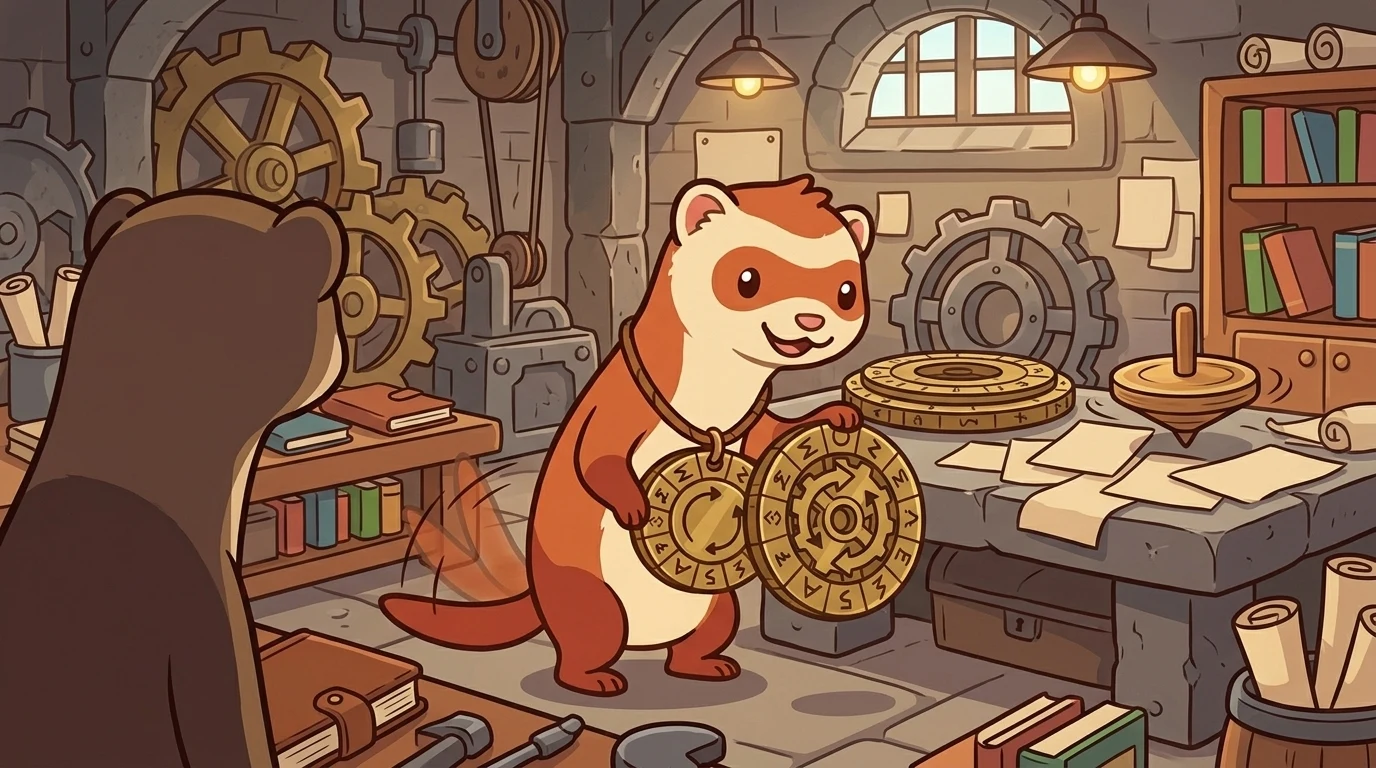
Caesar had one big rule. She never talked about spies. She never talked about secret wars. She always said, "Ciphers are just puzzles!" She would tap her wheel. "They are fun codes. Club codes. Codes for your friends." She shook her head. "Not spy stuff. Not army secrets. Not bad guys." She smiled. "Our puzzles are about pears. Or treasure hunts. Or escape rooms. They are for fun. Not for danger."
She taught how the shift worked. Every letter moved the same amount. If A moved to D, then B moved to E. And so on. All the way to Z. She showed how to lock a message. Then she showed how to unlock it. It was the same shift, just backwards. Or you could shift forward a lot. The shift number was the *key. Both people needed to know it. Without the key*, the message was just nonsense. Her wheel was a real tool. You spun it to set the shift. Then you read the new letters. It made the code easy to see.

Caesar grew up in a small village. Her family kept the village's secret recipes. They wrote them in code. This was a very old family tradition.
When Caesar was twenty-two, she walked to CipherForge. Cypher, the head of the place, asked her a question. "What is the *Caesar shift?" he asked. Caesar held up her wheel. "Two circles," she said. "You spin one. Every letter moves a certain number of spots." She paused. "It's a symmetric key*. Both people know the shift number." She kept talking. "It's the first step into codes. It's easy to break. You can try all 25 shifts." Caesar tapped her chin. "But its simple way is the lesson." Cypher nodded slowly. "You are appointed," he said.
The CipherForge ensemble
Caesar is part of CipherForge's distributed-narrative cast. Each character embodies a different curricular primitive; together they teach the full subject.
-

Mask
Atbash + general monoalphabetic substitution (every letter has a fixed substitute)
-
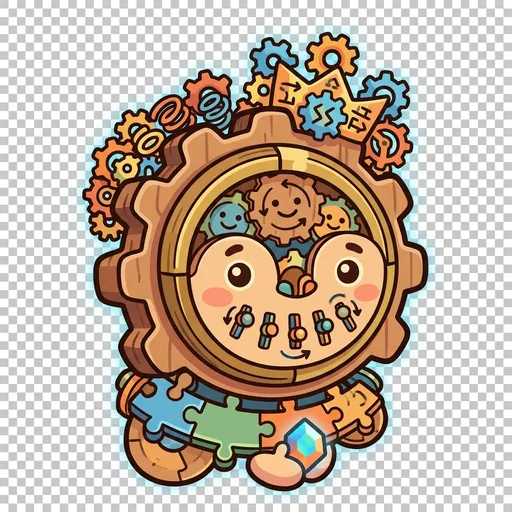
Vigenère
Vigenère / polyalphabetic keyword cipher (the Caesar-on-a-rotating-keyword pattern)
-

Echo Pair
Playfair digraph cipher (letters encoded in pairs through a 5×5 grid)
-
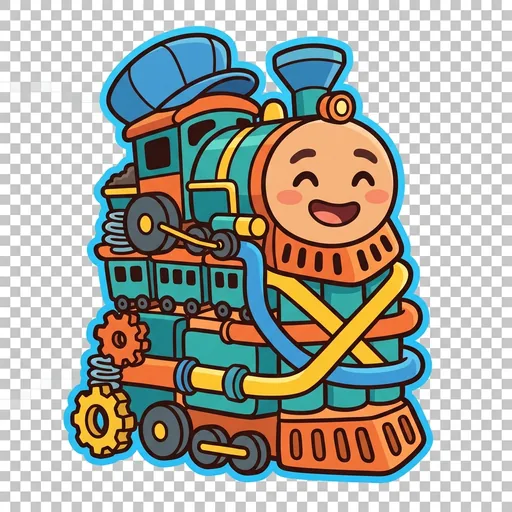
Rail
Rail-fence + columnar transposition ciphers (rearrange letter order without changing the letters themselves)
-

Tally
Number-based codes (A1Z26, ASCII, binary, book ciphers — any mapping that converts letters to numbers)
-

Sift
Frequency analysis + cryptanalysis-by-statistics (the cipher-breaking method, not a cipher itself)
-

Lattice
Modern cryptography fundamentals — XOR, public-key concept, hashing (the irreversible / asymmetric family)
-

Hollow
Hides a secret message inside something ordinary, so nobody even knows there is a message to look for.
-

Tome
Keeps a shared code-book where whole words stand for secret words, so only someone with the same book can read the note.