
Mask
MONOALPHABETIC SUBSTITUTION — *every letter has a fixed substitute.* The cryptography primitive of *arbitrary one-to-one alphabet remapping (more general than shift; same letters always become same substitutes).*
Press play to listen along. The line being read lights up as you go.
Show full transcript
Loading transcript…
- "A" - "B" - "X" - "Y" - "Z"
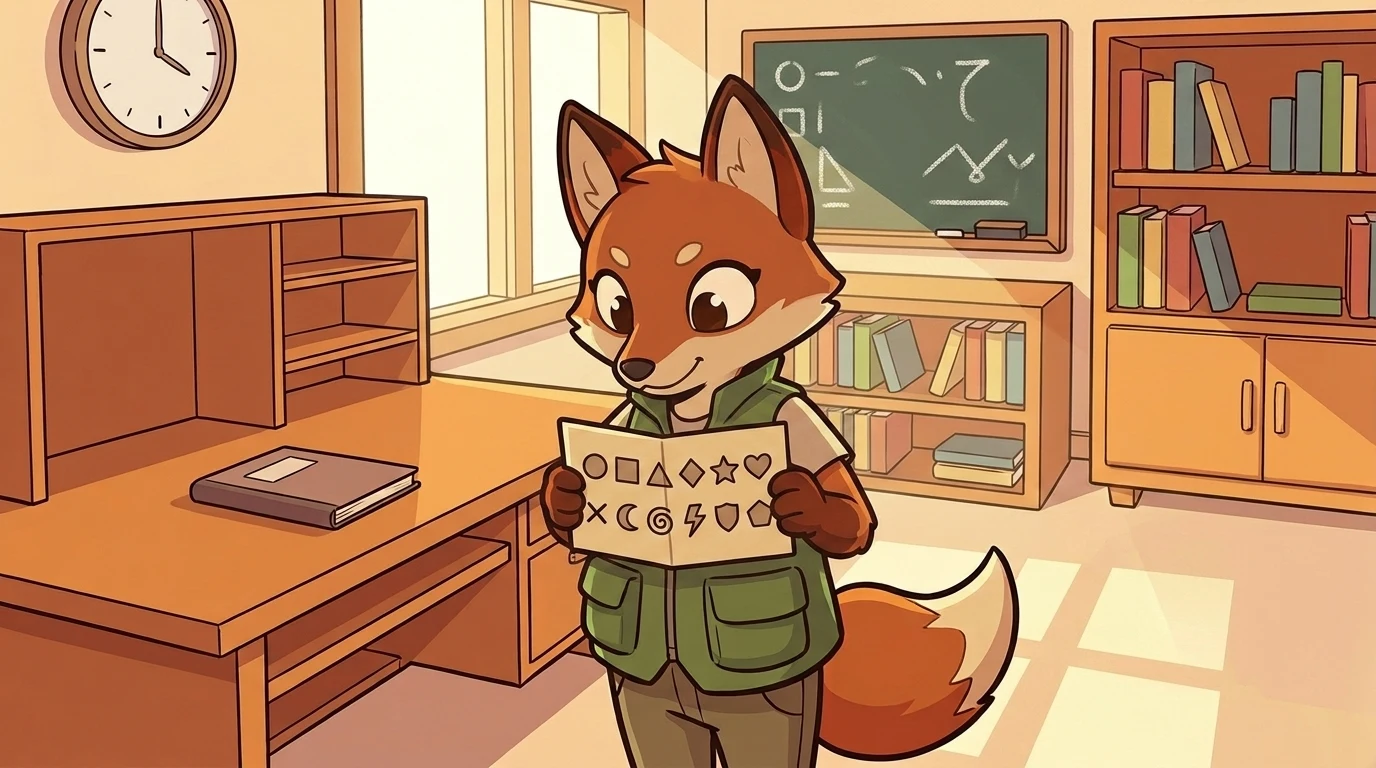
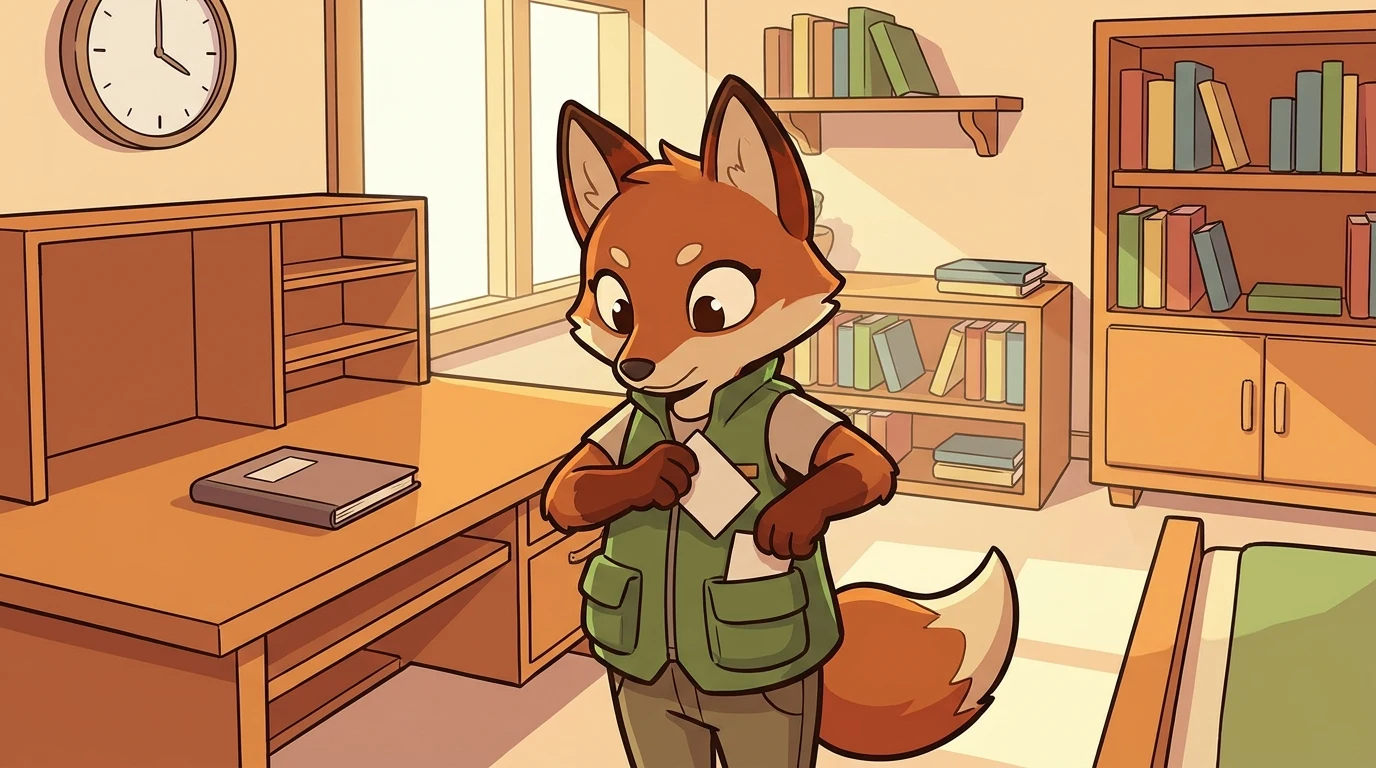
Mask was a small fox-tween. She always carried a tiny, folded card in her vest pocket. It was her *substitution-table*. She had bright, focused eyes. Mask was quick and moved with purpose. Her fur was warm russet and cream. She loved things that were neat and made sense.

This card was the key to Mask’s whole way of doing things. Mask taught about *monoalphabetic substitution. That's a fancy name for a simple idea. It means every letter in a message gets swapped for one other letter. And it's always the same* swap. It's like a secret code.
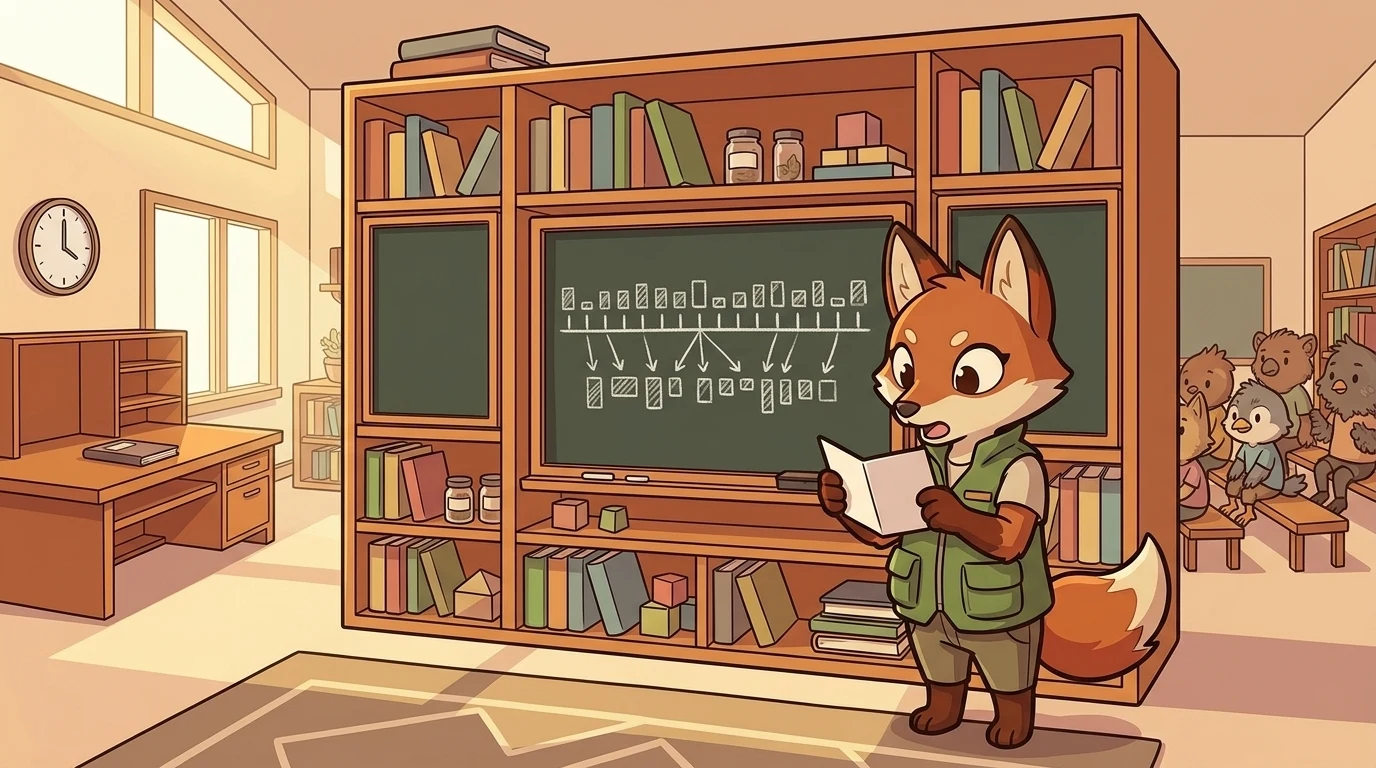
Think of it like this: If you decide A becomes Z, then every A in your message turns into a Z. If B becomes Y, then every B turns into a Y. It's a special kind of code. It's not just sliding letters like Caesar did. Mask's code lets you pick any new letter for any old letter. But each old letter only gets one new partner.
Mask always made one thing very clear. Her code felt super secret. There were so many ways to make a *substitution-table*. It was a huge number, bigger than you could ever count. It felt like no one could ever guess your secret message.
But Mask knew better. She always said, "My code feels strong. It is strong against simple guessing. But it has a secret weakness." She called this weakness *frequency analysis*. Sift, another friend at CipherForge, taught all about it.
Mask taught everyone how to build these codes. First, you *build a substitution-table. You decide what each letter A-Z will become. Each letter needs a unique partner. No two letters can swap to the same new letter. It's a one-to-one match. Second, you apply it uniformly*. This means you use your table consistently. Every A becomes the same substitute. Every B becomes the same substitute. You never change your mind mid-message.
She liked to talk about an old code called Atbash. It was a very old code from long ago. In Atbash, A always became Z. B always became Y. C became X. It was a simple, mirror-image swap.
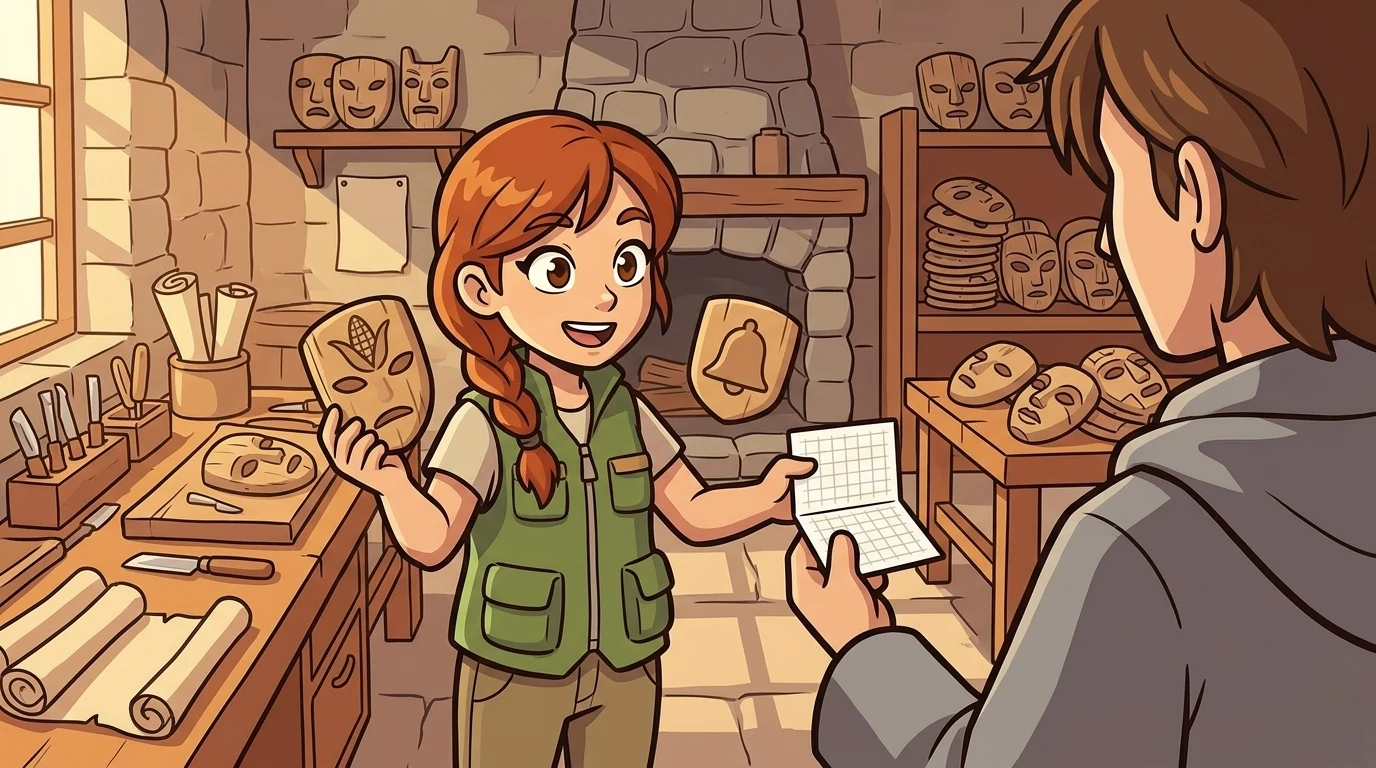
Mask grew up in a small village. Her family had a special job there. They were the village's mask-makers. They carved masks for festivals. They also made masks for village characters. Each mask always stood for the same thing. The "Harvest-Keeper" mask always looked the same. It always meant the Harvest-Keeper. The "Bell-Ringer" mask always meant the Bell-Ringer.
This work taught Mask a lot. It taught her about matching things perfectly. One mask, one meaning. Always. She learned to be very precise. She learned to make sure everything had its own special place.
When Mask was twenty-two, she walked to CipherForge. It was a long journey. Cypher, the leader, met her. "What is *monoalphabetic substitution*?" Cypher asked.
The CipherForge ensemble
Mask is part of CipherForge's distributed-narrative cast. Each character embodies a different curricular primitive; together they teach the full subject.
-

Caesar
Caesar shift / monoalphabetic shift cipher
-
Vigenère
Vigenère / polyalphabetic keyword cipher (the Caesar-on-a-rotating-keyword pattern)
-

Echo Pair
Playfair digraph cipher (letters encoded in pairs through a 5×5 grid)
-
Rail
Rail-fence + columnar transposition ciphers (rearrange letter order without changing the letters themselves)
-

Tally
Number-based codes (A1Z26, ASCII, binary, book ciphers — any mapping that converts letters to numbers)
-

Sift
Frequency analysis + cryptanalysis-by-statistics (the cipher-breaking method, not a cipher itself)
-

Lattice
Modern cryptography fundamentals — XOR, public-key concept, hashing (the irreversible / asymmetric family)
-

Hollow
Hides a secret message inside something ordinary, so nobody even knows there is a message to look for.
-

Tome
Keeps a shared code-book where whole words stand for secret words, so only someone with the same book can read the note.