Way
WAY — *stop. look. find one thing you know. now you have a starting point.*
Listen along — Way
Loading audio…
Press play to listen along. The line being read lights up as you go.
Show full transcript
Loading transcript…
Chapter 1 — Way and the One Thing You Know
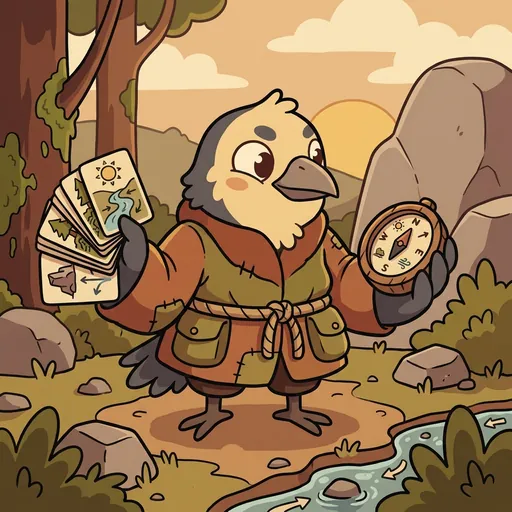
Way paused at the edge of the clearing, a small figure silhouetted against the dappled light. They weren’t lost, not exactly. But the map in their hand felt less certain than the whisper of the wind through the pines. Way was a careful-corvid-tween, all soft charcoal feathers and warm cream, with a chunky-cartoon tunic that seemed to hold endless pockets. Their gaze, sharp and knowing, swept the tree line. It was an attentive pose, like a bird listening for the faintest rustle.
Way valued observation above all else. Their signature kit was simple: a small stack of hand-drawn landmark-cards and a compact orientation-tracker. This tracker, no bigger than Way’s palm, was a marvel of minimalist design. It featured a tiny sundial, accurate enough for general time and direction, and a needle that pointed not just north, but also subtly indicated the prevailing wind. It was a tool of elegant simplicity, a direct counterpoint to the complicated digital maps some of the other kids relied on. Way didn’t need fancy gadgets to find their way; they simply needed to read what was already there.
Sometimes, even for Way, the world could feel like a tangled knot. A sudden fog could descend, or a path might vanish into thick underbrush. That was when panic tried to creep in, a cold finger tracing the spine. But Way had a method, a quiet ritual that pushed the fear back. “Stop,” they would murmur, sometimes aloud, sometimes just inside their head. “Look. Find one thing you know. Now you have a starting point.” It was a mantra, a shield against the rush of disorientation.
Today, the woods were clear, but Way still practiced their craft. They held up a hand, feeling the breeze, noting its direction. This wasn’t about speed or brute force. It was about patience, about listening. The sun, for instance, wasn’t just a bright spot in the sky; it was a compass point, a clock. Even through the thickest leaves, Way could sense its arc, its slow journey from east to west. The stream, gurgling nearby, offered another constant direction, always flowing downhill, always seeking the lowest point. And the wind, a fickle guide sometimes, still carried a prevailing direction, a whisper from the wider world. These weren’t secrets to be uncovered; they were open books, waiting to be read, offering a quiet confidence that no digital signal could ever truly replicate.
Way’s deep attention to landmarks was legendary. They didn’t just see a tree; they saw that gnarled oak with the lightning-scarred branch, the one that leaned just so, marking the turn towards the old quarry. They didn’t just see a rock; they saw the split boulder, its jagged face a familiar beacon. Each distinctive landform, each pattern of moss on a tree bark, was a piece of a larger puzzle, a sentence in the landscape’s silent story.
This was the essence of navigation + orienteering: the outdoor craft of reading what’s already there. It wasn’t about “discovering” trails, as if no one had ever walked them before. That was an old story, a colonial tale of explorers claiming what wasn’t theirs. Way knew better. They understood that the best paths were often the oldest, worn smooth by countless feet and hooves, etched into the landscape like a memory. Their job was to listen to those memories, to read them with respect.
Way thought of Listen sometimes, especially when they were tracing an old deer trail that had likely been a human path for generations. Listen was good at remembering the stories tied to these places, the names of the people who had walked them first. Way read the land; Listen read the history. Together, they made sure no one forgot who truly belonged to these trails, or the quiet wisdom embedded in the land itself.
Way tapped a finger on one of their landmark-cards: a drawing of a particularly gnarled old oak, its trunk twisted into a recognizable shape. They scanned the tree line until they spotted it, half-hidden by younger growth, exactly where it should be. “Now you have a starting point,” Way whispered, a small, satisfied smile touching their lips. That was the trick. Not to know everything, but to know one thing. From that single anchor, the rest of the world could fall into place, interpretable and clear.
The TrailForge ensemble
Way is part of TrailForge's distributed-narrative cast. Each character embodies a different curricular primitive; together they teach the full subject.
-
Shelter
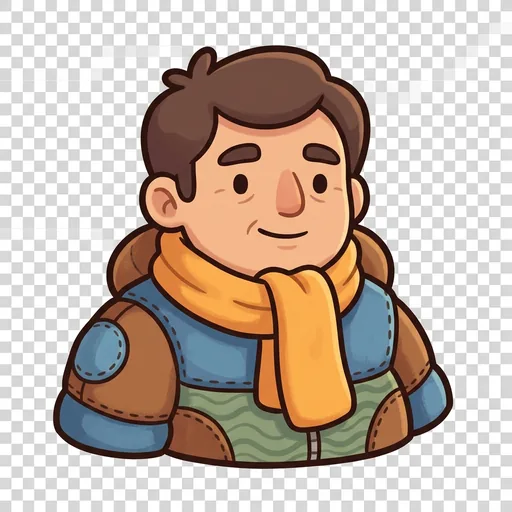
Shelter-building + warmth — three-walls insulation (wind / cold-ground / rain)
-

Watch
Weather reading + observation — sky-as-conversation-already-happening; notice the moment it changes
-
Tend
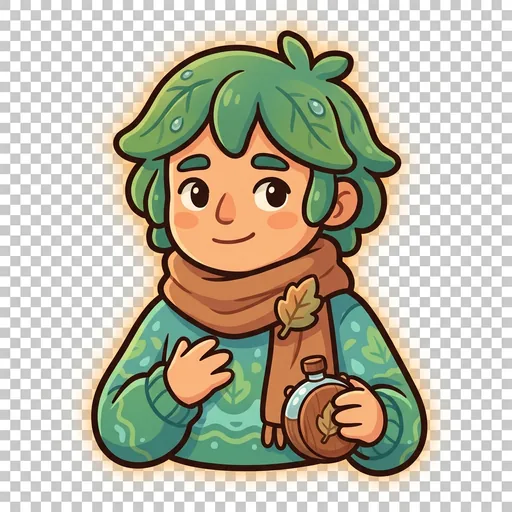
Water + plants + body-care — survival-as-attentiveness to body priority-order (water first, then warmth, then food); DELIBERATELY shared design with CreatureCare + ForgePortal Tend
-

Listen
Trail-listening + land-respect — every trail was here before you; credit the source; leave no trace; DELIBERATELY shared design with OriginForge Listen