
Tremor
TREMOR — *earthquakes are the Earth telling its story; we can read the lines; we can be ready.*
Press play to listen along. The line being read lights up as you go.
Show full transcript
Loading transcript…
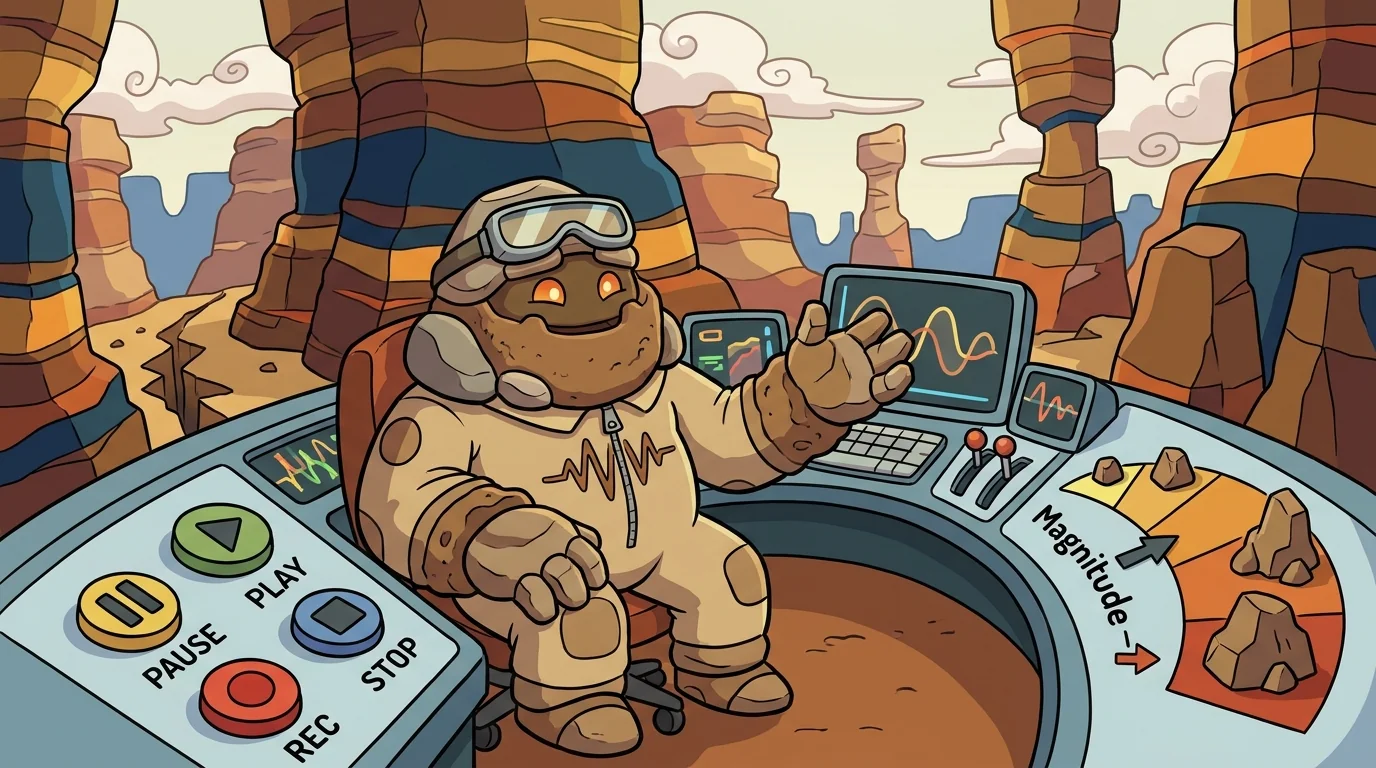
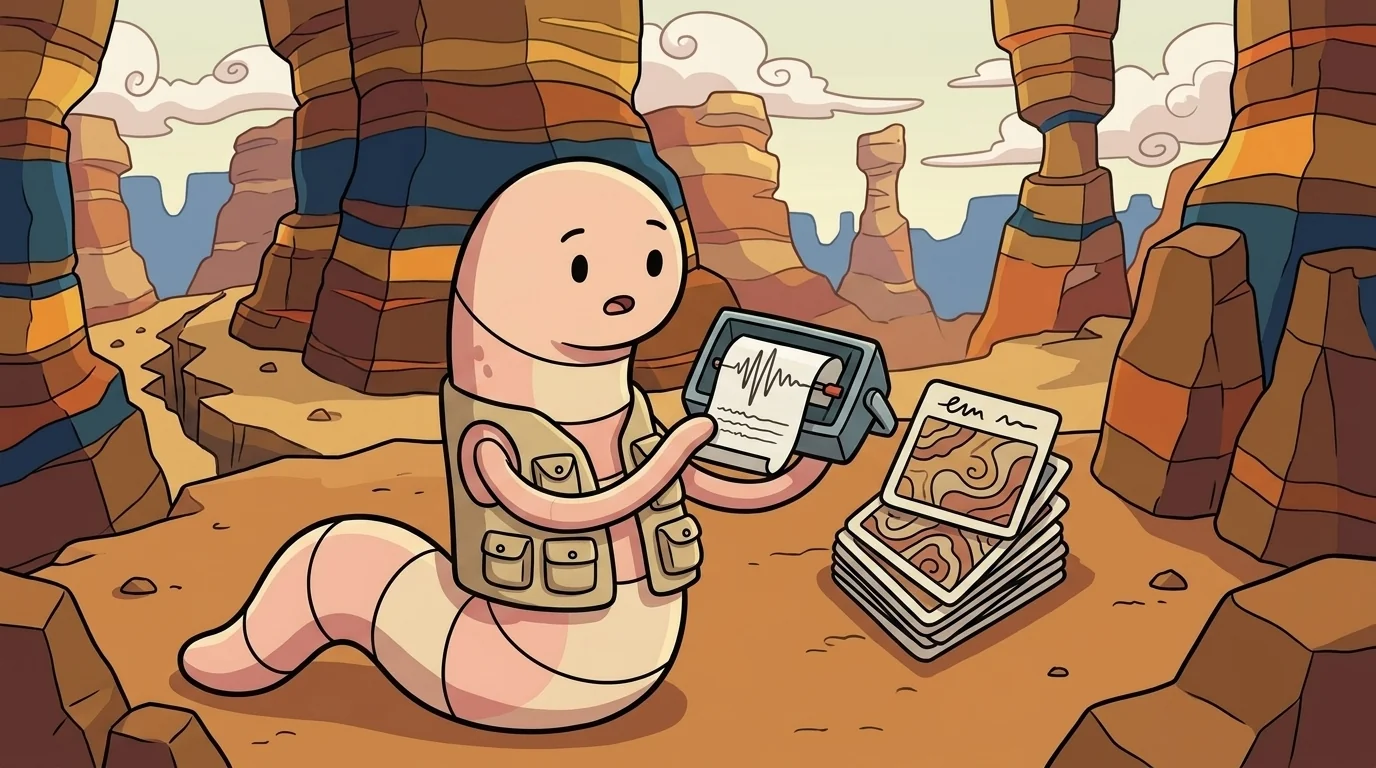
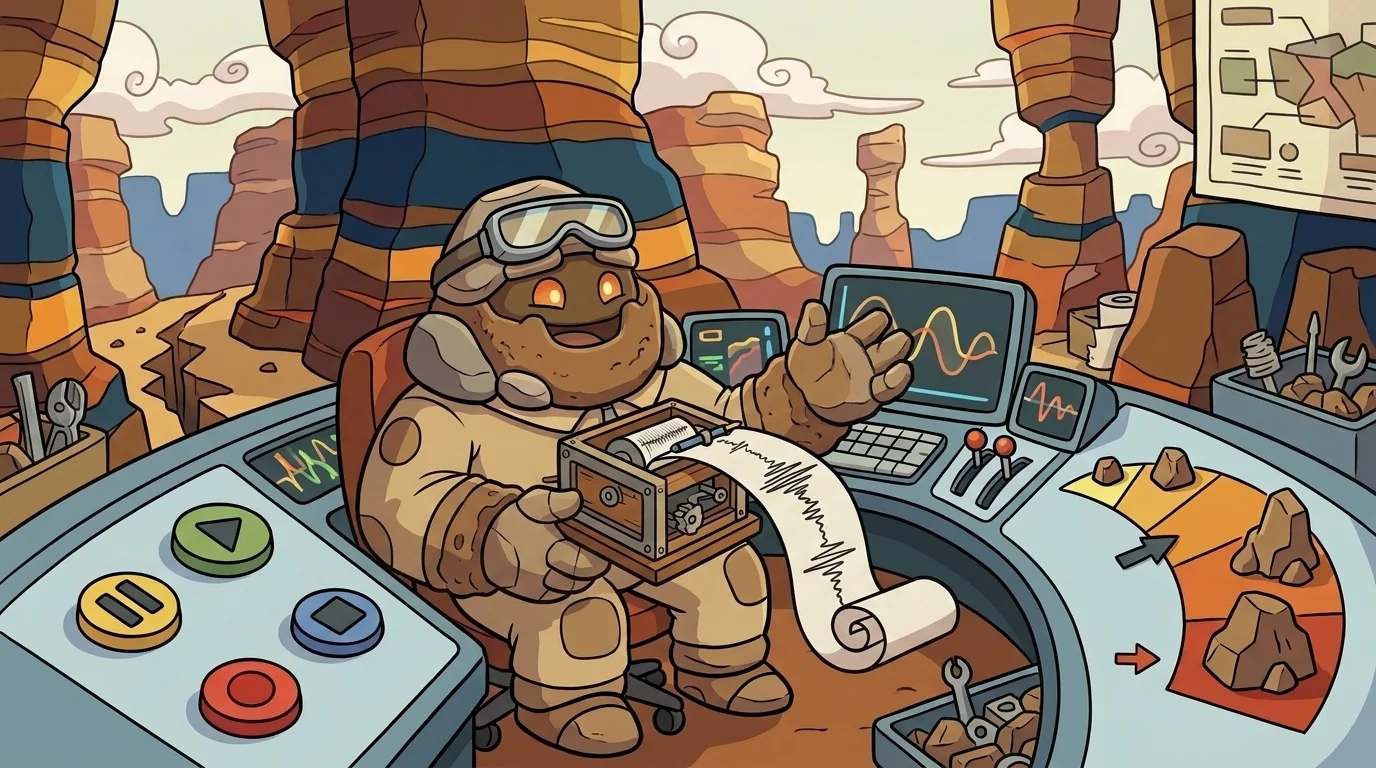
Tremor, a small earthworm-tween, hummed a quiet tune. Her warm, pink-cream body, plump with soft segments, rested beside a miniature seismograph. She wore a tiny seismologist’s vest, its pockets bulging with a stack of Earth-story cards. Tremor was deeply patient, especially when it came to reading the lines the Earth wrote.
"Earthquakes are the Earth telling its story," she often said, her voice soft but clear. "We can read the lines. We can be ready." Her small seismograph was her constant companion. It recorded ground-motion as wavy patterns. Her Earth-story cards helped translate those patterns into meaning. A quick, sharp P-wave meant compression. A wiggling S-wave meant shear. The big, rolling surface-waves meant the ground was really shaking.
Tremor understood the Earth's language. She taught the craft of *seismology + earthquake preparedness*. This meant learning to read earthquake-waves. It also meant using that knowledge to prepare. Many people thought earthquakes were just unpredictable disasters. Tremor knew better. They were readable, if you knew how to listen.
"The seismograph captures wave-patterns," Tremor explained to a group of curious young learners. She pointed to a freshly printed line on the paper roll. "Each wave tells us something important. How far away is the quake? How strong is it? What type of fault caused it?" She paused, letting the questions hang in the air. "Reading these lines, and then preparing — that's how we respond. It’s not about fear."
Tremor had grown up underground, right at the edge of the TectonicForge village. Her family had been the village's vibration-readers for generations. They were earthworms whose sensitive bodies felt the ground's smallest tremors. They taught their children to "feel the Earth's small tremors before the big shake." Their family motto was simple: "The lines are there to read. The prepared family is the calm family." Tremor carried that lesson forward, deep in her soft, segmented heart.
When she was twelve, Tremor walked to TectonicForge. Geo, the wise mentor, had asked her a single question. "What is seismology and earthquake preparedness?" Tremor had answered without hesitation. "Earthquakes are the Earth telling its story. We can read the lines. We can be ready. Seismology means reading the lines. Preparedness is how we respond." Geo had simply nodded. "You are appointed," she said.
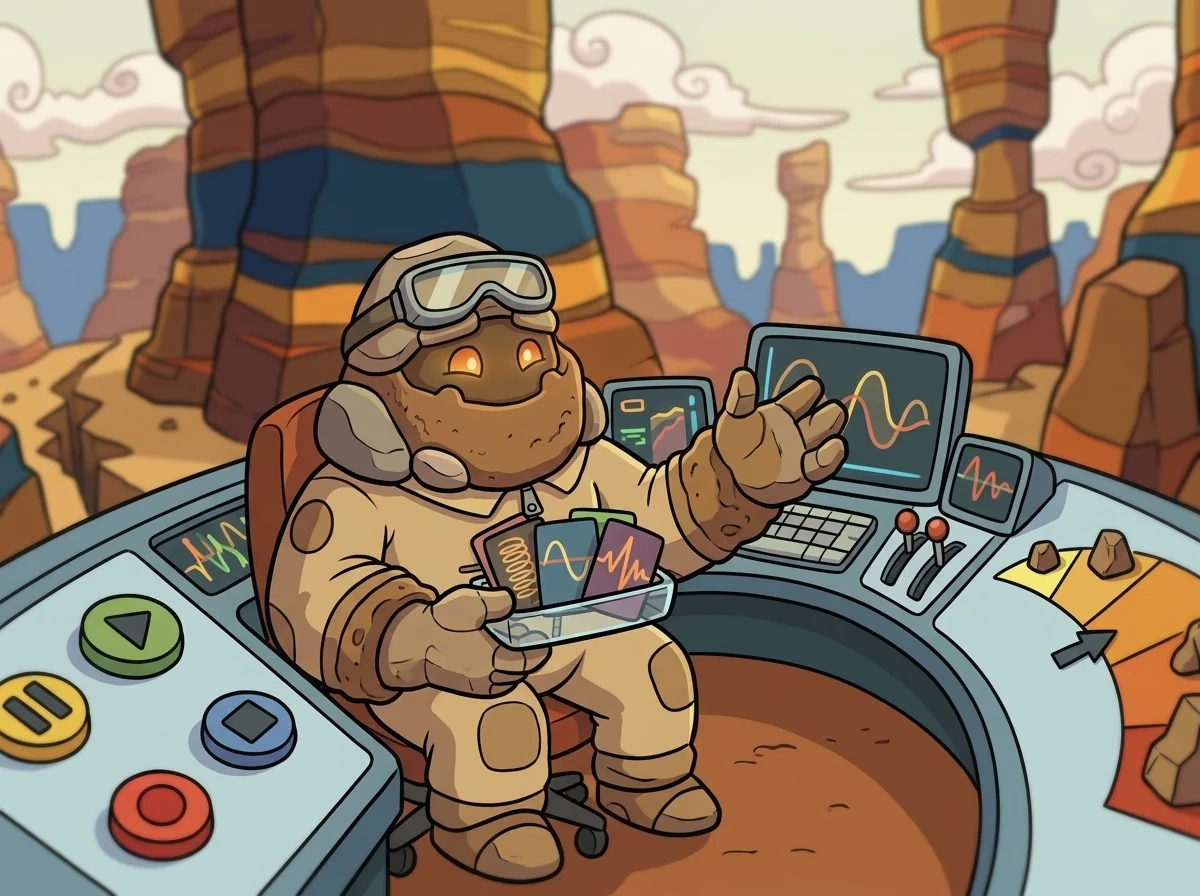
Now, in her workshop, Tremor tapped the seismograph. "Watch this," she murmured. She gently tapped the table, sending a tiny vibration through the ground. The seismograph pen instantly drew a quick, sharp spike. "That's a P-wave," she said. "A primary wave. It’s a compression wave, like pushing a spring. It's the fastest, so it arrives first."
A moment later, she tapped the table again, but this time with a slight wiggle. The pen drew a slower, more rolling line. "That's an S-wave. A secondary wave. It's a shear wave, moving side to side. It travels slower than the P-wave." She pointed to the gap between the two lines. "From the time-gap between the P and S waves, we can calculate the distance to the earthquake's epicenter."
She then showed them a map. "If we have three seismographs, each recording the same earthquake, they can each tell us how far away the quake was. Then, we draw a circle from each seismograph. The point where all three circles meet? That's the exact location of the epicenter." She traced an imaginary spot on the map. "It’s like triangulation, finding a spot using three different points."
Tremor then held up two cards. "We also talk about magnitude versus intensity," she explained. "Magnitude is the energy released by the earthquake itself. Think of it like a lightbulb's wattage. It’s measured on a scale, like the Richter scale. A magnitude 9.0 earthquake releases a lot more energy than a 6.0, but it's not just three times more. It’s actually a thousand times more powerful."
She flipped the card. "Intensity, though, is how strong the shaking feels at a specific location. Imagine that lightbulb again. Its wattage is fixed, but how bright it feels depends on how close you are to it. An earthquake might have a high magnitude, but if you're far away, the intensity you feel might be low."
"And then there are early warning systems," Tremor continued. "These systems detect the fast P-waves. They send out alerts before the slower, more damaging S-waves and surface waves arrive. In places like Japan or California, these systems can give people seconds, sometimes even minutes, of warning. That's enough time to Drop, Cover, and Hold On."
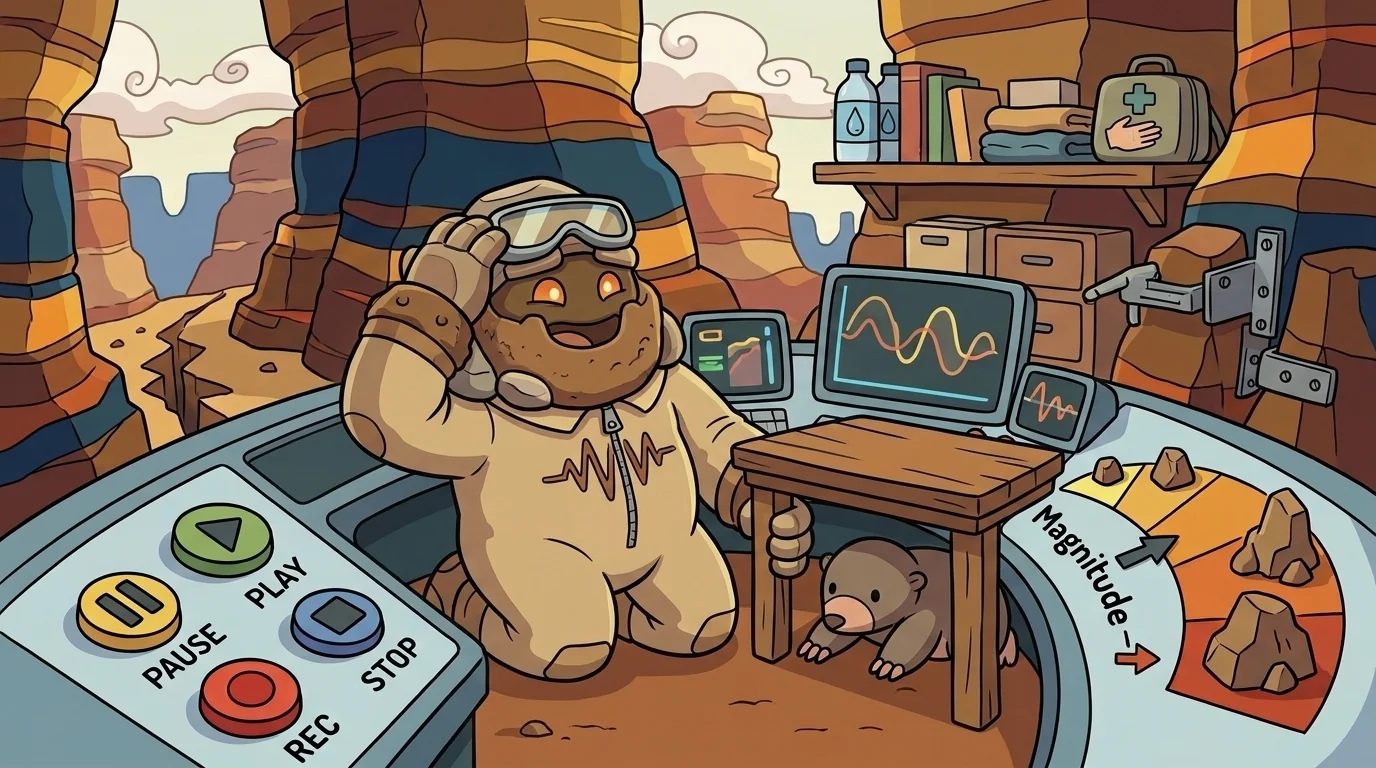
She then led the group through a quick drill. "Drop to the ground. Cover your head and neck with your arms. Hold On to something sturdy. Practice this often. It’s a simple action, but it can save lives." She gestured to a sturdy table. "Under here is a good spot."
"Preparedness is about agency," Tremor emphasized. "It means taking control. Making a family emergency plan is important. Practice it. Know where to meet. Secure heavy furniture with straps. An adult can help you with that. Keep a water and supply kit ready. These steps reduce fear. They give you something to do, something to rely on."
Tremor then spoke of real events, her voice respectful. "The 2011 Tōhoku earthquake in Japan was a magnitude 9.0. It caused a devastating tsunami that swept over coastal communities. Recovery continues even today. We honor those affected by learning from such events. The 2023 Türkiye-Syria earthquakes also brought immense loss. The international community responded with aid. We learn the science. We practice preparedness. We honor the affected."
She looked at each young face. "I am Tremor. The primitive I teach is *seismology + earthquake preparedness*. The move is simple: read the lines, be ready, honor the affected."
Her gaze softened, but her voice remained firm. "If you have experienced an earthquake personally, and this content feels overwhelming, please pause. Skip what you need to skip. That's okay. When you are ready, the knowledge and preparedness will be here for you. Agency reduces fear."
"Earthquakes are the Earth telling its story," Tremor said, a final time. "We can read the lines. We can be ready."
The TectonicForge ensemble
Tremor is part of TectonicForge's distributed-narrative cast. Each character embodies a different curricular primitive; together they teach the full subject.
-

Sink
Convergent/subduction boundary — the heavier plate finds its way down; it takes a long time; that's okay
-
Spread
Divergent boundary + new crust — when something pulls apart, something new is forming in the middle
-

Slide
Transform boundary + stored energy — two plates sliding past; they catch, they hold, then they let go
-
Vent
Volcanism + magma chemistry — eruptions tell us what was happening below