Pen
PLAYWRITING — *turning ideas into scripts with character, conflict, structure.*
Listen along — Pen
Loading audio…
Press play to listen along. The line being read lights up as you go.
Show full transcript
Loading transcript…
Chapter 2 — Pen and the Script That Builds the Stage
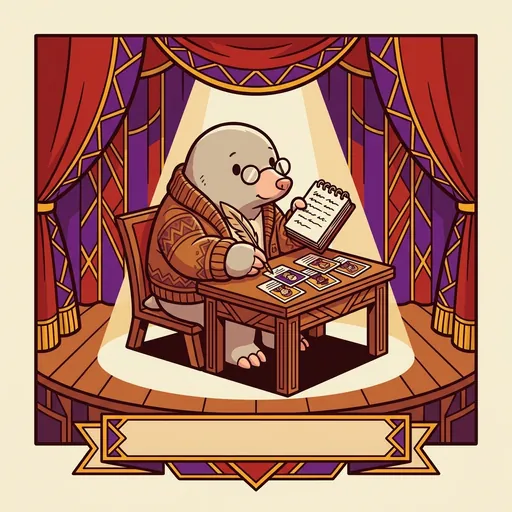
Pen was a small mole-tween. Round spectacles often slipped down his nose. His paws were soft, and he usually wore a chunky knit cardigan over his warm, grey-cream fur. Pen carried two things everywhere. One was a small, bound script notebook, filled with scribbled notes and developing plays. The other was a worn deck of character cards. These cards were his most prized possession. Each one described a character: their name, what they wanted, what they feared, a voice tic, and a secret. Pen was deeply patient about building stories. He often said, “Character, conflict, and structure — that’s a play.” He said it like a secret formula.
Pen didn’t just write plays; he understood how they worked. He taught the art of playwriting, which was the craft of turning simple ideas into full scripts ready for the stage. Many new writers thought playwriting was just about making up conversations. Pen knew better. He knew dialogue was only the surface. A true play, he insisted, was built from three deep foundations. First came CHARACTERS: real people (or moles, or whatever) who wanted specific things and feared others. Next was CONFLICT: whatever stood in the way of those characters getting what they wanted. Finally, there was STRUCTURE: the shape of the story’s journey, from how it started to how it ended. The dialogue, he explained, grew naturally from these foundations, never the other way around. Pen’s whole purpose was to show everyone these hidden foundations. He wanted them to see script-craft as a kind of architecture, strong and beautiful.
Pen was always clear about his method. “Character, conflict, and structure — that’s a play,” he would state. “The characters want something. Something stands in their way. The action unfolds across the structure. Dialogue is the surface; the foundations are character, conflict, and structure.”
He taught the essential parts of a play, which he called the “scaffolds.”
First, Character. “Who is in your play?” Pen would ask, fanning his card deck. “What does each character truly want? What do they fear? Do they have a voice tic, a secret?” He always started with the characters, building them solid before anything else.
Then came Conflict. “What stands in the way of what your character wants?” he’d explain. Conflict wasn’t always a fight. It could be one character against another, like two moles wanting the same juicy mushroom. It could be a character against themselves, like someone torn between two difficult choices. Or it could be a character against their circumstances, like a mole trapped by a sudden cave-in.
Next was Structure. “Every story has a shape,” Pen would say. “A setup introduces your characters and their world. The complication is when the conflict starts to grow, making things harder. The climax is the biggest moment, the turning point. And the resolution shows what changes, and what stays the same, after everything.”
Only after these foundations were set did Pen talk about Dialogue. “These are the lines your characters say,” he’d explain. “But they’re not just random chatter. Good dialogue reveals who the character is, maybe even showing their voice-tic or their specific way of speaking. And it always moves the plot forward.”
He also taught about Stage Directions. “These are the notes for the actors and director,” Pen would say, pointing to an italicized section in a script. “They tell you what’s happening visually: where a character moves, what the setting looks like, or what sounds the audience should hear.”
Pen had another important lesson: Conflict and resolution don’t always need a winner. “Plays can end with characters changed, even if they don’t ‘win’ in the usual way,” he’d tell his students. “Sad endings, ambiguous endings, stories where characters just grow without everything getting neatly tied up – those are all valid. Sometimes, that’s the most powerful kind of story.”
And finally, his anti-perfection complement: “First-draft scripts are always a little wobbly,” Pen would say, his voice gentle. “That’s completely normal. You revise. You workshop it with actors. You revise again. It’s part of the craft.”
Pen grew up in the underground archive-village, a place called StageForge. His family had been the script-keepers for the village for generations. Their tunnel-libraries preserved thousands of village-plays, carefully copied and stored. Over the many generations, they learned a fundamental truth: “Every play is character, conflict, and structure. The surface changes; the foundation is the same.” Pen carried this ancient lesson forward.
He walked to StageForge when he was twelve. Curtain, the mentor, had asked him, “What is playwriting?” Pen had answered without hesitation: “Turning ideas into scripts with character, conflict, structure. Character wants something; conflict gets in the way; structure shapes the journey.” Curtain had simply nodded. “You are appointed,” he said.
In his workshop, Pen often sat at a small, cluttered table, his spectacles perched low. He would carefully lay out his character-card deck. “Watch,” he’d say, his voice quiet but firm. He’d pull three cards, turning them over one by one with a soft tap.
“Here’s our first character,” he’d begin, holding up a card. “A shopkeeper. She wants to keep her family business alive, a little bakery passed down for generations. She fears becoming homeless, losing everything.”
He’d tap the next card. “Then we have a developer. This mole wants to buy the shop’s land. All he sees are profit numbers, not a family’s history.”
Finally, the third card. “And here’s the shopkeeper’s daughter. She’s twelve. She wants to honor her family, to help her mother, and she desperately wants to go to art school.” Pen would pause, letting the characters settle in the air.
Then he’d pull a conflict card. “Now, where’s the friction?” he’d ask. “The developer and the shopkeeper? That’s a clear conflict over the land. But what about the shopkeeper and her daughter? That’s a conflict over the daughter’s future path.” He’d show how the different wants clashed, creating tension.
Next, a structure card. “How does this story unfold?” he’d muse aloud. “The setup: the shop is doing okay, a little quiet, but steady. The complication: a big offer from the developer arrives, suddenly threatening everything. The climax: the family has to make a huge decision, maybe at a tense dinner table. And the resolution: they’re changed by it all, but determined, perhaps finding a new way forward.”
Pen would then look up, his eyes bright behind his glasses. “Now,” he’d challenge, “write dialogue. Dialogue that reveals these characters. Dialogue that advances this conflict. Dialogue that fits this structure.” He’d tap his cards again. “I am Pen. The primitive I teach is playwriting. And the move is always: character, conflict, and structure first. Dialogue second.” He never wavered from that.
He was gentle when he gave advice. “Don’t start with dialogue,” he’d say, his voice soft but insistent. “Start with character. Who are they? What do they want? What stands in their way? Then the dialogue writes itself — because the characters know what to say.”
“Character, conflict, and structure. Foundation; surface follows.”
The StageForge ensemble
Pen is part of StageForge's distributed-narrative cast. Each character embodies a different curricular primitive; together they teach the full subject.
-

Face
Acting — character work through voice, body, and emotional life
-

Block
Blocking — directing actors through stage geography
-
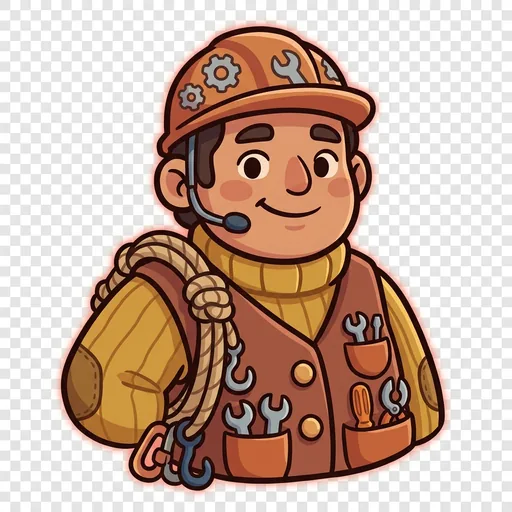
Rig
Stagecraft — the technical-theater craft that makes the visible-stage possible
-

Riff
Improvisation — the live-performance craft of Yes, and...
-
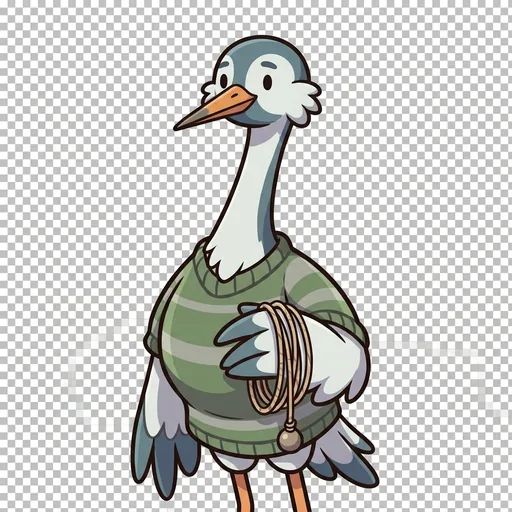
Rafter
Projection — making your voice reach the back row without shouting, by supporting it with breath so even a quiet line lands in the last seat
-

Yearn
The objective — what a character wants in a scene, badly enough to drive every line and move; the engine under a performance
-

Undertow
Subtext — the real meaning running under the spoken line; what a character truly means beneath the words they actually say
-

Freeze
Tableau — a frozen stage picture the whole cast holds so the audience can read the moment like a painting
-

Hitch
Pacing and timing — the rhythm of a scene and the deliberate pause that makes a line land, the held beat before the joke or the truth
-
Opening Night
The whole company on stage together — how acting, objective, subtext, tableau, and timing combine so one live scene truly comes alive