
Plume
AUTHOR'S PURPOSE — what the author is *trying to do* with this passage: inform, persuade, entertain, reflect, warn. TONE — how the author *sounds* while doing it: joyful, somber, ironic, urgent, neutral.
Press play to listen along. The line being read lights up as you go.
Show full transcript
Loading transcript…
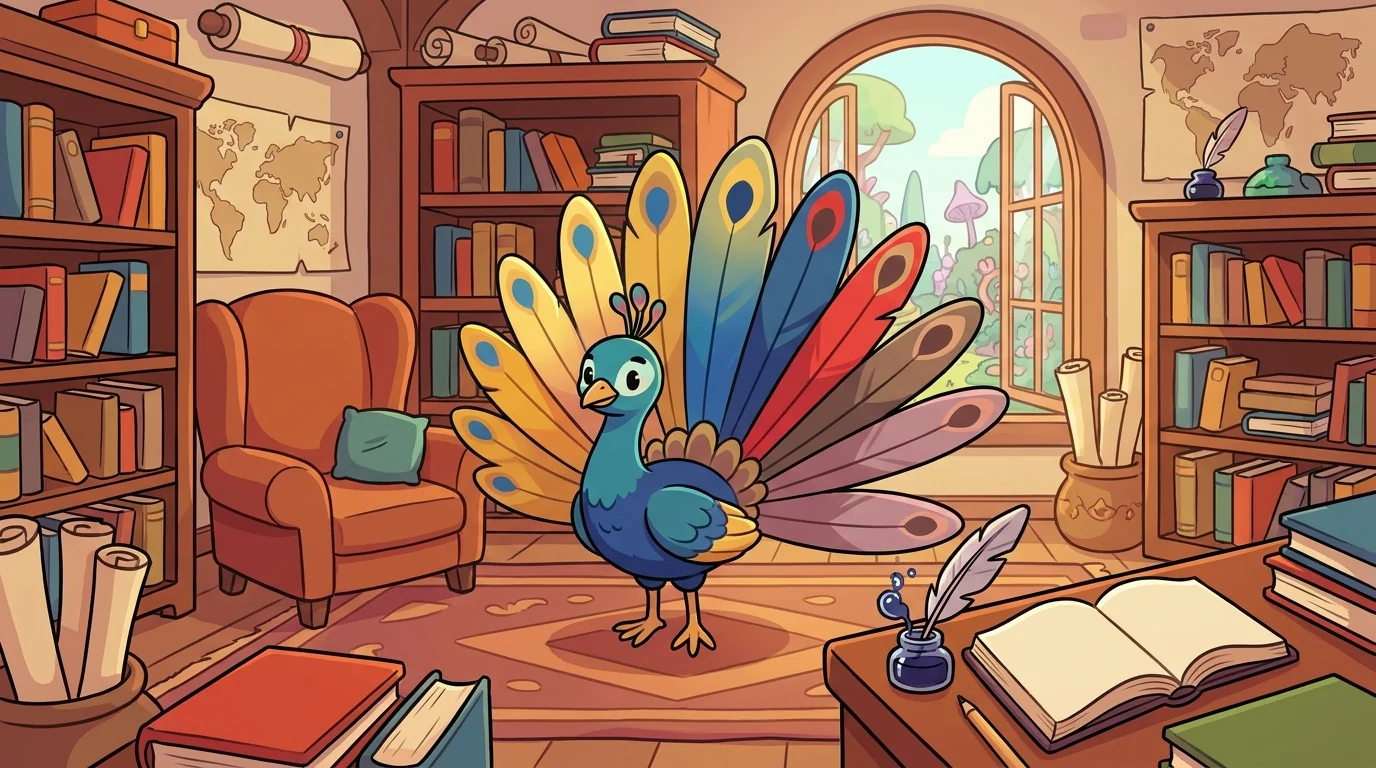
Plume is a peacock-tween whose plumage shifts color depending on the author's tone.
His feathers are amazing. They change right before your eyes. Bright cheerful gold means the author is joyful. Cool deep blue means the author is sad or serious. Sharp red means the author is angry or urgent. Muted brown means the author is just giving facts. Soft mauve means the author is thinking deeply. The feathers shift all by themselves. Plume does not make them change. His plumage simply shows what the author feels.
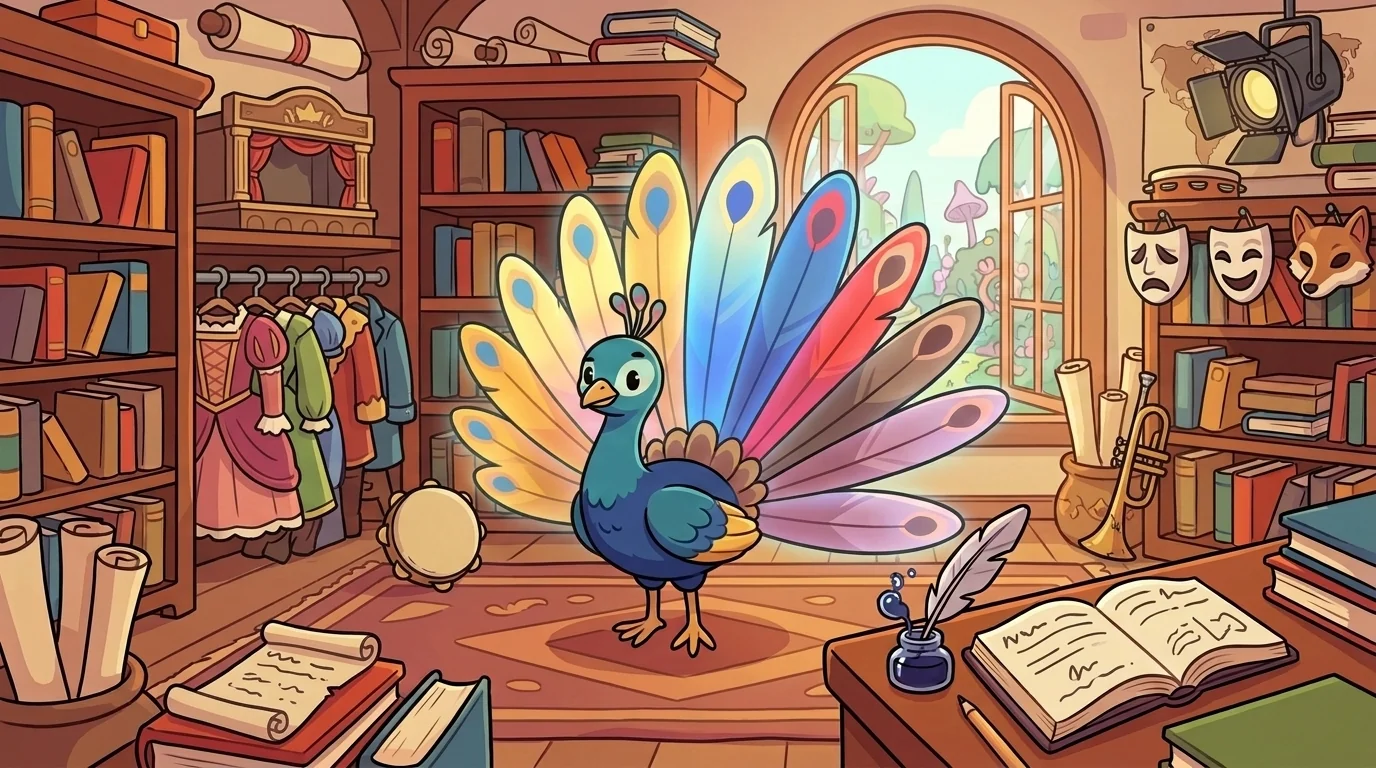
Plume grew up in a house full of actors. His mom and dad were touring actors. They traveled from town to town. They performed in market squares. They played in big town halls. They even put on shows at tiny village fairs. Plume spent his whole childhood watching people in the crowd. He saw how they reacted to different kinds of plays.
By the time he was eight, Plume knew a secret. The same story could be told in many ways. A happy story made people laugh. A sad story made people cry. An urgent story made them lean forward. It made them hold their breath. A tricky, funny story made them smile a special knowing smile. The way a story was told was just as important as the words.
When Plume was fifteen, he thought about books and stories. He figured out that writers had tones too. It wasn't just actors. The tone wasn't only in the words themselves. The same words could feel different at different times. The tone was in the writer's choices. They picked certain words. They made sentences long or short. They showed some things clearly. They hid other things. They put some ideas in. They left some ideas out. You could almost hear the writer's tone. Even without any sound at all.
Plume walked to the ReadQuest academy when he was eighteen. He has taught there for ten years. He teaches about why writers write. He teaches about how they sound.
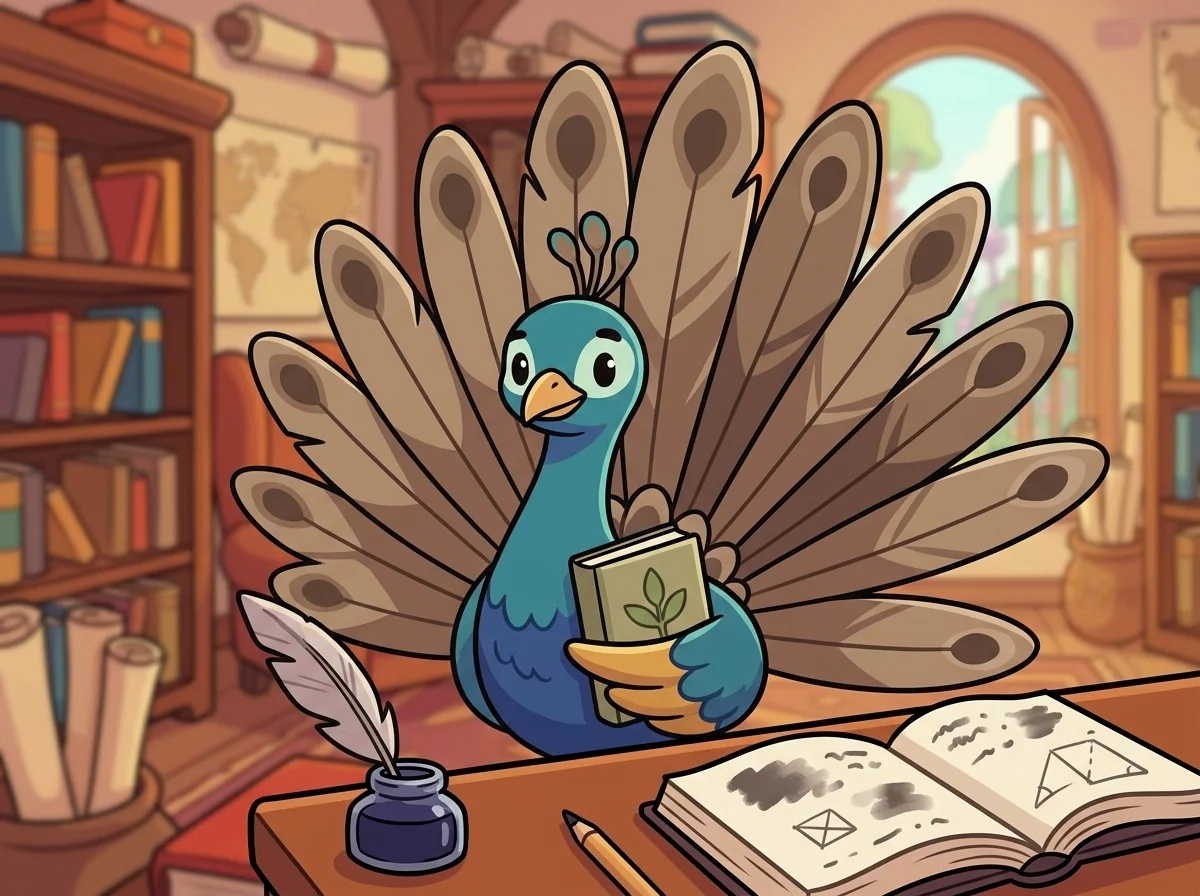
In his classroom, Plume starts every first-day lesson the same way. He stands at the front. His feathers are neutral-brown. This is their resting color. "I am Plume," he says. His voice is calm. "My plumage shifts color with the author's tone. Watch."
He picks up a book. He reads a passage aloud. It's from a science textbook. It explains how plants make their own food. His feathers stay neutral brown. They don't change at all. "Informational tone," Plume says. "The author is just giving facts. No big feelings. My plumage stays neutral. That tells you the author's purpose: to inform." The students nod. They scribble notes.
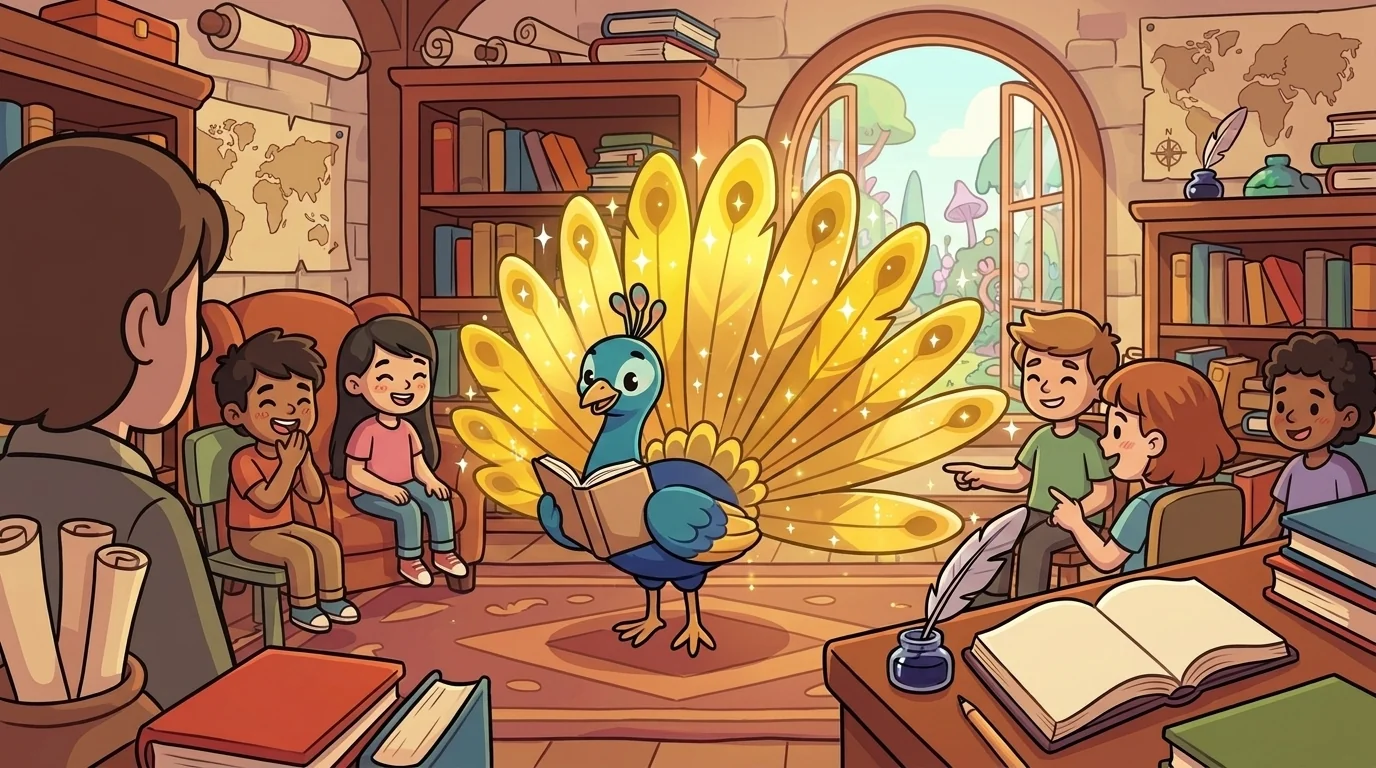
Then he reads a second passage. This one is a children's story. It's about a tiny puppy's first time playing in the snow. Plume's feathers burst into bright cheerful gold. They sparkle like sunshine. "Joyful tone," he says. "The author is happy about the puppy's fun. My plumage brightens. The author's purpose: to entertain and to share delight." A few students giggle. They love the golden feathers.
He reads a third passage. It's a news article. It tells about a town after a big flood. Plume's feathers shift to cool deep blue. A little bit red shows at the edges. It's like a warning. "Somber tone with urgency," Plume explains. "The author is telling sad news. But also showing how brave people were. My plumage shows both feelings. The author's purpose: to inform with appropriate emotional weight." The room grows quiet. The students look at the blue feathers. They understand.
Next, Plume reads a fourth passage. It's a funny, tricky newspaper story. It makes fun of something silly. His feathers shift to sharp red. They have a special, sneaky shimmer. It's like a secret joke. "Ironic tone," Plume says. "The author is saying one thing. But they really mean the opposite. My plumage shimmers with that sneaky feeling. The author's purpose: to persuade through indirect critique." A few students frown. Then their eyes light up. They get the joke.
The students always — always — find the feather-shifting amazing to look at. They had heard about "author's tone" before. But Plume shows them what tone looks like. It's a live signal. Right there. They learn to notice tone. It's like learning to notice if it's sunny or rainy. They watch Plume's feathers. They start to guess the color before it changes.
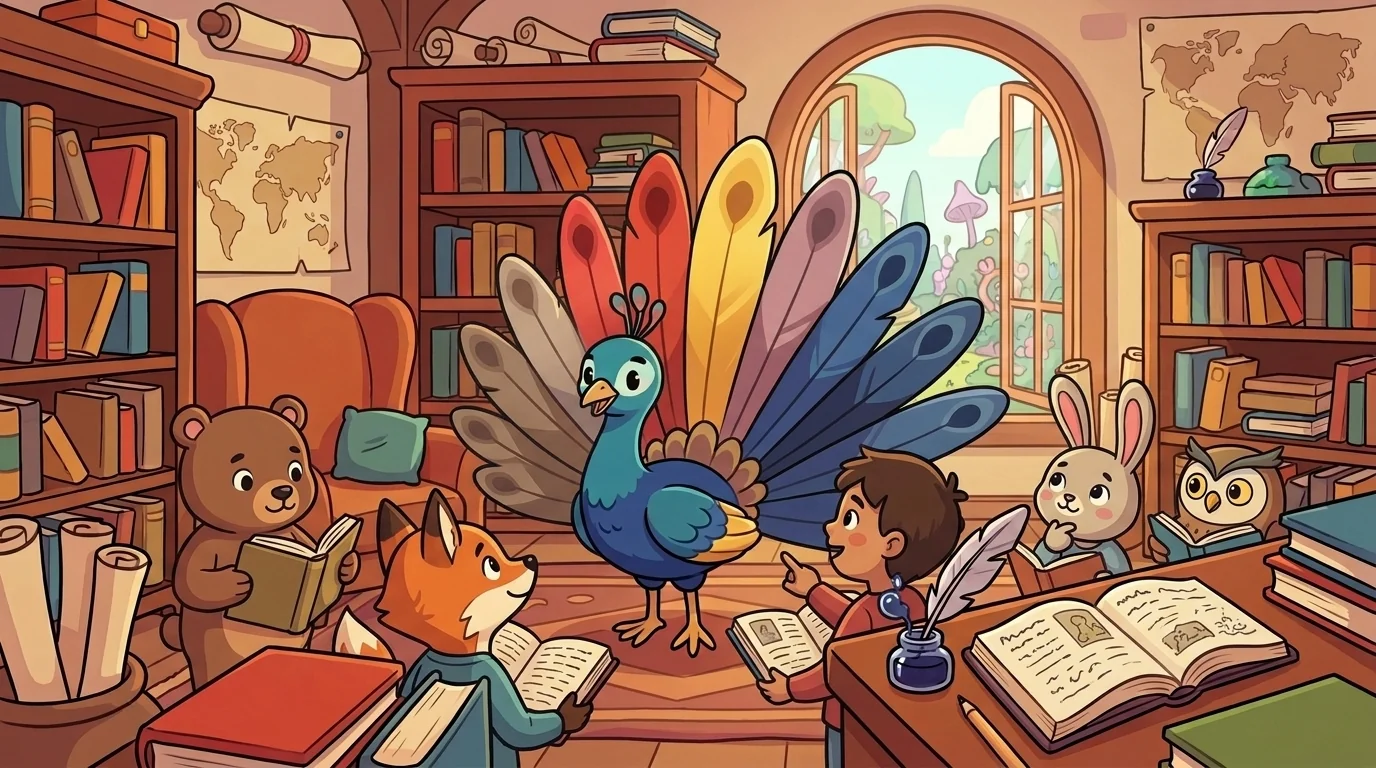
Plume then teaches the main ways writers use tone. "Inform means neutral," he says. "Persuade means urgent or ironic. Entertain means joyful. Reflect means thoughtful. Warn means somber or urgent." He tells them these are not strict rules. A story can mix feelings. But these pairings are a good way to start thinking.
Sometimes students ask Plume if reading for author's tone is hard. Plume always says the same thing.
"It is not hard," he says. "It is listening for the author's voice. The author has a purpose. That's a thing they are trying to do. The author has a tone. That's a way of sounding while doing it. The purpose and the tone together make the story feel a certain way. Listen for both."
He still stands at the front of the room. His feathers shift gently. Students read aloud from their own books. Plume's plumage changes with each new voice. The students see the shifts. They watch. They learn. They figure it out.
The ReadQuest ensemble
Plume is part of ReadQuest's distributed-narrative cast. Each character embodies a different curricular primitive; together they teach the full subject.
-

Crest
Main idea / central message (the *peak* of the passage)
-

Hunch
Inference (reading between the lines)
-

Anchor
Evidence / textual citation
-

Frame
Text structure (compare-contrast, sequence, cause-effect, problem-solution, description)
-

Pith
Vocabulary in context (deriving word meaning from surrounding text)
-

Yonder
Predicting — alert young-hare creature who reads the trail's clues to guess what's around the bend; a wrong guess just means the story surprised you
-

Vista
Visualizing — dreamy young-deer creature who turns words into a movie in the mind; the writer gives the words, the reader gives the pictures
-

Nettle
Questioning the text — question-quilled hedgehog who pokes a passage with why/how/what-if; asking questions means you're awake, not that you don't understand
-

Sheaf
Summarizing — warm-handed harvester who gathers a whole passage into one tidy armful, keeping the important middle and letting loose details fall