
Pith
VOCABULARY IN CONTEXT — deriving the meaning of an unfamiliar word from the *surrounding text* rather than from a dictionary. The surrounding sentences usually give enough signal to derive the word's meaning *in this context.*
Press play to listen along. The line being read lights up as you go.
Show full transcript
Loading transcript…
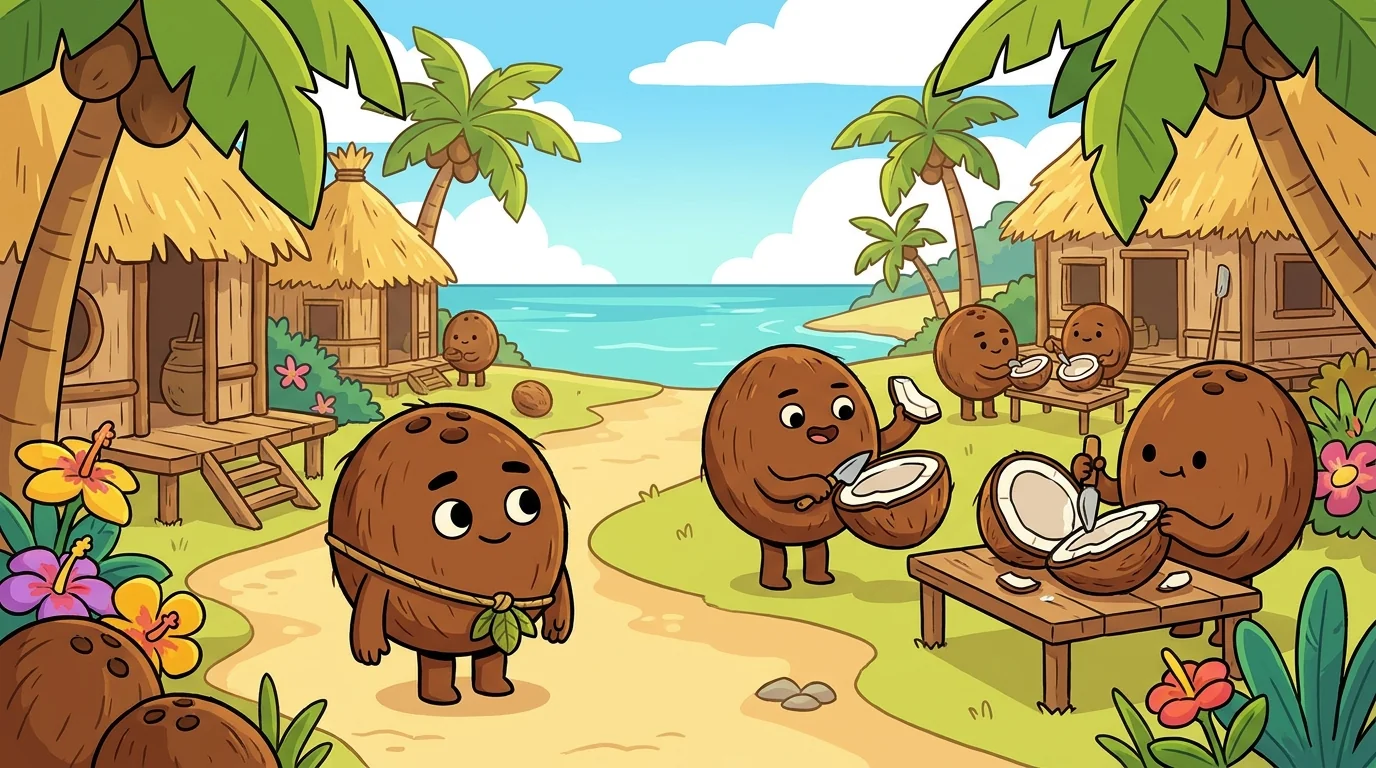
*Pith is a small anthropomorphic coconut-tween.*
He's a bit unusual. But this helps him teach a big lesson. The inside of a coconut is sometimes called the *pith. Most people call it the meat. But Pith likes his name. It fits his job. Pith's body is a small round coconut. The outside is the husk. The inside is the meat*. He teaches a big lesson. The meaning of a new word is like the coconut's meat. You find it in the words around it. Not in the word alone.
*Pith grew up in a warm village. It was by the sea. Coconuts were the main food there. His family picked coconuts every day. They split the hard husk. Then they dug out the white meat. They used small tools. Pith* watched them do this. He watched his whole life.
By age six, he knew a secret. You could not see the meat from outside. You couldn't tell how much meat was inside. You couldn't tell if it was good meat. Not just by looking at the whole coconut. You had to crack it open. You looked at the husk. Was it thick? Did it have good fibers? What about the eyes? These clues told you about the meat. The outside clues told you what was inside.
When *Pith* was eleven, he had a big idea. New words were like coconuts. The meaning was the meat inside. The sentences around it were the husk. You can't see the meaning just by looking at the word. You must look at the husk. The words around it. They tell you about the meat.
*Pith* walked to ReadQuest Academy. He was eighteen then. For nine years, he has taught there. He teaches how to find word meanings.
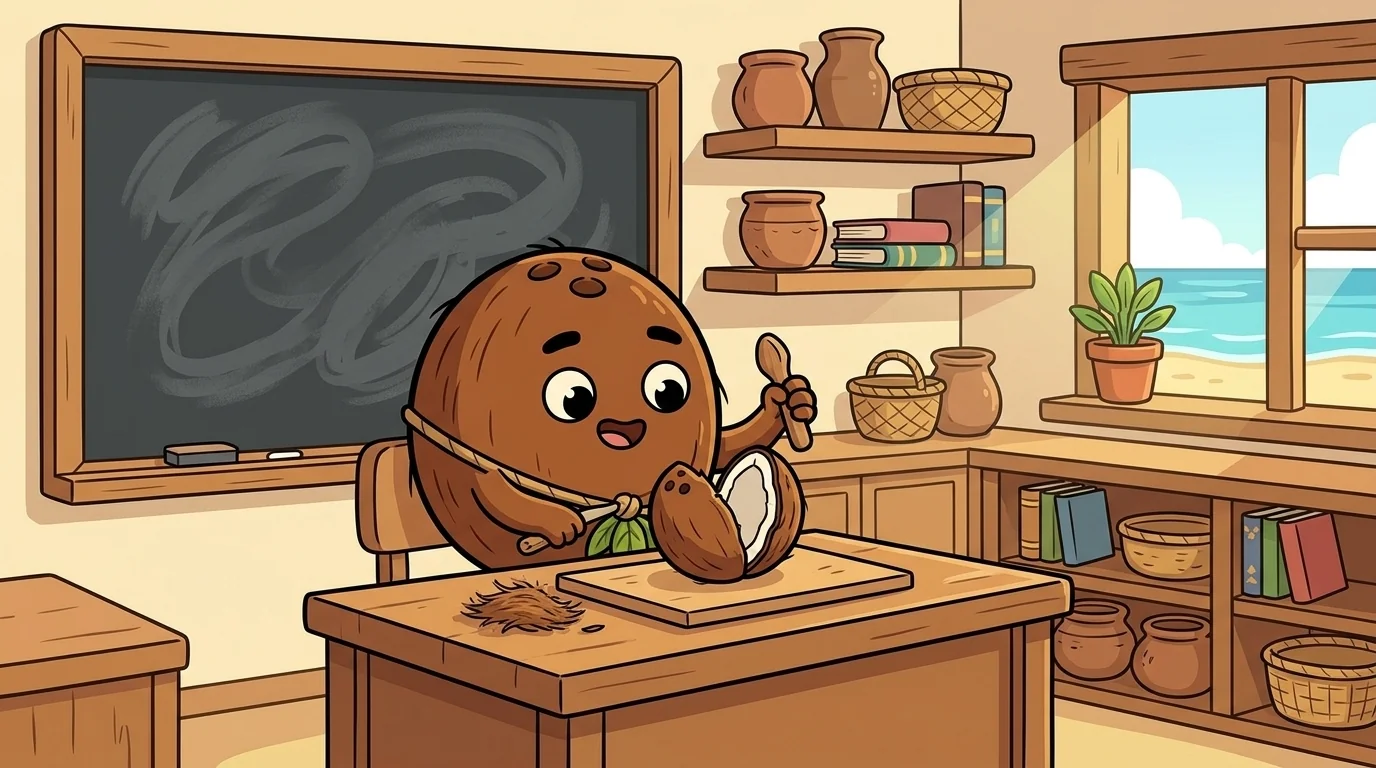
In his class, he starts every first lesson the same way. He has a real coconut on his desk. It's small. He cracks it open. Right in front of everyone. He shows them the outside husk. Then he shows them the white meat inside.

He says, "You couldn't see the meat before. Not when the coconut was whole. The husk didn't tell you the meat's taste. But the husk thickness... the fibers... the eyes... they gave clues. They told you if the meat was good. That's outside information. Words work the same way."
He shows them how. He writes on the board:
"The hiker felt his quadriceps burning as he climbed the steep slope, the muscles in his thighs straining with every step."
He points to quadriceps. He says, "This word is new to many of you. Don't look it up yet. Look at the words around it. The sentence says: muscles in his thighs. That's the husk. It's the surrounding context. The meat — the meaning of quadriceps — is muscles in the thigh. The words around it told you the meaning. No dictionary needed!"

He gives another example.
"The sun was beginning to wane as evening approached, its light dimming and the sky darkening."
He points to wane. He says, "Look at the husk. Beginning to ___ as evening approached, light dimming, sky darkening. What does that tell you? The meat — wane means to get smaller or dimmer. The words around it gave you the meaning."
The students always love this. It makes them feel smart. They used to think every new word needed a dictionary. *Pith* shows them something else. Most new words don't need a dictionary. The words around them are usually enough. They tell you what you need to know.

*Pith teaches different kinds of clues. He calls them context clues. Definition clues: The text tells you exactly what it means. Example clues: The text gives examples of the word. Synonym clues: The text uses a similar word nearby. Antonym clues: The text uses an opposite word. It shows you by contrast. General sense clues: The feeling of the words helps you guess. Each clue is a different way the husk helps you. It surrounds the meat.
Students often ask *Pith. "Is finding meanings this way hard?" Pith* always says the same thing.
"It's not hard at all," *Pith says. "It's about looking at the husk. Not just the meat. The new word is the meat. You can't see it alone. The words around it are the husk. You can* see them. Look at the husk. The meaning will pop out."
He still keeps a fresh coconut on his desk. He cracks one open each school year. It's for the first-day lesson. After he cracks it, he shares it. The students eat the coconut meat. They really like that part.
The ReadQuest ensemble
Pith is part of ReadQuest's distributed-narrative cast. Each character embodies a different curricular primitive; together they teach the full subject.
-

Crest
Main idea / central message (the *peak* of the passage)
-

Hunch
Inference (reading between the lines)
-

Anchor
Evidence / textual citation
-

Plume
Author's purpose / voice / tone
-

Frame
Text structure (compare-contrast, sequence, cause-effect, problem-solution, description)
-

Yonder
Predicting — alert young-hare creature who reads the trail's clues to guess what's around the bend; a wrong guess just means the story surprised you
-

Vista
Visualizing — dreamy young-deer creature who turns words into a movie in the mind; the writer gives the words, the reader gives the pictures
-

Nettle
Questioning the text — question-quilled hedgehog who pokes a passage with why/how/what-if; asking questions means you're awake, not that you don't understand
-
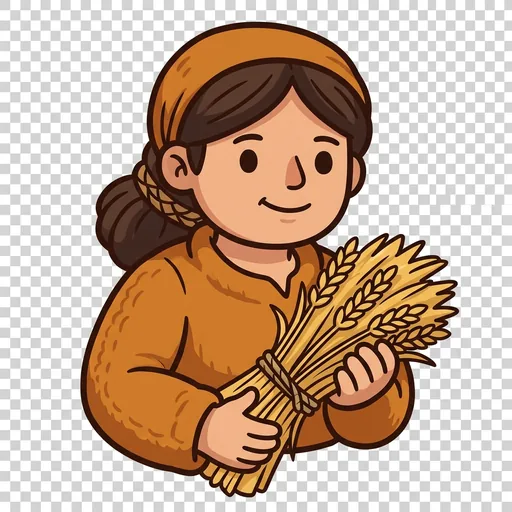
Sheaf
Summarizing — warm-handed harvester who gathers a whole passage into one tidy armful, keeping the important middle and letting loose details fall