
Saga
OLD NORSE ROOTS — *sky*, *take*, *gift*, *raise*, *weak*, *scant*, *they*, *them*, *their*. The northern-Germanic contributions to English that came in through the Viking Age contact.
Press play to listen along. The line being read lights up as you go.
Show full transcript
Loading transcript…
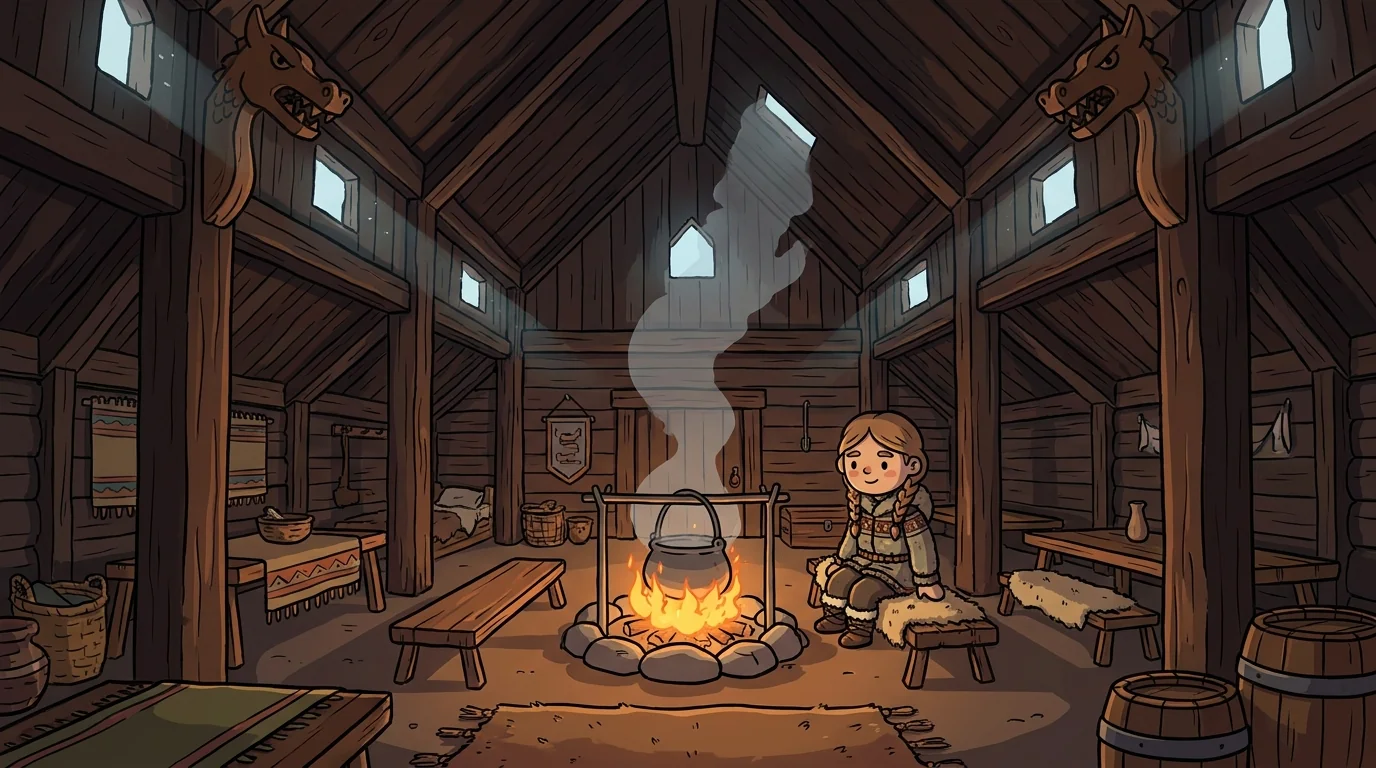
Saga lives in the Norse Longhouse.
The Longhouse is the academy's neighborhood for Old Norse roots. It sits on the academy's northern edge, a little further from the central buildings than the Latin Quarter or the Greek Acropolis. Even the Germanic Grove feels closer. When the academy's founders built the Longhouse a hundred and fifteen years ago, they deliberately placed it at a distance. They wanted the Norse-roots neighborhood to feel a sense of northernness, just like the language itself. That's what the academy historians say.
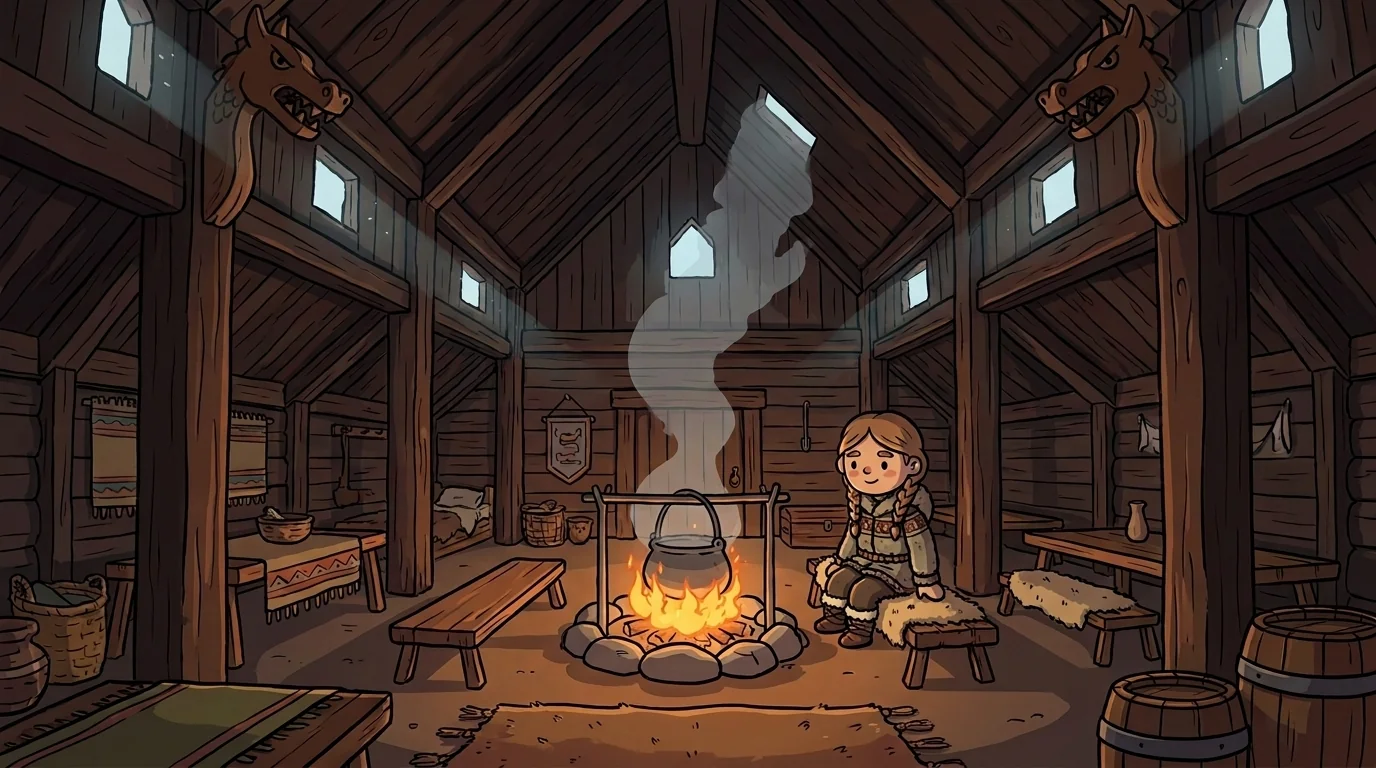
The Longhouse stood tall, a dark wooden structure with a steeply peaked roof. Carved dragon heads guarded the gables, their snouts pointing to the sky. Small, high windows let in slivers of light. Inside, a single hearth smoked through a hole in the roof, filling the air with the scent of woodsmoke and slow-cooked stew. Especially in winter. It was, by all academy accounts, Saga's favorite place.
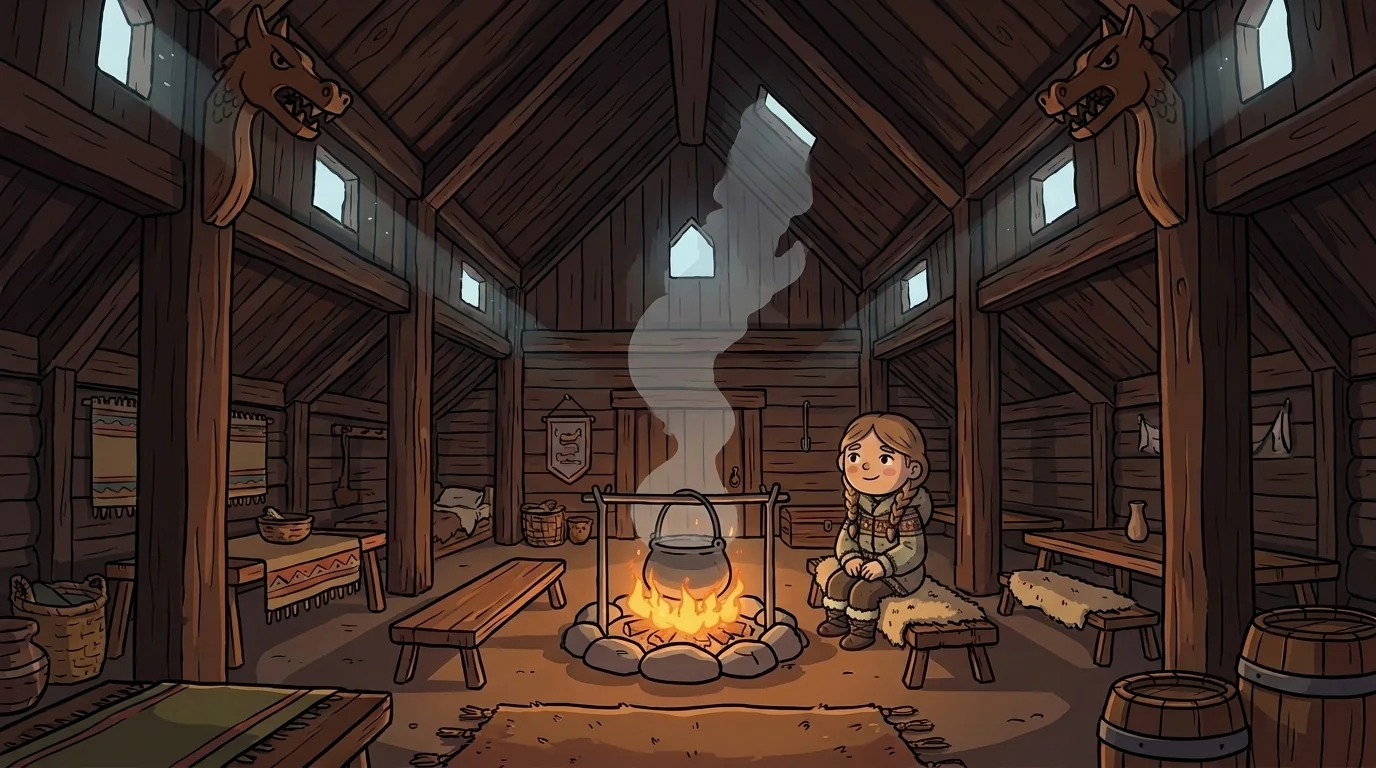
Saga’s given name is Skadi. It’s an Old Norse name for the goddess of winter. Skadi was, in Norse mythology, the goddess of mountains, skiing, and bowhunting. Saga treats the name as an honoring of the broad northern-Germanic mythic tradition. She doesn’t claim to worship any specific deity. Saga is the academy’s teacher for the English words that came from Old Norse. These words entered English during the Viking-Age contact period.
This vocabulary is, in fact, enormous. Many English speakers don't realize how many everyday words come from Old Norse, not Old English. Words like sky, take, gift, give, raise, weak, scant, knife, husband, window, egg, leg, root, skin, skirt, sister are all Norse. The Norse contribution to English was deep. It changed not only vocabulary but also some of the grammar. Old Norse gave English the they/them/their pronoun set. The Old English pronoun set had been confusingly similar to the he/him/his set. The Norse alternative was clearer, and English adopted it.
Saga is quietly proud of this.
She grew up in the kingdom's far northwest, in a village called Skogr. That's an Old Norse-derived name meaning forest. Norse settlers founded the village a thousand years ago. They eventually intermarried with the local population. By Saga's time, the village spoke the kingdom's common tongue every day. Still, many of the village's older words and place-names kept their Norse character. Skogr's neighboring fells, or hills, were called Helvellfell, Skiddaw, and Causey Pike. All of them were Norse-rooted names. The village had a beck (the Norse word for stream), a gill (the Norse word for ravine), and a tarn (the Norse word for mountain lake). Saga grew up speaking a northern-dialect English, full of these Norse survivals.
Like Birch, to whom she is closely allied, Saga noticed something by adolescence. Her local vocabulary felt more Norse than the southern dialect. But unlike Birch, who came to love Anglo-Saxon vocabulary, Saga came to Old Norse. Old English and Old Norse were like sister languages, both from the same Germanic family tree. The Norse contribution to English was substantial, but it layered differently than the underlying Anglo-Saxon vocabulary.
By the age of twelve, Saga could trace dozens of common English words back to their Old Norse origin.
She learned by telling stories. This was a tradition she had inherited from her grandmother, Halla. Halla had been the village's informal saga-teller. She knew dozens of short stories. Each one showed how a Norse word had entered English. Every story was about a Viking-Age sailor, merchant, or settler. They brought a word from their northern home and used it in the new country. Eventually, the locals adopted it. Halla's stories weren't always exact history. They were more like vivid tales, designed to make the words come alive. Saga learned dozens of words this way.
When Saga was eighteen, she walked the long road south to QuillSpell. She arrived at the Longhouse, which had been waiting for a teacher for four years. Saga asked to be interviewed by the academy master.
Lex said, "What is the etymology of sky?"
Saga answered, "Old Norse ský, meaning cloud. The Old English word for sky had been heofon — what we now call heaven. The Norse word ský came in through Viking-Age contact. It replaced heofon for everyday usage. Heofon survived as heaven, for the religious sense. Sky became the secular word."
Lex said, "What is the etymology of they?"
Saga replied, "Old Norse þeir. This is one of the deepest grammatical contributions Norse made to English. The Old English third-person plural pronouns — hīe, hira, him — had become confusingly similar to other pronoun-forms. The Norse plural pronouns þeir, þeirra, þeim were clearer. Middle English adopted them. They became they, their, them. Without Norse, English would have a much more confusing pronoun system."
Lex set down her tea. She said, "Take the Longhouse. Take your academic name. Saga. It honors what your grandmother gave you."
Saga has been the Longhouse's teacher for nineteen years.
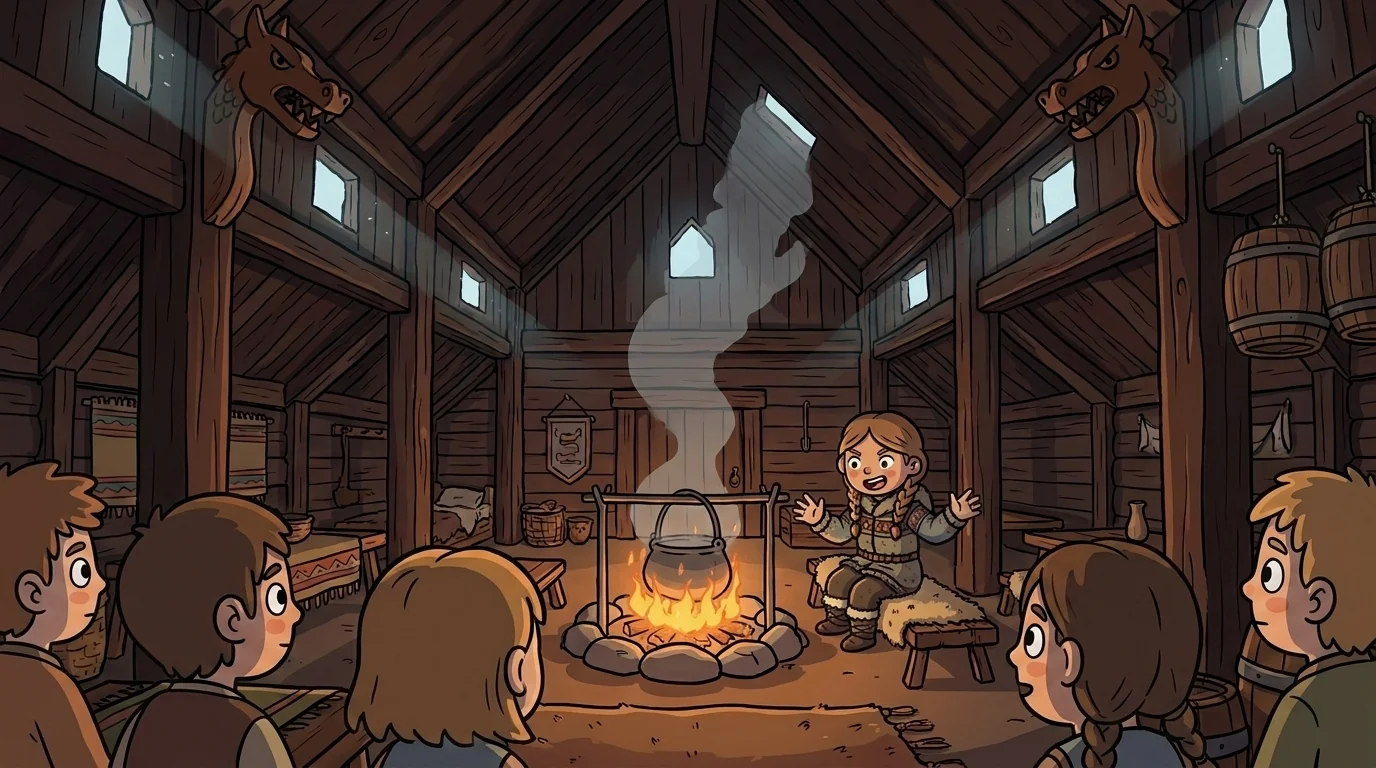
In her classroom, she begins every first-day lesson the same way. She sits at the long table by the central hearth. She lights a small candle. "Tonight," she says, "well, today, but the tradition was tonight, I will tell you a saga. The saga is about how a Norse word came into English."
Then she tells a story. Sometimes it's about a Viking sailor. He learns to call his ship's sky by the Norse word, and the English crew picks it up. Sometimes the story is about a Norse-settled village adopting the word take over the Old English niman. Sometimes the story is about they/them/their. This is Saga's favorite story. She tells it with particular animation, because the pronoun change is grammatically substantial. It's not just a new word.
The children always love the saga-format. They had not been told before that English grammar was partly Norse. They had not been told that common English words have origin-stories. Saga makes both visible.
When children ask whether Norse roots are hard to learn, Saga always says the same thing:
"They are not hard. They are layered into English so deeply you do not notice them. The job is to notice them. Once you do, you see Norse in sky, take, gift, give, knife, husband, window, egg, leg, root, skin, sister, they, them, their. These are not foreign words. These are English words with a Norse parentage."
She still lights the candle at the start of every lesson. The Longhouse fire is also lit when the weather is cold. The children sometimes ask to sit by the fire while she teaches. She always lets them.
The QuillSpell ensemble
Saga is part of QuillSpell's distributed-narrative cast. Each character embodies a different curricular primitive; together they teach the full subject.
-

Etyma
Latin Quarter — Latin roots (port, scrib, dict, vis, audi, port)
-

Sophia
Greek Acropolis — Greek roots (bio, geo, photo, log, graph, phon)
-

Birch
Germanic / Old English Grove — short, punchy Anglo-Saxon roots (mouth, hand, foot, hear, see, walk)
-
Margaux
French Chateau — Norman-French roots (royal, chef, ballet, garage, hotel, courage)
-
Zayn
Arabic Oasis — Arabic-origin English loans (algebra, algorithm, alchemy, zenith, sugar, cotton)
-

Hush
Silent-letter clan (kn-, gn-, wr-, mb, gh, pn-, ps-)
-
Twin
Double-consonant rule (running, beginning, hopped, planned — short-vowel-CVC + suffix)
-
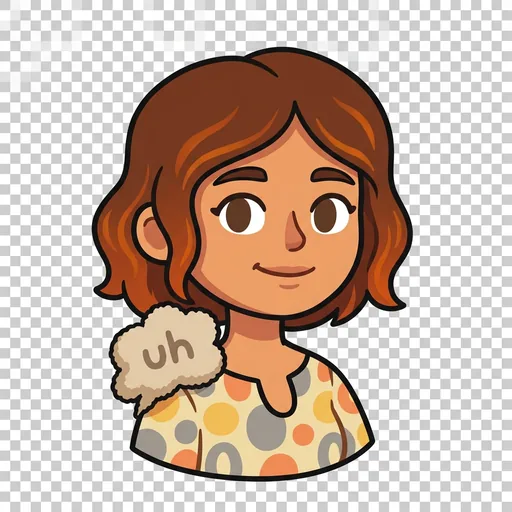
Ember
Schwa-keeper (the unstressed-vowel "uh" — `about`, `pencil`, `lemon`, `circus`, `medium`)
-
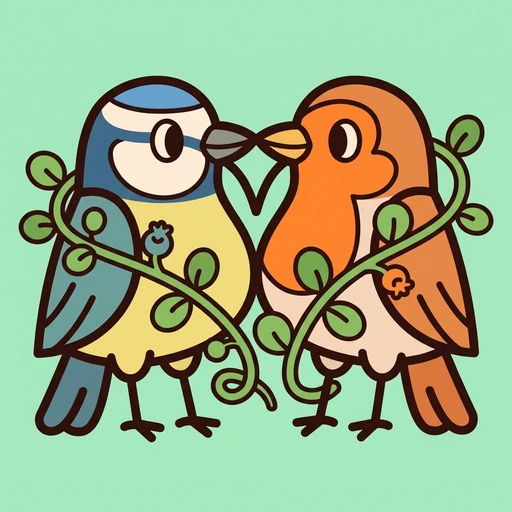
Wren
Vowel-team duos (ai, ea, ee, oa, ow, ie, oi) — "when two vowels go walking"
-

Affix
Suffix-stack guardian (root + suffix + suffix: nation → national → nationalize → nationalization)
-
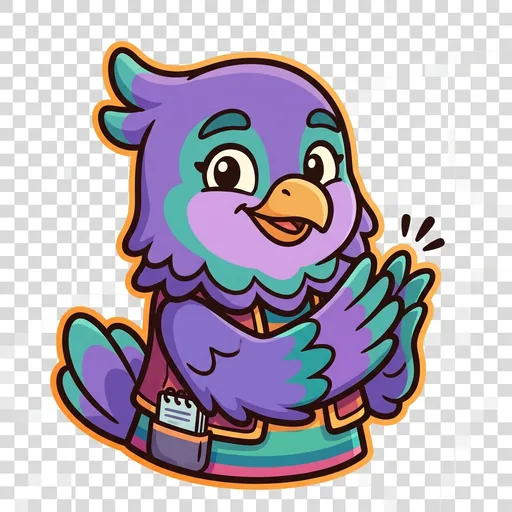
Cadence
Syllable-rhythm master (di-vid-ing words for spelling: VC/CV, V/CV, syl-lab-i-fi-ca-tion)