
Birch
GERMANIC / OLD ENGLISH ROOTS — *mouth*, *hand*, *foot*, *hear*, *see*, *walk*. The short, punchy, monosyllabic Anglo-Saxon roots that form the everyday vocabulary of common English speech.
Press play to listen along. The line being read lights up as you go.
Show full transcript
Loading transcript…
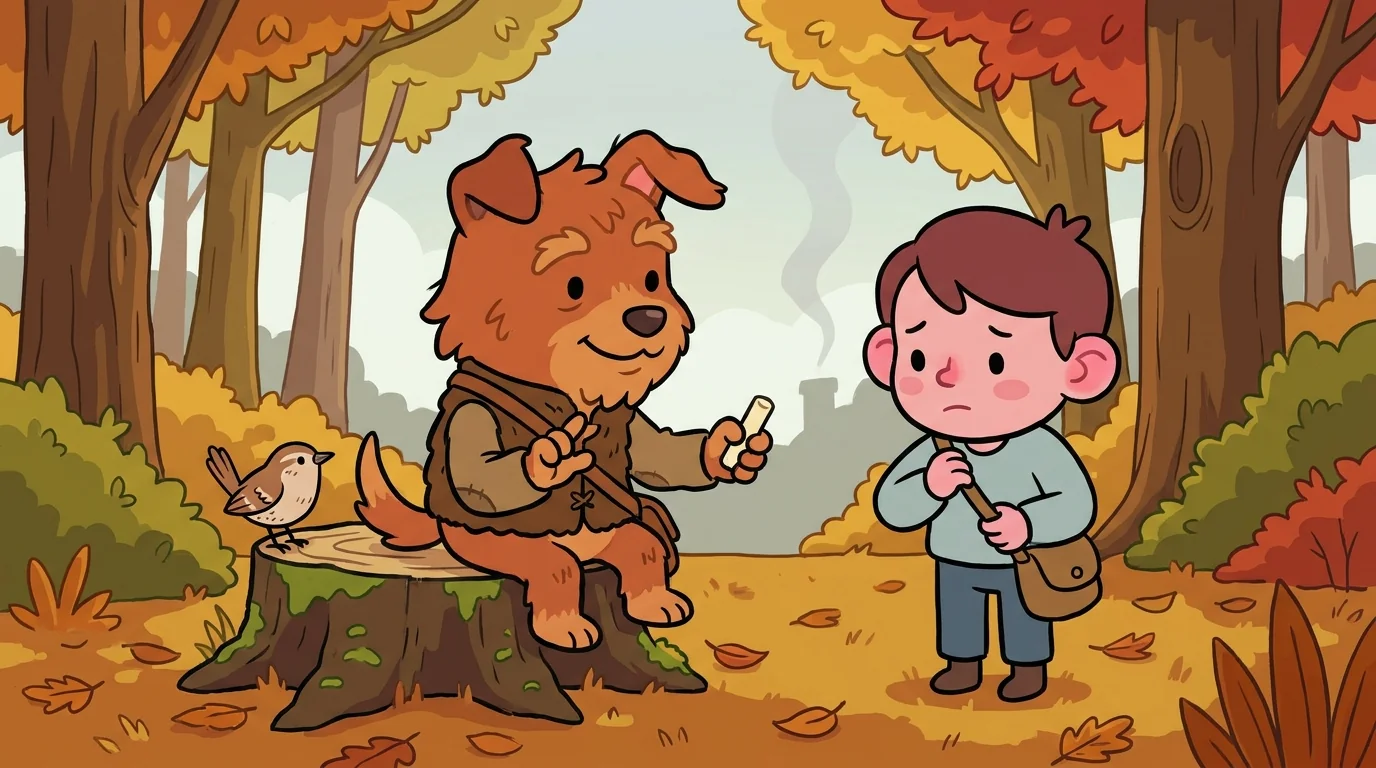
Birch lives in the Germanic Grove.
The Grove is on the academy's eastern edge. It is, unlike the Latin Quarter (with its paved streets) and the Greek Acropolis (with its white-marble paths), an actual woodland. The academy planted it deliberately when the academy was founded a hundred and twenty years ago. They planted birch trees, oak trees, ash trees, and yew trees — all of which had been named in Old English and whose Old English names had passed largely intact into modern English.
The Grove is, today, substantial. The birches are now nearly seventy feet tall. The oaks are enormous. The ash trees have unfortunately suffered from the kingdom's recent ash-die-back disease and are being replaced (slowly, mournfully) with hardier species. The yews are very slow-growing and remain modest. The whole Grove has a slightly northern, slightly old-English atmosphere — quiet, mossy, smelling of wet leaves and bark and earth.
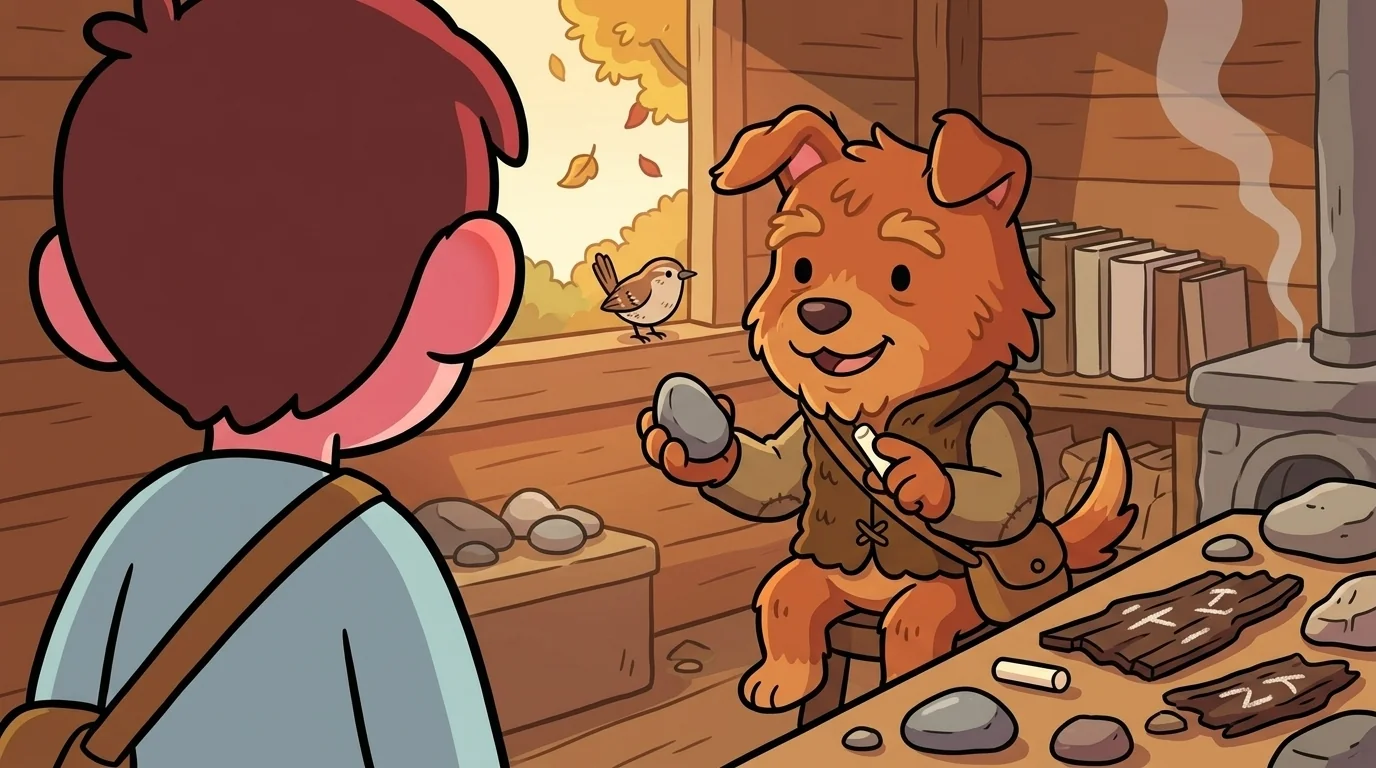
Birch teaches in a small wooden cabin at the center of the Grove. The cabin was built, like the Grove, by the founding generation. It has a stone fireplace, a low ceiling, and a single long table. There is a small log-store under the eaves. Birch keeps the fire lit through the cold months.
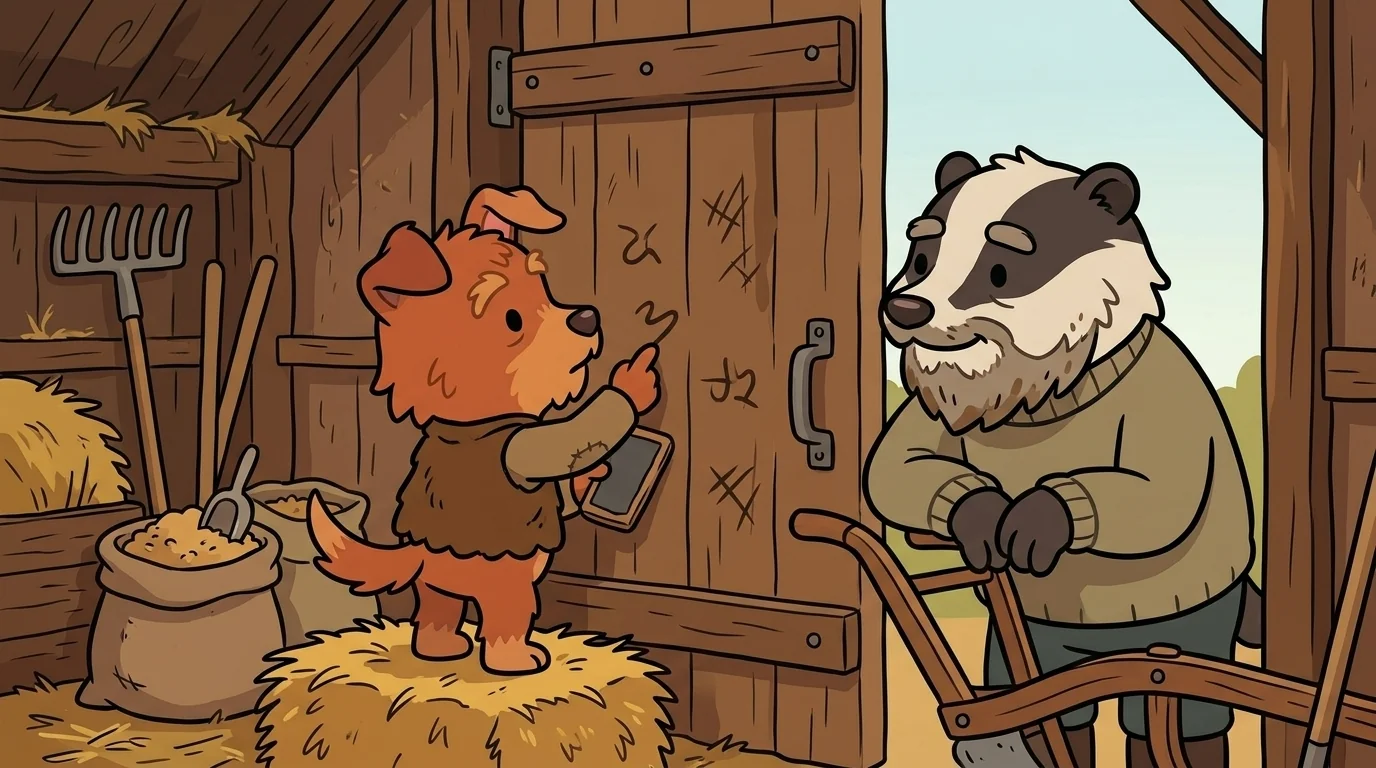
Birch — whose given name is Hroth, an Old English name meaning glory — is the academy's specialist in the foundational Anglo-Saxon vocabulary that makes up the everyday English of common speech. This is, in a sense, the most-important vocabulary in English. Most of the words a child uses every day — mouth, hand, foot, eye, ear, hear, see, walk, run, eat, drink, sleep, wake, day, night, sun, moon, sky, earth, tree, leaf, stone, water — are Germanic. Not Latin. Not Greek. Not French. Germanic. The Anglo-Saxon foundation underlies all the more-sophisticated vocabularies that came later.
Birch — who is gruff, woodland-rugged, and bearded — is quietly proud of this.
He grew up in the kingdom's far north, in a village called Beorn (an Old English name meaning warrior or hero, though by Birch's time it was used as a generic place-name without warlike connotations). Beorn was a small village. It had a church, a smithy, a tavern, a small school. It was surrounded by woods. Birch grew up in the woods. He spoke, at home, the northern dialect of the kingdom's common tongue — which preserves more Old English vocabulary and grammar than the southern dialect spoken at the capital.
This was, Birch eventually realized, a deep gift. He understood, viscerally, that common speech is Germanic-rooted. He understood that sophisticated English speech often layers Latin and Greek and French roots on top of a Germanic foundation. He understood, by the time he was twelve, that most English speakers do not realize how Germanic their everyday speech is.
Birch made it his life's work to surface this.
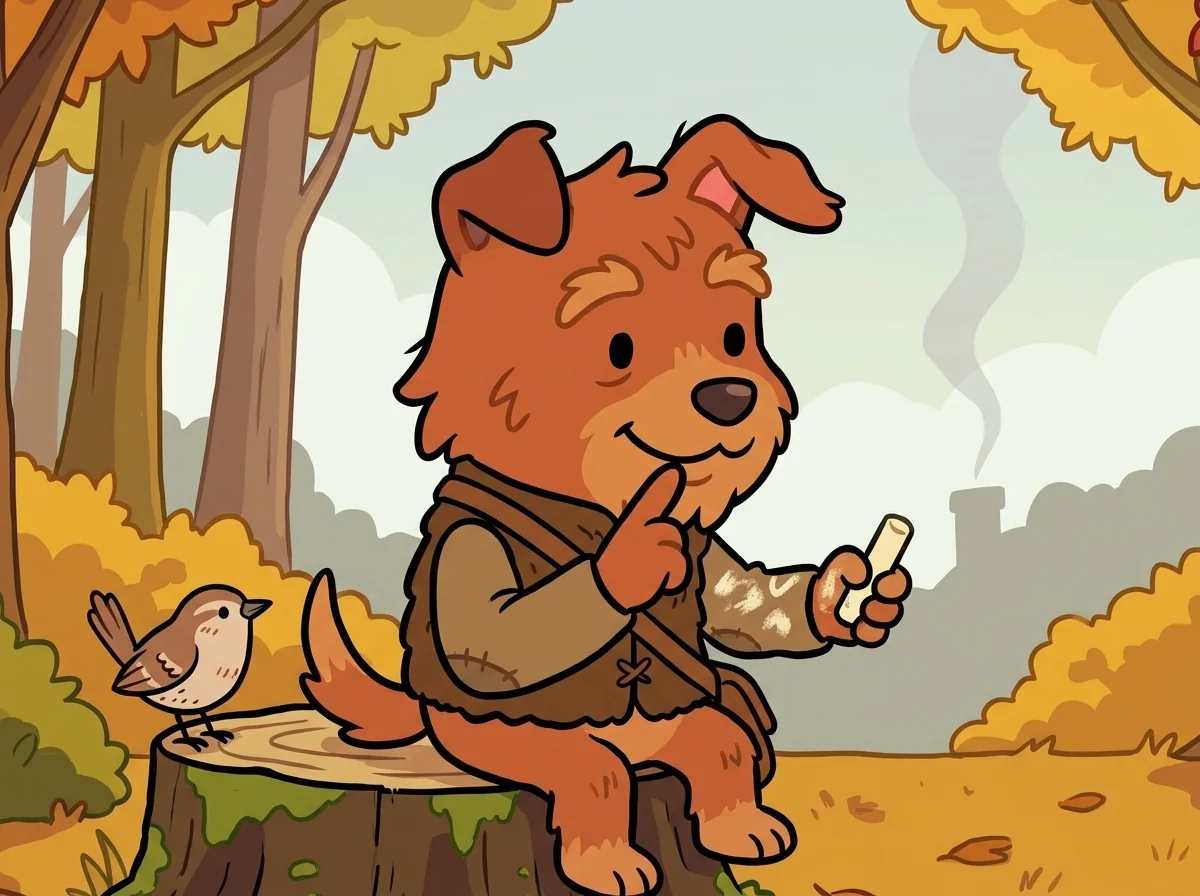
He left Beorn when he was nineteen. He travelled south to the academy capital. He arrived at QuillSpell with no formal academic credentials, but with a pocket notebook full of Old English etymology — every common English word he had been able to trace back to its Anglo-Saxon root. The notebook had, by his count, two thousand four hundred entries. He had filled it during his teens, walking the northern woods.
The academy master — Lex — interviewed him. The interview went like this:
Lex said: "What is the etymology of foot?"
Birch said: "Old English fot. Same word. The pronunciation has shifted slightly. The spelling has changed slightly. The meaning is identical. Foot has been foot for a thousand years."
Lex said: "What is the etymology of eat?"
Birch said: "Old English etan. Same word, with the suffix-vowel worn off. The Germanic family of languages all have a closely-related word: German essen, Dutch eten, Old Norse eta. The root is ed- in Proto-Indo-European. Eat has been eat since before English was English."
Lex said: "What is the etymology of the?"
Birch said, after a long pause: "That is the most-common word in English. It is also the most-Germanic word in English. Old English had multiple definite-article forms — se, seo, þæt — that collapsed over Middle English into the single form the. The history of the is the history of English shedding case-endings."
Lex set down her tea. She said: "You will teach in the Grove. Take your academic name. Birch — for the trees that mark your neighborhood."
That was thirty-one years ago. Birch has been the Grove's teacher ever since.
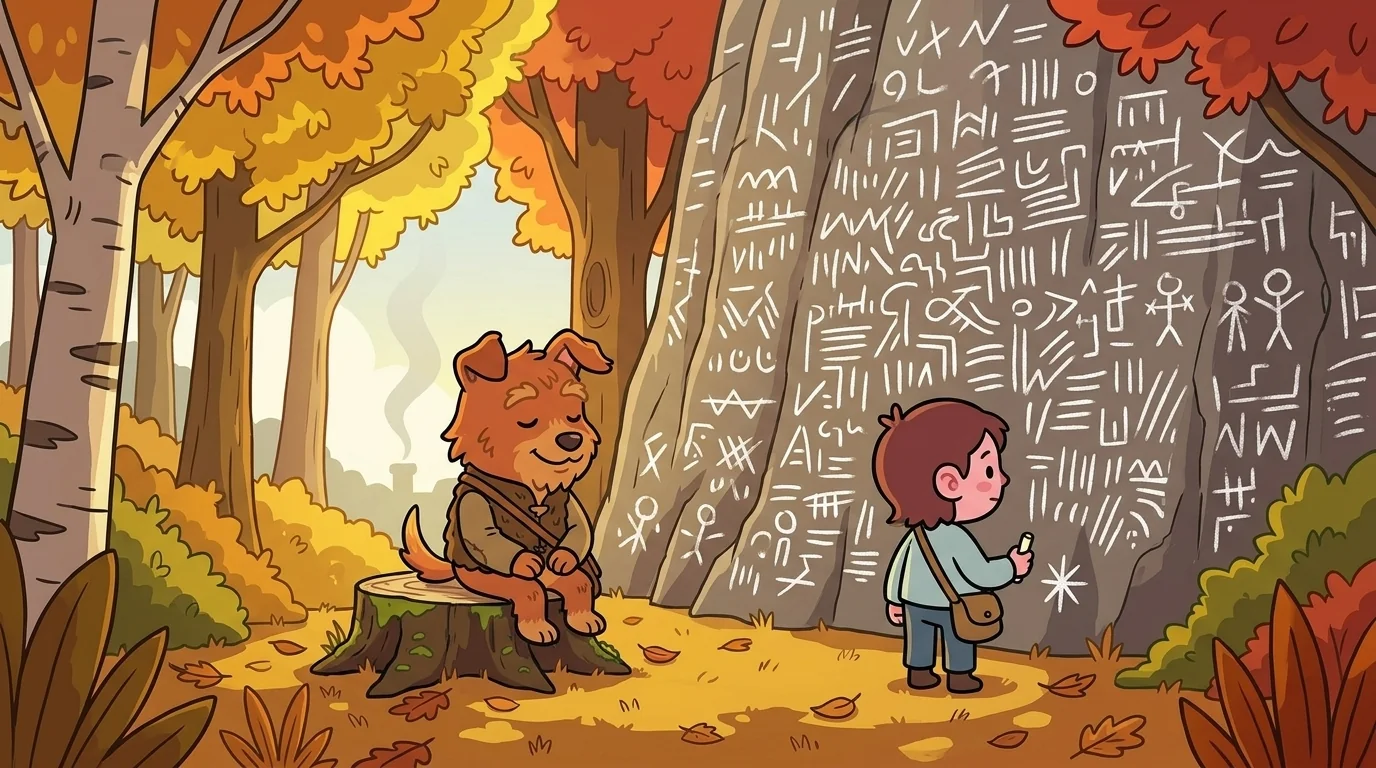
In his classroom (the wooden cabin), he begins every first-day lesson the same way. He sits at the long table. He has, before him, a small carved birch-twig (he carves a new one every few years; he gives the old ones to children who have impressed him). He uses the twig as a pointer. He says: "Most of the words you use every day are Germanic. Mouth is Old English. Hand is Old English. Foot is Old English. Eye, ear, hear, see, walk, run, eat, drink, sleep, wake, day, night, sun, moon, sky, earth, tree, leaf, stone, water — all Old English. The Anglo-Saxon vocabulary is the foundation of English. Latin and Greek and French are layered on top. But the foundation is Germanic."
He pauses. He taps the table with his twig. He says: "This is something most English speakers do not realize. They think fancy words are real English. They are wrong. Common words are real English. Fancy words are borrowed. English is, at its roots, a Germanic language."
The children — always — find this somewhat radical. They had been taught that sophisticated vocabulary was a sign of good language. Birch is telling them that common vocabulary is the original language. This reorganizes their sense of what English is.
When children ask whether Germanic roots are hard to learn, Birch always says the same thing:
"They are not hard. They are already in your mouth. You have been using them since you were two. The job is not to learn them — you already know them. The job is to recognize them. Once you can pick out the Germanic core of any English sentence, you can see the structure of the language."
He still keeps the carved birch-twig on the long table. The children sometimes ask to hold it. He always lets them. The twig is now, after thirty-one years of children's fingers, very smooth.
The QuillSpell ensemble
Birch is part of QuillSpell's distributed-narrative cast. Each character embodies a different curricular primitive; together they teach the full subject.
-

Etyma
Latin Quarter — Latin roots (port, scrib, dict, vis, audi, port)
-

Sophia
Greek Acropolis — Greek roots (bio, geo, photo, log, graph, phon)
-

Saga
Old Norse Longhouse — northern roots (sky, take, gift, raise, weak, scant)
-

Margaux
French Chateau — Norman-French roots (royal, chef, ballet, garage, hotel, courage)
-

Zayn
Arabic Oasis — Arabic-origin English loans (algebra, algorithm, alchemy, zenith, sugar, cotton)
-

Hush
Silent-letter clan (kn-, gn-, wr-, mb, gh, pn-, ps-)
-

Twin
Double-consonant rule (running, beginning, hopped, planned — short-vowel-CVC + suffix)
-

Ember
Schwa-keeper (the unstressed-vowel "uh" — `about`, `pencil`, `lemon`, `circus`, `medium`)
-

Wren
Vowel-team duos (ai, ea, ee, oa, ow, ie, oi) — "when two vowels go walking"
-

Affix
Suffix-stack guardian (root + suffix + suffix: nation → national → nationalize → nationalization)
-

Cadence
Syllable-rhythm master (di-vid-ing words for spelling: VC/CV, V/CV, syl-lab-i-fi-ca-tion)